Monday, February 23, 2026
Home Blog Page 587

Wheat Scoop: Learn more about the cooperatives in your community during National Co-op Month

0
Kansas Wheat

Contact: Marsha Boswell, [email protected]

For audio version, visit kswheat.com.

The flurry of fall fieldwork season makes October a fitting month to recognize the cooperatives that help supply Kansas wheat producers with grain storage, marketing, field recommendations, inputs and patronage. Cooperatives have existed nearly as long as farmers have been farming as producers learned how to pool resources and expertise to support each other’s operations. National Co-op Month is a nationwide event that raises awareness of how cooperatives provide a tried-and-true way to do business and support resilient communities.

And while rural Kansans are familiar with the prairie skyscrapers that dot the horizon — iconic grain elevators with the town name often painted in bold, block letters — cooperatives are more than just a place to deliver and store grain. Today, these member-driven businesses can also provide credit, insurance, electric service, health care, housing, telephone services and even childcare. Cooperatives also help support more than row-crop agriculture, representing industries from grape juice to electricity.

“In Kansas, agricultural cooperatives are very grain marketing-based, but outside of Kansas that is not the case,” said Brandi Miller, president/CEO of the Kansas Cooperative Council, the organization that has represented the cooperative business model in the Sunflower State since 1944. “There are a lot of cooperatives focused on consumer products. People see their products on the shelves and don’t realize they function exactly like the co-op they see in their hometown.”

According to the Kansas Cooperative Council, Kansas is home to more than 575 co-op locations with more than 116,000 members and 5,000 employees. Those businesses support the health of local economies by creating jobs, paying property taxes and income taxes and giving to charity.

The weather-driven challenges of the past few growing seasons have made this payback difficult for cooperatives, just as it has been difficult for their farmer members. But, Miller reminds farmers that just as they are resolved to adapt in challenging times, so are the cooperatives of which they are members. Kansas cooperatives are working to explore options to do things differently or more efficiently to help provide better services to their members, investments that take time and money to implement, but match the innovation that takes place on Kansas farms.

To support awareness of how cooperatives function, the Kansas Cooperative Council developed a series of “Co-ops 101 Videos” for educational uses from employee or new board director onboarding to sharing about what cooperatives do with high school students or interns. The videos were developed through a grant with CHS, Inc. and in collaboration with Brian Briggeman, director of the Arthur Capper Cooperative Center in K-State’s Department of Agricultural Economics. They cover a variety of introductory topics, including the definition and function of a cooperative, the seven cooperative principles, patronage, allocated equity retirement, co-op governance, qualified versus non-qualified patronage distributions and how patronage distributions are determined.

Miller hopes the video series and other efforts during National Co-op Month encourage both farmers and others to learn more about the cooperatives in their communities. She also encourages all to explore how they can help make decisions and set a strategic path forward by serving on that cooperative’s board.

“I always encourage people to consider getting involved in their local cooperative,” Miller said. “Every co-op is looking for good people who want to see their communities flourish and utilize the cooperative to provide community resources. Check it out; it’s an important function in our rural communities.”

Learn more about Kansas cooperatives or check out the Co-ops 101 video series at https://www.kansasco-op.coop/.
###

Written by Julia Debes for Kansas Wheat
 

Comprehensive checklist for end-of-season dry applicator equipment inspections

0

As reported in High Plains Journal as more and more growers invest in their own dry fertilizer applicators—and as the cost of in-season downtime climbs upwards of $2,000 per day—end-of-season equipment inspections have become increasingly important to help protect the machine investment and ensure timely fertilizer applications the next spring.

“We can’t stress enough how doing a complete and thorough inspection when you’re done with the machine this season, and performing any necessary repairs before storing for winter, will make it that much easier to get started when your fields are ready next season,” said Nathan Druffel, northwest regional operations manager, Heartland Ag Systems, one of the largest application equipment dealers in North America.

“As we all know, the timing of fertilizer application is very key in agriculture, and if you can’t use the machine when you need it, that can negatively affect your crop performance and yields,” Druffel added.

“Keep it simple. Make a checklist so you don’t forget anything and continue using that checklist year after year,” Druffel advised. “Or consider partnering with a trained and experienced Heartland Ag technician to perform the inspection or provide help.

“Our technicians specialize in application equipment, they see numerous spreaders and sprayers each year, and they know what to look for since they’re trained to do preventative maintenance inspections. They can help make sure nothing is overlooked so you can avoid costly in-season downtime,” he explained.

Regardless of how you prefer to handle the inspection, Druffel recommends following these key steps for winterizing your spreader.

Perform a comprehensive clean-up: Completely clean the machine’s exterior and interior, including the box, frame, booms, axles, suspension, steering components, spinners, hydraulic system—everything. Meticulously inspect for cracks, leaks, hidden damage from use, or anything that might need to be repaired before next season.

  • For self-propelled machines, inspect and clean the chassis, engine, transmission, rear end and hubs. Discard all trash from inside the cab, vacuum the interior, inspect air conditioning filters, and consider placing rodent bait or repellant to keep critters out.
  • For air boom systems, clean the booms and belts to be sure they are free of any corrosive materials. It’s also important to inspect the fan and fan housing to look for damaged blades, as holes in the fan housing can adversely affect the airflow to the booms and in turn the spread quality.

Remove all fertilizer debris: Fertilizer is very corrosive and can cause a lot of rust issues, especially when met with rain or moisture. When washing the outside of the machine—the box, booms and spinners—be sure to remove all corrosive fertilizer dust and granules to prevent rust and corrosion. It is also important to clear all corrosive materials from the electrical wiring and isobus connections to prevent rusting that can block electrical signals.

Clean the conveyor belts, oil the chains and check for missing pieces: To further protect against corrosion and rust, keep the chains and joints free and in good shape by removing fertilizer from all metal surfaces and greasing the chains. Help prevent metal from binding to metal by greasing the pivot points and shafts.

Keep the machine covered: Moisture in the air rusts metal parts of unprotected equipment. If you can cover the machine during seasons impacted by rain and/or snow—whether it be in a shed, shop or even with a large tarp—it will be better protected and in a better condition the next time it’s used.

“Annual, end-of-season equipment inspection and maintenance routines help to mitigate the risk of days or even weeks lost in-season due to downtime from costly, time-consuming repairs,” said Druffel. “These practices also help to protect the machine’s resale value when you’re in the market to upgrade.”

Growers who don’t have the time or interest in performing equipment inspections can turn to companies like Heartland Ag Systems, which offers a Preventative Maintenance Inspection program with an annual inspection to help customers keep equipment in tip-top shape and their operations running as efficiently as possible.

“Our application specialists carefully evaluate the customer’s equipment to find problems before they’re in the field. This also helps extend the life and value of the equipment,” said Druffel. “After the customer receives results of the PMI, they can choose to do any necessary repairs themselves or have us perform those repairs. Either way, the value these PMIs deliver to the grower is the potential for extensive savings and increased productivity at the start of the next season,” Druffel concluded.

Highly pathogenic avian influenza confirmed in Oklahoma flock

0

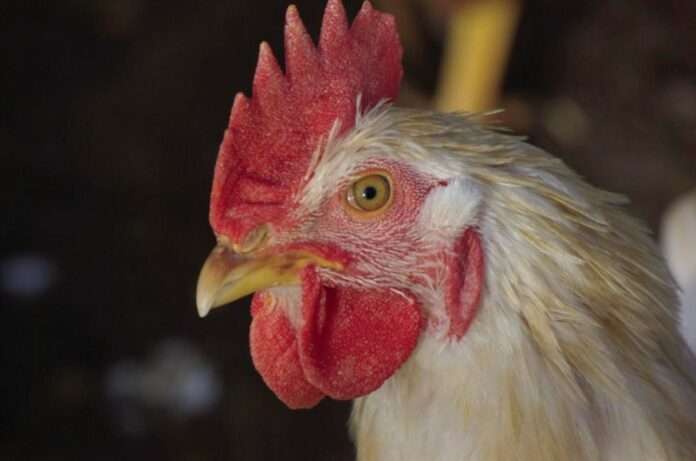
As reported in High Plains Journal On Oct. 16 the Oklahoma Department of Agriculture, Food and Forestry announced that a mixed poultry flock in Carter County, Oklahoma, had tested positive for highly pathogenic avian influenza. While HPAI is unlikely to be contracted by humans or other livestock, it is extremely contagious to birds and fatal in almost all cases. Fall bird migration can spread the disease rapidly as wild birds fly south for the winter.

ODAFF recommends backyard bird owners take precautions to protect their fowl by keep facilities and equipment clean, frequently changing food and water, fencing birds in to prevent contact with wild birds, isolating new or sick birds for the rest of the flock and limiting human visitors.

Symptoms of HPAI include: coughing and sneezing, difficulty breathing, extreme depression, lack of energy, decrease in feed or water intake, swelling or purple discoloration of head, eyelids, comb, wattle and legs, decrease in egg production, quietness among the flock and sudden, unexplained death. If you suspect a case of HPAI, contact your local county Extension educator, a veterinarian or the Oklahoma Animal Disease Diagnostic Laboratory for testing. Sick birds in Oklahoma should be reported to 405-522-6141.

The origins of candy corn: A divisive delicacy, destined to be a Halloween tradition

0

Candy corn: Is it a treat or some kind of trick candy makers are playing on us?

The question arises because the candy is truly divisive. But those who love it are delighted by the approach of Halloween.

Michael Byars, a public radio host in Kansas City, Missouri describes candy corn as “pure sugary deliciousness that reminds me of my youth – when everything was simple and easy and the worries and stresses and fears of adulthood weren’t even on the radar.”

On the other side of the candy corn issue is Johner Riehl, a public relations executive in San Diego, California. “As I look at a piece of candy corn, I feel bad for the sugar, corn syrup and industrial dye that were all congealed together to form a waxy, chewy and gross wedge that resembles (and tastes like) a safety cone more than it does a piece of corn,” he said.

Many of us are in the middle, like Mark Neese, a library assistant from Lansing, Michigan. “Candy corn is something I never even think about until October, but I actually kind of enjoy it (in limited quantities),” he shared. “I don’t think it deserves all the grief and disparagement it receives.”

Candy corn: An ‘iconic Halloween treat’

For many, candy corn represents the reason for the Halloween season. Most of the 9 billion kernels, more than 35 million pounds produced annually according to past pronouncements by the National Confectioners Association, are eaten around Halloween.

During the year, candy corn doesn’t get much respect. But candy corn elbows its way onto center stage with the arrival of fall and advent of Halloween. It’s the No. 3 rated Halloween treat, behind chocolate and gummy candy, the National Confectioners Association found in a July survey of 1,500 U.S. respondents (and an oversampling of parents).

How do you eat candy corn?

Puritans, all

1
john marshal

Labels forever plague and enchant the Kansas political scene. They are often laid on with righteous zeal, but over time the glue can weaken.
When he was Kansas Attorney General (2003-2007), Phil Kline was seen as a fierce anti-abortion zealot, an exercise that would cost him that job but land him another, teaching at Liberty University. This label smothered an earlier history, of his four terms (1993-2001) in the Kansas House of Representatives. In that time, I never heard him utter a word about abortion. Kline was immersed in budget studies and his later work as chairman of the Tax Committee. His label then was Republican guru on taxing and spending.
Kline’s senior at the time was House Speaker Tim Shallenburger, a Republican from Baxter Springs and labeled a strict conservative. This he was, but he used his powers sparingly and with a fairness that startled even Democrats. He held a passion for open government, exposing the private codes and connections among lawmakers and the lobbying industry. He favored a massive reform of ethics and campaign finance laws (House Bill 3000) that ultimately fizzled.
*
The nasty “liberal” label has been stuck on those who favor public schools, public highways and Social Security, and simpler programs of Medicare and Medicaid for the old and the poor. Some even want Medicare for all, or a version of it. Liberals also favor such socialistic programs as a tax-paid police force and an effective national army. In the long ago good old days of conservatism, we lacked all of the above.
At the same time, liberals are accused of being “conservative” because they favor economic development or free trade. That is, many believe in the righteous power of the marketplace so long as it is protected from false weights and measures ‒ such as high tariffs, quotas and other sanctions once designed to protect the American auto and electronics industries. (We know how that turned out.)
And what of sanctions, as in the case with Russia, Iran and others who provoke our ire? Kansas farmers should be well aware of the results of sanctions, embargoes and economic reprisals for political purposes. What happens to our wheat, corn and beef exports?
Not long ago we survived a puritan putsch to junk, or “de-fund,” the Affordable Care Act, a reform that brought some sanity to our system of health care. The recall campaign was laced with incantations against socialized medicine in America. This was wasted effort, for we already have socialized medicine. People who get sick and can’t afford insurance head for the emergency room at a hospital. There they are treated at no charge, the cost passed on to the rest of us ‒ socialized medicine in the raw.
*
We shout praises for free enterprise but rarely practice it. We teach courses in entrepreneurship and exercise it through lobbyists at the Statehouse and in Washington, all the while proclaiming our purity of spirit.
The best practical label for a puritan that we can evoke is for those who would remake the world in their own image according to their own values and rules, a form of humanism carried to an extreme.
By this definition, Marxists who would tailor the world to their dogma are puritans. Equally puritanical are those who find socialism the greatest menace. How’s that for Marxists and Capitalists sharing the same label?
Liberal or conservative, pro-choice or pro-life, Obamacare or NoMoreCare, we seem to be puritans all, ready to burn at the stake any who dare to disagree.