Tuesday, February 24, 2026
Home Blog Page 601

Most Recognized Successful Horse Trainer Dean Smith Passes Away

0
The world has lost one of the most renowned horse trainers.
Dean Smith passed away September 20, 2023, at Council Grove, Kansas.
 Whatever the occasion anywhere in the United States and beyond, mention the name Dean Smith and anybody with horse interests would share their most positive affiliations with the horseman.
Marvin Dean Smith was born January 6, 1933, in Valencia, Kansas, to Robert and Rinda Smith. Dean, the youngest of four brothers Harley, Fred, and Robert Jr. graduated from Silver Lake High School.
While in school, Dean enjoyed playing football, as he was quite the runner. There were many who raced against him, but few could ever beat Dean in a foot race.
On October 17, 1954, Dean married Donna Gifford from Burlingame. Next year would have marked 70 years of their marriage.
Son Rickie Dean, and daughter Catherine Kay were born in 1955 and 1958, respectively. After a brief stint of working at the Goodyear plant in Topeka, Dean returned to his true calling, training horses.
Those who have ever owned or ridden a Dean Smith trained horse are forever grateful that he followed his heart. His first professional training job was riding Morgan horses for Stuart Hazard at Wakarusa, Kansas. In 1961, the family moved to Eureka, Kansas, where Dean trained Quarter Horses for the Sutton Ranch.
Building his reputation as a professional horse trainer, Dean moved his family to Hutchinson, Kansas, where he rented a training facility. In 1967, Dean purchased his own facility at Council Grove.
The year 1969 is considered a milestone in more than one way for Dean Smith. In March, the family added the final member, daughter Tricia Rae. Later that same year, Dean won the National Reining Horse Association (NRHA) Futurity aboard Miss Sue Skip.
He followed up this win by taking the mare back the next year to win the NRHA Derby, a feat that had not been duplicated by any trainer until recent years. These monumental wins helped solidify Dean Smith as one of the top all-around horse trainers in the country.
With additional top performance horses throughout the 1970s, Dean decided to leave the all-around show horse world behind and started focusing primarily on training cutting horses.
Many of the bloodlines that are showing today can be traced back to horses that Dean Smith raised, trained, and/or showed. With more than 60 years of training horses in multiple disciplines, it would be impossible to list all the lines of horses that graced Dean Smith’s barns and were trained by his hands.
Dean took great pride in his horses, which everybody could tell when he unloaded them at a show. They were “showstoppers” and everything, tack included, would normally turn heads.
Just a few of the great horses trained by Dean Smith include Harlans Tyree, Docs Eldorado, Docs Tom Thumb, Docs Chita, Keeners Skip, Deans Choice, Ottago, Go Comet, Imapeppysandoc, Smart Mate, Peppy Sandorado, and Smart Alexa.
Exhibitor of multiple world and state titles, Dean was inducted into the Kansas Quarter Horse Hall of Fame in 2008. He also traveled and offered clinics to help people better understand their horses.
Recognized as “The Trainer’s Trainer,” other top trainers sought his advice and wisdom. But Dean was just as eager to share his knowledge with the weekend rider who wanted a nice horse to enjoy.
An “icon” in the horse industry, Dean Smith’s loyal customers and friends made through the years is “nothing short of amazing.”
As Dean got older, he realized there was life beyond horses that being four grandchildren and seven great grandchildren, all his pride and joy.
 Dean loved going to their soccer games, baseball games, and would spend time coaching horseback riding. When Dean could not be somewhere in person, he enjoyed watching all the family videos and pictures. Jessie Prichard is following in his grandpa’s footsteps as a professional horse trainer.
As Dean eased into retirement, he enjoyed spending time downtown having coffee and a sweet treat or his favorite chips and salsa. With his contagious smile, Dean loved to sit and visit with people.
Dean was proceeded in death by his son, Rickie Dean; his brothers, Harley, Fred, and Robert, Jr.; and his parents, Robert and Rinda Smith.
He is survived by his wife Donna Smith of the home, daughter Cathy (John) Pritchard of Council Grove, daughter Tricia (Mark) Hickey of Council Grove, and his grandchildren and great grandchildren.
A Celebration of Life with lunch and remembrances of Dean Smith will be October 15, 2023, 1 o’clock, at the 4-H Building, Council Grove.
Memorials have been designated in Dean Smith’s name to the Kansas Quarter Horse Youth Association (KQHYA) or USD 417 Athletics and can be sent to Sawyer Funeral Home at Council Grove.
+++30+++
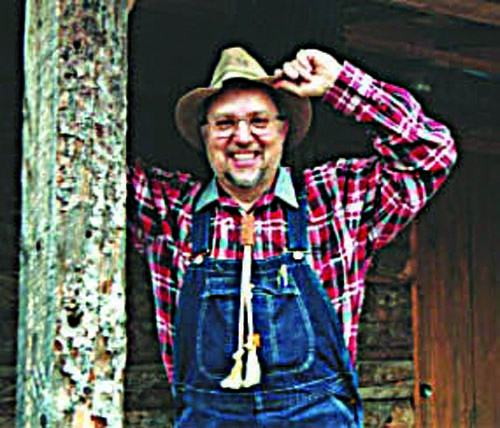
Firewood Follies

0

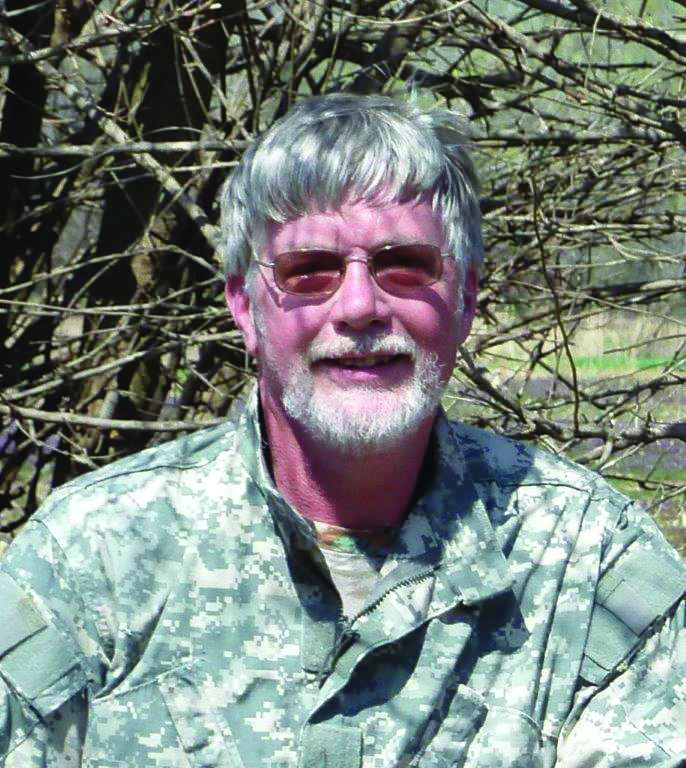
Ages ago when I wore a much younger mans clothes, I heated my home with wood. Cutting firewood is hard on the back but was always enjoyable to me, and I’ve had some interesting experiences whilst collecting my winter’s fuel, to include smashing the rear windshield out of my dad’s pickup with an errantly tossed chunk of hard hedge wood.
When I was still in my late twenties, my dad and I got permission to cut dead trees from a patch of Ohio woods that sat well off the road at the end of a long, hilly, winding tractor path. We spent a day cutting and dragging several trees into the alfalfa field that bordered the woods. The following Saturday we again wound our way up the rutted tractor path, looking forward to a rewarding day of simply cutting-up and hauling the now easily-accessible wood. All that greeted us as we entered the field were dozens of neat little rows of sawdust, the only evidence left after someone had cut up and made-off with all our firewood.
A few years later, I found a good-sized uprooted tree in the small woodlot I owned. The hole left in the ground beneath the roots was the size of a Volkswagen and three feet deep. With the tree already flat on the ground, I cut all the limbs and dragged them out of my way, then with the main trunk ready to chunk-up, I started cutting at the upper end and worked my way toward the giant root ball. I hadn’t made it very far when something happened to the saw, requiring a tool that was still at the house. I started to set the saw in the crater beneath the roots, but for some reason changed my mind and placed it on the ground a few feet away. When I returned with the tool, I thought I had stepped through a worm-hole into another dimension or something, cause the downed-tree and the saw were both gone. I wondered around in circles and finally stumbled onto the saw on the ground, but where was the uprooted tree? It took me awhile to realize that removing all the limbs and cutting off the upper part of the tree had allowed the weight of the root ball to stand the remaining trunk of the tree back upright into the crater. Good thing I decided against putting my saw there; even better that I hadn’t sat down in there for a nap!
The granddaddy of all firewood mishaps took place on a dreary fall Saturday while cutting down a huge dead wild cherry tree that stood just across the driveway from our house. My firewood cutting skills were the stuff of legends…. once I got a tree on the ground, but putting it there without catastrophe often eluded me. I clambered as high into the behemoth as I could get and encircled the trunk with a log chain, then attached an old hay rope salvaged from the barn and ran it yards out into the open field where dad sat waiting on the trusty Farmall H. Cutting was a slow process with a chainsaw barely half the length of the tree’s diameter, but a notch was soon cut toward the open field. As I cut on the other side, I motioned for dad to put tension on the rope and chain. The tree began to list slightly, so I cut a bit further then stepped back, figuring to watch our prize topple into the open field. However, the sound of cracking wood was drowned out by the sound of snapping rope fibers as the old hay rope gave up the ghost. Half a year’s firewood teetered and wobbled for a few seconds before crashing the opposite direction across the drive and onto the power lines, putting the whole neighborhood out of power, during an Ohio State football game no less, which was akin to loosing power at the nursing home during Wheel of Fortune. The neighbor’s anger was matched only by the power company guys who had to come out on a Saturday. It seems our firewood heated the entire neighborhood that day…continue to Explore Kansas Outdoors.
Steve can be contacted by email at [email protected].

Life cycles

0
Thayne Cozart
Milo Yield

We are in the midst of beautiful autumn. That means, we are watching life’s circles unfold. Last week, we had 4.5-inches of blessed rain and runoff. That moisture jump-started all the drought-dormant fall grasses and fall flowers. The Flint Hills are now ablaze in yellows of all descriptions — sunflowers of all types, broomweed, goldenrod and a host of others I can’t name. The purple Blazing Star plumes are abundant in the pastures. Some of the tree leaves are turning yellow.
Fall is a wonderful season for me. The crops get harvested. The livestock’s winter feed supply is (hopefully) in place. Ultimately, the leaves wither, die and drop to resupply soil nutrients for next growing season. The prairie tallgrasses brown off and go winter-dormant.
The worst thing about fall to me is that it’s followed by the long-cold nights of winter. But, thanks to life’s consistent life cycles, it’s reassuring to know that winter will eventually be surplanted by the new life of spring.
***
This past week, two good friends passed from the scene. And, our daughter and son-in-law had to put an end to the suffering of their faithful 15-year-old canine companion, Sami. She is now buried on our new homesite.
As we folks who are still kicking contemplate what we see as the finality of death, in actuality, spirituality aside, it’s just a natural part of our earthly life cycle.
That’s why I was comforted a bit, last week — and had to smile, too — when I was going through one of my dad’s cousin’s long-ago yellowed paper files and found the poem titled “Reincarnation.” It was noted as clipped decades ago from “Mother’s Magazine.” The author is unknown. I’ve never heard of the magazine either.
Here’s the poem for you to contemplate:
***
REINCARNATION
”What is, reincarnation?”
A farmer asked a friend ,
”Well, it starts,”
his old pal tells him,
“when your life comes to an end.
They wash your neck and comb your hair,
and clean your fingernails,
Then they sticks you in a padded box,
away from life’s travails.
Now the box an’ you goes in a hole
that’s been dug in the ground,
And reincarnation starts, my friend,
when they plant you neath that mound.
The clods melt down, as does the box,
an’ you who are inside,
And that is when you’re beginning
your transformation ride.
And in a while, the grass will grow
upon that rounded mound,
Until some day upon that spot,
a lonely flower is found.
And then a horse might wander by
and graze upon that flower,
That once was you an’s now become
your vegetative bower.
Well, the flower that the horse done ate,
along with his other feed,
Makes bone an’ fat an’ muscle ,
essential to this steed.
But there’s a part that he can’t use
‘an’ so it passes through,
And there it lies upon the ground,
this thing that once was you.
And if by chance I happen by
an’ see this on the ground,
I’ll stop awhile an’ ponder
on this object I have found.
And I’ll think about reincarnation,
an’ life an’ death an’ such,
And I’ll go away concluding,
‘Heck, you ain’t changed that much!’”
***
Words of wisdom for the week are: “As I watch this generation try and rewrite our history, I’m sure of one thing: it will be misspelled and have no punctuation.” Have a good ‘un.

Keeping your pumpkins longer

0
Photo Credit: Rich Bowen

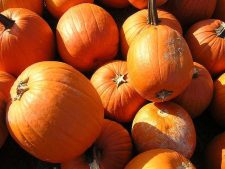
With fall approaching you might be looking to start getting your fall decorations ready. The first decoration that comes to mind for me is pumpkins. They come in all different shapes, sizes, and colors.

If you are wanting to buy your pumpkins early, I have a helpful tip for you. When selecting which pumpkins you are going to purchase you want to make sure the pumpkin wasn’t harvested too early. Pumpkin rinds develop a hard, waxy layer to keep it from drying out and shriveling up. An easy way to test the rind is to use your thumbnail. If it pierces the fruit easily, it was harvested too early and won’t last as long as others with a stronger rind. Pumpkins will also stay longer in cooler weather. If the weather starts to get hot again, you might want to pull your pumpkins into a cooler area to help them last.

If you enjoy carving your pumpkins for Halloween, have you considered saving the seeds and roasting them? When you scoop the seeds out, rinse them well to remove any strands of tissue that might remain and spread them out so they can dry completely. Once dry, roast them on a cookie sheet for 10 to 15 minutes at 350 degrees F. Just remember if you are carving your pumpkins the longevity of your pumpkins will be reduced. Once carved they will last about a week. So don’t carve them to soon before Halloween. If you have any questions feel free to stop by or contact me in the Washington office, at 785-325-2121 or [email protected].

Moving cold-sensitive plants indoors

0

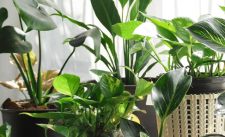
As fall weather approaches, it is time to start planning to bring cold-sensitive plants indoors says Kansas State University horticulture expert Cynthia Domenghini.

“Some gardeners move houseplants outdoors to bask in the summer heat and recover from the stress of an indoor environment,” Domenghini said. “Planning for their reentry to the house is important so houseplants have time to adjust to the changes in growing conditions.”

Domenghini said the first step is checking for insect pests such as mites and aphids.

“Insect pests can be dislodged by spraying the foliage with a hose,” Domenghini said. “If insects are found in the soil, soak the entire container in lukewarm water for 15 minutes.”

She recommends discarding plants with heavy infestation. Once moved indoors, continue to monitor for pests to prevent spreading throughout the house. Domenghini said plant growth will slow indoors and plants require less water and fertilization.

“Most houseplants will benefit from receiving water only when the soil surface is dry. Fertilization will likely not be necessary until spring,” Domenghini said.

Next steps include helping plants adjust to the lower light conditions indoors gradually to prevent leaf drop.

“Place plants near windows with the brightest light. Over several weeks move the plants further away until they’ve reached the desired location,” Domenghini said.

Supplemental lighting can be provided with grow lights. Domenghini said it is important to avoid cold drafts from doors and windows and heat from air vents. These extremes can put plants under stress.

Many houseplants come from tropical locations and favor humid conditions.

“Kitchens and bathrooms tend to be more humid areas inside the home. If space and lighting permits, this may be a good location for your plants,” Domenghini said. She also recommends grouping plants together to create a microclimate.

Cynthia Domenghini, Extenstion Agent