Really Good Bad Ideas
Kansas farmers rushed to grow hemp when it became legal, but now they’re ditching it
Fewer Kansas farmers are signing up to grow hemp each year, likely because of the diminishing demand for CBD oil. But hemp advocates say there are markets for hemp fiber and grains that could still be a boon for Kansas.
A drop in CBD oil production in Kansas appears to be causing a huge reduction in the number of farmers growing hemp.
When the state launched its program to oversee the newly legalized crop in 2019, more than 200 farmers signed up. This year, only 41 secured licenses from the state to grow it.
Before the drop in demand, most Kansas hemp was used to make CBD oil, a product used for health purposes and as an additive for food.
But industrial hemp experts say there is still a growing market for other hemp products — like fiber for clothing and grain for animal feed.
“There’s been a reduction in the number of growers and the number of acres on the CBD side,” said Sarah Stephens, CEO of Midwest Hemp Technologies in Augusta, Kansas. “But there’s been an increase in the number of growers and number of acres on the fiber and grain side.”
Hemp is related to cannabis, but hemp varieties have very low levels of the psychoactive compound THC.
The U.S. government legalized growing hemp in 2018, effectively making cannabidiol, or CBD, legal in all 50 states. The following year, Kansas began regulating the crop and a rush of farmers registered to grow it.
Supporters of hemp hyped it as a promising crop because of the popularity of CBD oil, especially in states that have not legalized medical or recreational marijuana use.
But the demand for CBD appears to have dropped off, and with it the need for hemp plants to produce it. The Kansas Department of Agriculture reported 90% of hemp produced in Kansas between 2019 and 2020 was used for CBD oil production. This year, that’s dropped to less than 5%.
Deputy Agriculture Secretary Kelsey Olson said the first few years of hemp production in Kansas were propelled by a strong CBD market. But since that time, more states have legalized the use of recreational marijuana, including neighboring Missouri. Now only a handful of states like Kansas completely prohibit the use of marijuana.
Legalized products made from marijuana may be more enticing than CBD to some customers.
“The landscape has changed over the last few years across the country,” Olson said, “I think that may have shifted some of the use.”
But the farmers and processors who have stuck with the crop contend that there is still value in other hemp markets. The plant’s fiber can be used for everything from clothing to biodegradable plastic alternatives.
Melissa Nelson is the co-owner of South Bend Industrial Hemp, a processing facility in Great Bend, Kansas. She said her business ignored the CBD fad and focused on processing hemp for fiber. The biggest market she sees now is using hemp stalks for stronger animal bedding than the standard straw bedding.
That decision appears to have paid off. Despite the drop in hemp farmers statewide, Nelson said her business continues to grow.
“More farmers,” Nelson said, “are growing for fiber and grain production instead of cannabinoids.”
Stephens said there are also hemp markets that Kansas farmers are not yet capitalizing on. For instance, Stephens said health food stores sell hemp grain food products. But not enough U.S. farmers are producing the grain needed for those products, so they are mostly imported from Canada.
To counteract that, Stephens said she’s part of a group of Kansans hemp producers working to educate farmers on the unlocked potential of the fiber and grain markets. If successful, Stephens said Kansas could become a major producer of the crop.
“We have the right landmasses,” Stephens said, “the right farmer know-how, the right seasons and temperatures to lead in this industry.”
Dylan Lysen reports on politics for the Kansas News Service. You can follow him on Twitter @DylanLysen or email him at dlysen (at) kcur (dot) org.
Scientists spice up their mosquito weaponry with mustard
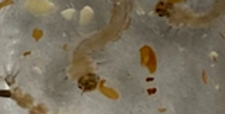
Scientists with the Agricultural Research Service have shown that seed meal from plants in the mustard family can kill mosquito larvae, which start their lives in stagnant water before emerging into winged adults that take to the air in search of a blood meal.
The findings, recently published in the journal Scientific Reports, open the door to a biobased approach to controlling the biting insect pests. Adult female mosquitoes feed on the blood of people and other animal hosts to produce eggs. But more than just an itchy nuisance, the pest’s bite can also transmit debilitating diseases.
At the ARS National Center for Agricultural Utilization Research in Peoria, Illinois, a team of scientists has set their sights on the discovery and development of environmentally friendly approaches for controlling mosquitoes at the habitat level and for individual consumer applications.
On a habitat basis, they’re focusing on products derived from plants and other natural sources that may offer an ecologically friendly way to target mosquito larvae, the pest’s most vulnerable life stage.
Some consumers may be hesitant to apply synthetic insecticide products, so alternative compounds that naturally repel or kill mosquitoes are also being examined. This research push also addresses another concern: preventing the onset of mosquito resistance to synthetic insecticide ingredients, noted Lina Flor-Weiler, an entomologist with the ARS center’s Crop Bio-protection Research Unit.
Together with ARS co-authors Robert Behle, Mark Berhow, Susan McCormick, Steven Vaughn, Ephantus Muturi and William Hay, Weiler is the first to report the potential of mustard seed meal to kill mosquito larvae, which feed on bits of organic matter and microorganisms in shallow bodies of water such as ponds, swamps, kiddie pools, old tires, tree hollows and other aqueous sites.
As larvae, the pests are largely confined to a concentrated area after hatching from eggs deposited there by adult female mosquitoes—a scenario that makes for an ideal pre-emptive strike against the pests before they can mature, mate and bite people, birds and other animals to start the whole miserable cycle over again. Sometimes, the environmental sensitivity of these areas or the presence of non-target organisms warrant a non-chemical solution to control mosquito larvae, such as with formulations that inhibit their growth, suffocate them or infect them with specialized bacteria.
In studies begun in 2022, the researchers examined the larval-killing potential of isothiocyanates, a group of plant defense chemicals that are released when mustard seed meals are soaked in water. “The mustard plant stores inactive defense compounds (glucosinolates) in the seed that can be converted into biologically active isothiocyanates by enzymes called myrosinases,” explained Hay, an ARS plant physiologist. Prior research by other groups has shown that isothiocyanates can kill insect pests and soilborne parasites and pathogens, including root-damaging nematodes and disease-causing fungi, he added.
However, there was little in the existing scientific literature about the potency of these compounds against medically important insect disease vectors like mosquitoes, noted Weiler.
To learn more, the researchers prepared seed meal from four types of mustard family plants (brown mustard, pennycress, garden cress and white mustard) and added varying concentrations of them to small beakers of water containing larvae of Aedes aegypti mosquitoes, which can also transmit dengue, yellow fever, Zika and other diseases. The researchers also exposed larvae in separate beakers to one of three types of isothiocyanates extracted from the meals. In all trials, they monitored the effects on the larvae at 24 and 72 hours and documented the highest isothiocyanate concentrations needed to kill at least 50 percent of the immature insects.
Of the four seed meal types, garden cress proved the most lethal, killing more than 95% of mosquito larvae after only 24 hours and 100% in less than 48 hours. All seed meals were toxic to the larvae, except for a pennycress treatment that had been heated. This was intentionally done to deactivate myrosinase enzymes (which are necessary for the production of isothiocyanate) and confirm that their absence in the seed meal allowed the larvae to survive.
More studies are planned, the researchers said, but the early evidence thus far points to a promising bio-based alternative to synthetic insecticides that can be derived from an inexpensive agricultural byproduct of processing mustard seed into oil and spices.
As reported in the High Plains Journal.
Marshall at State Fair: Mental health for farmers a major issue
Kansas U.S. Senator Roger Marshall, M.D. spoke on Saturday at the Kansas State Fair about the importance of caring for your neighbors with mental health issues, especially those working in agriculture.
“September is Mental Health Awareness Month,” Marshall said. “Specifically, we’re trying to educate folks about the challenges in agriculture. Farmers and ranchers have an almost four times higher suicide rate than the general population. The pressures are for real. Many of us, I’m a fifth-generation farm kid, many are six and seven generations out here. The pressure to keep that farm alive and well for future generations is enormous.”
It’s getting harder and harder to go from pencil to profit in production agriculture. Costs are not what they were even a few years ago.
“Interest rates alone, the average farmer has about $1 million operation loan,” Marshall said. “They were paying two percent interest on that particular loan three years ago and now it’s, I’m hearing nine and ten percent. That was the profit margin in their entire operation. Most farmers and ranchers are not having any profit left. At the end of the day, they’re working for free.”
Marshall said cultivating relationships with those farmers that live near you is important to keeping them alive and healthy.
“Call 988 for the suicide prevention hotline, if they need it,” Marshall said. “Most important, just be a good neighbor and reach out. When you see your neighbor struggling, invite them back to church. Invite them to a ballgame, invite them to go get some lunch with you. Be a good neighbor.”
According to Rural Minds, pre-pandemic in 2018, nearly two thirds of rural counties in America did not have a psychiatrist.
Kansas fall wheat planting looks like repeat of last year’s dry season
In talking with wheat growers from southwest Oklahoma up well into northern Kansas, I’m hearing the same story over and over again. “It’s dry, dry, dry.”
Here we go again.
If I didn’t know better, I’d say we slipped back in time and it’s September 2022 all over again when we had slim odds of getting a wheat stand. And it got worse every day you waited.
This is kind of a big deal because the No. 1 factor affecting yield is getting a stand. It’s said if you can get your wheat up, you’ve got 90 to 95% odds of harvesting something. This is no guarantee that you’ll have great yields, but you’ll at least have something.
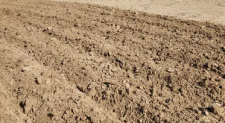
In a rainfed economy, this is something we periodically have to deal with—rains that just don’t come when they’re supposed to. We farmers have devised numerous ways to alter the course that Mother Nature tries to force us down. Here on our farm, one of our primary objectives through the summer fallow period is to protect the topsoil moisture at all costs. To do that through the summer fallow period we use a reduced tillage program combining herbicides for weed control with one or two or three deep tillage operations using our 6-foot subsurface blade plow that preserves the crop residues from the previous crop.
Research from the ‘60s and ‘70s on stubble mulch tillage showed in severe heat and drought, the top inch or two of your soil likely will dry out but the next inch or two down will stay semi-moist. Finally, when you get to the plow pan, you have decent enough moisture to get the wheat up. This past fall we had a failure rate of 1%. On the vast majority of our ground, we had decent stands and had to plow up only 1% of what we planted.
While it is still early for planting wheat, some farmers I’ve talked with are considering other alternatives. Already they don’t have enough topsoil moisture to get their wheat up. And that combined with wheat prices significantly below cost of production is leading them to think about maybe not even planting at all. Plus, many wheat farmers can’t find adequate supplies of seed wheat. And what they can find is expensive. And the weather forecast is equally discouraging.
Sure, we’ve got a 40 and 50% chance of rain 5 and 6 days out. But do you want to go on the operating table with those odds … especially when the trend is solidly going the opposite direction?
So just exactly where is the weather headed? Bill Turner, meteorologist with NOAA in Dodge City, notes the Climate Prediction Center says over the next three months of September through November, we should look for temperature and precipitation to be “near normal.”
Turner says there is no winter weather outlook yet, but El Nino is establishing and El Nino winters tend to favor heavier rain/snow across the central and southern Plains, including Kansas.
But what does Turner really think? “Personally, I have no faith in these long-range predictions. Anything past about 14 days is essentially useless in my opinion. There are just too many variables involved to make an accurate prediction. As an operational meteorologist that has been doing this for 26 years, I think useful predictability ends at about 10 days,” he concludes.
Vance Ehmke is a farmer in Lane and Scott counties in Kansas. He runs a seed business and is a former editor for Progressive Farmer. Ehmke also is a past president of the Kansas Association of Wheat Growers. As reported in The Hutchinson News.