Thursday, February 26, 2026
Home Blog Page 625

Sparks Burger Co. ignites passion for locally sourced food in Kansas

0

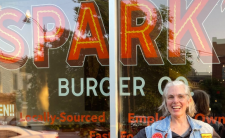
A vegetarian pastry chef opens a burger restaurant in the heart of Kansas cattle country—it sounds like the ultimate oxymoron or even the beginning of a corny joke, but for Genevieve McGregor it was a dream that became reality.

After years of baking sweet confections in the food service industry, McGregor felt the pull to open a restaurant that serves fast food that is locally sourced and sustainable. She has always loved making desserts, but more than that, McGregor loves the commercial kitchen atmosphere, working with a team of like-minded people to build a business she is passionate about.

“When I got to the point where I wasn’t feeling like making truffles and eclairs all the time, fate gave me an idea that incorporated everything I love about what I’ve dedicated my career to, which was serving people and the community, taking care of my co-workers, working tirelessly,” she said.

McGregor lived in Boulder County, Colorado, for 32 years and was raising a teenage son as a single mother when she started brainstorming on this restaurant idea, but she knew the concept did not make sense for the area she was living in. The community, which is north of Denver, is an extremely expensive area to purchase real estate and for McGregor, it was not an option.

“Additionally, because of mass development in many places in Colorado, I think the newer residents have lost touch with the historical ranching history and legacy of those areas,” she added. “To say locally sourced doesn’t resonate with people there as much as it does in an agricultural state like Kansas.”

McGregor said she also had trouble finding family-owned ranches that were in operation and had products to sell at the quantities and prices she needed. So, she made the difficult decision to take her locally sourced restaurant model and bring it to an area where it would flourish. After some research and travel, she decided on Manhattan, Kansas, partly due to its proximity to farms and ranches in the Flint Hills.

“There’s one thing more beautiful here than anywhere else, and it’s the people,” she said. “They are the most hard-working, honest, humble, down-to-earth people and I’m blown away. I felt a real connection and resonance with the community.”

Apart from the courage it took to pursue this dream, McGregor made an incredible sacrifice by moving away from her only child, who stayed in Colorado with his father while she moved to Manhattan to start her culinary venture. Sparks Burger Co., located at 405 Poyntz Avenue, was opened on Mother’s Day 2023 as a gift to her son to show him he can do anything he puts his mind to.

The restaurant serves American food commonly associated with fast food restaurants—including hamburgers, hot dogs, waffle fries and milkshakes—but in an approach that is counterintuitive to the way most view fast food. McGregor calls her concept fast food regeneration.

“I’m trying to take the food service industry and make it as sustainable and ethical as possible,” she said. “How can we take a fast-food meal, which historically has been corrupted both nutritionally and environmentally and make it in a way that is ethical and sustainable?”

McGregor’s burger shop is even more unique because she has been a vegetarian for the last 30 years. However, she knew from the get-go that her establishment would need to cater to carnivores for it to be successful. Her concern was finding products from operations that fit the criteria of ethically and sustainably sourced. Perhaps most surprising of all, McGregor’s diet has evolved through the design of the menu and opening the restaurant, so she is no longer a strict vegetarian. She slowly started eating meat again, but still tries to limit her intake and only eats meat in moderation.

“When I started eating red meat again I realized beef was what I had been missing,” she joked. “And I do feel better knowing that these animals were taken care of and they only had one bad day. It’s still hard for me to be a part of an animal dying, but when I decided to solidify this concept, I found a rancher in Missouri who was kind enough to let me go to her slaughterhouse and witness the whole process from start to finish. Part of why I did that was to reconcile with myself and see how it’s done and I’m OK with it.”

Every animal product served at Sparks Burger Co. is locally sourced within 120 miles of the restaurant. McGregor said she purchases her ground beef and roasts from Leffler Prime Performance in Americus, Kansas; bacon from R Family Farms in Lebanon, Kansas; dairy from Hildebrand Farms Dairy in Junction City, Kansas; hot dogs from Pacheco Beef in Alma, Kansas; cheese from Alma Creamery in Alma, Kansas; seasoning from Cowboy Prairie Dust in Rossville, Kansas; honey from Valor Honey in Manhattan, Kansas, and eggs from Eagle Ridge Ranch in Abilene, Kansas.

“I would have never in a million years thought a vegetarian would be in a slaughterhouse or in a field shaking a rancher’s hand and making a deal for 500 pounds of ground beef,” she mused.

Apart from the desire to serve sustainable and nutritious fast food, McGregor also made it part of her mission to provide a healthy work environment for others in the food service industry. She pushes back against the idea that there is currently a labor shortage.

“I think there’s plenty of people who want to work and I don’t think people are innately lazy or want to sit at home,” she explained. “People in food service love to be busy and we love to work. We just don’t want to work for a corporation who takes advantage of us. My hope is that if I give people the compensation as close to what they deserve as what I can, but also the environment that supports them, that they would be attracted to it and would want to stay.”

Although she has long-term plans to make Sparks Burger into a chain at some point, McGregor is currently focused on dedicating every day and night to the Manhattan establishment. She hopes after two years, she can create a cookie cutter version of the Manhattan location in a new town, with a different local food supply chain.

On its surface, the hot and hectic atmosphere of a bustling restaurant kitchen during a busy dinner service might seem like the exact opposite of a multi-generational ranch in the Flint Hills, but when brought down to their foundations, these two industries have striking similarities. The rancher and the chef are passion-driven individuals who put in the time needed for their businesses to succeed and they have common goals to feed the world. The desire to work in their industry is in their blood and when the rancher and chef come together it’s a beautiful thing.

“I think it’s a calling for both of us and it’s very divinely designed that there are people whose mission in life is to grow food and that there are people in life that their mission is to make and serve food,” McGregor explained. “How else will the human race survive if people aren’t interested in those two things? I feel a real kinship with these people and I’m just so honored to promote them because they do such noble work.”

As reported in the High Plains Journal.
In Kansas, child care can cost more than a mortgage

0

Ann Elliott runs one of the largest childcare centers in all of Kansas.

The Family Resource Center, or The Center, in Pittsburg, Kansas, is licensed to care for over 350 kids At $145 a week for toddlers, $135 a week for 30-month to 5-year-olds, and $185 a month for preschool — parents might assume Elliott and her staff are rolling in money.

They aren’t. They lose money on child care and grants help offset the loss.

“It doesn’t pay for an employee to make a living wage,” Elliott said. “We’ve been around 25 years. So somehow we’re continuing and we will continue as long as we can.”

Kansas is at a crossroads, childcare providers and experts say. Childcare slots are hard to come by and they are expensive. Some parents quit their jobs because childcare eats up entire paychecks and it’s just cheaper to be a stay-at-home parent. Others are paying more for child care than their mortgage.

Finding infant care is especially bad. Elliott said some kids have spent more than a year on her waiting lists.

“We tell people if you’re thinking about getting pregnant, get on a waiting list somewhere,” she said. “Get on a bunch of waiting lists and you need to do it right away.”

Providers say if nothing changes more day cares will close down and more staff will leave the field. Despite being an in-demand business, providers say they don’t make much money, they struggle to hire staff and just starting a business can be a headache.

Want to run a childcare business in Kansas? ‘It’s just hard’

Elliott started her day at 5:30 a.m., cooking for the kids. She’s been cooking for the last six days because the old cook left and they haven’t been able to hire a replacement yet.

It has become a lot harder to find staff at The Center, and this is a recent problem. Those who do apply might have little experience and need to be trained from scratch.

These jobs don’t always pay well, so The Center offers perks to keep people happy, like half off of child care and $1,000 bonuses every four months. But the wages are so low that staff members themselves qualify for childcare aid from the Department for Children and Families.

“Which is super, super sad,” she said.

Childcare businesses can struggle to offer pay raises because the cost of caring for kids can exceed what parents can afford.

Infant care is the most desperately needed type of care. State regulations require one caregiver for every three infants. At $200 a week per baby, a provider loses money paying someone just $15 an hour.

Providers say the local Walmarts can pay more, and it comes without the stress of having to take care of children all day.

At The Center in Pittsburg, Elliott said she loses $9,500 a year on every infant slot and $7,000 a year on every toddler slot. The business stays afloat because of grants that can offset the costs.

Stanton works with communities to find fixes to their child care problems. She said one common barrier to success is start-up costs.

Paying for a brick-and-mortar facility is not cheap and having an in-home business does not guarantee savings.

“You think you’ve got a handle on everything,” Stanton said.”(Then) you think, do I have enough sippy cups? Do I have enough wipes and diapers? Do I have enough cots? And what about cribs? And how do I feed 10 kids all at once? Do I just put them up to my table? Oh, wait, they can’t sit at my dining room table.”

It’s those expenses and limited income that might make some people’s time in this business limited. Multiple providers said they are seeing people retire with no workers to take their place, or younger providers open up only to close once their children age out of care.

Life of an in-home provider

That might be what happens to Trinity Johnson, who runs her business in Salina.

She used to work at an office job but she opened her own business once her daughter was born. The first few months were rocky, she said, as it is for most providers.

A state task force surveyed 500 Kansans about common issues with child care, one common complaint for providers was how complicated it was to start up a business. Licensing is slow and confusing, and it can be difficult to find useful information about the system.

Johnson stuck with it because she loves this work and dreams of opening her own child care center, but that might not happen. It’s financially risky and she is limited in how much more her business can currently grow.

“In order to expand out, I either have to hire another person or buy an actual building and I just don’t make enough to afford to do that,” Johnson said. “Right now it works and I pay my bills.”

Raising rates also isn’t something some providers want to do. Multiple providers told the Kansas News Service that they need to charge more to make money and pay higher wages, but if they do charge more, many families would be priced out.

The statewide survey also found that the subsidy from the Kansas Department for Children and Families offered to low-income families does not give them enough money to comfortably afford child care. Middle-income families also make too much to get the subsidy and have to pay by themselves, but they generally don’t make enough to comfortably afford it.

Tiffany Mannes, a provider in Johnson County, says she has some room to raise rates, but not much. She knows some families don’t have the financial means to pay more.

“We have a family who has three children in care. They pay more than a mortgage for child care,” she said.

Mannes has been in business for 20 years. She has a group license and runs her business with two other people. That helps families because a caretaker can take a sick day and the business will still be open. But having to pay three people makes it harder to make any profit, and she said her business has grown about as large as it can.

She can’t take on more kids because of state regulations. And she looked into a larger center but didn’t think the big cost would be worth it.

Mannes calls child care essential work. It helps kids develop, it helps other businesses grow. But no matter what she does, the money she makes just doesn’t seem to go far enough.

“I participate in the National Food Program, which some providers don’t,” She said. “I accept (a child care subsidy) from DCF, which a lot of providers don’t. To my knowledge, I’m doing everything that I can to be competitive and earn a living wage.”

Kansas is currently trying to address the issue.

The state is creating a new government office that will centralize state childcare programs, which should make them easier to access. Gov. Laura Kelly did set aside $53 million for one-time bonuses for childcare workers, which could be as high as $2,500. And there is a childcare subsidy offered through the Department for Children and Families, but participation among providers and families is low.

Kelly Davydov is executive director of Child Care Aware of Kansas. She is working on one possible solution to the infant care shortage.

Her group is helping coordinate a pilot program, called Baby Steps, that gives away thousands of dollars to providers to offset losses associated with infant care.

If a provider agrees to take on more infants, the program will provide an annual stipend so the business can raise wages to $15 an hour. A provider going from zero to one infant would get about $9,600. Going from one to two infants brings in $13,500 and jumping from two to three means $17,000.

So far, 53 providers are enrolled in the program and more than 50 new infant slots have opened up.

Davydov called it a dual-pronged approach that addresses both pay and capacity at the same time, and she said innovative ideas are needed to fix this problem. But even she worries this one pilot program isn’t enough to meet the extreme demand.

The Kansas News Service spoke with a dozen people in the childcare field, and solutions to the problem varied, but they generally started with the idea of the public, businesses and governments helping offset the costs of care.

That might mean legislative reform.

The Center in Pittsburg, Kansas, is licensed for more than 350 children at one time.

How are other states addressing childcare shortages?

Lawmakers return to Topeka in January and it isn’t clear what solutions they could pursue in the next legislative session.

Earlier this year, legislators did approve a bill that stripped away some childcare regulations. That bill would have changed adult-to-child ratios letting businesses take in more kids. Both the House and Senate passed the bill, but the governor vetoed it over fears it put children in unsafe conditions.

The Vermont State Legislature went even further, approving a new payroll tax on businesses and workers to increase funding for the childcare system.

Whatever the solution, most people are feeling optimistic Kansas is on the right path to find a solution, a statewide survey said. Statewide data did say there are 6,848 more childcare slots in July 2023 when compared to May 2022.

For providers like Elliott, the multiple decades in the field have all been worth it.

“It’s just the kids,” she said. “I love listening to them walk down the hall at night talking to their parents (about their day). And you know, their parents will say, ‘You did what?’ … I just love them.”

Blaise Mesa reports on criminal justice and social services for the Kansas News Service in Topeka. You can email him at [email protected].

The  Kansas News Service. is a collaboration of KCUR, Kansas Public Radio, KMUW and High Plains Public Radio focused on health, the social determinants of health and their connection to public policy. 

Treasurer: Search for unclaimed property; enter to win $529 at Kansas State Fair

0

More than $500 million in unclaimed property and a chance to win $529 into a Learning Quest 529 education savings account will be offered at the State Treasurer’s Office booth at this year’s Kansas State Fair, according to State Treasurer Steven Johnson.

“We are excited to bring the State Treasurer’s Office to the Kansas State Fair once again this year,” Johnson said. “We invite all fair-goers to stop by our booth in the Meadowlark Building to search their name in our unclaimed property database, and enter our giveaway to win $529 into a Learning Quest 529 education savings account for themselves or a loved one.”

Johnson’s office administers the state’s unclaimed property program, which currently holds more than $500 million waiting to be claimed. One in 10 people is estimated to have unclaimed property, which could include unpaid life insurance benefits, forgotten bank accounts, and safe deposit boxes. Kansans can search the online database any time at https://KansasCash.ks.gov.

The State Fair also coincides with September’s recognition as College Savings Month. Johnson’s office will have information at the booth on the savings programs administered by his office, including the Learning Quest 529 plan, KIDS matching grant program, ABLE savings plan, Kansas ScholarShop, and First-Time Home Buyer Savings Accounts. Staff from Johnson’s office will be on hand to answer questions about these programs, and visitors to the booth will be invited to enter to win $529 towards a Learning Quest 529 account. More information on these programs is also available on the Treasurer’s website at https://KansasCash.ks.gov.

Determining how male behaviors, environment affect offspring in livestock

0

Lacey Luense, Ph.D., spent the first 10 years of her career using live animal models to understand the mechanisms of the sperm epigenome and its role in human disease and development. But now, she is taking her epigenetics research program in a new direction.

Luense is getting back to her first love—agriculture—as an assistant professor in the Texas A&M College of Agriculture and Life Sciences Department of Animal Science since August 2022.

“I grew up in northwest Iowa in a rural area, and my family owns a steakhouse,” she said. “All my friends lived on farms, and I was in 4-H, so I grew up in an agricultural background. I knew from an early age that I wanted to study genetics and always thought I would go through graduate school and return to Iowa to apply my understanding of epigenetics to agricultural questions.”

But her path took her in a different direction.

She earned her bachelor’s in biology at Augustana University in Sioux Falls, South Dakota, her master’s in genetics at Iowa State University and her doctorate in molecular and integrative physiology at the University of Kansas Medical Center.

She then spent the next 10 years, first as a postdoctoral fellow and then as a research associate at the University of Pennsylvania School of Medicine.

“I ended up working with mice, which is a great system to understand better the basic mechanisms of genetics and epigenetics,” Luense said. “But I wanted to come back to the initial drive that I had while in high school and college to bring this area of study back around to answer agricultural questions.

“Texas A&M is a wonderful place to do that type of research. Obviously, the animal science program in the College of Agriculture and Life Sciences is extraordinarily strong.”

The study of epigenetics identifies changes in gene function that are not due to mutations but rather how the DNA is packaged in the cell and turned on or off in the wrong conditions.

“This is often influenced by the environment, so things like diet, drugs, alcohol, heavy metals, toxicants,” she said. “All sorts of things can influence the epigenome or how our DNA is coiled in the cell and then turns genes on or off. And that all affects disease and development.”

For Luense, her research interest is with the germ line epigenome and how DNA in the sperm of cattle or humans, the paternal epigenome, can be influenced by the environment.

“We know the environment can affect the epigenome and absolutely alter how the DNA is packaged. I am extremely interested in using the basic mechanisms we are examining now and applying this knowledge to other questions such as climate change, drought, increasing temperatures or health.”

She said the current hot temperatures will continue to affect ranchers throughout the state, and her goal is to understand how these environmental stressors impact reproduction.

“These are problems Texans need to understand to help their production operations,” she said. “By understanding the basic mechanism, looking for biomarkers and understanding how this works, we can hopefully improve the fertility of bulls in the future.”

Luense said she is trying to understand how the environment can influence offspring or the early embryo. For instance, there are more long-term implications to look at, such as implantation – how does the paternal epigenetic regulate the embryo to allow it to grow normally in the uterus? Does it affect long-term health and development, and potential disease for the offspring, whether children or livestock?

Scientists have understood a mother’s influence on offspring but are becoming more aware of how epigenetics within sperm can have a strong influence. Luense is interested in a deeper understanding of how male epigenetics impact progeny.

She said one of the important things she is excited about at Texas A&M and in animal science is using these technologies and knowledge to look at larger animals.

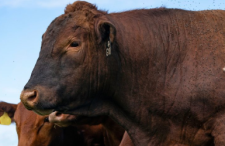
One of her first projects will look at the epigenome and sperm of cattle to understand fertility and how it relates to embryo development, long-term health and development of the offspring.

While she is now concentrating on livestock, Luense said an exciting avenue would be use her large animal research models to study human disease and development.

“I’m excited to have dual paths of translational value, to understand how the epigenome affects agricultural production and then utilize that for understanding human fertility and human development,” Luense said. “I would like to develop this into a research program where we can make impactful findings to multiple stakeholders on the animal production and human sides.”

She said there are similarities between bovine and human sperm and embryos, as well as more long-term development, and the discoveries in cattle can provide a better understanding of humans.

Luense will continue to use mice models in her research because they can help answer some questions quickly, but she hopes to answer more applied questions by studying cattle.

“It’s been a really nice opportunity to come full circle—my background, my training and then being able to come back and pull everything together in these different research areas,” Luense said. “We can study both agricultural questions, but then also gain an understanding of human health and disease.”

She has developed strong collaborative studies with experts at Texas A&M who have researched cattle, sheep and other animals within different production systems.

Luense is also passionate about developing the next generation of scientists as a mentor for students.

“That’s something I find really important, to mentor our students to become scientists, extension agents and teachers and to help them get the training and encouragement they need.”

As reported in the High Plains Journal.

KDA to Host 17th Annual Kansas Grape Stomp at the Kansas State Fair

0

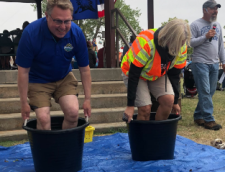
Feel the squish of the grapes in the time-honored tradition of grape stomping as you help celebrate the grape and farm winery industries in Kansas. The Kansas Department of Agriculture will host the 17th annual Kansas Grape Stomp on Saturday, September 9, at 1:00 p.m. in Gottschalk Park at the Kansas State Fair in Hutchinson.

Gather around the grape tubs to watch state and local leaders and others stomp grapes to salute the Kansas grape and farm winery industries. The competitive stomp-off will lead the event and an open stomp for all Kansas State Fair attendees will follow.

As of August 2023, there are 50 farm wineries throughout Kansas.

KDA is committed to advocating for and promoting the agriculture industry, the state’s largest industry, employer and economic contributor, and encourages all fairgoers to attend the grape stomp to have fun while learning about the grape and farm winery industries in Kansas.

For more information about the event please contact Robin Dolby, From the Land of Kansas marketing coordinator, at [email protected] or 785-564-6756.