Friday, January 23, 2026
Home Blog Page 134

First Responders In New Line Of Fire

0

Trent Loos
Columnist

As a kid I was fascinated with magicians; so much so that my folks actually bought me an entire magic kit and I would perform tricks for anyone who gave me the attention I needed. It turns out that there is no such thing as “magic” but only a distraction of your attention for a split second that allows things to be different than it appears they really are. It also turns out that magicians are still at it and, in this case, I am referencing those that put on a tie and go to DC every Monday. The majority of today’s policymakers would make even Houdini himself jealous.
This past weekend my U.S. Congressman from Nebraska was hard at it in his weekly distraction that he called “Reviving Energy Affordability.” For example he said this:
Because of the importance of biofuels to Nebraska’s economy and energy abundance, I supported inclusion of a provision in the House-passed reconciliation package to extend and improve the 45Z biofuels production tax credit through 2031. This measure directly supports farmers in the Third District and equips producers with the certainty to invest and power the future of sustainable aviation fuel and other clean transportation fuel.
Okay, let’s break this down. The distraction is the importance of ethanol to Nebraska and the overall economy but FACT: In Nebraska alone, as he also said in his weekly piece, ethanol generates $8.18 billion in sales. No doubt that is important. What he distracts you from in the magic show is that currently the big oil industry makes more money per gallon of ethanol sold than the farmer does. Stop and think for a moment, big oil is responsible for pricing and distribution. So when would the product they produce cost at the pump between 30-50 cents more per gallon? Say it with me: TAX CREDITS.
Right of out the chute let’s ask the real question: who needs a tax credit? Only the wealthy of the world like Warren Buffett, who regularly brags about the tax credits he and Berkshire Hathaway receive annually. To make matters worse, if these folks got a subsidy payment they at least would have to pay tax on the payment but instead a tax credit is a deduction when means it is worth double the value of a subsidy payment. Every time someone from DC talks about supporting the bio-fuels industry it involves a tax credit, usually 45Q or 45Z. They are bankrupting the American Public while not providing them more affordable energy or fuel.

What Smith is really saying, without saying it, is this Reconciliation Bill supports continued funding of things like compressing CO2 into a pipeline and sending it 1.5 miles deep into earth. It has now come to my attention that in order for the ethanol plant to compress the CO2 to 2200 PSI, they must use 50% equivalent of the energy produced by that ethanol plant. To make matters worse, that is 1/3 of the energy required to bury it deep into the earth. So just a little Cowboy Arithmetic says that it costs 200% of the energy produced to make carbon sequestration below ground happen.
Adrian Smith says dangerous CO2 pipelines are currently being buried all over your 3rd district and your constituents are being told “Pipelines are safe.” CO2 pipelines are not the same as all other pipelines. CO2 is the very element used to kill pigs, turkeys and chickens in new processing facilities. Depending on a variety of parameters, the kill zone for all living things can be up to 6 miles and this odorless, colorless gas coming out of a compressed pipeline will expand up to 500 times it’s state in the Super Critical pipeline that is being built.
We don’t need to generate theories on this, we have documentation. Last week I had a broadcast with Jack Willingham who is the Emergency Management Director for Yazoo County, Mississippi where they had a CO2 pipeline rupture on Feb 20, 2020. Jack called it “a perfect storm” and luckily no lives were lost but nearly 80 people were hospitalized. He told me that the plume model given to them by the construction company was absolutely incorrect. For the record, that CO2 sequestration company is no longer in business. Folks need to understand that CO2 is 1.5 times heavier than air whereas natural gas is 0.5 times as heavy. That means that natural gas goes straight up while CO2 crawls on the ground like a snake, sucking the oxygen out of anything in its path.
I must give a major tip of my hat to Jack Willingham as he recognizes the most grave danger with CO2 pipelines is the risk to all of the first responders who have not been educated or equipped with life saving skills. Jack has organized training systems in Mississippi to let the firefighters and EMT’s know that CO2 will kill you in 2 minutes with a concentration of 5% if you are not prepared and take precautions.
Back to where I started, the magicians are asking us to look in their left hand at the tax credit benefits to the corporations who pilfer the public for profit while he DOES NOT HAVE ONE FIRST RESPONDER CREW THAT REALIZES THEY ARE IN A WHOLE NEW LINE OF FIRE.


Insight: Waiting On Wheat

0

Kim Baldwin,
McPherson County farmer and rancher

June is the month that tests my schedule and patience as we await the start of wheat harvest. For years my replies to a variety of invitations and requests have always defaulted to something to the effect of, “That’s June, so if we’re harvesting wheat we won’t be able to.”
June is the one month out of the entire year where I fully exercise being noncommittal.
Our June days are determined by whether the wheat is ready or not. If it’s not ready, a last-minute invitation to have a friend over or spend a few hours at the city pool are possible. But if the wheat is ready, the day has already been intentionally made clear and our efforts are directed to getting the wheat out of the fields as quickly as possible ahead of any summer storms.
We generally have a pretty good idea of when our wheat harvest will take place on our farm based on history and memories posted on social media. Yes, some years we’ve started harvest earlier than normal, but we have established a “normal” harvest window give or take a few days based on the weather.
But there are exceptions, and this year is definitely one of those. We’ve passed the halfway point of the month of June, and with that, we have also passed our “normal” harvest window.
Normally we are in the thick of wheat harvest by this time of the month. I often joke that we will more often than not celebrate Father’s Day with naps because everyone is experiencing a level of tiredness that only occurs during wheat harvest.
But not this year. We are still quite energized at this point in the month mostly because we have had so much rain. The rain has essentially halted all work. From finishing up soybean and sorghum planting to swathing hay and harvesting wheat, we have been unable to get into the fields simply because it’s too wet.
We generally have completed our wheat harvest by the Fourth of July, and I begin thinking about and planning some family activities we’d like to do with the kids before they return to school in August. But this year, that might be pushed back as there’s a pretty good chance that we’ll still be harvesting wheat in early July.
I know the summer heat will soon turn up. I know that the Kansas winds will blow again. And I know that soon we will have dry fields and it will be “go time.”
The combines are ready. The trucks are ready. The workers are ready. And as soon as we can go, we will.
But until then, I’ve decided to extend my practice of being noncommittal into a portion of July as well. Afterall, our wheat harvest is turning out to be anything but normal this year.
“Insight” is a weekly column published by Kansas Farm Bureau, the state’s largest farm organization whose mission is to strengthen agriculture and the lives of Kansans through advocacy, education and service.

Just a Little Light: Dads, Moms, Kids and Tables

0

Dawn Phelps
Columnist

I recently listened to a brief video by a father who helps tuck his two young daughters in bed each night. He talked about how, when he tucks them in bed, he likes to ask them, “What was the best part of your day?” He wants to remind them to be thankful for the good things in their lives.
The dad told the story of a Sunday when their family had attended church in the morning. Afterwards the mom prepared a delicious lunch which included dessert. During the afternoon, the family watched a movie and played video games together. The dad described it as an overall enjoyable day.
So, that evening, when he was telling his daughters goodnight, he asked one of girls about “the best part of the day,” and she immediately replied, “lunch!”
When he asked her, “why,” she replied that it was because they had “all talked together.”
Then he asked his other daughter the same question. “What was the best part of your day,” and she also replied, “lunch!” When he asked her “why?” she replied, “because we all sat around the table and laughed and told stories!”
Perhaps the dad expected the daughters to mention the delicious dessert their mom had made or the movie they had watched. But instead, the highlight of the day was sitting around the table after lunch, talking, laughing, and telling stories!
That father’s story reminded me of my own childhood memories of eating and talking around a big table in years past where I grew up in Tennessee. There were 10 of us—my parents, seven kids, and my grandmother.
We had hot homemade biscuits in the morning and cornbread at noon and for supper. And we also laughed and had many conversations around our old table.
Our daddy was a preacher and took the scripture about not too much “foolish talking and jesting” seriously, so we seldom let our “foolishness” get out of hand. But we still had fun talking and telling stories—special time which made special memories.
After I grew up and married, I bought a sturdy old table with six leaves. We could seat 18 people comfortably around it and “squeeze” in a few more. On many occasions, our family, extended family, and friends filled that table plus another table in the kitchen! Those fun times and conversations are now priceless memories.
One of Tom and my favorite “table” memories was when Devin, one of Tom’s grandsons, was ten years old. We all sat around my big table after a Thanksgiving meal and told stories and laughed. Devin listened attentively, soaking up the stories! After a bit, Devin piped up with, “We need to have more family times like this!”
My daughter Misty told me another “table” memory. It happened when she, her husband Bryan, and their family were moving from one house to another. They worked all day moving their belongings and had moved the beds into the new house so they could sleep there that night. By then, it was almost midnight, so they decided to finish moving the next day.
At that time, their oldest child Samuel was about four years old. Sam went to his parents very distressed and was ready to cry. He pleadingly asked his parents, “But how can we eat without a table?” So, his dad made another trip and brought the table and chairs to their new home so they could eat together the next morning.
Sometimes we do not know how valuable taking time to talk and share stories may be for younger family members. Or we may not realize that our presence and time spent around a table (or even without a table) may be a gift to others!
So, dads, moms, and others in the lives of the younger one, those little ones are watching you. Your example is important! So, don’t underestimate the importance of the love and time you invest in the next generation.
Talking, laughing, and storytelling around a table can leave lasting impressions and memories. But like Sam said, “How can we eat (and talk) without a table?”
Wishing a late happy Mother’s Day and Father’s Day to those reading this!
[email protected]

Avoid food waste with practical storage solutions

0

As food insecurity grows and grocery prices climb, Oklahoma State University Extension encourages the public to reduce food waste.

Household food waste represents between 30% to 40% of all food waste generated in the United States, but smart food storage and basic meal planning can prevent waste and help families save money.

Food price trends

Although the United States-Mexico-Canada Agreement exempts Mexican fruits and vegetables from tariffs, Rodney Holcomb, OSU Extension specialist for food economics, said South American produce is subject to a baseline 10% tariff, which increases consumer prices.

Beef prices, specifically, are affected by the threat of New World screwworm, which has halted beef imports from Mexico.

“The U.S. has the lowest number of cattle in this country since the 1960s, and no animals coming in from Mexico is a big hit for us,” Holcomb said. “We depend on Canada and Mexico for a lot of cattle and hogs. When beef prices rise, pork and poultry prices also rise as consumers shift some demand to these other protein sources.”

Although still considered a relatively inexpensive protein source, eggs have made headlines in the past few years for their price hike due to highly pathogenic avian influenza. Holcomb said layer hen populations are rising, coupled with a seasonal dip in egg demand, so egg prices are just now starting to drop from the winter and spring.

However, food companies, in general, are hesitant to lower prices during tumultuous times in the market.

“It’s safe to say prices won’t rise as fast as they have over the past four years, but they’re definitely not going to go down,” Holcomb said.

Be a smart shopper

Planning out the week’s meals before grocery shopping reduces expenses and the amount of food that doesn’t get eaten. Holcomb said consumers can save money if they take advantage of a good deal on meat products; buy it in volume, break it into portions and vacuum freeze.

“A meal plan can help incorporate leftovers, which reduces food waste,” said Janice Herrman, OSU Extension nutrition education specialist. “Sunday’s roast can become Tuesday’s beef stew, and a roasted chicken can be turned into other meals such as chicken salad or a chicken potpie.”

Scan the refrigerator, freezer and pantry for items already on hand and plan around those ingredients for breakfast, lunch, dinner and snacks. Herrman said sticking to the shopping list prevents consumers from purchasing extra items that may go to waste at home in the pantry.

Also, organizing the list into different sections of the store avoids backtracking through aisles where the priciest items are stocked at eye level. Better food bargains are usually located on the upper and lower shelves.

Fresh food storage

Proper food storage keeps perishable food fresh until it’s consumed. Unlike canned goods, perishables should not be stockpiled. Storing them in the appropriate kitchen space will ensure they last as long as possible, said Christi Evans, OSU Extension food safety specialist.

“Everything shouldn’t be stored together in the refrigerator,” she said. “Fruits produce ethylene gas, which can cause other fruits and vegetables to ripen faster and eventually rot.”

Produce like cucumbers, sweet potatoes, cauliflower and asparagus are more sensitive to the ethylene gas.

“Organize your refrigerator, countertop and pantry space, so these foods aren’t stored next to one another,” Evans said.

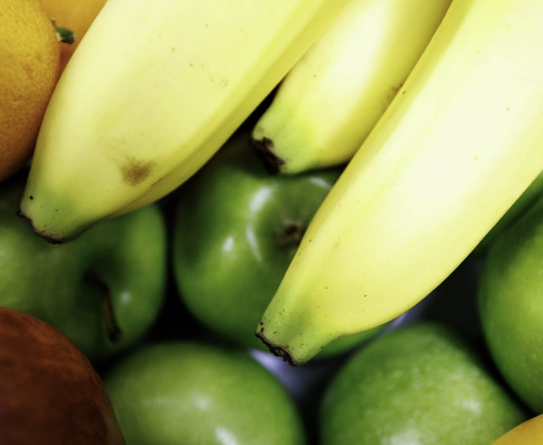
Fresh whole produce such as apples, bananas, citrus, mangoes, melons, pineapple, plantain, avocado, peaches, kiwi, cucumber, ginger, onions, peppers, potatoes, tomatoes, winter squashes and papayas should be stored at room temperature, but kept in the refrigerator once sliced.

Apricots, berries, grapes, green beans, cauliflower, leafy vegetables, sprouts, green onions, mushrooms and peas should also be stored in the refrigerator. Fresh asparagus can be placed stem-side down in a cup of water in the fridge to prevent it from drying out.

Evans recommends storing produce unwashed. Moist foods develop mold faster, so wash fruits and vegetables right before using. Avoid placing cut avocados in a jar of water because bacteria on the avocado skin could grow. Instead, wrap the avocado in plastic wrap. For celery, wrap it in aluminum foil and store it in the refrigerator to stay crisp.

Store strawberries, raspberries and blackberries in a glass jar with a lid and place a paper towel in the bottom to absorb moisture. Don’t overcrowd the berries and inspect them regularly to remove any with damage or decay.

“If you forget about greens and they start to get a little soggy, puree and freeze them to use in smoothies later,” Evans said. “If fresh herbs start to wilt, put them in ice cube trays with some olive oil. Pop a frozen cube or two in the saucepan next time you’re sautéing vegetables or making pasta sauce.”

Freezer storage

Consumers might be surprised to learn which foods they can freeze and save for later.

  • Milk: Pour in a freezer-safe plastic or glass container but remember to leave space at the top for expansion.
  • Bread: Place in a freezer-safe bag and press out the excess air before freezing.
  • Eggs: Crack and mix the yolks and whites. Pour 3 tablespoons into each compartment of a clean ice tray and freeze. Once frozen, store the cubes in a sealed freezer bag or container.
  • Fruit: Freeze before it overripens. Wash the fruit; remove the seeds, cores and pits; and chop or slice the fruit and place it in a freezer-safe bag. Adding a little lemon juice can help prevent the fruit from darkening. Squeeze out excess air.
  • Vegetables: Lettuce, celery and cucumbers don’t freeze well. Most vegetables can be frozen but should be blanched for a few minutes first. See the blanching times recommended by the National Center for Home Food Preservation at the University of Georgia.
  • Meat: Divide larger packages of meat into smaller portions, raw or cooked. Label all packages and keep the original label.

When freezing foods, check that the freezer is set at 0 degrees Fahrenheit or below to help maintain food quality and prevent bacterial growth. Use airtight, moisture- and vapor-resistant packaging to prevent freezer burn and off-flavors from air exposure.

Finally, Herrman and Evans recommend using the U.S. Department of Agriculture’s Foodkeeper app to ensure food is used at peak quality to reduce waste. The app offers food and beverage storage guidelines along with information on safe food handling and preparation.

K-State food scientist shares tips for outdoor meals during harvest

0

When planning food in the field, follow these guidelines to keep the party safe
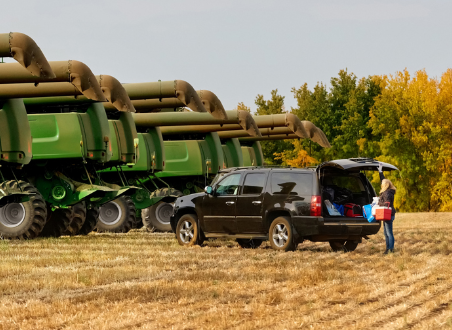
Combines will soon be rolling across Kansas for wheat harvest, with other crops not too far in the future.

Part of the tradition in farm country is feeding the people working to bring in the harvest. Kansas State University food scientist Karen Blakeslee says meals in the field follow many of the same guidelines for safe picnics and backyard barbecue meals.

Clean. Blakeslee suggests packing wet wash cloths with soap to clean dirty hands. “Another option is a spare soap bottle with a mix of water and soap,” she said. “Keep in mind that hand sanitizer is not effective on dirty hands. Wash them first, then apply hand sanitizer for best results.”
Separate. Keep raw meat and poultry away from ready-to-eat-foods. Use a clean utensil for each dish. Use a clean plate when going for second helpings of food.
Cook. Use a food thermometer to check for doneness. Cook all poultry to an internal temperature of 165 degrees Fahrenheit. Cook burgers and sliders to an internal temperature of 160 F.
Chill. Keep hot foods hot and cold foods cold. Put out food in batches.
In addition, Blakeslee said many foods can be prepared in advance and frozen for use later. Baked goods – bread, cookies, cupcakes and more – freeze well, she said.

“After baking, cool these foods completely before packaging,” she said.

Frozen fruit cups are an easy freezer treat for hot days, said Blakeslee, who cites a recipe from Iowa State extension that uses muffin tins to freeze fruit.

“Many casseroles, meat pies or pasta dishes can be frozen and baked from the freezer,” Blakeslee said. “Use aluminum foil containers or other containers made to go from the freezer to the oven with ease.”

Blakeslee cited a publication from Oregon State extension that provides ideas for foods that can go from freezer to oven with ease.

“If there is access to electricity out in the field with some farm equipment, it can be used to plug in slow cookers or roasters to keep foot hot,” Blakeslee said. “But be sure the voltage is compatible for the appliances being used.

Food aside, Blakeslee encourages families to make time to eat together during a break in the harvest.

“Set up a portable table and chairs to eat together, if possible,” she said. “That break from harvest activity is a great way to recharge and catch up with others before heading back out to the field.”

Blakeslee, who also is coordinator of K-State’s Rapid Response Center for Food Science. publishes a monthly newsletter called You Asked It! that provides numerous tips on food safety.

More information is also available from local extension offices in Kansas.