Wednesday, January 28, 2026
Home Blog Page 207

The Color Of Tractors

0
lee pitts

I looked around the cafe, saw that the rancher’s table was filled and then noticed there was a seat at the farmer’s table, so I considered joining them. I mean how bad could it be? So I went over to the dark side and asked the clodhoppers if they’d mind if I joined them?

“Sure, pull up a seat,” said farmer #1. “We have no prejudices here. Your ball cap may advertise a bull while mine advertises a CAT. You go to Denver to see all the newest squeeze chutes, while we go to Tulare’s Farm Equipment Show to see what’s new in heavy metal.”

“Some cattlemen have Red Angus,” said farmer #2, “and we have red tractors.”

“Yeah,” chimed in farmer #3, “We have a lot in common with you cow pokes. You have trouble finding good cowboys while we have trouble finding good tractor jockeys. And we’re both in a bad mood when we pour out the rain gauge and four inches of dust falls out.”

“And we’ve been invaded with imports,” said farmer #4. “You have Charolais from France, Simmental from Switzerland and Kobe from Japan while we have Kubota’s from Japan, Argo made in Europe and even some John Deere tractors made in China. America is dominated by John Deere Green while Registered Black Angus wear the pants in your family.”

I countered, “But many of our black Angus are bred to cattle of another breed.”

“Are you kidding, farmers invented crossbreeding,” said farmer #4. “Have you ever heard of a tangelo, a limequat or an orangelo?”

“Yeah, chimed in farmer #1, “and it’s a common sight in farm country to see a green John Deere pulling a blue New Holland baler. If that’s not crossbreeding I don’t know what is.”

“I’ll tell you what it is,” said the grumpy Oliver guy. “It’s heresy. That’s what it is!”

“That’s just because you’re so red that you own 35 antique Oliver tractors,” said the county extension agent who’d joined us. “There’s another difference between farmers and ranchers. You don’t see ranchers preserving taxidermy bulls or entering them in the Fourth of July parade. Generally, ranchers don’t have huge shops with bridge cranes, milling machines, expensive tool chests filled with Snap-On tools and piles of used tires everywhere. And you won’t find any horses on farms much any more, except in Amish country.”

“Now that I think of it,” I said, “ranchers and farmers do have some equipment in common. “We’re both starting to use drones, there’s usually a Bobcat or a mini-excavator on most big ranches and we both use ATV’s. And all of us are just like firefighters in that we’re always putting out fires. My bull might be shooting blanks while you’re tractor may not start. A rancher might have to get up in the middle of the night to check the bred heifers while a vegetable farmer checks on pumps and generators around the clock.”

“Yeah, I suppose we do have a lot in common,” said farmer #2. “We both read the farm papers to check on prices and read the classified ads, and all of us have to worry about being sued into insolvency for salmonella and e coli. And the product of our toil is hauled to market by Peterbilt’s and KW’s. We both drive pickups to check on water and many of us have equipment we use only once a year, farmers their harvesters and ranchers their scales. All of us pay attention to hay prices and many ranchers stoop so low as to grow their own. We both like auctions where farmers buy big tractors and ranchers buy young bulls and old cows. Both farmers and ranchers take out big bank loans to pay for everything and we both have no idea how we’ll ever pay it back. And farmers and ranchers get paid just once a year. If we’re lucky.”

By the end of breakfast with the crazy cultivators I had gained a new appreciation for them and we slowly formed an uneasy truce. And I found myself eating breakfast with them more and more often because my old rancher buddies had banned me from their table for associating with the sod busters. They said I’d need to get all the requisite vaccinations if I ever wanted to rejoin their table.
Spring is about to Spring

0

Well, you know what they say, “Spring Waits for No Man;” wait, maybe it’s just me that says that. Anyway, it’s true, and while we certainly have some winter left, I think we can figure there’s more of winter now in our rearview mirror than there is in front of us. So, as we wait to see if she comes in like a lion or a lamb, spring will continue to claw its way across the calendar and arrive at just the right time that God has planned. In the meantime, here are a few things in the Kansas outdoors still going on, or on the horizon.

Light geese, more commonly known as snow geese, can still be hunted under a special “conservation order” until April 30. In order to thin down the enormous population of these birds, besides allowing for a lengthy season, the special conservation order removes all harvest limits and allows for unplugged shotguns to be used. That lets hunters use the complete shell capacity of their shotgun, rather than only 3 shells in the gun at a time that is legal for normal waterfowl hunting. Permission to hunt these guys is usually easy to get too, as most farmers want them gone.

Both beavers and otters can be trapped in KS until March 31. I have never trapped otters, but I know that spring beaver trapping can be really productive as the males become very active in spring. They can be enticed to check out man-made castor mound sets that they make naturally in the wild to attract females. A pile of mud and leaves pulled up onto the edge of the bank and sweetened with a dab of beaver castor-based lure will usually do the job.

Wild turkeys will soon be leaving the large flocks where they accumulate, sometimes by the hundreds, for safety and security during the winter. The toms will start putting together their smaller harems of hens, and heading to where they will breed, nest and raise their broods. The 2025 spring turkey season for youth and disabled hunters starts April 1, archery season begins April 7 and regular firearms season starts April 16.

We all watch to see the first robins, wrens and other songbirds arrive back in KS each spring, but another less popular and often maligned, or at least ignored species will begin arriving back in our state in the month of March. Turkey Vultures that have wintered in South America will begin gracing our skies again in mid to late March. Vultures are God’s clean-up crew and have a face only a

mother could love, but watching them soar effortlessly on huge outstretched wings for hours at a time is mesmerizing to me. One spring years ago, Joyce and I were told of an old tumbled-down building not far away that had been a vulture nesting site for years, and that year we were privileged to watch a pair of Turkey Vulture chicks grow-up and fledge from that nest. Talk about humble beginnings; that so called “nest” was nothing more than a flat spot on the floor, amidst filth and excrement, in a concealed corner of that old ramshackle building. But from there grew two more amazing birds to float on the Kansas winds and to help clean-up dead critters from along out highways. Yet another example of how God can use the meekest among us for His service…Continue to Explore Kansas Outdoors.

Steve can be contacted by email at [email protected].

The Bridge Story

0
Thayne Cozart
Milo Yield

This is a story I resurrected from my public speaking days of attempting to humor rural audiences across a wide swath of the U.S. Here it it:

It wuz back in the days when tenant farming wuz much more common and the farm families actually lived on their rented farms. In this instance, on March 1, the Smith family rented a farm on one side of a flooded river. On the other side of the river lived another tenant family, the Jones.

With the river flooded, there wuz no easy way from one side of the river to the other. But, it wuz easy enuf for folks to yell across the river and understand the conversation.

And, as it turned out, the Smith family included a belligerent, testosterone-laden teenage son named Billy. And, the Jones family included an always-on-the-prod brute of a teenage son named Clarence. And, it only took a few days before the two teens were taunting each other across the flood waters about whose family wuz farming the best.

The animosity between the teens grew with each passing day. Billy would yell across the flooded river that red International farming equipment wuz the absolute best. Clarence would yell back that John Deere green was the best and always had been.

Billy claimed loudly that Fords were the best farm conveyance. Clarence echoed that Chevy’s could leave Fords in their dust.

Billy would counter that his family’s Angus cattle easily outperformed all other breeds. Clarence would yell back that his family’s Herefords were the best.

Billy yelled that Hampshire hogs were the best breed. Clarence yelled back that no breed could top Durocs.

They even yelled back and forth about whose bird dogs were the best. Billy favored his Setters. Clarence favored Pointers.

As it happened, all the while this teenage acrimony grew nastier, the county wuz nearing completion of a long bridge across the flooded river. At long last, the bridge construction wuz completed and open for travel.

The very day the bridge wuz open for travel, Billy told his Dad that he wuz going to cross the bridge and settle the score with Clarence. His Dad advised against it, but knew his argument wuz to no avail.

So, off to the bridge went the red-necked Billy to shut Clarence’s boastful mouth once and all. However, once he arrived at the bridge, he stopped short. Then he sheepishly backtracked as fast as he could all the way home.

When he got home, Billy’s dad asked him how his fight went with Clarence. Billy replied, “Well, Dad, there wuzn’t no fight. When I got to the bridge, I looked up and there on our side of the bridge wuz a big yellow sign that read, ‘CAUTION: CLEARANCE 12 FEET’ and I realized there is no way I can whip a kid that big.”

***

This story wuz told as a true one. One winter, a north-central Kansas farmer decided to save some repair money on his big round hay baler by replacing all the baler’s worn out belts.

So, he bought all the expensive belts from his local dealer, warmed up his farm shop and went to work. He got inside the bale chamber and first cut off all the worn-out belts. Then he put all new belts inside the chamber with him and started installing them.

He got so engrossed with the installation that eventually he realized he’d imprisoned himself behind a web of new belts with no way out unless the rear of the baler wuz lifted.

So, he took out his trusty cell phone and called his wife to help extricate him from his baler prison. He told his wife how to exactly start the tractor and carefully lift the baler lid. His wife refused, explaining that she wuz too nervous to start the tractor because she wuz afraid she would panic and hurt her hubby.

So, with no other way to get out, the farmer took out his pocket knife and cut away enuf of the newly-installed belting to let himself out. It turned out to be an expensive way to save repair money.

***

This story wuz told at the Old Geezers’ Morning Gabfest. The conversation had somehow turned to sad stories of how the use of alcohol had negatively affected workplaces, both on the farm and in the factory.

Here’s the story told by the oldest member of our gossipy group. He’s north of 90. He said that he once worked with a crew and one of the member’s had a glass pint of whisky. When it wuz quitting time, the generous worker passed the pint around the crew for everyone to take a sip.

Well, everyone did that, but one member wuz chewing tobacco and as he took his gulp of firewater, he clearly back-flushed flakes of tobacco into the bottle.

The owner of the bottle never said a word. He simply went to his vehicle, extracted an empty glass pint and used the corner of his handkerchief as an impromptu strainer and within moments had strained the tobacco-tainted whiskey into the empty bottle.

Satisfied with the purity of his remaining whisky, he put the new pint into his hip pocket and went home.

***

Words of wisdom for the week: “There ain’t nuthin makes me happier than to see the last snowflake from a blizzard finally melt. That’s what happened to me this week.”

Have a good ‘un.


Plant now for seeds of success

0

Get a jump on the gardening season by starting vegetable and flower seeds indoors now, says University of Missouri Extension field horticulturist Donna Aufdenberg.

“Starting seeds indoors doesn’t have to be difficult,” she says. “Knowing the basics is the best way to start.”

Sow most garden seeds 6-8 weeks before transplanting, says Aufdenberg. Set a goal date to plant outdoors and then count back on the calendar the number of weeks (or days) it will take for the plants to be ready to transplant, she says. Add the appropriate number of days for seed germination. This information is usually found on the seed packet.

Use new containers or reuse containers soaked for 10 minutes in 10% bleach water. Choose containers that are at least 2 inches deep and have drainage holes. Paper pots, plastic pots, cell packs or open flats can also be used. If you use open flats, plant in rows rather than broadcasting.

Select a high-quality medium such as potting mix or seed starting mix that contains peat and/or vermiculite. Do not use mixes that include fertilizer, and avoid potting and garden soils. “Buying inexpensive, poor-quality soils only causes problems,” says Aufdenberg.

Check seed packets for variety and information such as planting depth and light requirements.

After sowing seeds, keep the medium moist but not wet. Don’t let the soil dry completely. If you cover the seeds with a plastic dome, remove it when seedlings start to emerge to prevent disease.

Use heating mats under trays to speed germination of warm-season crops. Cool-season crops do not need heating mats.

Good lighting encourages quicker germination and keeps seedlings from becoming long and lanky, says Aufdenberg. Fluorescent shop lights are a good choice for seed starting. Place lights directly over seedlings, no more than 1-2 inches away from leaf tops. Do not allow bulbs to touch the foliage because burning can occur.

Check seedlings daily, or twice a day if they dry quickly. Water from the bottom and do not let the seedling sit in standing water. If you water from the top, water gently.

Keep seedlings in a well-ventilated, cool area (under 70 degrees during the day and 60 degrees at night). Good air circulation makes sturdier stems and stronger plants. Pay close attention to light levels and watering practices if seedlings get tall and lanky and have weak stems. Too little light and too much heat and water cause lankiness.

To transplant seedlings to a larger container, watch for the sprouting of the first “true leaves,” which look like adult leaves. Use a pencil or narrow tool to lift seedlings from the container. Plant each seedling in its own small pot filled with growing medium. Apply a diluted fertilizer solution after true leaves appear.

Plants grown indoors must “harden off” before being transplanted into the garden. If not gradually acclimated to outdoor conditions, plants can suffer wind or sun burn or chill. Place them in a cool, protected location outdoors for about 3-5 days to acclimate. Then move them into filtered sun/shade for another couple of days before planting outdoors. Plant on a cloudy day or late in the afternoon to avoid the strong sun and transplant shock. Water after planting.

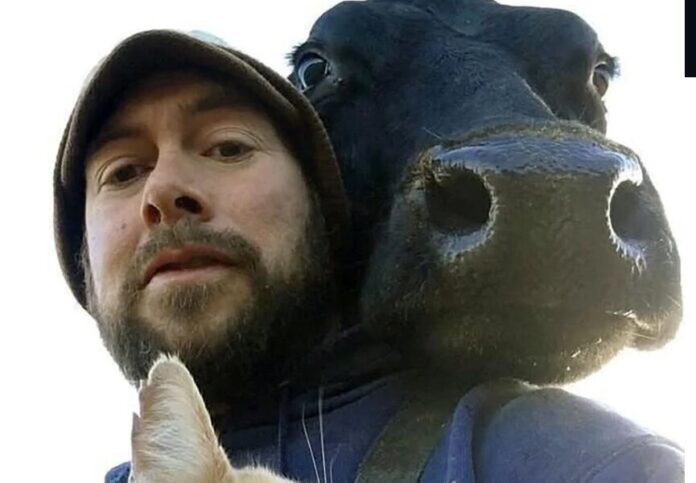
My cow friend, Buffalo, stood beside me throughout my farming career. Now I’ve had to say goodbye.

0

The other day, my old cow friend, Buffalo, died. She was the kindest, gentlest dairy cow that I’ve ever known, and I cannot remember mourning the loss of a cow more than I am mourning Buffalo. She has been by my side almost the entirety of my dairy farming career, and it is difficult to imagine the farm without her presence.

Small-scale, traditional dairy farming is unique among all sectors of agriculture due to the degree of intimacy between cow and farmer. I am with my cows from the first minutes of their lives every day until the last minutes of many of their lives. We endure it all together. Rain or shine, I am with my cows every single day, feeding, milking, breeding, calving, fighting them and loving their company. It’s not always romantic. The power imbalance can be brutal. But I always strive to give my cows the best possible lives I can afford to give them under the constraints of the dairy industry.

Some cows are just special. Every cow has a distinct personality, and every year I have a couple cows who just love people. As a kid, my sisters and I called these cows the “pets.”

Some of these pets are aggressive animals who don’t understand their own size and will bowl me over in their enthusiasm. Occasionally, I’ll run across a naturally timid cow who also wants to be my friend. These cows are the best. They make my job as a farmer particularly enjoyable, and I’ve long called them my therapy animals.

Twelve years ago, soon after the first crop of my calves hit the ground after I returned to the family farm, Buffalo was born. When I returned to the dairy farm 15 years ago, my parents and I worked out an arrangement where I would artificially inseminate their cows and I could keep the offspring to begin growing my own dairy herd. My parents had big black and white Holsteins, and I wanted to transition the herd to the smaller brown Jersey cows. The first generation of the crosses between these two breeds are normally born as solid black or chocolate-colored animals.

In the early part of 2013, Buffalo was born. This little, chocolate-colored, furry creature looked just like a little bison, so I named her Baby Buffalo. As this timid yet friendly calf grew up, her name became just Buffalo.

As someone who spends more time with animals than people, I tend to anthropomorphize my animal friends. I am convinced many animals (especially mammals) have similar emotional responses to life as humans. Buffalo was one of those cows who always seemed to have a sunny disposition. She would greet me with a rough lick to the face or would gently sidle up to me for a hug or a scratch. She went about her life with ease and without complaint.

I’m not sure if she was one of the aggressive boss cows, because I rarely remember her being a bully to younger cows. She definitely associated with the top boss cows of the herd who always bullied their way to the front of the line — first to get into the milk barn, first at the feed bunk, first out to fresh pasture. She had nine calves over her lifetime and almost always was one of my top milking cows. She never had a sick day in her life. She had a beautiful udder and was one of the gentlest cows I’ve ever had in the milk barn. If I ever had visitors who wanted to milk a cow, Buffalo would be the cow I took them to.

Last year, during her eighth lactation, Buffalo had her first bout of mastitis. One of the front quarters of her udder never really came back in milk production after that. This past fall, when she had her ninth calf, I decided that rather than trying to milk her bad mastitis quarter, I would make her a nurse cow for raising baby calves. I’ve been playing around with turning my old cows into nurse cows as their retirement plan from the milking herd. Keeping nurse cows seems to be a kinder and gentler way to raise baby dairy calves, different from the industry standard of separating babies from their mothers and bottle feeding the baby calves.

Because dairy cows produce way more milk than a single calf can handle, most milk cows can raise three to four calves. Finding cows with the right temperament to adopt calves can be tricky. Because the maternal instinct has been selected out of many dairy breeds, some cows have zero interest in caring for calves. Buffalo was the exception. She eagerly adopted each calf I put in her pen. I meant to stop with four calves, but I kind of accidentally put a fifth calf in with her. I thought about pulling the fifth calf but did some quick calculations. Buffalo had produced between 80 to 100 pounds of milk (10 gallons) daily her whole life. If any cow could raise five calves, it was her.

So she raised these five with the joy that she always seemed to have. When the calves were a couple months old, I moved Buffalo and her babies into a small pasture with other young calves and another nurse cow. I would still hear her low guttural calls to her babies as she led them around. Some joined in the shenanigans with the other calves while others were more clearly attached to mom.

This winter, through a brutally cold January on the Kansas plains and a couple of blizzards, I noticed Buffalo was losing weight. I’m still figuring out this nurse cow thing, but it does seem that once calves start growing bigger, they take a toll on the nurse cow. Their ravenous nursing sucks all the energy stores out of the cow. I think weaning at this point could be beneficial to allow the cows to recover. But I had my hands full with the hard winter weather and didn’t pay close enough attention to my old bovine friend. She still eagerly greeted me each day when I fed her and the calves their daily allotment of grain.

Buffalo continued to lose weight.

On a cold blustery February morning, I noticed Buffalo laying by herself out in her pasture with one or two of her calves occasionally coming over to her. From a distance, I knew the signs of a drooping head and a sunken frame that indicates a very sick cow. About noon, I pulled together some vitamins, grain, and other medication to go see if I could doctor her up. When I reached her side, I was alarmed by just how rough she looked. She greeted me with an outstretched neck. I knelt down and let her eat some grain, chasing away the other critters.

Once I gave her an injection, she struggled to her feet and continued to gingerly eat the grain. I had the fleeting idea of trying to bring her into the shed and making a small comfortable sick pen for her. As she continued to lick the grain and I, by her side, was stroking her and shoeing away the other calves, her body all at once went ridged and she fell flat on her side, barely missing me. It took me a second to realize this was the end. I took her big head in my lap and stroked her face as she moaned and struggled for a minute or two before her breathing stopped.

Buffalo’s ending was sudden and unexpected. I had a big lump in my throat as I said goodbye to my old friend. I was mad at myself for not intervening sooner. However, it was most likely an infection or cancer that finally took Buffalo. She was an old cow. In an industry in which the average dairy cow only lasts one and a half lactations (3.5 years of age), a 12-year-old cow is as old as Methuselah. Her death after a good, long, honest life should not have come as a shock.

Old Buffalo, I will miss you. It was an honor to be by your side these last 12 years. You were the best cow this dairy farmer could have ever asked for. I hope I gave you the best life I could have given you. Wishing you greener pastures, dear friend.

Jason Schmidt is a fifth-generation Kansas farmer near Whitewater.