Wednesday, January 28, 2026
Home Blog Page 213

Church Preparation Continues And Other Family Updates

0

Lovina’s Amish Kitchen
Lovina Eitcher,
Old Order Amish
Cook, Wife &
Mother of Eight

It is almost 6 A.M. on this Tuesday morning. It is warm weather for February with the temperature at thirty-eight degrees. The snow is disappearing fast. Oh no, now our yard is exposed and needs to be cleaned up a little before Sunday. As long as the snow covered it, we couldn’t see the leaves that were never raked up. Also, all the bones and treasures our dog drags up and stores all over our yard. Ugh! Hopefully we can get the outside cleanup done while its warm. I’m sure we have only a few days before the cold is back. I’m so ready for spring weather, but we need to stay patient a little while longer.
We have only five days left to get done what needs to be before we host church services here. I am checking prices on ham to serve with lunch Sunday. Whoa!! I am amazed at the price. I shouldn’t be surprised with everything else going up in price. I am going to use niece Verena’s peanut butter spread recipe this time. I am not usually one to eat peanut butter spread but I loved the one she served when they hosted church. I will share the recipe with you this week. It is a big amount so you might need to cut it down. She said she would use only half of this amount for a regular size church. She also said this spread freezes well for up to a year.
Sunday our whole family attended church in Daniel Ray’s (Daughter Verena’s special friend) church district.  Daniel Ray was baptized and accepted Jesus Christ as his Saviour. May God bless him as we travel into the unknown future. We appreciate all the help we get from Daniel Ray. He’s always willing to help out around here. I sure appreciate that Daniel Ray’s mother sewed Verena a new black dress suit for Sunday. She needed one for baptismal services and I was so busy that I didn’t have time to sew it.
My husband Joe has had a very painful back for quite a while and the doctor ordered an MRI. The results are back now and they want him to see a spine neurologist now. I am really glad if they can help him be pain free once again. He has pain to walk but gets relief when he sits. He can’t do much after a day’s work at the truss shop. We appreciate the help from our sons and son-in-laws to help with the outdoor work. Joe used to come home and work until dark but since battling with this pain for so long he can’t. We sure are glad to still have son Benjamin,25, here at home to help with chores and he is also a great caregiver for son Kevin,19.

It was so nice to have all the grandchildren in church Sunday. Baby Kylie Clare made her first appearance in church. She is seven weeks old now. She was passed around quite often and enjoyed by many. Loretta is still under doctor’s care for her smaller blood clot. She was in church but unable to wear her shoes due to her leg and foot still being swollen.
Tonight two bench wagons will be brought here. We need the second one since we will be hosting baptismal services which are usually a lot bigger with friends and family attending. Two young souls will be baptized, Lord willing. I need to almost double all the food as well so we have plenty for all the extras. I will go help my daughter Loretta for a while this morning. Verena needs to go see an eye doctor. She can’t open her eye and it is very painful. She needs someone to go with her to load and unload her mobility scooter. Daughter Elizabeth will go with her.
Tim and Elizabeth will go get their sink and toilet this afternoon. After they are installed, they should be ready to start moving into their living quarters in the garage. They have three bedrooms, a bathroom, kitchen and living room area and a small laundry/mud room. It is much smaller than their house is. It’s too bad that they have to tear down the house due to mold. The advice received from several professionals was that this will be better for their family’s health so they knew they had to do it. 
 God’s blessings to all!


Recipe:
PEANUT BUTTER SPREAD

10 pounds peanut butter
1 pound butter (room temperature)
1 gallon maple syrup or maple flavored pancake syrup
6- 16-ounce containers whipped topping

Mix peanut butter and butter until well combined, then gradually add maple syrup and keep mixing in until well combined. Then fold in whipped topping slowly until all is combined.

KDA Announces Specialty Crop Grant Opportunity

0

The Kansas Department of Agriculture is accepting applications for the FY25 Specialty Crop Block Grant Program. Funds for the program are awarded to the agency by the U.S. Department of Agriculture’s Agricultural Marketing Service.

The grant funds are in turn granted to projects and organizations to enhance the competitiveness of specialty crops by leveraging efforts to market and promote specialty crops; assisting producers with research and development relevant to specialty crops; expanding availability and access to specialty crops; and addressing local, regional, and national challenges confronting specialty crop producers. Specialty crops are defined by the USDA as “fruits, vegetables, tree nuts, dried fruits, horticulture, and nursery crops, including floriculture.”

Applications will be evaluated by a team of external reviewers. The team will rate proposals on their ability to successfully enhance the competitiveness of the specialty crop industry in Kansas and make a positive impact on the Kansas economy. Those recommendations will be submitted to the Kansas Secretary of Agriculture, who will make the final awards.

Applications are due to KDA no later than 5:00 p.m. on March 31, 2025. For more information, please download and carefully read the Kansas Request for Applications document from the KDA website: agriculture.ks.gov/grants.

Specialty Crop Block Grant Program funding from USDA–AMS is awarded to states based on recent value and acreage of specialty crops in the state. In 2025, Kansas will receive approximately $330,000.

The vision of the Kansas Department of Agriculture is to provide an ideal environment for long-term, sustainable agricultural prosperity and statewide economic growth. The agency will achieve this by advocating for sectors at all levels and providing industry outreach.

Hay feeding strategy

0

K-State beef cattle experts share how to incorporate older hay into the diet

To help reduce waste and stretch the food dollar, many people look for ways to use items in the refrigerator before they spoil.

Beef producers with old hay stored on their operation often look for appropriate ways to incorporate that into the forage feeding strategy. This was the topic that Kansas State University Beef Cattle Institute experts addressed on a recent Cattle Chat podcast.

In this case, a listener runs spring and fall-calving cows in the same pasture and is trying to determine how to best meet the varied nutritional requirements with hay that is 2-3 years old.

“Depending on the type of hay, when it was cut, and how it was stored, there could be a lot of variability in the quality of that forage,” K-State nutritionist Phillip Lancaster said.

To help determine the quality of the hay, K-State veterinarian Bob Larson recommended producers keep track of the harvest date.

“If we know the harvest date and are familiar with the maturity pattern in the area, we will have a pretty good idea about the nutrient quality of that hay,” Larson said.

Lancaster said the highest quality hay needs to be fed to lactating cows that have high maintenance energy requirements. He said producers can use older hay, but they will likely need to offer a vitamin and mineral supplement as well.

“In 2-3-year-old hay that is stored outside, the beta carotene in those bales deteriorate rapidly, so it is important to offer them a vitamin A supplement,” Lancaster said, adding that the minerals need to be fresh.

In some herds, producers can separate the fall and spring calving cow herds, allowing them to offer the older hay to cows with lower maintenance requirements, such as cows in mid-gestation. But in this case, the cows are maintained together and that leads to a different strategy, the experts said.

“With the fall-calving cows just coming out of the breeding season and the spring-calving cows in their last trimester, I recommend primarily offering them hay cut this year, but every once in a while, you could throw them a bale of the older hay to try to use it up and that should allow them to keep from getting too thin,” Lancaster said.

To hear the full discussion, listen to Cattle Chat on your preferred streaming platform.

Keeping your IDentities Safe

0

In January of this year, Keeping IDentities Safe reached an agreement with DSA (www.documentsecurityalliance.org) under which DSA will now be publishing this newsletter for its members. DSA is an association of more than 100 government, industry and academic organizations dedicated to securing the production, issuance, and authentication of government-issued identification documents and banknotes to help combat fraud and other criminal acts.

As a courtesy to our past readers, DSA has enabled Keeping Identities Safe the ability to send the DSA newsletter to you for the first quarter of 2025 (January, February, and March). The newsletter after that time will only be sent to the DSA mailing list.

DSA will continue to publish this monthly newsletter as a benefit to its government, academic and corporate members.

If your organization is interested in joining DSA, please find information about membership at https://documentsecurityalliance.org/join/application/.

If you are an employee or associate of an organization that is currently a member of the DSA, please email your newsletter subscription request to: info@documentsecurityalliance.org.

If you are an employee of a federal, state, county or city government, or otherwise are a volunteer with local law enforcement and would like to receive their newsletter, please email your newsletter subscription request to: [email protected].”

Carry Your Physical REAL ID When You Travel in 2025!

If you have traveled by air in the past year, it is highly likely that you saw one or more of the brightly illuminated Transportation Security Administration (TSA) notices of the May 7, 2025, deadline requiring passengers to present REAL ID compliant drivers’ licenses (DLs) or compliant IDs such as national Passports or Enhanced DLs.

TSA’s Domestic Aviation Operations is responsible for about 440 Federalized airports, screening more than 2 million passengers daily, and totaling over 815 million passengers annually. At most of those 440 airports, the passenger identity confirmations are assisted by electronic systems in which the inspections are assisted by ID scanning screens or devices into which IDs can be inserted to confirm the validity of the physical document as well as the information on it. Most of these machines were built and installed prior to the advent of mobile driver’s licenses (mDLs). In the past two years, following extensive pilot programs at three airports, TSA has fine-tuned new electronic machines that can read mDLs as well as physical identity documents. i.e., drivers’ licenses.

In 2024, TSA began deploying the new ID scanners and training the TSA passenger inspectors in their use, along with related connectivity to DMV sourced data. This has been a complex endeavor that required care to ensure reliability. Consequently at this date, only 31 airports in the USA are listed by TSA as having the capability to verify passenger identities by reading digital information. TSA will add digital screening at other large airports in 2024, as rapidly as staffing and budget constraints allow. (See list compilation below for those already prepared.) All DMVs advise you to carry your physical REAL ID on your person to ensure you can move quickly through TSA checkpoints.

On September 27th, 2024, I was caught at the Atlanta airport in the midst of flooding from Hurricane Helene. Although I arrived at the airport more than two hours prior to boarding, I didn’t get through TSA security in time to catch my flight, due entirely to long lines at TSA checkpoints. This was despite being in the TSA PreCheck lines.

Many of my fellow passengers shared my fate, some due to arriving at the airport with their cell phones containing mobile IDs, but without their physical driver’s licenses. In the press of congestion, an overloaded wi-fi, and the physical limits on TSA personnel, many missed their flights. I observed more than a dozen fellow travelers who only had mobile IDs in the TSA PreCheck line. These travelers were pulled from the line because the electronic readers were unable to verify their passenger information. They were not happy, and likely were not able to fly out of Atlanta’s airport that day as TSA personnel were so overwhelmed by the crush of passengers.

I was fortunate that United Airlines booked me out on the next flight to DCA, as that day – according to FlightAware – more than 170 flights into or out of Hartsfield-Jackson Atlanta International Airport were canceled, and more than 500 flights were delayed.

Weather events remain disruptive, and affect the reliability of digital systems, so carry your physical ID when you travel!

• My experience in Atlanta demonstrates that weather or other circumstances can create surprise problems when only having an mDL with you, so carry your physical card. TSA can verify the physical ID using the readers in place at every airport.

• There is also the possibility that in the months following May 7th, 2025, mDLs will NOT be accepted at TSA checkpoints because the regulatory waiver process will not be completed by any state. And the waiver process is the only way TSA will be able to accept an mDL. Per federal regulations final in 2024, no state’s mDLs will be deemed compliant unless the respective states have received a formal granted a waiver by TSA.

The following is a compilation of links and summary information to help readers get ready for the REAL ID deadline on May 7, 2025.

The Transportation Security Administration continues to roll out equipment and training so that additional airport are able to accept REAL ID compliant mDLs, once the states receive their respective waivers. A mostly complete list of those airports follows, and readers should save the link to the TSA map of airports that are capable of verifying digital ids.

https://www.dhs.gov/real-id/real-id-mobile-drivers-licenses-mdls

“Mobile driver’s licenses,” or “mDLs,” are digitized versions of the information on physical driver’s licenses and identification cards, and are stored on mobile electronic devices, such as smartphones.

mDLs Approved for Federal Use

Mobile IDs from the following states are now approved by TSA (see link for details: Arizona, California, Colorado, Georgia, Hawaii, Iowa, Louisiana, Maryland, New Mexico, New York, Ohio, Puerto Rico, Utah, Virginia, West Virginia; https://www.tsa.gov/digital-id/participating-states

Most Federal agencies are at least twelve months away from having digital reading capability at their physical sites. In fact, with the exception of military bases and “secure federal facilities,” digital readers are few and far between at government buildings. The deadline for agencies to submit their planned locations for requiring REAL IDs for entry is May 7, 2025.

A recent posting from the Department of Homeland Security.

Not all Federal agencies are accepting mDLs. Before attempting to use an mDL, individuals should contact the agency they intend to visit to ask whether the agency accepts mDLs. To reduce risk of potential disruptions, TSA strongly encourages all mDL holders to carry their physical REAL ID cards in addition to their mDLs.

In conclusion, mDLs are the near future for controlled travel by airports, airlines and military bases, where reliable digital equipment and trained users are affordable and in place. Despite this, always carry your physical driver’s license or state- issued ID!

The 31 Airports in the United States where TSA can verify passengers’ identities with mobile IDs, including TSA Pre-check Touch IDs and digital passports, as of January, 2025 – from TSA Digital ID Map 1/21/2025 listed by city

https://www.tsa.gov/travel/digital-id/map#CID

Atlanta International Airport (Hartsfield-Jackson), Georgia

Baltimore/Washington International Maryland, (Thurgood Marshall) Airport

Cedar Rapids, (Eastern Iowa Airport), Iowa

Charlestown West Virginia International-Yeager Airport

Chicago, Illinois (O’Hare) International Airport

Cincinnati, Ohio (/Northern Kentucky) International Airport

Columbus, Ohio International Airport (John Glenn)

Dallas/ Fort Worth, Texas International Airport

Denver, Colorado International Airport

Detroit, Michigan Metropolitan Airport

Des Moines, Iowa International Airport

Dulles, Virginia International Airport

Gulfport-Biloxi, Mississippi International Airport

Honolulu, Hawaii Daniel K. Inouye International Airport

Huntington, Indiana Tri-State Airport

Jackson, Mississippi (Medgar Wiley Evers) International Airport

Las Vegas, Nevada (Harry Reid) International Airport

Los Angeles, California International Airport

Miami, Florida International Airport

New Orleans, Louisiana International Airport (Louis Armstrong)

Newark, New Jersey Liberty International Airport

New York JFK International Airport,

New York – LaGuardia Airport

Oklahoma City -OKC Will Rogers World- Airport

Phoenix Sky Harbor International Airport

Richmond International Airport

San Francisco International Airport

San Juan, Puerto Rico (Luis Muñoz Marín) International Airport

San Jose Mineta International Airport

Salt Lake City International Airport

Washington, DC – National Ronald Reagan Airport

 

Understanding Your Knife Rights in Kansas: A Legal Guide

0

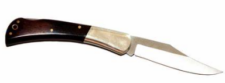
Kansas knife laws are relatively permissive, allowing citizens to enjoy a wide range of rights when it comes to knife ownership and carry. Here’s a comprehensive guide to understanding your knife rights in Kansas:

Legal Knives

Kansas law allows the ownership and carry of most types of knives, including:

  • Pocket knives
  • Fixed-blade knives
  • Switchblades
  • Balisong (butterfly) knives
  • Disguised knives
  • Karambits
  • Swords and sword canes
  • Machetes
  • There are no restrictions on blade length for knives in Kansas.

    Illegal Knives

    The only knives explicitly prohibited in Kansas are:

    • Throwing stars
    • Ballistic knives

    Manufacturing, selling, buying, transferring, or possessing these items is unlawful within the state.

    Carrying Laws

    Open Carry

    Open carry of any legal knife is permitted in Kansas without restrictions.

    Concealed Carry

    Concealed carry of knives is generally allowed in Kansas, with a few exceptions:

  • You cannot carry blackjacks, billy clubs, sand-clubs, slung-shots, bludgeons, or metal knuckles concealed.
  • Ballistic knives are prohibited from concealed carry.

    Restricted Locations

    While Kansas knife laws are generally permissive, there are some locations where carrying knives is prohibited:

    • Schools and educational institutions
    • Government buildings
    • Jails and juvenile correction facilities
    • Some public places
    • Private properties (if prohibited by the owner)
    • Public transportation (if prohibited)

      Age Restrictions

      Kansas does not have specific age restrictions on knife ownership or carry. However, minors should have parental permission and supervision when handling knives.

      Preemption

      Kansas has a statewide preemption law that makes knife regulations uniform across the state. Local municipalities cannot enact more restrictive knife laws than those set by the state.

      Restrictions for Convicted Felons

      Convicted felons face restrictions on knife ownership and carry. It is unlawful for a convicted felon to own or possess certain types of knives, including daggers, dirks, stilettos, and switchblades.

      Penalties for Violations

      Violating Kansas knife laws can result in various penalties:

      • Carrying illegal knives: Up to two years imprisonment or a fine up to $600.
      • Carrying knives in prohibited locations: Up to one year imprisonment or a fine up to $500.

      Kansas knife laws are generally favorable to knife owners, with few restrictions on the types of knives that can be owned and carried. However, it’s crucial to be aware of the prohibited locations and the restrictions that apply to convicted felons. Always exercise caution and responsibility when carrying and using knives in public spaces.