Friday, January 30, 2026
Home Blog Page 241

“Save and Preserve through movement”

0

“Lack of activity destroys the good condition of every human being while movement and methodical physical exercise saves and preserves it”. Plato said that some 2300 years ago. It is not news to anyone that moving the body is the best way to stay healthy. But sometimes life gets in the way, whether in the form of a motor vehicle accident, a nerve condition like Guillain-Barre syndrome, or a health condition like a stroke, there are times in life when knowing that exercise is good for you is not enough. And it is during those times that physical therapy becomes crucial.

My work in inpatient rehab places me directly in connection to a wonderful team of physical therapists, and I see first-hand the role they play in helping our patients overcome adversity. Strengthening the muscles is just one aspect of their jobs, they must also help the patients learn to adapt. For example, if an elderly patient has a stroke, in addition to helping the patient work on strengthening the affected side, therapists are tasked with optimizing the patient’s abilities, while helping them overcome their disabilities. They do this is tons of different ways, including introducing adaptive equipment, like walkers, canes, crutches, hemi-walkers, slide boards, etc.. They also help train patients in alternative lifestyle changes, sometimes the best way to overcome a problem is to find a workaround, and physical therapists are experts at problem solving with their patients, and coming up with safe and effective ways to help them improve.

Luckily, exercise is its own reward, and my patients almost always feel better, although a little worn out, after a good session. And this is because our body rewards itself with neurotransmitters following physical activity. Endorphins are released giving people that ‘runner’s high ’sensation, endorphins can relieve pain, reduce stress, improve mood and overall feelings of wellbeing. Working with physical therapists can cause a patient to release dopamine, the ‘feel good ’hormone, which causes improved mood, increased attentiveness, and can even improve memory and learning. Exercise also releases serotonin, which combats depression, improves sleep-wake cycles, and plays a role in digestive health. In my line of work we often talk about pre-medicating the patient, giving a pain medication before the patient needs to do something physically taxing. But it is striking how rarely we need to give pain medications after a patient finishes working with PT. Nature has taken care or that, by providing a built in system of pain relievers, mood improvers, and anti-depressants that accompany exercise.

Every patient is different, and so is the plan of care developed by the therapy team. If you or a loved one is dealing with a health condition that may require physical therapy, I want to be a calming voice or assurance, the therapist or team of therapists will customize a plan of care focused on the patient’s specific needs, that will help them adapt to changes, regain what they can, and improve the patient’s wellbeing.

Carter Holm, RN is a Registered Nurse at Avera McKennan in Sioux Falls Specializing in inpatient rehabilitation. Holm is a Certified Rehabilitation Registered Nurse and works with patients through their rehabilitation from strokes, brain injuries, spinal cord injuries, and trauma. Follow The Prairie Doc® at www.prairiedoc.org and on Facebook and Instagram featuring On Call with the Prairie Doc® a medical Q&A show celebrating its 23rd season of health information based on science, built on trust, streaming live on Facebook most Thursdays at 7 p.m. central.


Hard Roads And Easy Streets

0
lee pitts

I’ve always wondered, when does a town become a city? Is there a magic number like 10,000 or 100,000? I may not know when a town becomes a city but I darn sure know when I’m in one. I start getting the heebie-jeebies at anything over 30,000 people and I left San Diego one time at three a.m. because I couldn’t take it any longer. I don’t know if it’s the noise or the way that people like to congregate in crowds. You’ve probably heard the phrase, “A New York Minute?” That’s how long I can stand to be in the big bad apple.

I was born in a “hospital” with three or four beds in the town I was raised in. The sign at the edge of town said we were the “Citrus Capital of the World” and that the population was 10,000, both of which were out and out lies. They must have been counting the influx of braceros who came to pick our fruit every year.

We lived at the edge of town on one acre and the street in front of our house was the city limits. Speed one way going down the street and a policeman would give you a ticket and on the other side it would be a sheriff. We had a volunteer fire department where both my grandfather and great-grandfather were the chief. My great-grandfather was even Mayor but that was based solely on the fact that he gave out huge six inch Milky Way bars to young kids on Halloween who grew up to become voters. The train went through our town but it didn’t stop unless it hit a car or a cow. We did have a motel but it had threadbare carpet, cardboard walls and the occasional mouse.

For every year but a couple I’ve lived in small towns and from that experience I’ve learned that there are many things you won’t find in a typical town. For instance, I’ve lived at my current residence for 40 years and in all that time we’ve never had parking meters, one way streets, a metro area, a high school, neither a new or used car lot, a mortician, dermatologist, an Olive Garden nor any other chain restaurant. But we do have a great Mexican food joint that serves our needs quite nicely. We don’t have a museum or a mausoleum or a place to buy clothes except the hardware store. We did have a barber shortage until recently when a brave soul opened one. And our church-to-bar ratio is about one to one, which seems to be the standard against which all towns are measured. My mom went to church while my father hung out in bars.

I got a cowboy job straight out of college and lived outside one of my favorite burgs that I loved because it had about three cows for every permanent resident. It would have been what you call a “one stoplight town” except it didn’t have one. It did have a small grocery store, a cemetery but no hospital or urgent care, (which might explain the need for a cemetery). It’s never had a Starbucks but it did have a laundromat where I could wash my cowy clothes and pity the person who came after me. You could order a pizza from Dominos but it would take an hour to get your pizza, which was about the same time it took for an ambulance to arrive. The town still doesn’t have a Subway, either the kind you ride or order a sandwich. It doesn’t have an airport or a single skyscraper and the only elevator in town is the kind that holds grain, not suits holding briefcases.

In my opinion there are a few minimum necessities to even be called a town. You should have at least one gas station that sells both gas and diesel, a drugstore where you can fill a prescription and at least one bank preferably with the words “Mechanics” or “Farmers” in its name. It should also have a 4-H group and some folks who know what the letters FFA used to stand for.

If you live someplace with absolutely none of these symptoms of civilization you reside in either the country or in Heaven… but I repeat myself.


Ascension cyberattack impacted millions; leaked sensitive medical information

0

Ascension says the May ransomware attack resulted in the breach of Social Security numbers, medical procedure codes and more.

WICHITA, Kansas — An estimated 5.6 million people had personal information leaked during a May cyberattack against health care provider Ascension, according to the organization.

That makes the incident the third-largest breach of health care data reported in 2024.

The leaked information includes sensitive data like medical procedure codes and types of lab tests, as well as Social Security numbers and credit card information.

“Essentially, almost every piece of personally identifiable information that the patients had with Ascension seems to have been accessed and compromised,” said Kaustubh Medhe, vice president of research at the cyber threat-intelligence firm Cyble, which monitors activity on the dark web.

He said cybercriminals often try to use the stolen information to extract money from victims through sophisticated phishing attacks.

“Anytime such a large-scale data breach happens, we usually see this data coming up for sale on the dark web, typically within a year and a half of the actual breach occurring,” Medhe said.

The attack is linked to the cybercrime organization Black Basta, which has repeatedly targeted “critical infrastructure sectors” like health care, according to federal officials.

Current and former patients, senior living residents and employees were included in the breach. It’s unclear how many Kansans had information stolen. Ascension operates several hospitals, outpatient clinics and senior living facilities in the state.

The company said it began notifying people whose personal information may have been stolen by mail last week. It expects letters to arrive in the next few weeks.

“The data involved varies and cannot be confirmed for each individual,” Ascension said in a news release.

Ascension is offering victims two years of free credit monitoring.

The May 8 ransomware attack caused widespread disruptions to patient care across more than a dozen states, including at the organization’s Via Christi Wichita hospitals. Nurses told KMUW they were unable to access essential digital systems for weeks, such as one that reduces medication dosing errors.

Ascension says its facilities provided safe care throughout the impacted time period.

In a news release, Ascension thanked its clinicians for working during the cyberattack.

“The resilience and dedication shown by all our associates have been truly remarkable, and their embodiment of our Mission throughout this time has not gone unnoticed,” the company wrote.

Ascension says the breached information includes:

  • Medical information such as medical record numbers, dates of service, types of lab tests and procedure codes
  • Payment information such as credit card and bank account numbers
  • Insurance information such as Medicaid/Medicare IDs, policy numbers and insurance claims
  • Government identification such as Social Security numbers, tax identification numbers, driver’s license numbers and passport numbers
  • Other personal information such as dates of birth and addresses

 Kansas News Service ksnewsservice.org.

Tickborne blood cell parasite marches across U.S. to Kansas

0

A relatively recent (labeled as an emerging threat) red blood cell parasite has now been diagnosed in calves in Kansas. The parasite, Theileria orientalis ikeda, was originally detected in 2017 in Virginia but has been making a steady march across the United States and is now identified in at least 16 U.S. states.

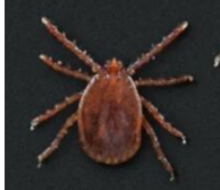
In one Kansas case, the calves were purchased on the East Coast and imported into Kansas for feeding. The disease is spread through multi-use needles and insect vectors. The primary vector is the Asian long-horned tick, a relatively new tick in the U.S. The tick has not yet been found in Kansas, but has been found in Missouri, Arkansas, and Oklahoma.

Theileria orientalis is a tickborne protozoan parasite affecting red and white blood cells, causing bovine infectious anemia. This condition, known as theileriosis, presents symptoms similar to anaplasmosis in cattle, including anemia , jaundice, and weakness. While native genotypes of T. orientalis in the United States are typically nonpathogenic, the virulent Ikeda genotype has emerged as a significant concern.

While some species of Theileria , such as T. parva and T. annulata , are reportable to the World Organisation for Animal Health, T. orientalis is currently not classified as reportable. Importantly, the U.S. Department of Agriculture notes that there are no known risks to human health from T. orientalis , but its impact on cattle health and the livestock industry is profound.

The emergence of the virulent Ikeda genotype poses challenges for cattle producers, particularly in regions with established populations of the Asian longhorned tick. Theileriosis can lead to significant economic losses due to cattle mortality, reduced productivity, and increased veterinary costs. Producers are urged to monitor their herds for symptoms and consult veterinarians promptly for diagnosis and management strategies.

Since 2017, T. orientalis Ikeda has been confirmed in cattle in at least 16 states, including Virginia, West Virginia, Pennsylvania, and New York. Its steady movement across the country correlates with the presence of the invasive Asian longhorned tick, a primary vector of the disease. Initially native to eastern Asia, this tick has been identified in 19 states , thriving in diverse habitats and spreading due to its ability to reproduce both sexually and through parthenogenesis.

Theileriosis primarily affects pregnant heifers and calves, with mortality rates reaching up to 5 percent in infected herds. Clinical signs include anemia, mucosal pallor, elevated heart and respiratory rates, weakness, reluctance to walk, and, in some cases, abortion. While cattle breeds like Wagyu in Japan exhibit reduced susceptibility, other breeds and younger animals remain highly vulnerable.

Cattle recovering from T. orientalis infections typically become chronic carriers, potentially serving as reservoirs for the parasite. The introduction of naïve cattle to endemic areas or infected animals into previously unaffected herds exacerbates the risk, especially when competent tick vectors are present.

Infected ticks transmit the parasite to cattle through their saliva during feeding. Sporozoites, the infective stage, develop in ticks feeding on infected hosts, completing the transmission cycle. High environmental temperatures can accelerate the maturation of sporozoites, increasing the risk of infection. Once introduced, ticks carrying T. orientalis can persist on pastures for up to two years under favorable conditions.

The USDA notes that as T. orientalis Ikeda continues its spread across the U.S., containment and management strategies are critical. Preventing further tick proliferation, monitoring cattle herds for early signs of theileriosis, and implementing advanced diagnostic tools are essential steps in mitigating this emerging threat to the cattle industry.