Wednesday, January 14, 2026
Home Blog Page 50

It’s science: Why a pumpkin is actually a fruit

0
AgriLife Extension horticulturist explains what sets fruits and vegetables apart.

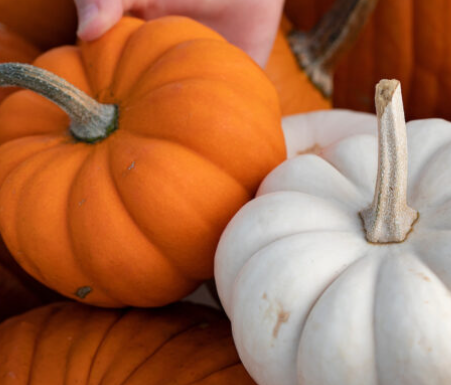
Every fall, pumpkins steal the spotlight with multiple purposes: as decorations, for soups and in pies. But here’s a fun fact backed by science: this seasonal favorite is actually a fruit.

Joe Masabni, Ph.D., Texas A&M AgriLife Extension Service vegetable specialist and professor in the Texas A&M Department of Horticultural Sciences, said pumpkins are scientifically classified as fruits because of how they grow. Anything that starts from a flower is classified botanically as a fruit.

Why do people mistake pumpkins for vegetables?

People typically consider something as either a fruit or a vegetable based on how they eat it rather than how it grows.

“We see them as to whether we eat them as a dessert, salad or as part of a meal,” Masabni said.

For example, consider cucumbers or tomatoes. People typically don’t eat them as desserts, he said. They often eat cucumbers and tomatoes in salads or cooked meals, so they may think of them as vegetables, even though they’re fruits.

“The pumpkin is a tricky one, though,” he said, “because some people make soups or stews from pumpkins, which is a meal, while others make pies, which is a dessert. So that can lead to confusion.”

What’s the difference between a fruit and a vegetable?

The difference between a fruit and a vegetable lies in whether the produce starts as a flower.

“All plants start from a seed,” Masabni said. “Let’s take the example of lettuce as a vegetable. It makes more and more leaves, and then you harvest them and eat those leaves. If you let it go even longer, it will eventually make a flower stalk and make seeds that we harvest and store for next year’s crop.”

A pumpkin plant starts the same. However, its flowers eventually turn into the fruit we eat – in this case, the pumpkin itself.

“A pumpkin starts as a small plant with a few leaves, and as the leaves grow and more branches develop, flowers will start to bloom on the plant,” he said. “Those flowers then need to be pollinated by bees or other pollinators. Once a flower is pollinated, it develops into a fruit that we consume. So ultimately, fruit relies on pollination of the flower to become the thing we eat.”

What other ‘vegetables’ are actually fruits?

Besides pumpkins, some other fruits that are typically confused with vegetables are:

  • Cucumbers
  • Tomatoes
  • Eggplants
  • Corn
  • Zucchini
  • Okra
  • String beans
  • Squash
  • Peppers

So, does it matter?

Maybe not at the dinner table, but it’s a fun fact to share at your next fall gathering.

“The fruit and vegetable debate is a fun one that hangs on the technical, scientific view of these plants that we consume,” Masabni said. “At the end of the day, we want to inform people, but we also want them to enjoy these plants as gardeners and at the dinner table.”

Daughter Verena Pens the Column Again

0

Lovina’s Amish Kitchen
Lovina Eitcher,
Old Order Amish
Cook, Wife &
Mother of Eight


This is Lovina’s daughter Verena writing. It is such a beautiful Monday evening. The leaves are changing color more and more. It is always such a beautiful view once the leaves are changed to such pretty colors.

Fall used to be my favorite season and I would love to rake up the leaves. But with me being disabled, it became too much for me to handle as I grew older. I’m thankful I can now use a leaf blower and still go out there to help gather up the leaves. It is something I enjoy. I do not care for the stink bugs and lady bugs and that also comes with fall since the beans were cut across the road from us but so be it. That is a very small thing to worry about. Haha! 

Summer became my favorite season once my muscles started to weaken more. I discovered it was easier to get around in the warmer weather. I still enjoy the snow, but I feel cooped up when I can’t go outside. Especially when there is a lot of snow on the ground, although it does look pretty. But I do look forward to putting together puzzles and sitting by the kitchen table sipping on hot chocolate while Daniel Ray sips on his coffee during the cold winter months. Sitting here writing this is just another reminder to myself that life is really what you make it. 

I now have the laundry folded and ready to put away. Laundry is one of the jobs I am not thrilled about and one of the jobs that is never ending. Haha! Also same as dishes but washing the dishes is a job I do not mind. Many times Daniel Ray will fold the laundry for me but today was not one of those times. He had other jobs to attend once he was home from work. Daniel Ray is on three days as of right now at the RV factory. Thursday and Friday he works at the buggy shop for another Amish man in this community. As of right now, he is learning how to build open cruiser seats. He enjoys the work so far. 

Daniel Ray and I butchered two deer on Saturday. Daniel Ray’s parents came to help us. We were so glad for their help. Daniel Ray’s siblings Anna, age 13, William, age 8, and Alvin, age 6, came along as well. We canned 14 quarts of deer burger and got 14 – 1/2-quart bags of deer burger for the freezer. Daniel Ray wants to make deer jerky this week yet sometime. I’m hoping Daniel Ray or I will get another deer soon because I would like to can deer chunks. Sister Liz said that she canned them and put beef flavoring in, and it tastes not far different from beef chunks that way. I’m excited to try it. We plan to go over to sister Liz and her husband Tim again this week sometime so I can try my luck at hunting again. So far, I haven’t had a chance at a deer but Daniel Ray shot two already out of sister Susan and her husband Ervin’s property. 

We now have our buggy back, it was getting fixed. Daniel Ray was getting around on his bike and I was driving the EWheels. The EWheels is a bigger mobility scooter and more road ready. I have a small trailer I can hook behind it and put my scooter on. We got around like that a lot this summer. It makes it so nice for me because I can go with Daniel Ray when he goes on a bike ride. I know mine isn’t a bike, but it feels pretty close.

It was nice to have our buggy back to go to church on Sunday because it was chilly and very foggy. The buggy lights are much brighter than the EWheels or bike lights. We have a heater in our buggy and it makes it nice and cozy for a horse and buggy ride. 

Well, you all take care and God’s blessings to you!!

VENISON CHILI

3 pounds lean venison

1 small onion, chopped

1 quart kidney beans, cooked

Brown sugar to taste if desired

1 to 1 1/2 tablespoon chili powder

1 quart pasta sauce

4 quarts tomato juice

1 quart water

Brown venison burger and onion. Add all remaining ingredients and simmer for 5 to 10 minutes. If desired this can be processed in a pressure cooker according to its directions. Makes 10-14 pints. 

Kansas hides a magnificent limestone castle that tourists have overlooked for decades

0

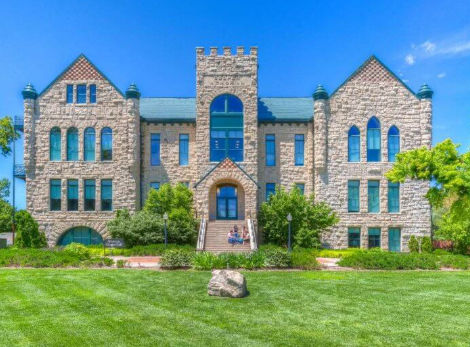
Cooper Hall’s Grand Vision on the Kansas Prairie

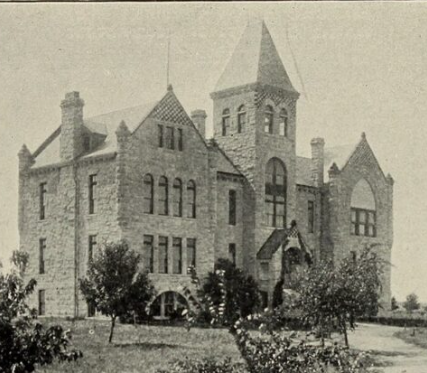
In 1886, Pliny Axtell gave ten acres of land to build a dream on the Kansas prairie. The United Presbyterian Church took the gift and set out to build their westernmost college in America.

They named it Cooper Memorial College after a church leader they loved. Soon, architects Evans and Gall got to work on a grand plan.

Local men cut huge blocks from nearby limestone beds to build the three-story hall with its tall 75-foot tower.

When Cooper Hall opened in 1887, it stood as both a school and church, with thick walls and round arches that still catch the eye.

Settlers Wanted Their Own College in 1880s Kansas

Pliny F. Axtell came to Sterling, Kansas as one of the first settlers and bought lots of land in the area.

The growing Presbyterian community in this small frontier town needed a college to teach their young people.

The United Presbyterian Church of North America was looking for a place to build their westernmost college.

Local folks in Sterling got excited about having a college in their small prairie town, as it would put their community on the map.

Ten Acres of Prime Land Sealed the Deal

In October 1886, Pliny F. Axtell gave 10 acres of his best land in Sterling for the college.

He picked a spot on high ground where people could see the building from miles around. This was a big gift worth a lot of money, and Axtell knew it.

The spot worked great as a landmark that farmers and travelers could spot from across the flat Kansas landscape.

Church Leaders Said Yes to the Sterling Proposal

The United Presbyterian Church Synod of Kansas took Axtell’s offer. They promised to pay for the school and keep it running for years.

This choice made Sterling home to the most western college in the entire United Presbyterian system. The church saw this as their chance to spread their values and education into Kansas frontier.

 A Beloved Pastor Gets His Name on the Building

The church named it Cooper Memorial College after Reverend Joseph Cooper, a top Presbyterian leader everyone respected.

Cooper had made such a big impact on the church that they felt he earned this lasting tribute. Presbyterians often named important buildings after church leaders.

The Cooper name gave the new school instant trust within church groups.

Two Talented Architects Dream Up a Masterpiece

George H. Evans and William Gall got the job to design the building.

They picked the popular Romanesque Revival style that people liked for big public buildings in the 1870s and 1880s.

Their plans called for a huge three-story limestone building stretching 120 feet long and 50 feet wide. The best part of their design was a 75-foot tower that would stand tall above the flat Kansas fields.

Kansas Stone Created a Lasting Monument

The builders found plenty of limestone right in Kansas to build Cooper Hall. The area had rock formations that gave perfect building material.

Using local stone saved money on shipping and gave jobs to local quarry workers. The limestone looked great and would last for many years.

Local Workers Tackled a Massive Building Project

Construction teams started work in 1886 right after the architects finished their plans. Workers from the area brought their skills to this big project that would change the town.

The Romanesque style meant they built round arches, thick walls, and used heavy building methods. Moving the giant limestone blocks from quarries to the building site took special tools and lots of workers.

One Building Served Two Important Purposes

Cooper Hall wasn’t just for classes. It also housed the Second United Presbyterian Church.

This smart plan meant the building stayed busy all week with students and then filled with churchgoers on Sundays.

Sharing the space helped save money when money was tight on the frontier. The multi-purpose approach showed how practical these frontier Presbyterians were.

One Man Ran Both School and Church

Reverend Francis M. Spencer ran both the college as president and the church as pastor.

His background in teaching and preaching made him perfect for this hard job. Having one person in charge of both places kept everything running smoothly.

Spencer became the face of this new school in Sterling.

Doors Opened to Students in Fall 1887

Cooper Hall welcomed its first students on November 1, 1887, with much celebration.

The college became the very first United Presbyterian higher education institution in this part of America, and the farthest west. The impressive building brought big-city architectural style to small-town Kansas.

The successful project showed what could happen when settlers, church leaders, and skilled architects worked together toward a common goal.

Visiting Kansas Historical Society in Topeka

The Kansas State Archives research room at 6425 SW 6th Avenue in Topeka offers free public access to historical records related to Cooper Memorial College (now Sterling College).

The archives operate Tuesday through Friday from 9am-12pm and 1pm-4pm, plus Saturday mornings.

While the Kansas Museum of History remains closed for renovation until November 22, 2025, administrative offices are available weekdays from 8am-5pm.

Judging The Halter

0
lee pitts

“They stopped judging chickens when they learned to count eggs.” Anonymous

I enjoyed some success on my collegiate livestock judging team so after college I was asked to judge some cattle shows. I was better at judging horses and sheep but I never did get asked to judge a horse show which was probably for the best. I’m told that losing halter horse owners can become quite irate to the point of fingering a firearm in their shoulder holster as an enticement to see things their way. I was a terrible swine judge and the porkers all looked the same to me. A seasoned and well traveled swine judge once told me that when explaining his reasons for picking his Grand Champion he just picked someone in the crowd and described that person with god-like superiority.

The 1970’s were a terrible time to be a cattle judge because the industry was in a quandary as to whether it wanted them tall and long or short and dumpy. Oops, the grammar police would have me say, ‘vertically challenged’ instead of ‘short’. In high school I worked on a ranch that once owned an International Grand Champion Angus bull and photos of him show he was belt buckle high to a fourth grader. I called such cattle ‘belly draggers’ because you couldn’t see any daylight underneath them.

I really didn’t like judging cattle shows because they took up a lot of time, the pay was peanuts and, alas, no one ever tried to bribe me. Plus you made a lot of enemies. I may be the only person to be banned forever from a county fairgrounds because I rolled a heifer to the bottom that belonged to the daughter of a fair board member. My psyche is fragile enough to begin with and I really didn’t enjoy people hating me.

I was once asked to be a member of a three person team to judge a breeding show which I wouldn’t recommend to anyone seeking to advance their career. One of my fellow judges was a breeder of the the breed we were judging, another was an academic who spent his time before shows studying the results of prior shows in breed journals so he’d have some idea of what was expected of him. He didn’t want to put a Denver Grand Champion fourth in his or her class. Then there was me who primarily served as a referee that broke out on every class between the academic and the breeder. In every instance I found them both to be wrong.

In one show I judged there was a two year old bull I’d seen before. He’d been winning all the shows but I disliked him very much. So much so that when I judged a class with him in it at the Cow Palace Collegiate Judging Contest I put him in third place knowing I’d bust the class. The bull was so tall you could drive a Smart Car under him and come out the other side untouched. I’ll admit the bull was the longest beast I’d ever seen but my problem with the bull was that he was devoid of muscle. Funny thing, even though I busted the class I got a 50 on my reasons, a perfect score. Still it cost me several points and I lost winning the entire contest by two points.

A smart person would have just realized who owned the bull and put him on top. In horse judging this is known as ‘judging the halter’, or recognizing the horse’s name that was on the brass plate on his halter. A friend told me this frequently happened at cattle shows too and to prove it he once showed the lesser of two heifers he had in a class but was picked first because, he explained, “The judges always assumed I’d be showing my best animal in every class.”

For me and the gutless wonder who, to this day, I’ve never seen in any pedigree, judgement day came when the fraud was sent to slaughter. I’m told they couldn’t scrape enough meat off his long bones to produce a decent Quarter Pounder. I felt vindicated at last, but still, I was never asked again to judge another cattle show and for that I will be forever grateful.

Hinton to be inducted Into National Agricultural Hall of Fame

0

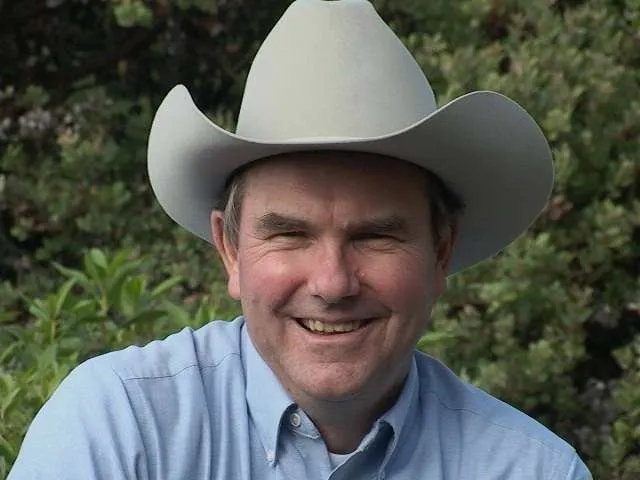
The National Agricultural Hall of Fame will induct three individuals this fall whose work has significantly shaped American agriculture—antique tractor preservationist Michael Hinton of Hutchinson, former U.S. Agriculture Secretary Sonny Perdue, and pork industry innovator Wendell Murphy. The ceremony will take place Oct. 23 at the National Agricultural Center in Bonner Springs.

Chartered by Congress in 1960, the Agricultural Hall of Fame honors those who have made outstanding national or international contributions to the advancement of agriculture. Previous inductees include such figures as Sen. Pat Roberts, Eli Whitney, George Washington Carver, and John Deere.

Honoring a Hutchinson Preservationist

Hinton, known nationally for his dedication to preserving vintage tractors and the stories they carry, founded Antique Tractor Preservation Day and created TalkingTractors.com in 2024, a platform celebrating the heritage of rural life and agricultural innovation.

His efforts have earned multiple Kansas Governor Proclamations—in 2025, 2024, 2012, 2011, and 2010—along with two U.S. Congressional Record Statements and four USPS Pictorial Postmarks recognizing Antique Tractor Preservation Day.

Through his preservation and storytelling work, Hinton has brought global attention to the enduring spirit of American farmers. “It’s about storytelling, stewardship, and strengthening the bond between generations,” the Hall of Fame release noted. “He works to honor those who labored in the fields, advanced American farming, and embodied the values of hard work, innovation, and community.”

National Leaders in Agriculture

Also being honored is Sonny Perdue, who served as U.S. Secretary of Agriculture from 2017 to 2021. During his tenure, he established the first Under Secretary for Trade and Foreign Agricultural Affairs to open global markets for American farmers, expanded food programs during the COVID-19 pandemic, and advanced rural broadband initiatives. Perdue now serves as chancellor of the University System of Georgia, overseeing agricultural research, education, and the creation of the 250-acre UGA Grand Farm research facility.

Wendell Murphy, of Rose Hill, North Carolina, transformed modern pork production. Through Murphy Farms, founded in 1962, he pioneered contract feeding systems, confinement technology, and genetics programs that revolutionized pork production nationwide. His innovations in nutrition, biosecurity, and efficiency remain industry standards.

For more information about the inductees or the October 23 ceremony, visit www.AgHallofFame.com