Tuesday, January 20, 2026
Home Blog Page 130

Wheat Foods Council prepares for summer strategy meetings

0

Contact: Marsha Boswell, [email protected]

For the audio version, visit kswheat.com.

From engaging top chefs in an immersive dive into the world of wheat to summer strategy meetings, the Wheat Foods Council (WFC) continues to champion wheat-based foods, as it has done for more than five decades.


“The WFC brings together all of the different industries connected with wheat,” said Cindy Falk, Kansas Wheat nutrition educator. “Millers, bakers and more are all members, so this organization is where folks can come get a really good perspective about what is going on in the world of wheat from the farm to the table and everywhere in between.”


Wheat producers across the country joined together in 1972 to create the WFC as a national organization to promote the entire category of wheat-based foods, including baked goods, cereal, crackers, pasta, sweet goods and tortillas. Since then, the organization has established itself as a source of science-based information on wheat and grain foods nutrition.


Today, the WFC uniquely remains an organization whose membership encompasses the entire wheat foods value chain. Kansas Wheat is a member, along with grain producers, millers, baking suppliers, life science companies and cereal manufacturers. Together, the WFC stays true to its original mission — to help increase the awareness of dietary grains as an essential component of a healthful diet.


To do so, the Council develops sound nutritional, educational and promotional programs that reach health and nutrition professionals, opinion leaders, media and consumers. The organization works with a wide swath of key audiences, including health and nutrition professionals, educators, supermarket and retail dietitians, health-conscious consumers, media, chefs and cooks and personal trainers.


One recent example of these efforts was a chef-focused event in April 2025, when the WFC hosted 11 prominent, high-volume chefs for an in-depth look into the wheat industry at the Culinary Institute of America in Napa, California. The experience included a tour of a working flour mill, educational sessions on wheat varieties, production and growing region, hands-on demonstrations of a variety of techniques and doughs, guest lectures and more.


Attendees included culinary and research and development leads from major foodservice operators and suppliers. The event culminated with a culinary challenge, where teams of chefs used their creativity and newfound knowledge to develop innovative menu items for the morning and afternoon dayparts – all centered around wheat. The WFC plans to maintain ongoing connections with these chefs, monitoring their progress and offering continued support to ensure successful menu integration and increased wheat usage.


This successful event adds to the WFC’s decades of achievements. Now, the organization is turning its sights to the future during the upcoming WFC summer board meeting, scheduled for June 17 to 19, in Minneapolis, Minnesota. This meeting will serve as a forum to review the previous fiscal year’s marketing program, analyze current industry health and wellness trends and formulate planning recommendations for the 2025-2026 fiscal year. A significant discussion will also focus on the future direction of the WFC, strategizing how best to continue its mission in an evolving landscape.


Falk will help provide context to the discussion with a presentation highlighting 20 significant events in the organization’s history, spanning from the creation of the WFC to the latest in educational resources and research. She is also bringing along a display of historical items and educational materials, including posters, pamphlets, books, swag and more.


“For more than five decades, the WFC has been a steadfast voice supporting the wheat industry, ensuring its vital role in people’s daily lives,” Falk said. “This continued work is crucial, and this organization is a place where the entire industry comes together for a shared vision.”


Learn more about the Wheat Foods Council at wheatfoods.org.
Researchers using drones to aid cattle feed yard sustainability

0

K-State researchers use thermal images to improve cattle management.

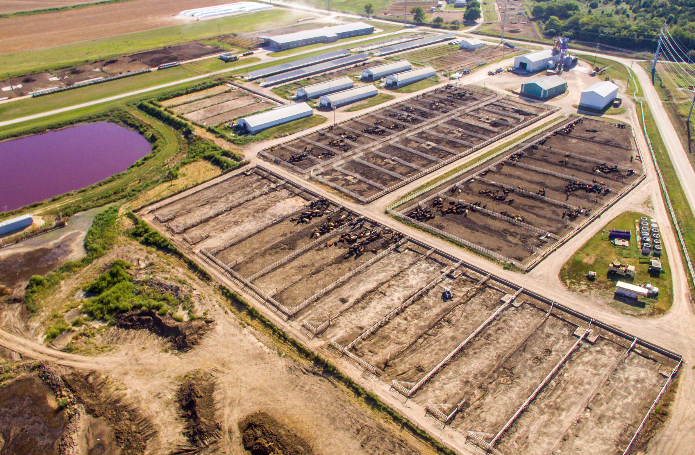
Kansas State University researchers are working on a project to analyze the opportunities available by using drone thermal imaging in cattle feed yards.

In a recent episode of Cattle Chat, guest Haley Larson, assistant professor in animal nutrition and health at K-State Olathe, described their project and findings.

“To start off, we needed to determine the type of samples in these feedlot pens that could better detect pen management, especially as you have different environmental conditions, different manure outputs, moisture content,” Larson said. “Then, we wanted to find out if we could capture that same pen management findings in a thermal image from a drone.”

She said that drones are highly sensitive, and images can be collected in series to improve sensitivity contrary to what some might think.

“It’s a series of many images of that pen that then are combined so we can get a lot of sensitivity out of these aerial images. They’re taken sequentially as the drone flies over that pen,” Larson said.

With their findings, Larson and her team were able to begin analyzing cattle management strategies. After pilot testing small pens, the researchers took the drones to commercial feed yards to see what information they could gather.

“Commercially there are ways that you can upload the drone’s images into an app on your phone and it will run the algorithm to count the number of cattle that are in that pen,” Larson said.

One of the team’s interesting findings: Larson said researchers found they could detect water leaks that pen riders had missed. Drones were able to pinpoint the thermal temperature of the bedding as well as the coolest locations of each pen.

Larson added that the technology has the potential to be very useful to producers as it becomes more accessible.

“A lot of this pilot work is helping to lay the foundation for where we could go eventually for some real time processing ability at the producer level, or at the nutritional consultant level, to try to better extrapolate some of this data outside of the very specific programs that recombine the images together, she said.”

For the full discussion listen to Cattle Chat on your preferred streaming platform.

Reduce mosquitoes by taking away their habitat

0

Areas of standing water will encourage the biting insect to multiply.

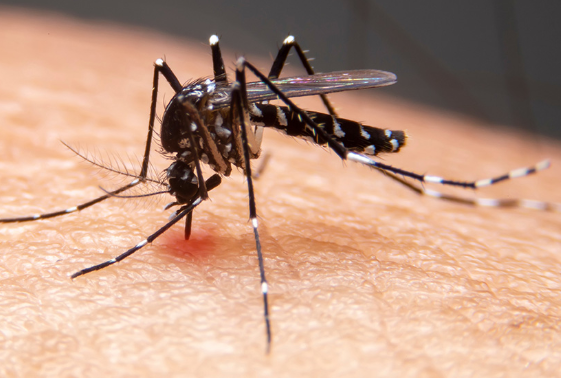
For many, the onset of summer means outdoor picnics, walks and time at the park, but a blood-sucking insect whose lifespan rarely lasts past two months often can put a bite in those plans.

Kansas State University entomologist Jeff Whitworth said May and June tend to be the time of year when adult mosquito populations rise in Kansas. Many parts of the state received adequate rainfall during those two months, which promoted ideal conditions for mosquito breeding.

“If it keeps raining,” Whitworth said, “you ain’t seen nothing yet, because they’re going to keep coming.”

He said mosquitos lay their eggs on the surface of water, so anywhere that there is standing water – bird baths, old tires, eaves around the house, feeding troughs on farms are among some of the areas – mosquitos are likely to multiply.

“There are 40-50 species of mosquitos in Kansas, and they will lay anywhere from 200 to 300 eggs at a time,” Whitworth said. “Some species will lay eggs in a low spot that’s just damp, and when the water comes in, the eggs will hatch. But they have to have moisture to hatch the eggs, which happens 4-5 days after the adult mosquito lays the eggs.”

Thus, Whitworth said, reducing mosquitoes around a property comes down to reducing areas where water sits idle.

“If you live out in the country, it’s really difficult to get rid of all of these sources of mosquito larvae,” Whitworth said. “But that’s what you want to shoot for. You want to try and get rid of the eggs – the larvae or pupae – before they become adults.”

Once adults, mosquitoes mate. Males have a very short lifespan; typically 10 days during which time they are harmless. Females need a blood meal in order to produce fertilized eggs, so they are aggressively seeking a blood source prior to depositing their eggs.

“They’re very persistent, and very good at finding a source of that blood meal,” Whitworth said.

Whitworth said mosquito control efforts in towns and cities are generally not effective ways to kill adult mosquitoes. The females will fly as far as three miles searching for its next meal, “and by the time they get there, the residual activity (of the insecticide) is very, very little.”

“The chances are very small that they are going to land on something that has a little chemical on it,” Whitworth said. “They fly right in from where they are going and directly on to a human, bird, chicken or whatever their next blood meal is.”

For humans, the best way to protect from mosquitoes is to stay inside. When going outside, wear long sleeve shirts and pants. A repellent containing DEET will work against mosquitoes, but needs to be re-applied every two hours.

“The presence of mosquitoes is not going to get any better until it dries out, or at least until the corn, sorghum and soybeans are harvested and in the bin in the fall,” Whitworh said. “Even so, the mosquito is not going to go away. It’s best to try and control the habitat that is producing them.”

More information about mosquitoes in Kansas is available in a publication available online from the K-State Research and Extension bookstore.

Want to shoot off fireworks in Hutchinson and Reno County? Here’s what to know first

0

Fireworks are already on sale in some cases, and depending on where they live in Reno County, there are laws in place about when, where and what people can light off to celebrate the Fourth of July.

While some laws prohibiting certain types of fireworks, like bottle rockets, silver salutes, M-80s and M-100s are set by the state of Kansas, other prohibitions and regulations may be set locally.

Here’s a look at when, where and what fireworks can be discharged in Reno County.

Hutchinson and unincorporated Reno County share regulations on discharge

After a change at the county level in 2023, Hutchinson and Reno County have the same regulations on when fireworks can be set off.

Discharge of them can take place between 8 a.m. and 11 p.m. June 30 to July 4.

The Rattler Relocation Project

0
lee pitts

The rattle of a rattlesnake has been the sound track of my life as I’ve lived in rattler country most of my time on earth but it seems like lately I’m seeing and hearing more of them. In the last five years I’ve killed six of the cold-blooded killers within ten yards of my front door! A friend who likes to go hiking says he too has seen so many more rattlers in the state park that he is now wearing shin guards that baseball catchers wear. It’s a good thing because one rattler got a nasty headache when it struck the hard plastic that covered his leg from his knee down.

I’m not ashamed to say that I kill every rattlesnake I can because the way I see it, it’s kill or be killed. My admission probably horrifies the animal rightists who live in big cities where the only snakes they come in contact with are politicians and bureaucrats.

One busy-body, who used to semi-like me, got word that I killed a rattlesnake and now won’t even return my wave because I didn’t call The Rattlesnake Relocation Project instead which supposedly catches rattlers and relocates them. I tried explaining to my neighbor that the only way that rattler would even be in the same zip code by the time the rattler trapper got there was because I’d chopped its head off. I bet if her beloved blind dog got bit by one she’d change her tune.

Speaking of dogs getting bit, I have another neighbor who went from being a snake lover to being repelled by reptiles when a rattler bit the nose of her dog. I think the only reason the dog survived was because it was a rough and tough Catahoula with a proud heritage of fighting gators in the swamps of Louisiana. Still it nearly died and hasn’t been the same since. To prevent future occurrences my neighbor put in a rattlesnake fence and it had hardly been completed when her dog got bit a second time. After surviving two rattler attacks that dog is now on a mission to rid the world of rattlesnakes and went from being a nice dog to a deadly assassin. Because of her dog’s new desire to kill rattlesnakes my neighbor sold her beautiful home, took her now-nutty dog and moved to a condo in a sanctuary city.

When I worked in the oilfields it was in an area crawling with rattlers. It was a slow week if at least one wasn’t killed and put in someone’s lunch box to scare them to death like they did me on my my first day on the job. We killed so many rattlesnakes that I started collecting their rattles and skinning their hides.

On my first day in the oilfields I was handed two things, a hard-hat and a snakebite kit which consisted of one rubber end that held a razor blade and the other end was a rubber suction cup you were supposed to use to suck out the venom after you’d cut a deep X through the fang marks. I always wondered if I’d have had the guts to cut myself if I was ever bit. A friend who retired from working in those same oilfields told me they no longer issue snakebite kits and said the old rules no longer apply. Now they tell you to remain calm (easy for them to say), apply a tourniquet and have someone drive you to the nearest hospital, or mortuary, whatever the case may be.

What prompted this essay was an event that made me even more proud of my wife, if that’s possible. She loves to garden but before she gets down on her hands and knees to plant or trim she shakes the bushes with a stick to scare any snakes away. Today my wife casually mentioned that she’d killed a rattlesnake while gardening. At first I was leery of her claim but sure enough she showed me the dead rattler with its head chopped cleanly off. I wonder, how many women can say they’ve killed a rattlesnake? It’s got to be a very low number. Now, just like that Catahoula, my shovel-wielding wife is on a deadly mission and has embarked on her own version of the Rattlesnake Relocation Project.