Wednesday, January 21, 2026
Home Blog Page 146

New digital tool provides satellite monitoring of crop health across US

0

Researchers from the University of Kansas, with support from the KansasView and AmericaView programs, have created a web-based app for the public that provides free satellite monitoring and analysis of vegetation and crop health across Kansas and the nation, called the Sentinel GreenReport Plus.

The free digital tool integrates Google Earth Engine with high-resolution imagery from the European Space Agency’s Copernicus Sentinel-2 satellite mission, consisting of two identical satellites that share the same orbit. The Sentinel GreenReport Plus combines this satellite imagery with climate datasets from the PRISM group. As a public-service resource, the tool provides users with up-to-the-day insights into vegetation greenness, changes in land cover over time and climate abnormalities.

According to its KU creators, the Sentinel GreenReport Plus already has seen use in monitoring crops, assessing damage from drought, detecting changes in land use and tracking vegetation recovery following a disaster.

“Remote sensing and satellite imagery technology has been improving in terms of the spatial footprint that it can represent in a pixel,” said Dana Peterson, director of KansasView and senior research associate with Kansas Applied Remote Sensing, a program of the Kansas Biological Survey & Center for Ecological Research at KU. “This allows us to do more detailed monitoring of vegetation condition — it could be vegetation in a forest community, a cropland community or on rangeland. We could create a tool that would allow access to these data easily and create an interface where people — whether educators, researchers, ranchers or cropland producers — could access the imagery easily and look at vegetation health.”

The KU team said the public-facing digital tool could be used further to assess vegetation destruction from natural hazards or even more routine damage like hail.

“We’ve also looked at some of the burn events and wildfires,” Peterson said. “You can look at how the vegetation has been damaged and to what extent and severity.”

The Sentinel GreenReport Plus improves detail and insight over the classic GreenReport, introduced in 1996 with support from NASA by the Kansas Applied Remote Sensing Program. The new Sentinel GreenReport Plus is underpinned by Copernicus Sentinel-2 satellite data, a much finer 10-meter resolution than the classic version relying on 1,000-meter resolution MODIS imagery.

Abinash Silwal, KU graduate student and tech lead in the project, said any agricultural producer could use the tools to assess the success of different crops, monitor crop health or compare crop conditions over time, which may indicate yield performance. The tool integrates USDA NASS Cropland Data Layers, which allows crop-specific stress analysis.

“We can look at vegetation health at the crop-type level,” Silwal said. “For example, if I want to monitor my field of corn, I can select ‘corn’ in the app and draw a rectangle or polygon around the area. The tool instantly displays multiple charts, including a time series and comparison charts showing current vegetation health relative to historical averages. This helps determine whether the crop’s current condition falls within the normal range or is showing signs of stress.”

The heart of the Sentinel Green Report PLUS is underpinned by the Normalized Difference Vegetation Index. The Sentinel GreenReport PLUS has several key features:

  • Greenness Map: Uses the NDVI as a proxy for photosynthetically active plant biomass over a selected composite period.
  • Difference Map 1: Compares NDVI to the previous composite period within the same year, illustrating recent vegetation changes.
  • Difference Map 2: Compares NDVI to the same period from the previous year, highlighting year-over-year vegetation changes.
  • Difference Map 3: Compares current NDVI to the average NDVI from previous years, showing changes relative to historical trends

Aside from Peterson and Silwal, the team that produced the Sentinel GreenReport Plus is composed of Chen Liang, former doctoral student; Jude Kastens, research associate professor and director of KARS; and Xingong Li, professor of geography & atmospheric science.

The KU researchers know stakeholders have found many features to be valuable. For instance, Silwal said the ability to compare vegetation health with precipitation adds a powerful dimension to understanding vegetation stress.

“The addition of the precipitation curve is the coolest thing,” he said. “If I see that vegetation health is below normal and the precipitation curve is flat or shows significantly lower rainfall compared to the 30-year historical statistics, we can infer that drought may be contributing to the stress. When the vegetation line is declining and the accumulated precipitation trend remains flat or below average, it points to possible drought conditions affecting crop health.”

These breakthroughs should lead to better-informed agricultural producers, policymakers, insurers and research ecologists in Kansas and across the nation, Peterson said.

She added the Sentinel GreenReport Plus might represent “a better way to understand the interplay of climate and vegetation. Users can visualize trends, generate crop-specific charts and download outputs to support reports, presentations and further analysis.”

For more information, visit the program’s website.

Judge hands Leavenworth, Kansas, a court loss as battle over immigrant detention continues

0
A U.S. District Court judge ruled in favor of a private prison company that plans to use its troubled Leavenworth facility for immigration detention. The city argued CoreCivic should follow local laws first.

The city of Leavenworth cannot ask the U.S. District Court of Kansas to block a private prison company from holding immigrant detainees at its dormant facility, a federal judge ruled Thursday.

The decision is a major setback for city leaders who hoped to enforce local regulations — and for immigrant rights advocates and former CoreCivic employees who opposed the facility reopening. 

The city of Leavenworth is expected to appeal the ruling to the 10th U.S. Circuit Court of Appeals in Denver.

In an email to the Kansas News Service, CoreCivic spokesperson Ryan Gustin did not confirm whether the company plans to begin housing detainees at the facility on June 1, as indicated during litigation.

“We are grateful for the Court’s decision,” he said. “And as we continue to bring jobs and other economic benefits to the community, it remains our strong desire to work in close partnership with Leavenworth and its leaders.”

U.S. District Judge Toby Crouse said his court did not have the authority to take the kind of action that the city had requested.

“The City asserts that CoreCivic should be enjoined from operating its detention facility without the proper permit,” Crouse wrote in the seven-page decision.

“But it has not pled facts to establish that subject-matter jurisdiction exists in federal court to consider that claim,” he said.

The legal battle centers around a 1,000-bed complex in Leavenworth, Kansas, that CoreCivic ran as a maximum-security private prison for federal inmates until it closed in 2021.

Former staff and inmates said they saw preventable drug use, injury and death on a regular basis — problems exacerbated by chronic understaffing, according to a 2017 audit by the U.S. Department of Justice.

Gustin told the Kansas News Service that most issues with safety and staffing were concentrated during an 18-month period coinciding with the pandemic.

“As with any difficult situation, we sought to learn from it,” he said.

Now, CoreCivic has signed a contract with U.S. Immigration and Customs Enforcement, or ICE, to boost capacity for President Trump’s deportation agenda.

In late March, the city of Leavenworth sued to stop CoreCivic from following through on its plans. The city said a special permit is needed because the facility has not housed inmates in over three years.

That lawsuit set up a legal battle over local development regulations. Small potatoes on the surface, the case could decide whether Leavenworth becomes a key regional hub for immigrant detention.

Balls and strikes

U.S. District Court Judge Toby Crouse, a Trump appointee, rolled a baseball around in his hands as he considered the parties’ arguments.

From the outset, Crouse questioned whether his federal courtroom was the right venue to decide a conflict about local rules.

“How many federal courts get involved in zoning violations?” he asked Joseph Hatley, an attorney for the city of Leavenworth.

Hatley responded that the case satisfied the elements of diversity jurisdiction — a legal principle that gives federal courts the power to hear a case where parties from different states are arguing over a matter that could be worth $75,000 or more.

From there, Hatley fleshed out the argument presented in the initial filing from March.

He explained that Leavenworth requires special use permits for prisons. But the CoreCivic facility operated before 2012, when that rule took effect, so their facility was “grandfathered in.”

Nevertheless, Hatley said CoreCivic lost its special use permissions when it stopped using the property as a prison.

“They may have been keeping the lights on, mopping the floors,” he said. But the facility had held no inmates since then-President Joe Biden issued an executive order that caused federal contracts with private prisons, including the Leavenworth Detention Center, to end.

If the company is allowed to begin operations, Hatley said, it would fly in the face of local authority to regulate land use.

So the city asked Judge Crouse to block CoreCivic from housing inmates until it has gotten a special use permit — a process that takes multiple months and public input.

“If you can’t enforce your own laws, that’s irreparable harm,” Hatley said.

CoreCivic’s lawyer disagreed that the facility was ever truly closed.

“CoreCivic didn’t just keep the lights on,” said Taylor Concannon Hausmann, the company’s lead attorney in the case. The entire time, Hausmann said, CoreCivic employed maintenance staff and pursued new contracts.

CoreCivic applied for a special use permit in February, then quickly withdrew it — a fact both parties tried to frame to their benefit.

CoreCivic said it was a show of good faith to the city. But the company withdrew its application when it seemed like the city would put it through an extensive process and slow its collaboration with ICE.

Lawyers for Leavenworth said CoreCivic had tacitly acknowledged the correct process — and then dodged it when public scrutiny began to mount.

Throughout the hearing, Crouse remained focused on the question of whether Leavenworth had gone through the proper legal process to seek judicial intervention. He appeared critical that the city had satisfied all the legal requirements necessary to earn injunctive relief.

Hatley compared his case with other high-profile ones in New Jersey and California, where laws banning private immigration detention altogether were struck down or delayed in court. By contrast, he said, this case was purely a matter of local development regulations — not an attack on immigration detention writ large.

After the hearing, Leavenworth City Manager Scott Peterson maintained that the lawsuit was not politically motivated. Mayor Holly Pittman said the city would entertain any application for a special use permit.

But the specter of federal power and the hot-button issue of immigration loomed large in and outside of the courtroom.

On Wednesday, a federal judge said the Trump administration had “unquestionably” violated a court order by deporting migrants to South Sudan who had no connection to the country.

When asked if the federal government would obey a ruling in Leavenworth’s favor, Hatley said “it’s certainly a concern.”

Outside the courthouse

As lawyers prepared to debate the case, representatives from Kansas Interfaith Action gathered outside in speech, prayer and song.

KIFA is part of a coalition of local groups that have organized events, appearances at public meetings, and petitions to oppose the reopening.

“The command to welcome strangers is repeatedly, explicitly, over and over, given to us throughout scripture,” said the Rev. Dr. Annie Ricker, chair of the organization.

KIFA Executive Director Rabbi Moti Rieber referenced a recent U.S. Supreme Court Decision allowing the Trump administration to end a program that had protected hundreds of thousands of Venezuelan immigrants from deportation.

Rieber said the unwinding of legal safeguards for immigrants paved a path toward the removal of legal permanent residents or even citizens.

“We’re (protesting) because of who it’s affecting now, but this does not stop with the ‘other.’ It ends up with us,” he said.

Kansas Insurance Department offers help to Reno County residents

0

Residents affected by recent severe weather in Reno County should contact the Kansas Department of Insurance if they have an issue with an insurance claim, Kansas Insurance Commissioner Vicki Schmidt said.

The Department has been in contact with local authorities in Reno County and urges residents affected by the storm to contact the Department if they need assistance.

“Severe weather in Kansas often means storm damage and insurance claims,” Commissioner Schmidt said. “If you have any questions about your insurance coverage after the storm or have an issue with an insurance claim in the coming weeks, please contact the Department.”

If you or someone you know is having trouble with an insurance claim, please contact the Kansas Department of Insurance’s Consumer Assistance Division 785-296-3071, or by email [email protected] or visit the Department online at insurance.kansas.gov for any claims-related questions or concerns.

Underground Railroad site in Kansas City, Kansas, named National Historic Landmark

0
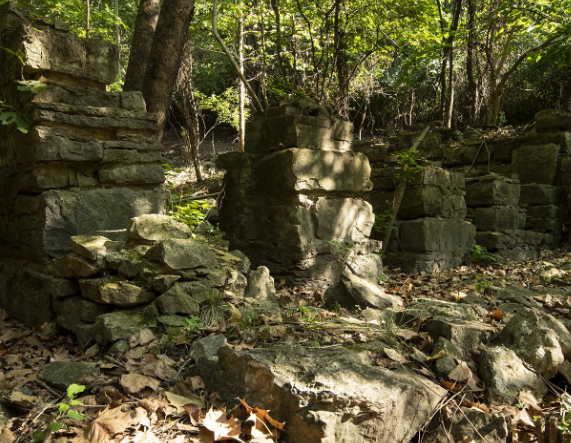
The stone and brick foundations of the Wyandotte House Hotel peek up from the ground in the old settlement of Quindaro. It’s now an archaeological site owned by the African Methodist Episcopal Church and the City of Kansas City, Kansas.
The designation from the National Park Service opens up the Quindaro Townsite to new opportunities for federal funding and assistance. The ruins, now deteriorating, were once a haven for Black people escaping slavery and for Free State abolitionists.

The Quindaro Townsite in Kansas City, Kansas — once a stop along the Underground Railroad for people escaping slavery and a home to abolitionists during the “Free State” era — received National Historic Landmark status from the federal government on Thursday.

Quindaro now joins the more than 2,500 national historic landmarks across the U.S. that are “nationally significant in American history and culture,” according to the National Park Service.

“The designation … really cements the site’s status as a truly significant piece of American history,” said Johnny Szlauderbach, director of communications and projects at Freedom’s Frontier National Heritage Area, a group focused on the history of the struggles for freedom in western Missouri and eastern Kansas.

Szlauderbach said Quindaro is an “extremely unique space in American history.”

“It represents, as a site, how we got from the 1850s, and segregation and the division of the 1850s, to the world that we live in today,” he said.

The board of the National Park Service unanimously recommended Quindaro as a National Historic Landmark yesterday; it now goes before U.S. Secretary of the Interior Doug Burgum for final approval.

The designation opens the site up to more funding opportunities and assistance for some much-requested improvements.

It comes amid President Donald Trump’s attacks on diversity, equity, and inclusion initiatives, and his administration’s attempts to erase and whitewash aspects of African American history. Earlier this year, the National Park Service removed a photo and quote from Harriett Tubman and said the Underground Railroad “bridged the divides of race.” They have since been restored.

But Szlauderbach said Quindaro’s history is one that overcomes ideological differences.

“I believe that the history of Quindaro and the example that Quindaro sets, of groups working together for something bigger than themselves and something better than themselves, is so inspirational that it reaches across party lines,” he said.

Earlier this month, Rep. Emanuel Cleaver, from Missouri, and Reps. Sharice Davids and Derek Schmidt, from Kansas, sent a letter to the National Park Service, urging them to recognize Quindaro as a National Historic Landmark.

“Designating Quindaro as a National Historic Landmark would not only honor the site’s historical significance but also ensure the preservation of its legacy for future generations,” the letter reads. “It stands as a testament to the collaborative spirit and unwavering pursuit of liberty that define our national identity.”

After Thursday’s announcement, Cleaver told KCUR the designation is a big deal.

“The way we are going now, we are trying to destroy truths,” he said, referring to Trump’s DEI attacks. “And you know, Quindaro is the truth. Its existence is still there.”

It’s especially significant, he said, that some of the Quindaro ruins are still standing.

“We want this landmark designation of the Quindaro Townsite to speak eloquently to the history and ingenuity and commitment to freedom these slaves had,” Cleaver said. “As a Missourian, it’s very significant to me, and it destroys the myth that the slaves were happy and singing hymns and enjoying their slavery.”

Davids said in a statement that she’s proud of the bipartisan effort to secure the designation.

“Quindaro is a rich part of Kansas history, and its role in our country’s effort toward equality and justice deserves to be honored and preserved,” she said.

‘Truly a port town’

The Quindaro townsite sits on and around the bluffs overlooking the Missouri River. It was established in the 1850s by the Wyandotte Tribe, and was a gathering place for several Native American tribes.

Its proximity to the Missouri River became an advantage, and Quindaro grew before the Civil War into a booming community of Free State abolitionists, formerly enslaved Black people and Native Americans.

Quindaro became an important stop on the Underground Railroad for Black people escaping slavery from Missouri, a slave state. In the latter half of the 1800s, Quindaro remained a bustling port town, Szlauderbach said.

“It had hotels, it had restaurants, it had shops,” Szlauderbach said. “It was truly a port town and the first real stop on one’s way westward into Kansas.”

After the Civil War, residents of the town established the Quindaro Freedman’s School, the first school for Black people west of the Mississippi River. It was later renamed Western University, and served Black students until it closed in 1943.

By the mid-1900s, Quindaro began deteriorating and people left the town for better opportunities elsewhere.

“The town emptied out and eventually became a ghost town, to the point that now all that exists on the site are ruins,” Szlauderbach said. “It’s overgrown, it’s difficult to access.”

‘Safe haven for all’

The hope is that the National Historic Landmark status will make Quindaro, and its history, easier to access. Over the years, Quindaro’s ruins have decayed and the site has become overgrown.

With a new designation, the National Park Service can deploy its experts, preservationists and conservationists to improve the site.

“It’s such an inspiring story, too, that these groups were working together before the Civil War and after the Civil War to create this kind of safe haven for all — for people of different races, different religions,” Szlauderbach said. “And finally, we have the resources that we need to tell that story and get the word out.”

Quindaro received National Commemorative Site status in 2019, which advocates hoped was a stepping stone to becoming a National Historic Landmark. Six years later, the Quindaro Townsite is still largely inaccessible to the public.

Szlauderbach hopes its landmark status can lead to trails, signs and a museum in the future. He said he sees Quindaro as the “best representation of the American promise.”

“The fact that we are now grappling with that — the loss of that promise — and learning about how this experiment failed will maybe teach us about how precarious the entire American experience truly is,” Szlauderbach said. “It is a truly American story, a significantly American story, that’s right in our backyards that almost nobody knows about.”

Kansas News Service

Kansas Wheat Hosts Milling Industry Delegation from Latin America

0
Kansas Wheat

Contact: Marsha Boswell, [email protected]

Kansas Wheat Hosts Milling Industry Delegation from Latin America
For the audio version, visit kswheat.com.

Six milling industry professionals from Mexico, Central America and Venezuela were in Kansas this month to participate in the Wheat Quality Council’s annual Hard Red Winter (HRW) Wheat Tour and gain firsthand insight about this year’s wheat crop and engage directly with Kansas wheat farmers.


“This tour is an excellent opportunity for U.S. customers from Mexico, Central America and Venezuela to get out into the fields and see Kansas wheat production firsthand,” said Stephanie Bryant-Erdmann, U.S. Wheat Associates (USW) Assistant Regional Director, Mexico/Central America/Caribbean/Venezuela.


U.S. Wheat Associates sponsored the delegation using USDA’s Regional Agricultural Promotion Program (RAPP) for Central America and Venezuela and Market Access Program (MAP) funds for Mexico.


The tour kicked off in Manhattan, Kansas, with a briefing on the diverse growing conditions across the state and the challenges Kansas farmers face.


On the first full day of the tour, participants from Honduras and Mexico visited Chris Tanner’s farm near Norton, Kansas. Tanner is President of the Kansas Association of Wheat Growers and Secretary of the National Association of Wheat Growers.


The participants had the opportunity to ride with Tanner in his sprayer, experience sitting in his combine and then visit one of his wheat fields to perform yield calculations. These direct interactions between buyers and farmers are invaluable for building strong customer relationships.


“The visit was incredibly valuable — for both of us,” said Tanner. “When people from the wheat and milling industry come to the farm, it’s a meaningful experience for them. They get to see firsthand where the product begins. For me, it’s rewarding to meet the people who take my product to consumers, build those relationships and show them the practices we use to produce a safe, high-quality product.”


“Mexico is the largest buyer of U.S. wheat in the world, a title it has held for nine consecutive years,” said Mitch Skalicky, USW Regional Vice Present, Mexico/Central America/Caribbean/Venezuela. “U.S. wheat exports to Mexico are up 18% year over year at 3.90 MMT (143 million bushels). It is also the #1 buyer of U.S. HRW and has purchased 1.57 MMT (57.8 million bushels) thus far in marketing year 2024/2025, which will end on May 31.”


Honduras is a top 20 market for U.S. wheat exports with U.S. wheat exports to Honduras growing 3% year over year to 302,000 MT (11.5 million bushels). U.S. wheat has maintained 100% market share in Honduras for more than a decade.


On the next day of the tour, some of the participants visited the Millershaski farm near Lakin, where they had the chance to speak with Gary and his son Kyler about their operation. Gary Millershaski, who serves on the Kansas Wheat Commission and is Treasurer of USW, then met up with the entire delegation at the evening meeting in Wichita.


“We raise wheat because that’s what we do,” Gary told the group. “It’s what our family has always done, and we take great pride in it.” As each of the vehicles pulled up to their farm, Gary welcomed the visitors by inviting each person to introduce themselves and share why they chose to participate in the wheat tour — sparking engaging conversations and building immediate rapport. The personal connections made between the farmers and millers were enhanced as they showed them their combine and header as well as evaluated the fields. Gary pointed out signs of drought stress, but said that despite this year’s challenges, the heads are large, and it should be an average crop.


“It all comes down to one thing,” Gary said. “How can we work together to make tomorrow better than today?”


The delegation also included customers from Venezuela and Costa Rica. Pamela Rubio, USW/Mexico City Programs and Communications Assistant, accompanied the group.


U.S. wheat sales to Central America are up 42% year over year at 1.16 MMT (42.5 million bushels) and U.S. HRW wheat sales to Central America total 307,000 MT (11.3 million bushels).


Venezuela is a top 20 market for U.S. wheat exports, and the eighth largest U.S. HRW market in the world in marketing year 2024/25, having purchased nearly 200,000 metric tons (7.35 million bushels) of U.S. HRW wheat.


USW is the industry’s market development organization working in more than 100 countries. Its mission is to develop, maintain and expand international markets to enhance wheat’s profitability for U.S. wheat producers and its value for their customers. USW activities are funded by producer checkoff dollars managed by 17 state wheat commissions and USDA Foreign Agricultural Service cost-share programs.


USW continues to foster vital partnerships between American wheat growers and international customers.