Saturday, January 24, 2026
Home Blog Page 182

Tractor Show, Cowboy Music and Barn Quilts

0

Spring Crank Up! Tractor Show is scheduled for Saturday, April 19th at Ag Heritage
Park in Alta Vista. “Zerf” will entertain with his cowboy songs, while lunch is served
starting at 11:30.

All tractors are welcome to display and join the Parade of Power, planned for 10:30 a.m.
Registration begins at 9:00 a.m., with no registration fees. The public is invited to view
the Parade of Power through downtown Alta Vista, and then visit Ag Heritage Park for
the Tractor Owner Introductions following the Parade. The tractors should be on display
until 2:00 p.m.

“Zerf,” cowboy song writer and singer is scheduled to perform from 11:30 through lunch.
His repertoire consists of Kansas cowboy and pioneer tunes, and original songs of Kansas
frontier towns and characters. Zerf claims, “Singing these songs has sent me down
fascinating trails rich in geography and characters of this place, this Kansas.”

A barn quilt drawing will be held at 2:00 p.m. Saturday afternoon. Red, white and blue
will be the theme this year, with three drawings offered, including 3 sizes. Barn quilt ticket information is available at www.AgHeritagePark.com and Facebook. The winner
does not have to be present to win.

Visitors are encouraged while at the Park to “Step Back In Time;” all age groups will
enjoy visiting the exhibits throughout the Park. Lunch, snacks and drinks will be
available show day on the grounds, with the proceeds benefiting Ag Heritage Park.
Follow Ag Heritage Park Facebook and website, www.AgHeritagePark.com, for the
latest updates. Ag Heritage Park will be open tractor show day from 8:30 a.m. to 2:30
p.m.; rain or shine. Admission to the handicap accessible park is by donation, used for
park upkeep and maintenance.


Own a hybrid truck in Kansas? You might have to pay higher fees than hybrid SUV owners

0

A plan in the Kansas Statehouse would add larger registration fees for electric and hybrid vehicles to help pay for roads. The law would require hybrid truck owners to pay significantly higher fees than owners of very similar hybrid SUVs.

A bill in the Kansas Legislature aims to help fund the state’s roads by adding additional fees for electric vehicles and hybrids, but the proposal would put a much larger fee on hybrid trucks than similar hybrid sport utility vehicles.

Under one plan, owners of hybrid trucks, which include both a gas engine and an electric motor, would pay more than double the fees paid by hybrid SUV owners.

Automakers often use the same basic building blocks for different vehicles to increase cost efficiency. Trucks and SUVs often are built on the same basic chassis and share many parts.

The bill as written would apply the larger fee to popular trucks like the Toyota Tacoma and Ford Maverick.

The disparity would land right as automakers are releasing more models into the hybrid truck and SUV markets. Ford and Toyota currently sell hybrid trucks, with more models likely coming from other manufacturers. As more Kansans buy those new vehicles, more could see the disparity affect their costs.

Republican Rep. Nick Hoheisel of Wichita helped draft the bill. He said the proposal would replace the existing $40 truck registration fee with a $125 fee for hybrid trucks and $200 for fully electric trucks.

The focus on fully electric trucks is because large, heavy electric trucks including the Tesla Cybertruck, Ford F-150 Lightning and Rivian R1T cause significant wear and tear to the roads, but don’t pay fuel taxes that help fund road repairs and construction.

“We’re just trying to find parity between our gas vehicles and our EVs so everybody’s paying their fair share of the road,” Hoheisel told the Kansas News Service.

But the way the bill is written, owners of hybrid trucks would pay $125 annually, while owners of very similar SUVs built on the same platform would pay $50 under the Senate’s proposal and $85 under the House plan.

When asked about that disparity, Hoheisel said lawmakers are still trying to determine the appropriate level of fees.

“Not set in stone. It’s just a starting point for us,” Hoheisel said.

The bill also targets trucks, both hybrid and fully electric, because a past law that put higher registration fees on electrified vehicles was written in a way that ultimately didn’t apply to trucks.

“I think it was just an oversight,” Eastborough Democratic Rep. Henry Helgerson said.

The hybrid fee disparity in the new bill would affect owners of common vehicles including the closely related Toyota Tacoma truck and Toyota 4Runner SUV that share similar 2.4 liter hybrid powertrains.

Toyota sold nearly 200,000 Tacoma trucks in 2024, the first year with the hybrid option. More than 9,000 were hybrids. The 4Runner sold more than 90,000 units in 2024, although the hybrid option is new to that vehicle for 2025.

Also affected would be the big-selling Ford Maverick hybrid truck that shares a platform with the Ford Escape SUV. Ford sold nearly 69,000 Maverick hybrids in 2024 out of more than 131,000 Mavericks overall. The company sold almost 147,000 Escapes, although didn’t specify how many of those were hybrids.

Zack Pistora, with the Kansas Sierra Club, said the environmental group understands the need for parity between internal combustion and electrified vehicles. But he said the current bill doesn’t address the nuances.

“We shouldn’t punish vehicle owners, drivers for doing the right thing, for using less gas,” Pistora said.

A truck’s towing capacity can indicate its capability, and potential for wear and tear on the roads. Full-size trucks like the Ford F-150Ram 1500 and Chevy Silverado 1500 have maximum towing capacities of 11,000 to 13,000 pounds based on the configuration.

The Toyota Tacoma hybrid and 4Runner hybrid can tow 6,000 and 5,800 pounds, respectively.

The towing capacity for the 2025 Ford Maverick hybrid is 2,000 pounds, or 4,000 with a towing package.

The bill in the Kansas Legislature does not include any distinctions in the hybrid tuck fees based on variables like capability or gross vehicle weight.

Because of all those complicating factors, some people argue the Legislature needs to put the issue on hold.

“We need to hit pause, hit the brakes on this legislation a little bit,” Pistora said, “and figure out the bigger picture on how we’re going to maintain our roads.”

The proposed fee increase for hybrids and EVs passed the House but did not pass the Senate before a legislative deadline last week. However, there are multiple ways for bills that miss deadlines to still advance.

The author of this story owns one of the vehicles that would be affected by the new hybrid fees, which is how he noticed the disparity. The story was reviewed and edited by an editor who would not be affected.

Kansas News Service

Why are eggs different colors?

0

Eggs-ploring why chicken eggs come in different colors, shapes, shades

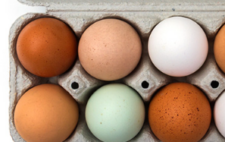
Have you ever wondered why chicken eggs can be different colors? While most eggs are white or brown, they also come in colors like cream, pink, blue and green. In addition — and this is no “yolk” — some are even speckled.

According to a Texas A&M AgriLife Extension Service poultry specialist, many factors can impact a hen’s egg-making process.

Let’s shell out some information about the egg-straordinary world of egg colors.

Chicken earlobes help predict egg color

Egg color is mostly determined by genetics. If you’re looking for a hint, a good way to guess what color eggs a hen will lay is to look at her earlobes.

“Generally, hens with white earlobes will produce white eggs,” said Gregory Archer, Ph.D., AgriLife Extension specialist in the Texas A&M College of Agriculture and Life Sciences Department of Poultry Science, Bryan-College Station. “But all eggs start out white because the shells are made from calcium carbonate. They get their color from the hen’s genetics as the egg forms.”

Archer said, more often than not, chickens with lighter earlobes also have white feathers and produce white eggs. Those with darker feathers and darker earlobes will likely produce more colorful eggs.

Chicken egg formation

Nature has its own way of coloring eggs, and it doesn’t require boiling water, food coloring or paintbrushes. Let’s eggs-plore how this happens.

Different eggshell colors come from pigments deposited onto the shell as the egg forms in the hen’s oviduct.

A chicken yolk, or ovum, forms in the hen’s ovaries. A fully formed ovum leaves the ovary and enters the oviduct. There, it goes through a five-stage process to help ensure the yolk makes it safely to the outside world. The entire egg-forming process usually takes a little more than 24 hours.

It’s during the fourth stage of this process involving the shell gland that pigments are deposited onto the shell, producing its color. So, in short, different chicken breeds deposit different pigments on the shell as it forms, changing its exterior — and sometimes its interior — shell color.

A pigment of your imagination

White leghorn chickens lay white-shelled eggs, and breeds like Plymouth Rocks and Rhode Island Reds lay brown-shelled eggs. The shells are brown because a pigment called protoporphyrin is deposited onto the shell. But because this happens late in the shell formation process, the pigment doesn’t penetrate the shell’s interior.

“This is why when you crack open a brown egg, you will see the interior of most of the shells remains white,” Archer said.

A pigment called oocyanin is deposited on the egg of the Ameraucana breed, penetrating the outside and inside of the shell and making both blue. Other breeds such as Araucana, Dongxiang and Lushi lay blue or blue-green eggs.

An olive egg results from a cross between a brown egg-laying breed and a blue egg-laying breed. The hen produces a brown pigment that blends into the blue shell of the egg, resulting in a greenish-hued egg. The darker the brown pigment, the more olive-colored the egg appears.

Other chickens that lay colorful eggs include the Barred Rock, Welsummer and Maran, with the color of the egg depending on the breed and its genetics.

Some speculation about speckled eggs

As it turns out, the speckles on speckled eggs are just extra calcium deposits.

One reason for the speckled-egg spectacle is that speckles are formed when the egg-shaping calcification process is disturbed. Another possible reason is a defect in the shell gland. Then again, it could result from excess calcium in the hen’s system.

Sound a little scrambled? Don’t worry about it. Just keep your sunny side up and know there’s probably more than one explanation for this speck-tacular occurrence.

Oh, and although technically considered “abnormal,” speckled shells can sometimes be stronger than those without speckles.

Egg-straneous factors change shell color, shape

While genetics primarily determine egg color, other factors can also influence the color and other characteristics of the shell. These factors include a hen’s age, diet, environment and stress level.

“As they age, hens that lay brown-colored eggs may start to lay larger and lighter-colored eggs,” Archer said. “But though this may produce an egg of a lighter or darker shade, it will not alter the egg’s basic color.”

While not directly associated with color, an oddly or irregularly shaped egg may occasionally pop out. This may result from a problem during the hen’s egg-forming process.

Archer said both very old and very young hens are the most likely to lay abnormally shaped eggs.

“Stress factors like disease, heat or overcrowding may also affect the hen and impact the size, shape and quality of the egg,” he said. “A lot also depends on the amount of calcium the hen has in its body and can provide for the egg-making processes.”

All things yolk: Color, nutrients and double yolks

You may also be wondering if the egg’s shell color affects its yolk color. It doesn’t, but the hen’s diet certainly does.

For example, if a pasture-raised hen eats plants with yellowish-orange pigmentation, the yolks can take on a more orange color. If she eats mainly a corn- or grain-based diet, the yolk is more likely to be a pale yellow.

Here’s a little egg-stra information for you. Research shows that darker, more colorful yolks have the same amount of protein and fat as lighter yolks. However, studies have shown that eggs from pasture-raised hens can have more omega-3s and vitamins and less cholesterol.

Speaking of yolks, this will crack you up. Sometimes an egg will have two yolks. While some people think a double yolk is good luck, the reason is more mishap than fortune. A double yolk is a fluke that occurs when a hen ovulates too rapidly, releasing two yolks, usually about an hour apart. These yolks go into the oviduct and eventually both end up in the same shell.

Hormonal changes or a hyperactive ovary will also cause these double releases. These “double-yolkers” are most common among younger chickens because their reproductive systems have not yet fully developed.


Peas: how to grow it

0

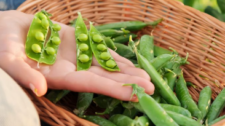
The most common type in American gardens is the shelling pea, also called the “garden pea” or “English pea.” Tender, sweet peas are removed from thin, tough pods before eating. Edible pod peas include the flat-podded snow peas, which may have a tough string, and sugar snap peas, which usually do not.

Types: Different plant types include tall vines, up to five feet, which need to be supported as they climb; these varieties bear over a longer period. The more common “bush” types are only two-to-three feet tall, and will flower and then set their crops all at once, for a shorter harvest period.

Fun Fact: Peas are an ancient food; they have even been found in the Egyptian tombs.

Planting

Sowing: Direct sow the seed into moist soil. Place the seeds in a row 1 to 1 ½ inches deep and 1 inch apart. Alternatively, two rows may be planted 2 or 3 inches apart. Cover gently with soil. Handle the seed carefully; pea seeds that are cracked are unlikely to germinate, especially in the cool soil of early spring.

Timeline: Plant as soon as the ground can be worked. Young pea plants can withstand light frosts and will grow at any temperature above 40°F. Days to harvest range from 50 to 75 days, depending on variety.

Plant Care

Fertilizing: Peas generally need little or no fertilizer when grown in soil. If grown in a container, a light dose of a fertilizer for fruiting plants, such as 5-10-10 may be applied early in their growth.

Trellising: Trellises, which can be as simple as a few stick placed into the ground along the row, or much more elaborate, help keep the plants upright and avoid diseases.

Watering: Moisten the soil thoroughly at planting, and soak the soil thoroughly when watering, letting the top ½ inch dry between waterings or rain. Depending on your soil, watering once a week may be adequate.

Weeding: Frequent, shallow cultivation will kill weeds before they become a problem. Or mulch heavily with straw or grass clippings.

Pests and Diseases

Major Diseases

  • Powdery Mildew: Disease is common in hot weather. Leaves and pods can become covered in a whitish mold.
  • Root Rotting Pathogens: The plants begin to brown and die from the soil up, and eventually collapse. Caused by cold wet weather followed by hot dry conditions.

Major Pests

  • Cutworms: Cutworms can sever plants off near the soil due to their feeding.
  • Aphids: Aphids are small insects that remove plant sap and often spread disease in the process. Can be found on the undersides of the leaves. The pods are rarely damaged.

Harvest and Storage

Harvest: Optimum pea harvest occurs as soon as the peas have achieved their full size, slightly larger than the dry seed you planted. Over-mature peas have a starchy flavor, less sweetness or even bitterness, thick, tough skins, and a firm or hard interior.

Average Yield: 3 pounds per 10-foot row.

Storage: Pick the peas and either shell immediately, then cool, or cool immediately for shelling later. Store peas in a cool, humid place with temperatures ranging from 32° to 40°F.

Preparation

Cooking Tips: Sugar snap peas are commonly used in stir-frying, steaming and sautéing, or even fresh in salads. Peas are easy to freeze. For more details on preparing and preserving peas, see our Pick it! Try it! Like it! resource for peas.

Nutrition Facts: Fat and cholesterol free, source of vitamin C and K, low calorie and good source of fiber.