Saturday, January 31, 2026
Home Blog Page 287

Fall Color on Trees

0

Many gardeners are aware leaves are responsible for making food for plants through
the process of photosynthesis. Chlorophyll in the leaves captures energy from the sun resulting in their green pigment. Chlorophyll production slows down this time of year because the amount of daylight decreases. With this change in chlorophyll, the green leaf color of trees begins to fade allowing other pigments to be visible.

If tree leaves are turning orange/yellow, that indicates the presence of xanthophylls and
carotenes. Tannins produce brown colors and anthocyanins create red/purple colors.
These pigments are present year-round but are only noticed when the green from the
chlorophyll fades. This is the reason for fall color in trees.

Fall color varies by tree species as well as environmental conditions. Certain oaks and
maples put on a brilliant display with a variety of colors, but some species only show
one color before leaf drop. The level of pigmentation is different among each species.
Fall leaf color can be cut short by frost and freezes, but even the summer weather has a
role with the fall display. If you notice the same trees looking different this fall than last,
it is likely an environmental factor that is at work.


Survey: Kansas voters support legalizing marijuana, oppose current direction of the country

0
The responses were mixed on Republican-led efforts to ban gender-affirming care for minors.

As Kansans in some counties have already begun casting ballots in the presidential election and Statehouse races, new survey data gives a look at how people in Kansas feel about key issues including marijuana legalization, abortion and gender-affirming care for transgender kids.

The Midwest Newsroom partnered with Emerson College Polling to conduct surveys of registered voters in Iowa, Kansas, Missouri and Nebraska between Sept. 26 and Oct. 2. The sample size was 1000 people in each state, with a margin of error of + or – 3% and a 95% confidence level.

Overall, it shows Kansans are pessimistic about the direction of the country, as 70% said it’s on the wrong track. But that trend is somewhat normal in Republican-leaning states during a Democratic presidential administration.

After the 2022 vote, how do Kansans feel about abortion? 

Since Kansans voted in 2022 to keep the right to an abortion in the state constitution, providers in the state have seen an influx of patients from other states where abortion has been outlawed or heavily restricted.

The survey asked respondents if they thought that was ultimately a good or bad thing. The results showed almost half, 49%, said it was a good thing and 38% called it a bad thing.

Patrick Miller, political science professor at Kent State University, told the Kansas News Service that abortion could be a motivator this election cycle.

“It’s not shocking to see the plurality of Kansans coming down on the pro-choice side of the abortion issue,” he said. “But there are a significant minority of Kansans who are against abortion rights.”

Do Kansans support efforts to ban gender-affirming care for minors?

This year, Kansas Republicans tried to pass a bill to ban hormone replacement therapy and other treatments for transgender minors. The bill passed in both chambers but was vetoed by Democratic Gov. Laura Kelly.

Republicans tried to override the veto, but fell just one vote short in the House.

The survey indicates a plurality of Kansas voters support a ban on gender-affirming care for minors, at 46%. But the matter is still closely contested among Kansans, as about 40% of respondents said they opposed such a ban.

How strong is support for legal marijuana in Kansas?

More than 72% of Kansas voters said they support legalizing medical marijuana. About 56% support legalizing it for recreational use.

Kansas has some legal access to products derived from hemp, but they are lower in potency and therefore potential medicinal value. It’s one of 12 states with no legal access to medical or recreational marijuana.

Cheryl Kumberg is president of the Kansas Cannabis Coalition. She said at a legislative hearing that different forms of cannabis can treat different ailments.

“Patients need access to all forms of cannabis,” she said.

Some Republican leaders in Topeka have long opposed legalizing marijuana of any kind, but they recently appointed a special committee on medical marijuana after a federal proposal to reclassify the drug to a less serious level.

The committee is hosting informational hearings on medical marijuana this month, but it’s not clear what kind of legislation it might recommend for the next session, if any.

Election Day is Nov. 5. Kansans can visit votekansas.gov to check their voter registration. County election offices can provide details on early voting.

Kansas News Service ksnewsservice.org.

Task force: Kansas schools should ban cellphones for all students

0
Members of the Kansas State Board of Education say they want to offer guidelines to local districts but don’t plan to impose statewide restrictions. Cellphone policies, like budget or curriculum decisions, are ultimately up to local school boards.

WICHITA, Kansas — An advisory group created by Kansas education leaders is recommending that schools ban cellphones for students at every grade level.

A majority of the 36-member Blue Ribbon Task Force on Student Screen Time voted to recommend that districts prohibit students from using cellphones for the entire school day, including during lunch and passing periods.

They also voted to recommend that students store personal devices “in a secure location that is not accessible to them during the school day.”

The group meets again this week and plans to make its final report with recommendations to the Kansas State Board of Education in November.

Derby teacher Tawna Hall serves on the task force and supports “bell-to-bell” policies that ban cellphones. She said her school allows students to use their phones between classes, but she still spends class time managing phones and other devices.

“Regardless of how much we want to believe that we can teach them to do differently, if they have access, they will get on it,” Hall said. “And they will do it over and over again.”

State school board members directed the task force to study and discuss issues related to electronic devices and the effect of social media on students’ mental health. The group includes students, teachers, parents and school leaders.

As part of their research, task force members read and discussed “The Anxious Generation,” a book by social psychologist Jonathan Haidt that looks at connections between increased screen time and the epidemic of adolescent mental illness.

Ava Gustin, a student at Mission Valley High School, southwest of Topeka, voted in favor of bell-to-bell phone bans because she said students need time away from screens.

“I’m really, personally, worried about my generation and how we interact with each other,” she said. “I think it’s important that we have that face-to-face interaction, and … hands-on learning that isn’t all on the screen.”

Gustin shared with the task force that she was diagnosed with an eating disorder as a sophomore.

“I strongly believe that if phones weren’t so prevalent in my high school or so prevalent in society, that this wouldn’t have been so harmful for me,” she said. “I just encourage you to think about students that are struggling … because they feel like the phones are surrounding them all the time.”

State school board members said they want to offer guidelines to local districts but don’t plan to impose statewide restrictions. Cellphone policies, like budget or curriculum decisions, are ultimately up to local school boards.

Some task force members voiced concerns about a total ban on cellphones.

“I need to be able to text my parents … or my boss. If a practice is canceled really last minute, I need to be able to communicate that,” said Ananya Argawal, a student in the Blue Valley district near Kansas City.

“If there was a complete bell-to-bell ban, I know students in my school would be more hesitant, and there is a bigger push for resistance toward that. … Having a bit more flexibility, like during lunch, would allow for students to be more receptive to this policy.”

Wichita, the state’s largest school district, tightened restrictions on cellphone usage last year. High school students can still use personal devices — including cellphones, laptops, headphones and earbuds — before and after school, during passing periods and at lunch. Elementary and middle school students must keep devices silenced and stored away at all times during the day.

Task force member Erika Sheets, a parent in the Blue Valley district, opposed the majority’s recommendations. She said student cellphones are “also a safety device” that could be useful during a school shooting or other emergency.

Brian Huff, superintendent of the Gardner Edgerton district, said most experts say young people should stay off personal devices during an emergency.

“For those of us who have been in school, we know that in an emergency situation, students do not use devices appropriately, and it’s actually more dangerous to have them with a device than without,” Huff said.

Kansas News Service ksnewsservice.org.

Kansas scientists say they’ve found a cheap fix for a source of potent greenhouse gases on farms

0
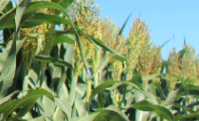
Sorghum is one plant sometimes used for silage. Scientists at Kansas State University say fermented livestock feed produces nitrous oxide, a potent greenhouse gas, but that they have uncovered a cost-effective treatment.
New research suggests silage has been overlooked as a substantial producer of nitrous oxide. A team at K-State figured out why – and a potential way to tackle the problem.

A common fermented feed for livestock churns out a potent greenhouse gas, but scientists in Kansas say they’ve figured out an affordable way to one day tackle the problem.

A team of scientists at Kansas State University has published the best estimate yet of how much nitrous oxide enters the atmosphere from silage, which they suggest could be the country’s third-largest farm source of the gas.

Now, they want to grab the attention of federal regulators and the agriculture industry to address the problem.

“So that we can do something to minimize it,” civil engineering associate professor Jeongdae Im said. “Luckily, we have a simple solution.”

The new research suggests silage may churn out 30 times as much nitrous oxide as does another common practice, burning corn stubble and other crop residue after harvest. But while the U.S. Environmental Protection Agency regularly factors field burning into its reports on emissions, the impact of silage gets overlooked, K-State scientists say.

The scientists’ proposed fix involves an inoculant. Treating 1 ton of silage with it would cost 4 cents, K-State researchers concluded. Im says $5 million could treat all the silage produced in the U.S. each year.

“It’s really, really exciting,” Im said. “We can reduce 2% of (the U.S.’) total nitrous oxide emissions.”

Im, who is also an environmental microbiologist, won one of the National Science Foundation’s most coveted awards to carry out this research.

The K-State team’s findings appear in last month’s issue of the National Academy of Sciences’ PNAS Nexus journal.

Trapping heat and depleting the ozone

The Intergovernmental Panel on Climate Change says the Earth’s atmosphere now contains 20% more nitrous oxide than before the Industrial Revolution.

Unlike the rise in carbon dioxide that primarily comes from fossil fuels, humans add nitrous oxide to the atmosphere mostly through agriculture.

Though this gas makes up a small slice of global greenhouse emissions, its potency worries scientists. Compared to carbon dioxide, nitrous oxide is about 265 times more effective at trapping heat over a 100-year period, a report from the EPA says. It also depletes the ozone layer that shields humans and other life on the Earth’s surface from harmful solar radiation.

Im and his colleagues carried out lab experiments with several kinds of silage as a first, crucial step to figuring out how much of the gas comes from that source.

Silage is chopped plant material — often corn, sorghum or alfalfa — that is fermented and stored in silos, bunkers and plastic-covered mounds across the country.

The team homed in on the bacteria in it that produce nitrous oxide and tested a variety of additives and inoculants to deal with them.

The bacteria produce nitrous oxide under stress, Im said, when they don’t have access to enough carbon compounds. So the team found a combination of ingredients that kills off most of the bacteria and then reduces this stress on the survivors. It gives the lingering microbes a boost of carbon compounds.

This two-pronged approach prevented 99% of the nitrous oxide emissions in the scientists’ silage experiments.

Verifying the safety of the treatment

Scientists and policymakers use formulas to tally up the estimated toll that different kinds of emissions take on society, such as by harming human health and property.

Those formulas suggest that the nitrous oxide wafting off of silage may cost society hundreds of millions of dollars annually in the U.S., Im said.

Several steps must happen, though, before it’s likely that a fix of the type proposed by K-State civil engineers and agronomists would potentially gain widespread traction.

Researchers will conduct larger-scale studies to verify their findings.

They’ll also further investigate to what extent chlorate, one of the ingredients in the treatment, remains in the silage after fermentation.

This will be vital to verifying the treatment’s safety.

“Anything toxic to microorganisms can be toxic for humans,” Im said. “So one of the things that we have to answer is the fate of this chlorate at the end of this silage process. And we are looking into it.”

But eventually, Im hopes carbon markets or other incentives could make treating silage to reduce emissions an attractive option for farmers.

Kansas News Service ksnewsservice.org.

What is The Longest Road in Kansas?

0

While Kansas may be known for its straight roads, it’s also home to some surprisingly long ones. And the longest of them all? That title belongs to K-4, stretching an impressive 369 miles across the state. This highway isn’t just about length, though; it offers a glimpse into the heart of Kansas, connecting rural communities and showcasing the state’s diverse landscapes.

K-4 begins its journey in western Kansas, north of Scott City at US-83. From there, it heads east, traversing the High Plains and passing through small towns like Healy and Quinter. As it continues eastward, the scenery gradually shifts, with rolling hills and farmlands becoming more prominent.


Key Connections and Overlaps

Along its route, K-4 intersects with several major highways, including US-283, US-183, and US-281. It even shares a stretch of road with I-135 and US-81 in Saline County, offering a brief taste of interstate travel. And as it approaches eastern Kansas, K-4 joins forces with I-70 in Topeka, providing a convenient route through the state capital.

More Than Just a Road

K-4 isn’t just a way to get from point A to point B. It’s a window into the soul of Kansas, offering glimpses of its agricultural heritage, its small-town charm, and the resilience of its people. Whether you’re a road trip enthusiast, a history buff, or simply looking to experience the beauty of the Sunflower State, K-4 provides a unique and memorable journey.

Exploring K-4

Driving K-4 is like taking a cross-section of Kansas. You’ll encounter historic landmarks, charming towns, and breathtaking scenery. So, if you’re looking for an authentic Kansas experience, hop on K-4 and let the road lead you through the heart of the state.