Monday, February 2, 2026
Home Blog Page 314

Annual Butterfly Festival to be held Sept. 28

0

The Kansas Wetlands Education Center’s 11th annual Butterfly Festival will be held on Saturday, September 28, from 9 a.m. – 12 p.m. in Great Bend.


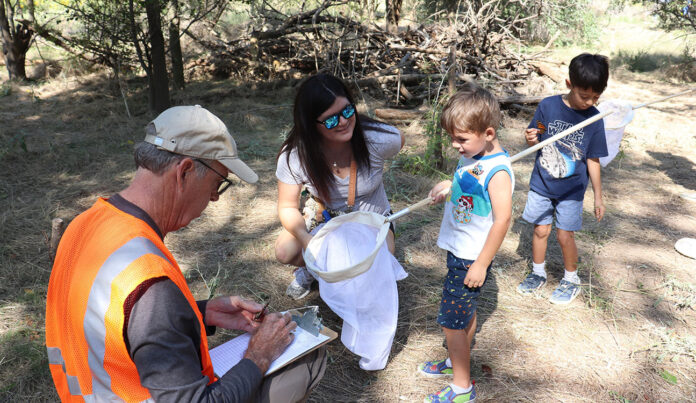
Each year, millions of monarch butterflies undertake their annual fall flight to Mexico. Nets and tags will be available during the event for those who want to capture and tag monarch butterflies.


Participants head out into the flower-filled fields and shelter belt around KWEC to capture monarchs, with tagging leaders stationed along the trail to help with the tagging process. For the past several years, monarchs tagged at the event were recovered at three Mexico roost sites.


On their way to Mexico, data collected from tagged monarchs helps support the research of Monarch Watch. Tagging helps answer questions about the origins of monarchs that reach Mexico, the timing and pace of the migration, mortality during the migration, and changes in geographic distribution. It also shows that the probability of reaching Mexico is related to geographic location, size of the butterfly, and the date.


StoneLion Puppet Theatre will be back again this year presenting “Bubba & Trixie,” a story of a scaredy-cat caterpillar afraid to leave his leaf until it meets a fearless ladybug. This story about friendship and facing fears is sure to delight attendees of all ages.


Larned-based Kellie Honey Farm will be present with a demonstration hive on display in the exhibit hall to educate about the importance of honeybees. KWEC will also feature an invertebrate zoo with giant walking stick insects, butterflies, caterpillars, chrysalises, fluorescing scorpions, and more. Kids can make a crawling caterpillar craft or a butterfly mobile at the craft station and take part in many other activities.


Grassland Groupies, a nonprofit dedicated to inspiring the conservation of grassland ecosystems, will be at the festival with a Bumblebutt Petting Station, an all-male (so they won’t sting) bumble bee interaction display.


Explore the Melody Marsh, a new interactive addition to the KWEC Pollinator Garden, and paint a section of a mural celebrating the monarch butterfly that will be displayed on the garden’s fence.


The garden provides wildflower planting ideas to use at home. It features a variety of native and adaptable plants that serve as host plants for different species of caterpillars and provide nectar sources for pollinators, including butterflies, birds, bees, beetles, and more.


Milkweed plants and wildflower seeds will be available free until they run out. For more information, contact KWEC at 1-877-243-9268 or visit: wetlandscenter.fhsu.edu.
Vegetable Crop Rotation

0

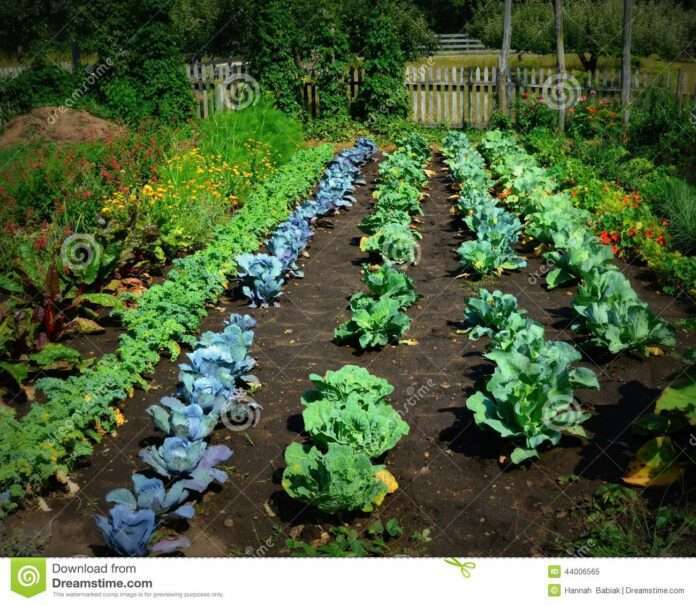
Success in the garden requires planning. To give your plants a healthy start next year, the best practice is to rotate crops within the same family to a different location than where they’re growing this year. This is known as crop rotation and offers several benefits.

Plants in the same family are typically susceptible to similar pests. Some pests overwinter in the soil; some are able to survive on debris. If the same host is available when the pests emerge in the spring, they will be able to continue feeding and multiply the problem. Crop rotation breaks the cycle of these pests.

Plants in the same families have similar nutrient requirements. Rotating crops prevents
the soil from becoming depleted of those nutrients. Also, the varied root system depths
from one plant family to the next contributes to the health of the soil.

Now is the perfect time to make a map of the vegetable garden so you can switch things up when you plant next year. For example, in the location where tomatoes are growing now, avoid planting anything from the Solanacaeae family (eggplant, pepper, potato) next year.

The Kansas Garden Guide has a helpful table of common vegetable crop families and an example of how to rotate these crops. You can access a digital copy of the Kansas Garden Guide here: https://bookstore.ksre.ksu.edu/pubs/kansas-gardenguide_S51.pdf

Harvesting Sweet Potatoes

0

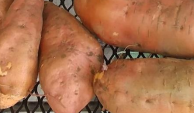
Cold soil negatively affects the quality of taste and shelf life of sweet potatoes. To prevent this, harvest prior to the first fall freeze. Sweet potatoes are typically ready for harvest three to four months after planting.

Gently unearth the sweet potatoes in one mound to check for readiness. You may notice die-back of the above ground growth as harvest time approaches. After digging, sweet potatoes need to be cured for several days.

This process increases the shelf-life and flavor of the sweet potatoes. Curing should be done in a warm, humid location. Ideally the temperature should be between 85- and 90-
degrees F with a relative humidity between 85 and 95%.

Store sweet potatoes for several weeks before consuming. During this time starches are
converting to sugars which improves the flavor. Protect sweet potatoes during storage
by keeping temperatures above 55 degrees F.

Big political event to immediately follow end of Daylight Saving Time in Kansas

0

Daylight Saving Time in Kansas will end two days before the United States elects its next chief executive.

DST comes to a halt at 2 a.m. Sunday, Nov. 3, when time will “fall back” one hour for Kansas residents.

U.S. voters on Nov. 5 will then choose between this nation’s two presidential candidates, Democratic Vice President Kamala Harris and former President Donald Trump, a Republican.

Why does Daylight Saving Time exist?

Sunflower State residents this year have been observing DST since early March, when they carried out their annual ritual of “springing forward” by setting clocks ahead one hour in the spring.

Residents then “fall back” by setting their clocks back one hour in the fall.

DST encompasses roughly eight months of the year, with the rest being called “standard time.”

The U.S. Department of Transportation is in charge of DST in the U.S.

DST exists for purposes that include conserving energy and fuel and making better use of sunlight.

Proponents say it also reduces crime.

What’s the history of Daylight Saving Time?

DST was first used in 1908 in Thunder Bay, Canada, according to timeanddate.com, which says Germany and Austria then became the first countries to use it in 1916.

The U.S. temporarily put DST in place during World War I and World War II.

DST became a national standard in 1966 when President Lyndon Johnson signed the Uniform Time Act.

That act allows states to exempt themselves from observing DST but requires those that do observe it to begin and end it on the federally mandated dates.

The federal government in 2005 approved the Energy Policy Act of 2005, which establishes the dates DST begins and ends.

What states don’t observe Daylight Saving Time?

DST isn’t observed by Hawaii and Arizona, with the exception of the Navajo Nation.

The five territories the U.S. maintains also don’t observe DST.

Those are Guam, Puerto Rico, American Samoa, the U.S. Virgin Islands and the Mariana Islands.

Why did Daylight Saving Time almost get quashed?

U.S. lawmakers took a step toward putting a permanent end to DST in March 2022 when the U.S. Senate unanimously approved the Sunshine Protection Act, a bill that would have done that.

But the U.S. House of Representatives never put that bill to a vote, meaning it wasn’t forwarded to President Joe Biden.

2023 version of the Sunshine Protection Act remained idle in Congress as well.

key point of contention involved whether to switch to permanent DST or transition instead to year-round standard time.

As reported in the Topeka Capital Journal

Don’t Bet On The Blood

0
lee pitts

I continue to be amazed by the differences in people and animals that are closely related. For example, one of my good friends was at one time one of the top Hereford breeders in America and over his fireplace is a row of Grand Championship trophies he won at Denver. I’ll never forget the day I was at his place when two bulls were delivered that my friend had purchased at the Cooper-Holden sale which in those days was a combined event. The bulls were Line Ones and were both very closely related and yet they could not have been more different. I don’t think my friend would take offense when I call one of the bulls downright ugly. If he’d have been a scarecrow he’d have kept the crows out of a quarter section of corn. The bull looked like he’d been put together by a committee of sheepherders. He was long, tall and moderately muscled and in all the years I was acquainted with the bull I never did get a decent photograph of him. Clearly the bull had a superior intellect and enjoyed toying with me.

If the Hereford Association wanted a bull to represent the breed they couldn’t have found a better specimen than the other bull. He was heavily muscled, structurally correct, easy on the eyes and was phenotypically perfect. So guess which bull went on to sire sons and grandsons that won numerous Denver Championships? You’d say the second bull right?

WRONG! Which just goes to show, you can’t tell by looking.

In 2006 the Food and Drug Administration declared that meat and milk from cloned animals and their offspring was safe and I thought there’d be a rush to clone livestock but it didn’t happen, probably due to the cost associated with cloning but also because even though the animals had exactly the same genotype, in most cases they never lived up to the animal that was cloned. Plus, the clones turned out different. One wet day in judging class at college our coach had us judge a class by looking at still photos from the rear and side of four bulls. It was an easy class to judge and there was a lot of differences to talk about in our reasons. Only afterwards did he tell us they were clones.

At bull sales quite often we see full brothers sell and one of them will bring $50,000 while its identical sibling will fetch $5,000. For EXACTLY the same genes!

I’ve seen first hand how genetics continues to toy with us. Take my brother… please. Though we supposedly have the same genetic makeup we could not be more different. My brother is logical, a genius at math, fastidious about his appearance, would rather golf than do hard physical work, retired at 55, wears shorts all the time, graduated number three in his class at West Point, went on to get his MBA at MIT and places a lot of emphasis on good breeding. While I think that’s fun too I hate math, am an extremely hard worker, don’t golf or own a single pair of shorts and I’ve always been more entrepreneurial and will never retire. My brother likes liver, lima beans, corned beef and cabbage and moved to the East Coast as soon as he could while I’m a dyed-in-the-wool westerner and you’d have to tie me down and force feed me to eat liver, lima beans, corned beef and cabbage.

From the first time he met me my niece’s husband just looks at me, shakes his head and says, “You simply CAN’T be the brother of John Pitts.”

I don’t know if he means that as a compliment or a criticism.

I was talking about genetics with a cattlemen buddy who has three siblings, two sisters and one brother. Like me and my brother, he and his brother could not be more different. My friend is quiet, extremely hard working and if he says something you can take it to the bank. His brother is exactly the opposite. His father used to say of him, “If BS was music he’d be a brass band.”

All this reminds me of the words of novelist Barbara Kingsolver: “We are baked in the same oven. Why does one cake rise and the other fall?”