
Tuesday, February 3, 2026
Home Blog Page 335

Daughter Verena Shares Her Experiences

0

Lovina’s Amish Kitchen
Lovina Eitcher,
Old Order Amish
Cook, Wife &
Mother of Eight

Hello, this is Lovina’s daughter Verena writing. I was in one of those writing moods, and I heard Mom saying that she wished someone would write the column for her, so here I am.

Today, eight years ago, my sister Susan married Mose. They had two children together. I moved in with Susan for two years after Mose passed. It was very heartbreaking to watch Susan struggle with her loss. I remember staying up with her most nights just talking because she could not sleep. Susan married Ervin, who had three children and had lost his wife to cancer. Ervin and Susan could feel for each other and understand each other, and that brought a connection between them. I am thankful that God blessed us with Ervin and his three children that we consider family now. 

On July 19, my boyfriend Daniel and I decided to have a campout with my nieces and nephews and his younger siblings. There were five of his siblings: Andrew, 14, Anna, 12, Kenneth, 11, William, 7, and Alvin, 5. My sister Liz’s children Abigail, 7, T.J., 5, and Allison, 4. Also, sister Susan’s children Kaitlyn, 7, Jennifer, 6, Isaiah, 6, Ryan, 5, and Curtis, 4. My sister Liz and her husband Tim were kind enough to let us have it there. We put up two big tents and one small tent. Everyone brought snacks, hot dogs, and hot dog buns. I brought the drinks and everything that goes with the hot dogs. Two small pools were set up along with my inflatable slide pool. The night started out with a water balloon fight. We needed to dry off, so we played kickball. It was pretty funny watching the 4–6-year-olds learn to play. Ryan always ran like he was told but never to the correct base. By the end of the game, they had it figured out. 

We ended the night with stories around the campfire and s’mores. Tim and Liz ended up joining us with their daughter Andrea, who is two years old. They helped along with the stories, and it made the night a lot more interesting. 

I always enjoy sitting around the campfire and eating campfire food. Hobo suppers over the campfire are one of my favorite meals, and Daniel and I made them for my family one evening. On Saturday evening, Daniel and I brought supper over to Daniel’s parents’ place. We made hobos and put them on the campfire once we got there. This was the first time Daniel’s family had any. Thankfully, they all loved it. We had plenty leftover that we could put into a casserole dish and have for lunch the next day. Daniel has seven brothers and two sisters; none of them are married yet. 

I moved back home in January after three years of not living here. It feels so good to be back. I love that I have so much less responsibility than I did when I lived alone. Although, I sure enjoyed the experience.

My sister Loretta and her husband live across the road from Dad and Mom. Every morning that Dustin goes to work, I get up at 3:50 a.m. and head over there to stay with Loretta and her two boys, Denzel, 2, and Byron (turning 1 on August 7). 

Byron is awake most mornings when I get there. Loretta or I will change his diaper and then lay him back in his crib. The boys wake up at around 8 or 9 a.m. Loretta and I don’t get up until they do. Our excuse is that we don’t want to get up before the boys, or we might accidentally wake them. Haha. 

Loretta and I stay busy looking after the boys and getting their meals. One of us will wash the dishes while the other sweeps the floors. We like to mop the floors at least one day a week. Unless the boys decide to destroy the house and make us mop more than we like to. Haha. There’s also always laundry. Dustin most times will wash it, but he doesn’t offer to fold it. Ha. Loretta and I are both in a mobility scooter. We have Limb-girdle muscular dystrophy. I know that a lot of people doubt what we can accomplish, but when we work together, we get a lot done. Our disability does not define us. We are blessed. 

I will share the hobo supper recipe, and I hope you’ll all get a chance to try it. It is very tasty. This recipe is from my mom’s cookbook, The Essential Amish Cookbook. You all take care, and God bless. 

Hobo Suppers

10 red potatoes, unpeeled and cut into chunks

1/2 cup onion, diced

1/2 cup green bell pepper, diced

2 cups carrots, sliced

1 cup celery, chopped

1 (16-ounce) package smoky links, cut into pieces; or 1 pound smoked sausage, cut into pieces

Salt and pepper, as desired

Cheese, sliced

Preheat grill to medium-high heat. In a bowl, mix all the ingredients together except the cheese. Divide the mixture into the amount you want for each serving, placing individual servings on sheets of aluminum foil. Fold foil over, wrapping tight, and set on grill for 10 minutes on each side. 

Open up foil; if potatoes are soft, add a slice of cheese. (If potatoes need more time to cook, close pouches and return to grill before adding cheese.) Re-wrap and grill a few more minutes until cheese is melted. 

Alternatively, can be cooked in oven at 400 degrees for 10 minutes, then turned over and cooked for 10 additional minutes. Check doneness of potatoes before adding cheese. 

Lovina’s Amish Kitchen is written by Lovina Eicher, Old Order Amish writer, cook, wife, and mother of eight. Her three cookbooks, The Cherished Table, The Essential Amish Cookbook, and Amish Family Recipes, are available wherever books are sold. Readers can write to Eicher at Lovina’s Amish Kitchen, PO Box 234, Sturgis, MI 49091 (please include a self-addressed stamped envelope for a reply); or email [email protected] and your message will be passed on to her to read. She does not personally respond to emails.
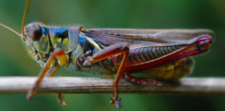
In the garden: Am I growing plants, or feeding grasshoppers?

0

Gardeners face annual battle of protecting crops from aggressive insect

If gardeners get this eerie feeling that they’re feeding grasshoppers right now, they’re likely not alone.

Kansas State University horticulture expert Cynthia Domenghini said many grasshopper varieties make their home in gardens this time of year, preferring the luxurious accommodations – rife with leaves, flowers, stems and seeds – as they molt and mature.

Grasshoppers have huge appetites and sharp, chewing mouth parts to damage fruit, defoliate a tree or even devour entire plants. They are considered one of the most destructive garden pests.

“Full-sized adults are the most problematic because they have wings and can cover more ground,” Domenghini said. “They also have tougher skin, making insecticides less effective.”

Gardeners should act early if they detect grasshopper infestations.

“Nets and floating row covers can be effective protection for small areas, though grasshoppers have been known to chew through netting,” Domenghini said. “Gardeners who want to avoid synthetic (insecticide) treatments have to decide the amount of damage to garden plants that they can tolerate. In suburban areas, it is important for gardeners to work together to control grasshoppers and limit the destruction.”

Domenghini said insecticides are usually effective when the spray comes into direct contact with the grasshopper.

“Most insecticides have to be re-applied to eliminate new arrivals,” she said. “Immature grasshoppers are limited in their range since they travel by foot. They are easiest to control at this stage.”

For updated recommendations on pesticides, including a protocol for applying them, gardeners are encouraged to contact their local K-State Research and Extension office.

Domenghini and her colleagues in K-State’s Department of Horticulture and Natural Resources produce a weekly Horticulture Newsletter with tips for maintaining home landscapes and gardens.

Interested persons can subscribe to the newsletter, as well as send their garden and yard-related questions to Domenghini at [email protected], or contact your local K-State Research and Extension office.

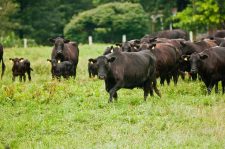
K-State cattle experts discuss how to correctly body condition score beef animals

0
Photo credit: U.S. Department of Agriculture

Body mass index allows people to evaluate their physical health by measuring body fat using a weight-to-height ratio. In a similar fashion, cattle producers employ the body condition scoring system to gauge an animal’s nutritional status.

Beef cattle experts at Kansas State University recently outlined how to score cattle for new and young ranchers on an episode of Cattle Chat, noting this practice started similarly to its human equivalent.

“A body condition score is a producer’s way of visually assessing how much body fat, or flesh, a cow has,” K-State beef cattle nutritionist Phillip Lancaster said.

“When this practice started, they did look at weight relative to size – kind of like BMI in people. Then it migrated to a visual assessment system, so people did not have to measure body weights.”

Determining an animal’s nutritional well-being with a body condition score aids producers in appraising how an individual’s body currently functions from a reproductive standpoint.

To start the body condition scoring process off right, Lancaster advises rancher to look at “key anatomical structures”.

“Study their ribs,” he said. “Then ask yourself, ‘How many ribs are visible?’ If they have a winter hair coat, that can get a little tricky and tough to see.”

“Next, look above the flank area at the spine’s transverse processes coming out of the vertebrae. ‘Is that flesh on their back dipping down or coming straight across?’ That is the next thing I would think about,” K-State veterinarian Brad White said.

Producers often assign a lower body condition score to cattle displaying multiple ribs and spinal processes. Another area that affects an animal’s score include the hip and brisket.

“Looking at an animal from behind, they should assess how much their hook and pin bones protrude,” Lancaster said.

The beef cattle body condition scoring system ranges from 1 to 9. Scorers designate emaciated animals with a one, and obese cattle with a nine.

“In that pelvis region, I also like looking at their tail head. If there is a nice indentation and you don’t see any fat – after looking at other physical characteristics – I would think an animal may be closer to a four,” he said.

“When you start to see little rolls of fat, then I start pondering if that individual is at a six or seven because we shouldn’t see excessive fat pones (lumps of fat above the pin bones) in that area – especially on a cow in production.”

Lancaster and White recommend consulting the Guide to Body Condition Scoring Beef Cows and Bulls before making management decisions for those unfamiliar with this system.

To hear the full discussion, listen to Cattle Chat on your preferred streaming platform.

10 Best Breathtaking Natural Wonders In Kansas That Should Be On Your Bucket List

0

Kansas Has It All

Kansas, also known as the Breadbasket State of America, is often imagined as having huge golden wheat and corn fields. Well, that’s not entirely wrong, but some of its natural wonders are not given the attention they deserve.

It has plain fields, surreal landscapes, awesome rock formations, cascading waterfalls, exciting hikes, and a lot of fun at any time of the year.

Arikaree Breaks

Okay, now for the land known for plain fields, this natural wonder is astounding. At Arikaree Breaks, the landscape dramatically transforms from flat plains to rugged canyons and rolling hills.

This 36-mile stretch of breathtaking beauty in the state’s northwestern corner, near the Nebraska border, was made by ancient rivers and shaped by time. You’ll see rugged canyons, steep ravines, and rolling hills covered by wind-blown clay and slit.

Little Jerusalem Badlands

Now, this one looks almost unworldly. Little Jerusalem Badlands is in Logan County, spanning over 330 acres.

Home to the largest expanse of Niobrara Chalk formations in the state, these stunning white rock formations, sculpted by erosion over 85 million years, create a dramatic landscape of spires, buttes, and cliffs rising to 100 feet high.

Wow, that’s huge! And you’ll find a rich fossil record of ancient sea creatures, showing glimpses into a time when this area was covered with sea.

Monument Rocks

Have you ever seen giant rocks in the middle of a plain field? In Gove County, Monument Rocks, also known as the Chalk Pyramids, rise majestically from the earth, reaching heights of up to 70 feet.

They genuinely look like the Stone Henge of Kansas. They are remains of the Western Interior Seaway, which once flowed here, leaving behind these giant geological limestone rocks. Even this is filled with fossils of ancient sea creatures, so be on the lookout.

Alcove Springs

If the previous one didn’t excite you, this one will. It’s a surreal natural water spring that cascades over a limestone ledge, creating a stunning waterfall.

The Alcove Springs on the Oregon Trail in Blue Rapids is an easy 0.4-mile hike where many travelers used to rest and replenish their water supply or sometimes even wait for the water levels to go down of the Blue River.

This lush landscape with cool waterfall and relaxing vibes makes for a perfect trip.

Pillsbury Crossing

Another magical waterfall is Pillsbury Crossing, just 6 miles southeast of Manhattan. Don’t picture a colossal waterfall, as it’s a low-water waterfall, but it has fantastic wildlife all around and framed flora and fauna.

This picturesque waterfall, where water flows over a flat limestone ledge, drops about 5 feet and creates a serene, 60-foot-wide cascade. Cool water plunging down a limestone henge gives it a relaxing and peaceful aura.

Cowley Lake Waterfall

If you’re looking for a quaint and serene spot for a getaway, you need to check out Cowley Lake Waterfalls. Within the Cowley State Fishing Lake area, these delightful falls are not as grand but have a natural charm.

The waterfalls cascade over a rocky outcrop at the edge of Cowley Lake, which spans approximately 1,500 acres, making it a popular spot for fishing and boating. Maybe pack a picnic and go fishing in the lake at these amazing waterfalls.

Gypsum Hills

Do you ever wonder why we don’t have red-colored hills instead of green? Well, Kansas has that. The Red Hill or Gypsum Hills are 42 miles long and renowned for their striking red and pink gypsum rock formations, which create a dramatic and colorful contrast against the flat plains.

They’re made up of dolomite, gypsum, sandstone, siltstone, and brick-red shales, thus their reddish tone. Rich in history, the area was once home to Native American tribes and remains significant to local ranching culture, so you must check them out.

Mushroom Rock State Park

You’ll be pleasantly surprised with this one, especially mushroom lovers. Now we’ve got red hills, but what about a giant mushroom-shaped rock in a park? A 27-foot-diameter mushroom-shaped rock, with several smaller ones around the park in Ellsworth County.

The “mushrooms” are formed from sandstone, where harder capstones of cemented calcium carbonate have resisted erosion better than the softer sandstone beneath, resulting in their iconic shapes.

Horsethief Canyon

This rugged beauty is in Kanopolis State Park in Marquette and is for everyone who loves deep canyons and a great hike with incredible views.

Horsethief Canyon has dramatic sandstone cliffs about 300 million years old, deep crevices, winding trails, and towering rock formations created by millions of years of erosion. Wildlife, such as deer, turkeys, and numerous bird species, roams the area too.

Flint Hills

The last one on the list has grass that grows up to 10 feet. Yes, it’s all-natural grass. Flint Hills is the last of tallgrass prairie ecosystems on Earth, located in eastern Kansas and extending into northern Oklahoma.

Steep hillsides, rocky outcrops, and broad valleys with over 70 species of grasses and 300 species of wildflowers are a beautiful site to enjoy. Why miss a chance to witness this magnificent landscape right here in Kansas?

The Places in Kansas Are Mindblogging

Kansas might be known as the Sunflower State, but it’s packed with more than endless fields.

Think again if you thought it was all flat plains! Kansas has jaw-dropping, history-rich wonders like serene waterfalls, massive mushroom-shaped rocks, fiery red hills, and tallgrass prairies with grasses that can reach up to ten feet high.

These underrated landscapes are pure gems, making Kansas a cool place to explore any time of the year!

Hutch Post Office to offer special postmark Aug. 22

0

HUTCHINSON, Kan. — The United States Postal Service has announced it will make available on August 22, 2024, a Pictorial Postmark, commemorating Antique Tractor Preservation Day in the State of Kansas, as proclaimed by Kansas Governor Laura Kelly.

The Postmark will be available August 22, 2024, by visiting the Hutchinson Post office at 128 E. 1st Ave., Hutchinson, KS 67501-9900

Out of area customers may submit a “Mail Order” request to:

Pictorial Postmark

Talking Tractors.com Station

128 E. 1st Ave. | Hutchinson, KS 67501-9900

“Mail order” requests must be postmarked no later than 30 days following the August 22, 2024, Commemorative Postmark date. All requests must include a stamped envelope or postcard bearing at least the minimum First-Class Mail postage.

Customers wishing to obtain the Commemorative Postmark, must affix stamps to any envelope or postcard of their choice, and address the envelope or postcard to themselves or others.

Michael Hinton, Founder of Antique Tractor Preservation Day and www.TalkingTractors.com, shared, “This Postmark, combined with the Proclamation Governor Laura Kelly awarded, are significant not only to Kansans but all those who have farming ancestors and/or current relations to farmers – both recognize the tractors of long ago; manufactured and used to farm with during a given era.”

TalkingTractors.com serves as a ‘virtual educational resource’ for those who share a like passion for preserving America’s heritage farm machinery for future generations. The Proclamation was issued on behalf of the people of Kansas, commemorating the state’s renowned agricultural heritage, and Kansas resident Michael Hinton’s passion for classic tractors.