Thursday, February 5, 2026
Home Blog Page 363

The Newlyweds Return from their Honeymoon

0

Lovina’s Amish Kitchen
Lovina Eitcher,
Old Order Amish
Cook, Wife &
Mother of Eight


July 1 (yesterday) was daughter Loretta’s 24th birthday. I wish her many more happy, healthy years ahead. Her two little boys keep her busy. Denzel will be 2 years old on July 10 and Byron will be 1 on August 7. On Sunday Joe and I drove with Dustin and Loretta and the boys to the park. Byron was sitting with Loretta and me in the back, and he wouldn’t quit fussing until he could sit up front with Joe, Dustin, and Denzel. Then he would look back at Loretta and me with a grin on his face as if saying, “Ha ha, I like it better up here.” He enjoys watching the horse run. Denzel will hold the lines to drive their horse, Spirit. Spirit is a calm horse and travels along safely. Of course, Dustin makes sure to keep a watch on the road for traffic. 

Our family gathered at the park for a picnic lunch on Sunday in honor of daughter Verena’s special friend Daniel’s birthday, which was on June 29. It was enjoyable, with some taking hikes on the walking trails and some of us just relaxing and visiting. 

Daughter Lovina and Daniel joined us at the park. They just arrived home from their honeymoon. They spent a week at a cabin by a lake after the wedding. They are enjoying being newlyweds. 

Last night they came to get another load of their belongings and their wedding gifts. Thank you to all of you that sent a gift, card, etc. to help them start their life together. They greatly appreciated it. Lovina made a vegetable soup here, and they ate supper with us. I always have a hard time when another of our children leaves the house. My mother heart just doesn’t like change. I am happy for them, but having one less person in the house makes for an empty spot. 

At least it’s not like losing a loved one. Sarah Irene (sister-in-law) attended the wedding along with some of her family. Brother Albert was missed so much. She did a great job in hiding her sorrow and helping make it a cheerful day for the newlyweds. I know her heart was hurting and she misses her dear husband. Her 59th birthday was on June 28—the first birthday without her dear husband by her side.

Daniel and Lovina had a nice day for their wedding, although it was a very hot week. Temperatures reached the 90s. The cooks did a great job in the heat to prepare all the food. 

Our sons-in-law, Daniel’s brothers, and sister Emma’s sons-in-laws and son started grilling chicken around 5 a.m. They grilled 300 pounds for the noon meal and another 100 pounds in the afternoon for the evening meals. We had 480 pounds of chicken here but only grilled 400 pounds. We had plenty left over. They did a great job on the chicken, and it tasted really good. They had 9 or 10 grills going and were done by the time the wedding services started at 9 a.m. That was also a hot job on a 90-degree day. 

On the menu for the wedding meals were bread, strawberry butter, mashed potatoes, gravy, buttered noodles, dressing, barbecued chicken, mixed vegetables, lettuce salad, pecan, rhubarb custard, and strawberry pies, caramel pudding, fresh fruit (watermelon, cantaloupe, and grapes) and coffee. The cake was cut at the 7 p.m. meal. It was decorated by the bride and groom. 

Daniel and Verena and Dustin and Loretta were their witnesses. They had 14 couples for table servers and 12 special helpers (they pass out the guest book, gifts, etc.). The rest of their nieces and nephews that were too young to help—those age 3 and younger were called Day Brighteners, and the girls wore yellow dresses. The boys wore gray pants with yellow shirts. The special helpers wore light green. The table servers wore coral, the cooks wore burgundy, the family wore green, and the mothers wore a dark green. The bride wore a dark teal, and her witnesses wore light teal. Lovina had someone make a wall hanging with all her colors she chose. It looks really nice! 

I chose sister Emma and niece Elizabeth to be my head cooks at the wedding. They once again did a great job in keeping everything running smoothly. 

Wednesday and Thursday before the wedding were busy days, with over 20 women coming each day to bake over 80 pies, 30 loaves of bread, dice carrots, celery, and onions, wash and slice strawberries for pie, cut up rhubarb for pie, etc. We had good help on those two days, and all was done by lunch time. Casseroles, salads, and desserts were brought in each day by the women who came to help. For the wedding on Friday, we had over 50 cooks to help make the food. Their help is greatly appreciated. Also, an extra thank you to the cooks who spent an extra day preparing ahead and took their time out of two days to help. They are truly a blessing. And a special thank you to sisters Emma, niece Elizabeth, and my friend Ruth who were here through it all! Sister Verena also came every day with Emma. Ruth furnished the transportation for them to and from here. If we missed something, it was Ruth that had to go get it. God bless you!

Pie Dough

Makes 6 9-inch pie crusts

6 cups flour

2 teaspoons baking powder

1 teaspoon salt

2 cups lard

2 eggs

2/3 cup water

2 teaspoons vinegar

Mix together flour, baking powder, and salt. Add lard to flour mixture and make crumbs. It’s best if crumbs are quite moist—a little more lard can be added for that. In a separate bowl, beat eggs, water, and vinegar together and pour over crumbs. Mix with a fork until right consistency. Don’t overmix.

Divide dough into 6 equal parts and form each part into a ball. Press each ball into a disk and roll it onto a floured surface to 1/8-inch thickness. Fit the dough into a 9-inch pie pan and trim the edges. For a prebaked crust, bake at 450o F for 10 to 12 minutes, or until lightly browned. 

Lovina’s Amish Kitchen is written by Lovina Eicher, Old Order Amish writer, cook, wife, and mother of eight. Her three cookbooks, The Cherished Table, The Essential Amish Cookbook, and Amish Family Recipes, are available wherever books are sold. Readers can write to Eicher at Lovina’s Amish Kitchen, PO Box 234, Sturgis, MI 49091 (please include a self-addressed stamped envelope for a reply); or email [email protected] and your message will be passed on to her to read. She does not personally respond to emails.

 

Gardening in a Heat Wave

0

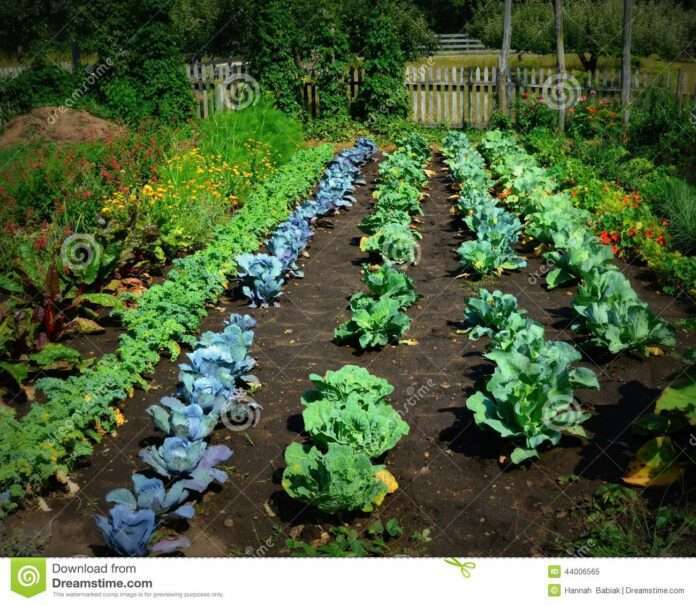
When the summer heat cranks up it is tempting to add water, but this is not necessarily what the plants need. On average, vegetables need about one-inch of water per week. During a heat wave (over 90 degrees F) it may be necessary to water daily or every other day but check the soil first.

Before adding water to the garden, insert your finger one to two inches into the soil and check for moisture. If the soil is wet, wait to add water. A layer of straw mulch, several inches thick can be added to the garden in advance of a heat wave to keep the roots cooler. Ensure plants have enough water before the heat wave.

It is best to water as early as possible in the morning to reduce the amount of
evaporation. Drip irrigation is the best option, but regardless of the method it is
important to keep water off the leaves and close to the soil.

Pests

0

Description: Similar in appearance to other June bugs, the adult Japanese beetle is 1/4 to 3/8-inch long with a shiny, metallic-green head. The body has bronze wing covers and five clumps of hair that border the sides of the abdomen. The larvae are cream-colored grubs with a light brown head about 1 ¼-inch long at maturity.

Life Cycle: Adult female Japanese beetles lay eggs in July beneath wet lawns. Upon hatching, larvae feed on the sod roots and overwinter until the following summer. In June, the larvae pupate and adult beetles emerge to feed above-ground.

Damage: An extremely destructive pest, Japanese beetles feed on every part of the
plant. The beetles skeletonize leaves and consume flowers and fruit entirely. Hundreds
of varieties of plants can play host to this non-selective pest.
Control: Controlling Japanese beetles is a challenge this time of year as new adult
beetles emerge from underground daily over several weeks. In small quantities, beetles
can be manually removed from plants and dropped into a bucket of soapy water. Check
plants daily to look for symptoms. Mornings are the best time to observe as beetles are
slower and easier to catch.

There are many traps available that lure Japanese beetles into a container where the
pests can be gathered and disposed of. However, some sources caution against using
traps as the pheromones used to attract the beetles can draw in even more beetles than
would naturally appear. Not all of these beetles may end up in the traps and the result
could be greater damage to the plants.

Insecticides such as cyfluthrin (Tempo), bifenthrin (Hi-Yield Bug Blaster II) and
cyhalothrin (Bonide Beetle Killer, Spectracide Bug Stop Indoor + Outdoor Insect Killer,
Spectracide Triazicide, Bonide Caterpillar Killer) can be used for Japanese beetle
control with about two to three weeks protection. Carbaryl (Sevin dust) can also be
effective but only for about one to two weeks. The downside of using such products is they will also eliminate parasitoids and other natural predators. Neem products (Natural
Guard Neem-Py, Fertilome Triple Action Plus) and Pyola (pyrethrins in canola oil) can
offer control for three to four days.

Final Wheat Harvest Report

0

This is day 13 of the Kansas Wheat Harvest Reports, brought to you by the Kansas Wheat Commission, Kansas Association of Wheat Growers, Kansas Grain and Feed Association and the Kansas Cooperative Council.

With harvest down to the final few days, this will be the last report for the 2024 Kansas wheat harvest. Rain delays continue to stretch out the season, but producers welcome the moisture as they turn their attention to planting fall crops and managing the weeds coming up rapidly in wheat stubble.

Moisture over the weekend continues to prevent harvest from wrapping up in northwest Kansas, but no one is complaining about the beneficial moisture for fall crops, according to Jeanne Falk Jones, Multi-County agronomist with the Northwest Research-Extension Center in Colby.

Area producers started test cutting after Father’s Day and harvest kicked into full gear the following weekend. The end of harvest is now in sight – maybe three days more if the skies stay clear. This last push feels more like last year’s harvest – foggy mornings and tough wheat that can’t be cut until late in the day.

Yields are all over the board – from 20 to 100 bushels per acre – across the northwest region, not surprising given the challenges to get stands established last fall. Weather during the grain fill period was much more favorable with moisture, fewer triple-digit days and especially cooler night temperatures.

As a result, Falk-Jones reported average test weights between 58 to 62 pounds per bushel and proteins between 9 and 11.5 percent, depending on field fertility and conditions during grain fill.

“Everybody is pleasantly surprised on how good our wheat has been,” she said, adding that the wheat looked pretty tough for the majority of the growing season. “Now, not every field has been that way.”

Falk-Jones did investigate a fair amount of wheat disease this year, including Wheat Streak Mosaic Virus, Triticum mosaic and High Plains disease, all of which are transmitted by the wheat curl mite. She sent several samples off to the diagnostic labs in Manhattan to determine which virus was on the rise after seeing the characteristic yellow leaves in fields planted to varieties with decent resistance to WSMV. The result was a bit of uptake in Triticum mosaic. The earlier the infection of viral disease, the more impacts on yields, but a good number of fields already had yield potential set when symptoms showed at heading.

She attributes the uptick in disease pressure to severe hail last year after kernels were formed. As a result, there were more shattered kernels in the field and continual flushes of volunteer wheat after catching little rain showers. While folks tried hard to control volunteer wheat, even kernels left in wheels tracks were enough to harbor the disease vector – wheat curl mites – over the fall.

In Sherman County, Brian Linin has about five or six days left to cut near Goodland, after starting harvest on June 26 – three to five days earlier than normal and three weeks earlier than last year.

Expectations were low after the wheat did not have good stand last fall, thinking this year would be a repeat of the last. Blowing fields this spring added to the anticipated disappointment. Linin noted he went ahead and applied fungicide and did not see a lot of rust or Wheat Streak Mosaic virus, but controlling volunteer wheat will be essential to prevent the spread into next year’s crop.

While the cooler days and nights during grainfill helped the wheat do better than expected, this year will still be about 20 percent below an average yield. Linin reported yields on dryland wheat ranging from 30 to 70 bushels per acre, with most in the 40s. Test weights were averaging 58.5 to 59 pounds per bushel, but this weekend’s rain may cause them to lose a bit. Protein ranges from 12 to 14 percent.

“Growing wheat has a lot of value for our farm,” Linin said. “Wheat stubble once again has proven its value. Not only is wheat a good cash crop, if you are able to get a good price with forward contracting, but the importance of the stubble to plant into makes such a huge difference on fall crops. There are a lot of factors that going into profitability.”

In Smith County in north-central Kansas, Bryce Wiehl finished wheat harvest near Smith Center on Monday, July 8, after a week-long weather delay on his last 100 acres. He’s not complaining about the rain, which will benefit double-cropped soybeans on all his now-harvested wheat fields.

The wet conditions are in stark contrast to how the growing season started last fall, when Wiehl harvested bone-dry soybeans last September and October then drilled wheat in an absolute desert. The good fields were barely 50 percent up when the area had a rare rain in December that brought 1.5 to 1.75 inches of moisture. The wheat had snow on it through most of the winter, emerging from dormancy in February. Wiehl noted he had more moisture this past winter than the last seven years.

After starting on Monday, June 24, harvest is above average with a final farm yield of 65 bushels per acre and average test weights of 58 to 59 pounds per bushel. He noted other producers reported test weights clear up to 63 to 64 pounds per bushel.

Last year, his wheat averaged seven bushels per acre, well behind the 38 to 39 bushel-per-acre average he aims for with wheat behind soybeans. While the moisture and the bushels are welcome, the commodity prices are half what they were, driven more by investment funds than fundamentals.

“It was a wheat year; we caught early spring rains, and the wheat will do what it will do,” he said. “But it looked like a total train wreck in the fall.”

In southwest Kansas, wheat harvest is 98 percent complete in Finney County, down to the last few mud holes, according to Jeff Boyd, CEO/general manager of Garden City Co-op. Wheat harvest started earlier than the normal on June 20 this year, meaning many folks were finished up and able to enjoy the July 4th holiday weekend.

The wheat came in dry this year with moisture at 9 to 13 percent, solid test weights between 60 and 62 pounds per bushel and average protein for the area. Yields were all over the place depending on cropping rotation. Wheat after fallow did really well, thanks to the additional moisture, while wheat planted after corn or milo was not as good. Irrigated and dryland yields were comparable.

“No year is the same and that keeps getting reiterated,” he said. “The volatility we see goes from one extreme to the other.”

Taking out the last couple drought years, Boyd reported the cooperative’s overall take is back up to the five and 10-year average. In general, folks are surprised and happy with their harvest, although he noted some area producers were hit by hailstorms.

“It wasn’t until that wheat was really drying down that it really started to look good,” Boyd said. “That wheat in the field just looked thicker the more mature it got.”

The draw area for Garden City Co-op extends down to Hooker, Oklahoma, where substantial five to 10 inches of rain will continue to affect test weights and delay harvest, but Boyd said no one is going to scare the rain away.

As harvest finishes, he noted the next priority for producers is going to be managing the weeds coming in fast into the wheat stubble. For the elevator, Boyd explained that with a thin international market, domestic mills in Kansas and California are driving the final destination for those bushels – along with increasing demand from the wheat gluten plants in Phillipsburg and Russell.

Look for a final round-up and quality reports as the data is crunched from the 2024 wheat harvest. Producers are also encouraged to start controlling weeds and volunteer wheat now as the much-appreciated moisture will bring plenty of green to harbor wheat curl mites – the vector that will foster WSMV infections next harvest.

The 2024 Harvest Reports are brought to you by the Kansas Wheat Commission, Kansas Association of Wheat Growers, Kansas Grain and Feed Association and the Kansas Cooperative Council. To follow along with harvest updates, use #wheatharvest24 on social media. Tag us at @kansaswheat on Facebook, Instagram and Twitter to share your harvest story and photos.