Friday, February 6, 2026
Home Blog Page 367

Wheat Scoop: Gone with the Wind

0

The lives of one Kansas farm family were forever changed after a large and violent long-track tornado tore across north central Kansas on May 25, 2015. Ranking as one of the most violent tornadoes of the season with an EF4 rating and estimated winds of 180 miles per hour, the funnel was on the ground for more than a staggering 90 minutes, bending railroad tracks and snapping trees three or four feet wide in half.

The worst damage was to a single farmstead one mile southwest of Chapman, where the home and all the outbuildings were completely blown away as the operation’s matriarch hid in the basement underneath pillows. But what could be only a story of devastation is also one of hope, community and resilience for Ken and Deb Wood, who shared their story with Aaron Harries, Kansas Wheat vice president of research and operations and host of the Wheat’s on Your Mind podcast.

Today, Ken is a retired wheat farmer, who has served on the boards of the Kansas Association of Wheat Growers and the National Association of Wheat Growers. He still serves as a board member for the National Wheat Foundation. Deb works as a family resource management agent for K-State Research and Extension in Salina.

The day the tornado struck wasn’t expected to be a very severe weather day. Ken was away in Hays for KAWG meetings and Deb went to and came home from work like normal. Their farmstead was picturesque, located in a river bottom with a traditional farmhouse, nine outbuildings and all the machinery you would expect on a working farm – minus the combines that were stored at a different location. Ken had all his corn and about half of his soybeans planted and he recalled he was three weeks to a month out from wheat harvest.

Deb came home like any other day, got a bite to eat and had the news on. There was a storm building east of Bennington, but it was Kansas and May, so thunderstorms and tornadoes are just part of the normal weather broadcast.

“There’s tornadoes around Kansas all the time, so I didn’t think too awful much of it until things started getting closer,” Deb said. “Looking back, if I knew then what I know now, I would have put as much stuff into my vehicle as I possibly could have and gotten the heck out of Dodge.”

Ken stayed in Hays for supper. He got an alert on his phone that there was some severe weather developing, but he just watched as it developed like a normal storm. He got on the road and headed for home, but the longer he drove, the more he realized the storm was developing into something dangerous.

In Kansas, tornadoes typically move from the southwest to the northeast or due north. This night’s tornado moved west to east, took a right turn, went south across I-70 and hit the Wood’s farmstead out of the northwest as a monster.

“When you live in Kansas, you spend a lot of time in the basement when there’s a warning,” Deb said. “Most of the time, I go downstairs and I just kind of sit there, listen to the radio and wait for it to be over with. I had done that and then I had gone back up as I was getting texts from people. And that’s when I started worrying.”

Deb quickly gathered what she could – some medicine, work clothes and, importantly, Ken’s work boots. Then she ducked under a desk in the basement, taking pillows off the bed in the room and stuffing them around her. Still, it didn’t occur to her that the storm would take everything else.

Then the storm hit. The glass broke. The subfloor was totally blown away. And the entire house was gone.

“There was nothing left at the farm and I mean nothing left,” Deb said. “There was just nothing. It just chewed everything up into little pieces.”

The glass all broke, it ripped off the subfloor totally. The house’s center beam broke into two and a wall landed on Deb. Then it started raining and then it started hailing. Still, Deb kept her cool.

“I called Ken to let him know we’d taken a direct hit, but I was fine, but I couldn’t get out,” Deb remembered.

A local fireman who had lost part of his own farming operation in a 2008 tornado that hit nearby Chapman was first on the scene. Deb could hear him calling for her, so she started hitting on top of the wall. He removed what he could but had to wait for help to get her out entirely.

Ken got the call when he was in nearby Abilene. He raced down the road but was stopped on his normal route on Old 40 Highway because there were poles across the road. When a deputy came flying around the corner and heading north towards I-70, Ken got behind him and followed him all the way – not stopping at a single stop sign, only slowing when they hit a heavy hailstorm.

By the time Ken got home, it was still light enough to see the damage. Deb had very deep bruises on her back, but no broken bones. Although they had no house, no clothes, no food, the community immediately rallied together. Ken and Deb stayed that night at Ken’s brother’s house, but neither slept a wink.

The next morning brought help that did not stop – from family, friends, neighbors, the community, former co-workers, the KARL program, the wheat family. Anyone and everyone who could offer help did. Two former teachers of Ken offered to rent them a two-story farmhouse west of Junction City that was fully furnished. The couple moved in with half a trash bag full of clothes and a pan of lasagna from a neighbor and lived there for 10 months. Although, the fridge was already so full of offerings that the lasagna barely fit.

In addition to the farmhouse and yard, the couple lost irrigation pivots, bins, other buildings and a couple of pieces of equipment. But one of the hardest chores was cleaning up all the acres where debris was scattered like crumbs.

“It literally just chewed stuff up and so there was a lot of stuff that was spread out over the fields,” Ken said. “Little pieces. You’d find a handle off a truck, and there was a lot of things that you couldn’t tell what they were.”

In addition to picking up individual pieces of debris, Ken and his helpers burned wheat stubble and then had to mine the debris hidden under the stubble. It couldn’t be done all at once, so it was done one smoky, dusty terrace at a time.

Within just a few weeks, it was time for wheat harvest. Luckily, Ken was no stranger to borrowing trucks or tractors from his brother or neighbors. And wheat harvest felt like a return to something normal.

“That was the first thing that felt like I was doing something that’s not picking stuff up and not tornado-related,” Ken said. “Although harvest was a real trip, cutting around stuff out in the wheat fields, that was what got me back into the right frame of mind to at least start a plan.”

The couple navigated insurance and deciding where and how to rebuild their farmstead. The home builders broke ground at the end of September and they moved into their brand-new home the first weekend of the next April.

Their story does not end there. When health issues popped up, Ken made the difficult decision to retire. One of the neighbors who stepped up after the tornado and brought out a loader to help out had a son coming home and wanted to expand his operation. So Ken and Deb made the calls – first to their landlords and then to others – it was time to turn over the operation to a new generation.

“One weekend, that’s about all I did was call people and let them know,” Ken said. “As it turned out, I’ve been way healthier than I was expecting to be from this whole deal, so I could have kept going. But once you make the decision, I’ve been at peace with it pretty much.”

While COVID-19 disrupted retirement travel plans, the Woods have found themselves as busy as ever. Deb now helps share her story about taking an inventory of both everything in the machine shed and in the house, but also putting together a grab-and-go box with all the policy and phone numbers needed if the worst happens. And Ken found he missed serving on wheat industry boards, so he quickly applied when a spot opened up for the board for the National Wheat Foundation.

“Now I’m probably busier than I want to be, but it’s self-inflicted,” Ken said. “So I’m good with that.”

Through it all – farming, tornadoes, rebuilding a home, retiring – Ken and Deb know one truth above all else – it’s the people around you that matter most.

“I feel like we’ve come out on the other side stronger and more resilient,” Deb said. “All of the people that helped us get through the recovery; we couldn’t have done it without them. Building those relationships and keeping in touch with people and having that community – it really helps you get through things like this.”

Listen to Ken and Deb’s full story on the podcast or find other episodes of “Wheat’s On Your Mind” at wheatsonyourmind.com.
A rancher’s journey: Caring for the land, cattle, and community

0

Rick Caquelin is using the knowledge he’s acquired from his three decades of working at the Natural Resource Conservation Service (NRCS), on his own ranch to improve his soil’s health.

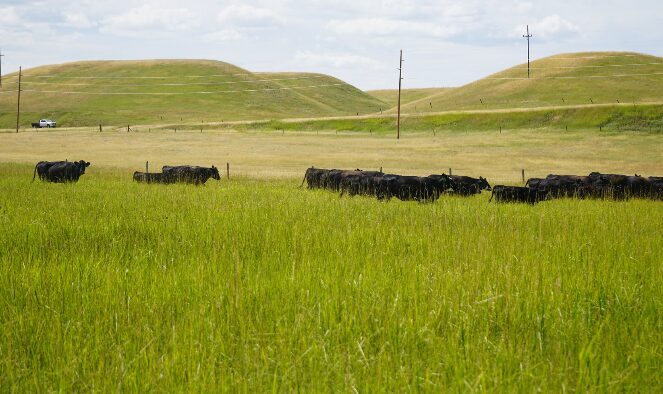
In the quiet town of Stanford, Montana, grassy plains spread out to the surrounding mountains where Rick Caquelin has embraced full-time ranching post-retirement. For over three decades, Caquelin worked for the USDA Natural Resources Conservation Service (NRCS), assisting ranchers and farmers across the state in improving land management.

“Without NRCS, I would have still ended up here, but I would have never gained the knowledge on how to do it or have been as successful,” says Caquelin.

Early Interest in Agriculture

Caquelin first learned about the NRCS when he was a child. The agency came out to his family’s farm in Illinois to conduct waterway projects on the land. This helped trigger his interest in conservation.

“I’ve always enjoyed being on the land and trying to make it the best it can be,” he explains.

Earning a Range Sciences degree from Montana State University reinforced his desire to work outdoors and cemented his decision to do something related to helping the land. After graduation, Caquelin accepted a job with the NRCS, which led him back to Montana.

“And now it’s 33 years later,” says Caquelin, who finished his career with the NRCS as a range specialist two years ago.

Rick and his wife, Doreen, have lived in their current home since 2011. With their children grown, the couple primarily devotes their attention to their ranch. On the side, Doreen is a talented baker and runs a candy operation. Not surprisingly, Rick is just as supportive of her growing venture as Doreen has been of his dream operating a ranch.

Same Passion, New Role

Ask anyone in the agricultural industry and they’ll tell you starting a ranch from scratch is no easy feat. Caquelin describes his journey as having evolved over the past 20 years in small doses. He acquired cattle in 2003 and little by little he was able to lease more land.

“Because of both of our careers, my wife and I we were able to slowly build into the cow business over a lot of years,” says Caquelin. “It’s difficult to do when you’re starting from scratch. You have to be patient and you have to work hard at finding the right opportunities so that you can succeed.”

Even after retiring from the NRCS, Caquelin still collaborates with and learns from his former coworkers, as well as the ranchers and farmers he assisted. This is what inspired him to venture into ranching himself and he has no intention of ending the relationship anytime soon.

Caquelin continues to share his valuable ranching experience to assist others both in and outside of the pasture. He actively serves on the Montana Grazing Land Conservation Initiative and the Ranchers Stewardship Alliance, continuing his dual role as rancher and conservation advocate.

One person who can speak at length about Caquelin’s journey is Pam Linker, an NRCS District Conservationist at the Stanford field office. She credits her friend and former coworker for helping her along her own journey in conservation. The two worked together for nearly 20 years, having first been introduced at a conference. Caquelin was not only her coworker, but as Linker describes him, “a mentor and teacher.”

“Rick’s operation is unique because he has used it as a training opportunity for so many people with NRCS,” says Linker. Caquelin has provided plant identification training, shared his knowledge about livestock, and offered guidance to new NRCS employees.

Leading by Example

Today, the Caquelins have a Conservation Stewardship Program (CSP) contract. With a goal of trying to provide maximum rest from grazing on their lands, it’s been a great vehicle to benefit the long-term use of the grassland.

Some of their practices include strategically rotating their cattle around using temporary fencing and water, planting species specifically for pollinators, and applying bale grazing to improve their land. Caquelin is also keeping a close eye on the health of the range—monitoring conditions right down to the soil beneath his feet, something he learned from his time at the NRCS.

One thing Caquelin is eager to talk about is soil health, especially for grazing lands. Healthy soil means healthier grass for the cattle and a better environment overall.

“We do range monitoring and even started doing soil biology monitoring to see if there was something to be gained by watching how microbiology works in the soil,” says Caquelin.

What’s incredible is that Caquelin is doing all of this on a smaller piece of land than many of the properties he visited over the years. His aim is to leverage this distinctive opportunity to demonstrate to other small landowners the significant impact they can have on conservation. “As far as land management goes, there are advantages and disadvantages for small operations,” he says. “Our economic scale is quite a bit smaller so there are tradeoffs.”

In addition to improving plant health, soil health, water infiltration, and forage production, the results of this work positioned the Caquelins’ pastures to better deal with recent drought conditions.

“Grazing management has been his passion throughout his career,” Linker states. “If there’s anything I take from that, it’s if you are on top of your grazing management, you remain more resilient and can make the changes without it being so pressed.”

Preparing for Tragedies

The past two years, marked by only 40-60% of usual precipitation, were particularly challenging for producers like the Caquelins in Judith Basin County.

While the ranch had seen benefits from existing grazing management plans, Caquelin says he still had to consider the option of destocking their animals. Currently, the ranch is down 30% from where it was at the end of 2020.

“The critical part was destocking quickly enough, so you didn’t have long-lasting severe negative impacts on the ground,” Caquelin says of his difficult choice.

Linker has watched ranchers who have spent decades culling the perfect herd, making destocking a difficult decision during tough times.

“They’re really proud of their bloodlines and it can be difficult to let them go,” she says. Unfortunately, waiting until the last minute only makes it more difficult as panic sets in.

Caquelin adds that while it’s common for people to notice when their cows don’t look well, they may overlook the condition of their grass and soil.

“Soil health tends to be underestimated,” notes Caquelin, mentioning the topic wasn’t widely discussed early in his career. “We always knew everything started there, but we never closely examined its state. A healthy and robust soil serves as the foundation for everything else to thrive.”

But Caquelin learned a lot during his time with NRCS, and he takes that knowledge with him now, on his own ranch. “What we’re discovering about grazing land is that the better we care for the surface, the better we care for the underground biology. This relationship is crucial.”

Legacy of Land Stewardship

Even after retirement, Caquelin remains passionate about the NRCS and continues to help other ranchers learn.

He lives by the belief that good management is key, no matter the size of your ranch. He wants people to understand conservation practices are simple to apply and can make a huge difference. And possibly most importantly, he’s learned that listening to others and being willing to learn is crucial, even if it means making mistakes along the way.

“I learned on the job for a long time from all the people that I worked with. Everything I think I know today is because of a thousand relationships over 30 years,” he says. “Whether they were relationships with NRCS; people that trained me and taught me about soil and water and grasses, or farmers and ranchers who taught me how to make use of all that institutional knowledge.”

Caquelin wants future landowners to know that taking care of the land is not just a job; it’s a way of life, filled with valuable lessons and a willingness to learn from others.

“We would’ve never ended up a small ranch as successful as we are without those relationships.


Rice County Historial Society

0

“Life and Limb: The Toll of the American Civil War,” a six panel banner exhibit from the National Library of Medicine, opened at the Rice County Historical Society/Coronado Quivira Museum on July 1, 2024 and runs until August 10, 2024.

Over three million soldiers fought in the American Civil War. More than half a million died and almost as many were wounded. Hundreds of thousands were permanently disabled by battle filed injuries or surgery, which saved lives by sacrificing limbs. These men remained a stark reminder of the costs of the conflict for long after the war.

“Life and Limb: The Toll of the American Civil War” explores experiences of disabled veterans and their role as symbols of the fractured nation. The United States National Library of Medicine, operated by the United States federal government, is the worlds largest medical library. It is located in Bethesda, Maryland, and the NLM is an institute within the National Institutes of Health.

The Coronado Quivira Museum is located at 105 West Lyon, Lyons, Kansas. Hours of operation are Tuesday to Friday from 10:00 a.m. to 4:00 p.m. and Saturday from 10:00 a.m. to 1:00 p.m. Call (620) 257-3941 for more information.

Love Where You Live is for all of Reno County

0

Kari Mailloux with the Hutchinson Community Foundation let Hutch Post know that a three-year project called Love Where You Live is for all of those in Reno County, not just those in the Salt City.

“We’re asking people all across Reno County to tell us how they feel about their communities,” Mailloux said. “What do they love about their communities? What are they paying attention to? How will they know if the community is making progress? It starts with a survey right now that is open at renosurvey.com through the end of July.”

If you’re not comfortable with an online survey, they still want to have your input.

“We are distributing paper copies across the county to like city halls and libraries,” Mailloux said. “People can stop in and pick up a paper copy and either leave it there or mail it back or bring it back to the Hutchinson Community Foundation.”

They are hoping to get a good response to the survey from all of the county’s communities.

“Our goal is to get 1,150 responses,” Mailloux said. “That breaks down to about 400 in Hutchinson and 125 in each of those smaller communities, at least. We are asking them what makes their community special. We’re asking them what do they feel makes their community strong? We’re asking them how do they feel about the future of their community? What makes their place unique? We’re also asking them what are their priorities? What are they paying attention to in the community? Is it the aesthetics? Is it the jobs? Is it the accessibility of childcare? We want to know so that then we can help residents kind of come together and put collaborative action behind those priorities.”

In addition to the survey, there will be community meetings this fall to narrow down priorities so that the foundation can hopefully put some funding behind the most important ones in the coming years.

K-State food safety specialist shares tips for food at the fair

0

County and state fairs are around the corner, and food is a main attraction. From vendors and trucks to projects and competitions, Kansas State University food scientist Karen Blakeslee said knowing how to prevent food safety mishaps is key.

“For any food preparation, always wash your hands before handling food,” Blakeslee said. “Use plastic gloves or utensils to handle ready-to-eat foods.”

Blakeslee recommends wearing closed toe shoes for safety in the case of accidents and securing hair with a hat or other method to keep hair out of food.

Food projects need to be safe for judges to sample, she added.

“There are several ways to check for doneness of baked goods such as the recommended baking time, color, touch, inserting a toothpick and it comes out clean, and using a food thermometer,” Blakeslee said.

Blakeslee, who is also coordinator of K-State’s Rapid Response Center for Food Science, suggests preparing food entries early and freezing them to help save time and stress at county fairs.

“Most baked goods freeze well and can still be blue ribbon quality. This includes cookies, yeast and quick breads, and cakes,” Blakeslee said.

Additional tips for freezing food entries include:

  • Bake the product as usual. Cool completely to help prevent condensation inside the wrapping and the development of ice crystals.
  • Use moisture-vapor resistant packaging. This includes freezer-safe plastic containers or bags, heavy-duty aluminum foil, and rigid containers.
  • Separate layers of cookies with wax paper or parchment paper.
  • If a cake or bread is to be frosted, freeze the product only and frost after it is thawed.

When preparing pies, Blakeslee suggests making pie crusts ahead of time and freezing them.

“Freezing whole prepared pies can cause the filling to soak into the crust,” she said.

When the time comes to thaw the product, thaw all baked goods in the freezer packaging.

“They can be thawed at room temperature. Remove from the freezer the night before the fair. Once thawed, repackage into the proper packaging according to your fair rules,” Blakeslee said.

Signage at the fair is also important when preventing food safety hazards.

“There have been foodborne illness outbreaks traced back to fairs in the past. If handling animals, washing hands is very important before handling or eating food because of the chance of contamination from E. coli bacteria,” Blakeslee said.

She suggests using signage to help remind fair-goers of simple tips for food safety.

“It’s a joint effort between the fair organizers and fair-goers to make the effort to prepare, serve and consume safe food,” Blakeslee said.

Blakeslee publishes a monthly newsletter called You Asked It! that provides numerous tips on food safety. More information is also available from local extension offices in Kansas.