Saturday, February 7, 2026
Home Blog Page 383

Yard and garden: Strawberry care

0
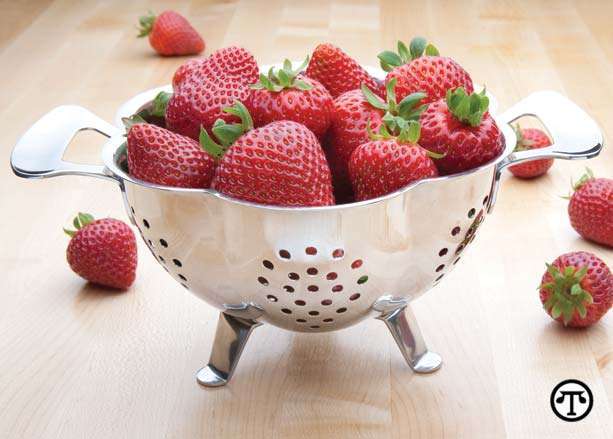
photo credit getty images.
Strawberries can improve the flavor and nutrition of both sweet and savory dishes.

Harvest strawberries when the fruit are uniformly red

Few can resist the allure of fresh strawberries — they’re an early summer treat for many. Luckily, cultivating these delectable fruits is relatively easy. With full sun, well-drained soil and just a little bit of attention, you can reap the rewards of a tasty harvest. In this article, horticulturists with Iowa State University Extension and Outreach answer questions about strawberry care in the home garden.

When should strawberries be harvested?

Harvest strawberries when the fruit are uniformly red (fully ripe). Strawberry cultivars can differ on what shade of red indicates they are fully ripe. A substantial white ring inside of the berry usually indicates when a berry is not fully ripe. Taste each cultivar to see what color indicates the optimal flavor for you.

Pick the berries with the caps and stems attached to retain firmness and quality. Pinch off the stem about 1/4 inch above the cap. Don’t pull them off. Pulling them off can create a wound, which can decrease the berry shelf-life.

Strawberries should be picked about every other day in warm weather and every three to four days in cool weather. The harvest period for some June-bearing varieties may last three to four weeks. Strawberries can be stored in the refrigerator for up to five to seven days. Ideal storage conditions are 32 degrees Fahrenheit and 90% to 95% relative humidity.

How often do I water my strawberries?

Strawberry plants need 1 inch of water per week for adequate growth. Water the strawberry plant once a week during dry weather. Water in the morning to allow for the foliage to quickly dry. The use of drip irrigation systems or soaker hoses is also beneficial for keeping the foliage dry and reducing issues with diseases.

How do I control weeds in my strawberry patch?

Controlling weeds is important to maintain healthy, productive strawberry plants. Weeds compete for water, nutrients and sunlight, while also increasing the risk of diseases by allowing moisture to stay on the leaves and fruit.

For home gardeners, hand-weeding and frequent shallow cultivation is effective, taking special care to avoid damaging the strawberry plant’s shallow root system. Utilize the mulch that covered the plants in the winter as a mulch between the rows. This also helps reduce the amount of mud created when harvesting strawberries when the soil is wet.

When should I fertilize my June-bearing strawberries?

Established plantings of June-bearing strawberries should not be fertilized in spring. Spring fertilization stimulates foliar growth, produces softer berries and increases disease problems. Lush, vegetative growth may make picking difficult. Also, soft berries are more likely to be attacked by fruit rots.

Fertilizer should be applied to June-bearing strawberries during the renovation process immediately after the last harvest of the season. Apply an all-purpose fertilizer at a rate of a half pound of actual nitrogen per 100 feet of row.

Some of the strawberries in my garden are covered with a gray, velvety growth. What is it and how can it be controlled?

The gray, velvety growth on your berries may be gray mold.  It is also known as Botrytis fruit rot. This fungal disease thrives in humid conditions and poor air circulation. It often affects berries touching the soil or other infected ones.

Cultural practices can help minimize damage. Avoid spring fertilization for June-bearing strawberries to prevent excessive foliage growth, which creates a favorable environment for gray mold. Weed control and mulching with straw keep berries dry and off the ground. Irrigate in the morning during dry spells to promote quick drying. Harvest ripe berries frequently, handling them gently to prevent bruising, and refrigerate immediately. Remove and discard any berries showing signs of gray mold promptly. While fungicides are an option for commercial growers, focusing on cultural practices is the best approach for home gardeners to combat Botrytis fruit rot.

There are small, black, yellow-spotted beetles feeding on my strawberries. What should I do?

The small, black beetles are likely sap beetles.They are also known as picnic beetles or picnic bugs. Sap beetles commonly feed on overripe or damaged fruits and vegetables in the garden.

Sanitation is the best management strategy for sap beetles in home gardens. Keep the strawberry patch as clean as possible through timely picking and removal of damaged, diseased and overripe fruit. Insecticides are not a viable option for gardeners as few insecticides are labeled for use on strawberries in home gardens.

My strawberries aren’t as sweet as normal. Why?

Weather significantly impacts the flavor of fruits and vegetables. For strawberries, warm, sunny days and cool nights during fruit development produce the most flavorful berries. Cool, cloudy weather in May and June reduces sugar content, resulting in less sweet berries. Extremely hot weather can lead to slightly bitter-tasting berries.

My strawberries are small and dark maroon color, but don’t taste ripe. Why?

Leather rot, a common fungal disease in wet conditions, causes fruit rots in strawberries. Berries infected before they are ripe may not size up and are maroon. Despite a dark color they are low in sugar and off-flavor. Minimize soil contact and remove infected fruit to control leather rot.

Tomato Leaf-Spot Diseases

0
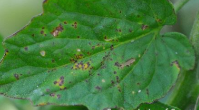
Septoria Leaf Spot appears initially as small, water-soaked spots on the lower leaves. The centers of the spots turn light tan or gray while the margins remain dark. Dark-colored fungal fruiting structures form in the spots which are typically smaller and more numerous than early blight spots.
 
Early Blight symptoms appear as irregular, brown lesions or spots on the leaves up to ½-inch in diameter. The dark, concentric rings in the lesions give the spots a target-like appearance. This is a distinguishing symptom to identify the disease. Several lesions can merge together and cause the leaf to yellow, dry up and drop prematurely. Leaf drop reduces the plant’s ability to photosynthesize thus reducing the energy and vigor of the plant. It can also expose fruit to an increased risk of sunscald. Early blight lesions can develop on the stem and fruit as well.
In Kansas, Septoria leafspot tends to be more common than early blight. Both fungi overwinter in plant debris, on seeds or weeds. Spores can splash or blow onto tomato plants. Warm, humid weather and heavy rainfall favor development of Septoria leafspot and early blight.
 
Read more at our KSRE Publication: Early Blight and Septoria Leaf Spot

Hornworms on Tomatoes

0

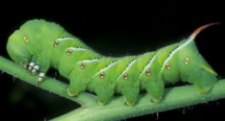
Description: The larval stage is a 3 ½ to 4-inch long pale, green caterpillar. There are five pairs of prolegs and a horn on the last segment. The tobacco hornworm has seven diagonal white stripes and usually a red horn. The tomato hornworm has Vshaped markings and a blue/black horn. The adult moth has a stout, grayish-colored body with wings that span 4 to 5 inches.

Life Cycle: In the larval stage the hornworm caterpillar passes through four or five stages before reaching full size. This process takes about one month. The caterpillar pupates in the soil giving rise to an adult moth. The adult of the tobacco hornworm is the Carolina sphinx moth. The adult of the tomato hornworm is the five-spotted hawk moth. There are two generations each year.

Damage: Hornworm larva are the damaging stage and are typically found on tomatoes,
but feed on eggplant, peppers and potatoes as well. Caterpillars devour leaves and
stems leaving behind dark green or black droppings.

Control: Hornworms are parasitized by several insects including the small braconid wasp which lays eggs on the larva. When the eggs hatch, the wasp larva feed on the hornworm devouring it from the inside killing the hornworm.

To avoid harming beneficial insects, handpicking hornworms is the recommended control.
Hornworms camouflage themselves among the leaves making it difficult to find them.

Bt (Dipel, Thuricide), Spinosad (Conserv, Captain Jack’s Dead Bug Brew, Monterey
Garden Insect Spray), cyfluthrin (BioAdvanced Vegetable & Garden Insect Spray) are a
few insecticides that can be effective at controlling hornworms. Always follow label
instructions and pay close attention to the harvest interval.


Squash Bugs

0
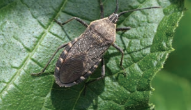
Description: Eggs are 1/16-inch in diameter and change from light brown to dark red. Young nymphs are pale green with red antennae which later turn black. As the nymphs develop, they turn a light to dark grey color. Mature nymphs are up to ½-inch long and wingless. Adults are ½ to ¾-inch long and dark-brown in color. The wings are brownish-black with orange markings on the outer edge of the body. If crushed, adult squash bugs emit a foul odor.
 
Life Cycle: Squash bugs overwinter as adults. From late-May through June they seek a plant host. From June through mid-August, after mating, females lay eggs in clusters on the stems and undersides of leaves. Within 7 to 14 days nymphs hatch and go through multiple stages of development. By 4-6 weeks, the adult squash bug is fully developed.
 
Damage:  The primary hosts for squash bugs include summer/winter squash and pumpkins but they will feed on other cucurbits as well. Adults and nymphs have piercing-sucking mouthparts which they use to suck fluids from leaves, stems and fruits. Young plants are at a great risk for destruction from squash bugs, though mature plants can be severely damaged as well if the pest population is high. Damage appears as small yellow specks on leaves. Stem damage causes wilting and leaves will dry up and shrivel. Feeding on fruit affects the quality by causing distortion and scarring along with sunken areas.
 
Control: Preventative management is the best recommendation. Scout for pests in the garden regularly. Look on the undersides of leaves and the stems for eggs early in the season. Remove plant debris to reduce overwintering habitats. Physically remove and destroy eggs, nymphs and adult bugs from plants as you find them. Use floating row covers, if garden size allows, to exclude pests from accessing plants.
Horticulture oils can be effective if applied on eggs. Young nymphs can be controlled with insecticides. Weekly application may be necessary for complete control. Adult squash bugs have a thick, waxy cuticle that makes insecticides ineffective. Ensure thorough coverage of the plant for best results. See your local extension agent or KSRE Publication: Squash Bugs for insecticide recommendations.
For more information about squash bugs see KSRE Publication: Squash Bug