Sunday, February 8, 2026
Home Blog Page 403

Exasperating airline trip

0
Thayne Cozart
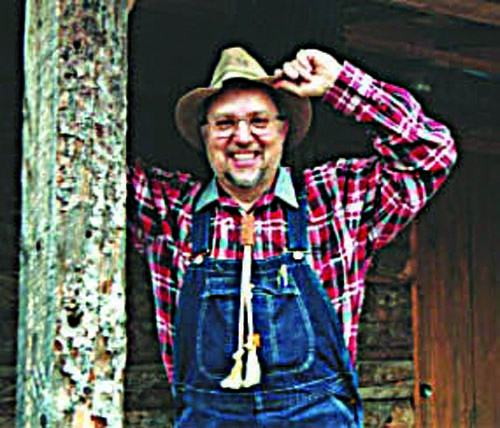
Milo Yield

A word of warning. The purpose of this column is not humor. The purpose of this column is to vent about the most exasperating airline flight of my long life. The only humor in my recent flying experience is that it wuz a comedy of errors.

I pretty much swore off airline travel two decades ago with the advent of the Travel Security Administration’s necessary, but frustrating, pat downs and near strip searches that passengers have to endure just to get on an airplane.

But, a strong desire to attend a grand-daughter’s wedding near Knoxville, Tenn., necessitated that Nevah and I fly, rather than drive for the trip. At 81, driving 2,000 miles seemed like too much to deal with comfortably. Plus, our nearby daughter wuz traveling with us to the wedding and she agreed to deal with the ticketing and keep Nevah and I on track.

Now, before launching into the following diatribe about air travel, let me admit up front that, in a way, it’s my own fault. That’s becuz when we were planning the trip, I insisted that the flight originate at the new MHK airport in Manhattan, Kan. At the time, it seemed like a logical decision because Manhattan’s airport is only 20 miles away, compared to a 300-mile round trip to the new KCI airport in Kansas City. The tickets were reasonably higher compared to the expense of a KC trip, plus long-term parking at KCI.

Manhattan’s airport is served by American Airlines affiliate American Eagle which has flights to Dallas-Ft. Worth airport (DFW) and, after a couple-hour layover, American Airlines (AA) flies non-stop to Knoxville. Little did we know that our hair-pulling flight experience would start before we even got started.

Here’s the story: Our planned flight wuz to leave MHK around 2:30 p.m., so we picked up our daughter around 1 p.m. But, before we could leave Riley, our daughter got an email informing us that our American Eagle plane wouldn’t be ready to board until about 4:30. So, we turned around, went home and waited an hour and a half before restarting to MHK.

After going through a minimally intrusive minor league TSA inspection, we loitered in the MHK terminal before boarding our flight to DFW. Although the one-hour flight was uneventful, alas, we arrived at B-terminal in DFW just in time to learn that our scheduled flight to Knoxville had left a few minutes earlier.

Ah, but the friendly and efficient folks at American Airlines assured us that we could conveniently reschedule to another Knoxville flight departing in just three hours in Terminal B. But, we were informed that our status now was as standby passengers hoping that three seats would be available on the rescheduled flight. However, after another long walk to the designated gate, we were informed that only two standby seats were currently available and that the new flight would depart from Terminal A, not Terminal B.

So, after a half-mile trek and a cattle-car ride on the oh-so-efficient Skylink automated elevated rail system, we ate three tasty evening meals, at a cost of $75, and headed for our new departure gate. There the AA ticketing folks gave us the news that the new flight had seven standby seats and that we were at the head of the standby list. Good news under the circumstances, but that state of affairs would not last long.

After waiting at the departure gate until it was near 11 p.m., we at last got standby clearance and started to board. You can’t guess what happened next? Our daughter and most of the passengers boarded the plane, but just as Nevah and I were to show our boarding passes to the boarding agent, he curtly informed us that “this plane ain’t flying nowhere. The flight’s been cancelled. We will deboard this plane.”

So, it took 15 minutes for all the passengers, including our daughter, to deboard the plane. Then the friendly AA folks informed us there would be no more flights to Knoxville that night and we would be given vouchers for “free” overnight accommodations at an undisclosed hotel or motel. You’d be correct if you think my blood-pressure was going up at this time. Ah, but there’s more — much more.

After standing in a “folding line” at least 100 yards long for a half hour for our hotel vouchers, the efficient AA folks announced that another plane had been miraculously discovered and would board at another Terminal A gate shortly after midnight. So, we joined the passenger stampede to the new gate, only to be greeted with the news from AA that the new plane would depart from Terminal C, not A.

This necessitated another long walk to the Skylink rail system where we discovered that the escalators had been shut down at 11 p.m. and most of the restrooms closed. So, we waited to take the elevator. In the cattle car Skylink this time, we got the full 20-minute tour of all six of DFW’s terminals — A through F.

But, we eventually arrived at Terminal C. After another wait, we cleared for boarding and trudged to our seats. Two-hours later we arrived at Knoxville where we had a long-walk and long wait for our baggage. But, thankfully, our bags arrived just as our Tennessee daughter arrived to transport us to her home. We finally laid down our heads at her home at 4:30 a.m.

Short version of the story: A flight that was to take 6 hours actually took around 14. Thanks for all the memories American Airlines.

Looking back, the most exasperating thing about the trip is that AA never once tried to tell us why the planes were delayed. If it wuz mechanical failure, the delay wuz understandable. But it could have been terrorists, a drunk or drugged pilot, bad weather. Who knows? We were left in the dark and that is irritating.

Gladly, I can report that our granddaughters wedding was a beautiful event and we now have a fine specimen of a new grandson-in-law. We spent a fine three days in Tennessee with family.

And, our reverse flight on AA and American Eagle was uneventful. But, we had enuf bad events on the flight out to last us a lifetime. I will think more than twice before I schedule another airline trip.

My words of wisdom for this week, don’t fly when you can drive, walk or crawl — or stay home. Have a good ‘un.

Florida Representative Seeks Permanent Ban On Horse Slaughter

0

It’s been almost a decade since a series of horse thefts and slaughters in Florida sparked anger among area animal activists.

Over that time, U.S. Representative Vern Buchanan has continued to push for a U.S. ban on the killing of horses for meat.

The Congressman lead a bipartisan letter demanding prohibition on the use of any U.S. tax dollars for horse slaughter.

A letter to House Agriculture Appropriations Subcommittee leaders asked that the U.S Department of Agriculture instate a permanent ban on the practice enforced by federal food and safety inspectors.

“This overwhelmingly popular and fiscally responsible policy has been enacted for each year since Fiscal Year 2014 and for all but two years since 2005,” the letter reads. “Horse slaughter is an inherently cruel practice that 83 percent of Americans want to see permanently banned.”

The letter bore the signatures of 120 U.S. House members.

“The slaughter of horses for human consumption is a barbaric practice that has no place in our country,” Buchanan said. “As co-chair of the Animal Protection Caucus in Congress, I look forward to continuing to lead the effort to protect these majestic creatures.”

He has successfully pushed for Congress to impose restrictions in USDA’s budget each year since 2014, but the prohibition must be renewed each year.

The span of time for continuous bans coincidentally dates back to a series of local crimes in 2015 when individuals stole horses off Floria farms, around the same time a show horse was found butchered at another farm.

Deputies at the time told local media they believed that horse had been killed for its meat.

Different regions of Florida continue to see horse thefts, and three horses were found slaughtered earlier this year.

Buchanan the past few years has worked on the legislative effort to ban horse slaughter in the U.S. completely.

The year-by-year restrictions have had an impact, with the last slaughterhouse dedicated to butchering horses closed about 17 years ago.

But some slaughterhouses in the country continue to buy horses and have opposed a ban on the practice of killing horses when the practice, at least at professional facilities, differs little from killing cows and pigs.

An executive for New Holland Sales in Pennsylvania told Horse & Rider magazine last year that many horses sold for slaughter are past their prime and otherwise unwanted by farms.

“If they’re usable and we can find a home for them, I want to do that,” the sale operator told the trade publication. “But some are mentally or physically beyond repair. What are we going to do with the ones that don’t find a home?”

But animal rights groups are working with Buchanan to shut down the practice of butchering horses for good.

They say it’s a cruel way to end the life of many horses and supports a black market leading to the horse thefts and killings investigated around the nation.

“With the last horse slaughter plant in the United States closing in 2007, Congress has continuously agreed that shutting down this predatory industry remains paramount in protecting the economy and loyal companions,” said Tracie Letterman, vice president of Federal Affairs for the Humane Society Legislative Fund.

“The horse slaughter industry is inherently cruel and begins the moment the horse is sold into the hands of the slaughterhouses.”

+++30+++

More Training Than ‘Miracles’

0

“Surely all of the highly trained horses used in Western movies aren’t fed those very expensive drugs and supplements.”

No offense to the owners-management of large veterinary suppliers from which major ranch purchases are made. They are very professional, congenial, helpful, and cooperative in every regard.

However, it is interesting that their fancy four-color slick equine supplies catalogs have so many pages of horse “drugs.” The word “drug” is used loosely because the pages are all dedicated to supposedly health-improving equine medications of sort.

Remainder of the catalog offers every kind imaginable of additives, enrichments, just name it, products “to make horses better.”

Again, “better” is said cautiously, because the “costly stuff” causes customers to generalize healthier, fitter horses with these “miracle products.”

The catalogs also feature extensive equipment indicating to prospective buyers that it’ll readily enhance their horse performance whoever the handler.

Seemingly many viewers take for granted the high caliber of acting ability that horses used in many movies must have.

The horses are trained to fall, lay down, act lame, play dead, buck, rear, and much more, all on command. Their trainers are very knowledgeable with an extreme horse sense.

Admittedly, movie stars riding the horses in general are poor horsemen. Yet, not many fell off, and that must often be credited to the horses taking care of their riders.

Today’s most elite “horse whisperers” and bigtime showring champion trainers are excellent. But what rope horses, cutting horses, reining horses, jumping horses do is incomparable to that of movie stunt horses.

High school trained trick horses like Trigger, Champ, and Koko were elite with quite diverse acts through most knowledgeable training.

However, movie stunt horses often ridden by generally low paid unknowledgeable contract actors are the ones deserving greatest applause. Certain horses have a more natural ability to do such stunts, but the training is what is utmost.

Every horse looks nice, but it is a guaranteed bet they don’t get all those fancy miracle drugs and conditioners. Most likely they live on pasture or have a daily ration of prairie hay and water.

Reminded of First Corinthians 9:25: “Now every athlete who goes into training and participates in the acts is disciplined and exercises self-control. They do it intending to please their beloved best friend handler and their own personal satisfaction.”

+++ALLELUIA+++

XVIII–22–5-27-2024

Ag Marketing Genie

0
Thayne Cozart
Milo Yield

Farmers and ranchers are faced with a perpetual dilemma — how to decipher the agricultural markets in ways that hopefully will provide enuf profit from their enterprises to keep them in bizness year after year into future generations.

Alas, deciphering the ag markets is easier said than done and I’ve never known a farmer or rancher who thought he or she had a perfect insight into the markets.

And, to help farmers decipher the ag markets is an entire phalanx of self-declared marketing gurus who, eagerly, for a healthy sum of money, will provide a farmer with marketing advice of all types — personal visits, phone calls, newsletters, podcasts, social media connections, charts, graphs, historic data, brokerage services, etc.

And, yet, after availing themselves of all the offered marketing advice, farmers and ranchers too often still find themselves on the short-end of the assured profit margin.

All the above brings me to this ag marketing story, the nugget of which wuz provided by my height-challenged friend, ol’ Bob Doff. Here’s the story.

A beleaguered, cash-strapped farmer wuz mending a washed-out water gap in a pasture fence when he saw a piece of glass shining through the surface of the mud and muck. When he pulled it out, it wuz a bottle made out of glass so dark he couldn’t see through it to see its contents.

So, to his great surprise he found that the metal bottle top would unscrew easily. Now, imagine his greater surprise when he opened the bottle and before his eyes a magic, smiling genie appeared out of a smoky cloud.

The tiny genie surprised him further when it spoke these words. “Thanks you, kind Sir, for releasing me from my bottle prison. I’ve been washing downstream for months and finally ended up buried in the mud. I thought I was a goner. As thanks for releasing me, I have the power to grant you any one wish. What will your wish be?”

The astounded farmer replied without much thought, “My fondest wish would be to always make a nice profit from any technique I use in the agricultural commodity markets!”

The genie’s smile evaporated into a frown and wrinkled brow. He replied to the farmer, “Do you, Sir, realize how difficult it will be for me to grant you that particular wish? The ag markets are infinitely puzzling from the infinite number of constantly moving parts and factors such as global production, droughts, floods, storms, monopolistic corporations, insider trading, incompetent regulatory agencies, universal greed, ineffective farm bills, government environmental policies, global trade relationships, transportation problems, energy supply and cost, input inflationary prices, constantly changing consumer preferences, and population trends. Those are just starters. Do you see the problem for me? Would you even consider making a simpler wish that I could grant you?”

That put the poor farmer in the horns of a dilemma. Now, he felt sorry for the genie. So, he pursed his lips and said, “Well, I’d settle if you could tell me how to understand women.”

At those words, the genie almost burst into tears, and he replied: “You, Sir, are a tough one. After considering your second wish, I’ll grant you your first wish. From this day forward, I guarantee that any way you use the ag markets will assure you of a commodity price equal to the government’s monthly published 100% parity price. That way every acre of your farm will produce disposable income for you.”

I call that a wishful thinking story with a serious moral to it.

***

I’m finishing this column on Wednesday, May 15, and the previous few days have been eventful. First, all the local Yield family members, including the two great grandsons, met Saturday for an early Mother’s Day meal at the Cupalahunert Restaurant & Brewery. That wuz good eatin’ and a lot of fun.

Then Sunday afternoon Nevah and I drove to Yates Center, Kan., and overnighted with her twin sister and brother-in-law, who stuffed us with steak and trimmings. We spent the evening playing cards and laughing a lot.

Monday, after breakfast, we continued our trip down to Parsons to attend the memorial service for our son-in-law’s mother. She lived a long and productive 89 years.

While in the Parsons area, we met a number of treasured friends and even squeezed in time for a short visit with my old friend and compatriot Markus Parkus and his wife.

Our drive through the Flint Hills coming and going wuz simply beautiful and inspiring. The Flint Hills are now at their most appealing. Thanks to an abundance of rain this spring, the tallgrass prairie is verdant and from the road looks like a million acre golf course with plenty of rocky hazards. After the severe drought the past few years, it was refreshing to see all the ponds brimming full.

And, the wheat fields we saw are headed out and look very promising for a good harvest. Sadly, a few fields we saw had been inundated and ruined by recent flood waters.

***

Seldom a day goes by that I don’t receive by regular mail or email several solicitations to make a political donation. To me, it seems any donations made at this time are wasted. Name me a voter who doesn’t already know everything there is to know about Biden, Trump, and even Kennedy? I don’t think any amount of money, or any method of persuasion, will change the mind of any voter. That’s why I shred all the donation mail and, appropriately, make garden compost out of it.

***

I’ve finally got all my garden planted. Now, I’ve got to put my effort into maintaining what I’ve got planted. My gardening words of wisdom for the week are: “When weeding, the best way to make sure you are removing a weed and not a valuable plant is to pull on it. If it comes out of the ground easily, it is a valuable plant.” Have a good ‘un.

KU media advisory: Airborne electromagnetic survey of aquifer conditions planned in northwestern Kansas

0

From the Office of Public Affairs | http://www.news.ku.edu

Media advisory

Contact: Jim Butler, Kansas Geological Survey, 785-864-2116, [email protected]

Airborne electromagnetic survey of aquifer conditions planned in northwestern Kansas

LAWRENCE — Beginning in late May and continuing for much of June, residents of northwest Kansas may see a low-flying helicopter towing a large hexagonal frame. This unusual arrangement is part of a project to map groundwater conditions in the Ogallala aquifer in Northwest Kansas Groundwater Management District No. 4.

Through funding from the Governor’s Office and the Kansas Water Office, GMD4 and the Kansas Geological Survey, working with Aqua Geo Frameworks LLC of Fort Laramie, Wyoming, have planned the helicopter flights to develop a better understanding of the Ogallala aquifer. AGF has performed more than 20,000 miles of similar airborne electromagnetic surveys in Nebraska, Colorado and Wyoming, but this will be the first of its kind flown in Kansas.

Scientific equipment will hang below the helicopter 100 to 200 feet above ground. The equipment is designed to map geologic structures and groundwater resources to depths of approximately 1,000 feet below land surface. The helicopter will be flown at about 50 mph by pilots who are specially trained for low-level flying and have a great deal of experience with airborne electromagnetic surveys. Flights will not occur over residential areas and other buildings, livestock feeding operations or wind turbines.

The Ogallala aquifer is the major water resource for agricultural, industrial and municipal use in GMD4. Intensive pumping of the aquifer over the last 60-plus years has resulted in large groundwater level declines in Sherman, Thomas, Sheridan and Cheyenne counties. The information obtained in these flights will allow GMD4 and the Kansas Geological Survey to better assess the nature and continuity of water-yielding materials in the aquifer.

The ultimate objective of the project is to obtain information that will assist GMD4 in developing strategies for charting more sustainable paths for the Ogallala aquifer in the district.

For further information about the planned survey, contact Shannon Kenyon, GMD4 manager (email or 785-462-3915), Jim Butler of the Kansas Geological Survey (email or 785-864-2116), or Jared Abraham of Aqua Geo Frameworks (email or 303-905-6240). A video describing previous airborne electromagnetic surveys in Nebraska is available on the GMD4 website.

The Kansas Geological Survey is a nonregulatory research and service division of the University of Kansas. KGS scientists study and provide information about the state’s geologic resources and hazards, including groundwater, oil and natural gas, rocks and minerals, and earthquakes.

-30-

————————————————————————


KU News Service

1450 Jayhawk Blvd.

Lawrence KS 66045

Phone: 785-864-3256

Fax: 785-864-3339

[email protected]

http://www.news.ku.edu


Erinn Barcomb-Peterson, director of news and media relations, [email protected]


Today’s News is a free service from the Office of Public Affairs