Thursday, February 12, 2026
Home Blog Page 451

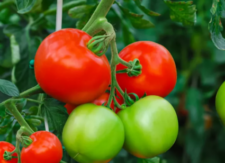
Is it Tomatoe Time yet?

0

Tomatoes are the most popular home garden vegetable, and
all spring gardeners are eager to get them into the garden.
Optimal growing temperatures for tomatoes range from 70- to
75-degrees F during the day and 60- to 65-degrees F at night
making late April to May a safer time to transplant. Cold garden
soils do not promote growth in tomatoes and plants will have to
be protected if there is a danger of frost when planted too
early.

This is a great time to do some tomato planning, however.
Remove any remaining plant debris from the garden. When the
soil is not saturated work compost into the top six inches. Plan
enough space in the garden to provide tomatoes up to two feet between plants. This will
promote air flow and reduce the risk of disease. If possible, use an area of the garden
where tomatoes, peppers, eggplant, potatoes and tomatillos have not been grown for
the past three years. This is called “crop rotation” and will help prevent the spread of
diseases/pests that have overwintered in the soil.

Plan for how you will support your plants. This depends in part on
the type of tomato. Determinate varieties have more compact
growth and can typically be supported by traditional tomato cages
commonly sold at garden centers. Sturdy tomato cages can be
made using wire fencing. Indeterminate varieties can reach over
five feet tall. It is still important to provide support for these vines
so they are not lying on the ground. In this case staking or
trellising and pruning may be necessary.

Many problems with tomatoes are exacerbated by wet, humid
conditions. Providing good airflow within each plant and between
plants as well as consistent and properly-timed water minimizes this risk. Water on the
leaves and water splashing onto plants from the soil are two occurrences that can
spread disease. Using drip irrigation or a soaker hose reduces this problem and enables
the gardener to provide consistent moisture to the targeted area.

When the time is right to purchase tomato transplants, select dark green, short,
compact plants with sturdy stems about as thick as a pencil. Plants that outgrown their
container may be root bound and suffer shock when transplanted. Planting guidelines
will be highlighted later in the month, or you can read more by following the link to our
KSRE Tomato Publication.


Fertilizing Fruit Trees

0

Before applying fertilizer in the spring, a soil test should be completed if one hasn’t been done for several years. The best time to fertilize established fruit trees is when they enter the bloom period. Nitrogen is typically the focus which can be applied with a lawn fertilizer. Choose a high nitrogen fertilizer without herbicides or preemergence included.

Young trees require less fertilizer than established trees.

• 1-2-year-old tree = ¼ cup
• 3-4-year-old tree = ½ cup
• 5-10-year-old tree = 1 – 2 cups
• More than 10 years old = 2 – 3 cups

Spread the fertilizer on the soil surface, away from the trunk, but beneath the canopy.
Water the fertilizer in well and evaluate the tree for further fertilization needs.

Lettuce Eat Local: Toto, I have a feeling we’re in Kansas again….

2

Amanda Miller
Columnist
Lettuce Eat Local


There’s the Fiesta Bowl, cereal bowls, open bowling. But the bowl I think of when I look outside these days is the Dust Bowl. 

Coming back from Ohio a couple weeks ago, I was again reminded of how my soul appreciates this big cloudless sky of ours. Ohio is just often so cloudy, so gray; Kansas weather is by no means perfect, but at least we almost always have sunshine and blue skies. 

Almost always. It’s still not gray out, but the blue has been losing out to brown recently. Clouds might even be better than this haze of dust blowing into everything from the sky to our lungs. I’m not surprised per se, as we’re no stranger to excessive heat and windiness. We definitely lean more towards an arid landscape rather than lush verdancy, and summers here with our dusty dry heat often remind me of when I lived in the desert in Kenya.

I’m fairly certain weather patterns like this week would actually cause Dorothy to say, “Toto, I have a feeling we’re in Kansas again.” 

At the same time, this unrelenting dry wind so early in the year seems extra Kansas-y even for Kansas. It makes me a bit concerned for actual summer, especially since our livelihood rests on raising healthy crops and cows. I recognize that history shows cycles of crazy weather, and this season may or may not be more egregious — but it’s happening to us, which makes it feel closer to home because it is. Creation care has always been important to me since I know the Creator; so we’ll keep on plugging away in our little corner (can you have corners in a round Earth?), trying to do the best for and with the world we have been given. 

And while the wind makes it a little harder to as fully enjoy the experience, we sure love getting our hands into the earth of this Earth. Another way we know we must be in Kansas is our nice early planting dates; people back East in Ohio were surprised to learn I was already behind on my garden timeline since I didn’t get potatoes and onions in by St. Patrick’s Day. Our zone’s frost free date is next week already, April 15, but it’s not for another month for my parents in central Ohio. It’s already probably too late for the peas I just planted, but at least this way we can say I tried to give peas a chance. 

I’m hoping it was the right time for the other seeds we threw in the ground this week, beets and carrots and radishes, etc. One section I’m calling “Brassica Surprise”: a row of sprouts my friend gifted us that she started from various cole crop members. They like cooler weather, which is why they get planted earlier, but who knows if it’ll be cool enough for them this year. 

Just today we had our first picking of the first thing I write about every spring — asparagus! I’m always overjoyed to find the harbinger of the growing season, although every year I also struggle to remember to keep finding it. I’m even less inclined to go hunting in the asparagus patch in assaultive Dust-Bowl-reminiscent wind like this, but at least I’ll know I’m in Kansas. 


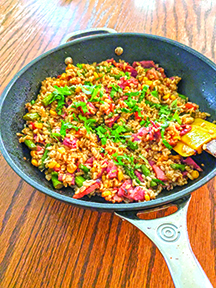
Bowl of Kansas-Influenced Thai-Inspired Fried Rice

That’s quite a mouthful of a title, but it’s appropriate for the mouthfuls of flavor this dish provides. It’s been a bit of a crazy week, and fried rice is frequently one of my go-tos since it ticks so many boxes: satisfying, economical, versatile, speedy. A smidge of Thai spin with fish sauce and cilantro worked beautifully with our spring-style additions of asparagus and ham. The original recipe I consulted didn’t include eggs, so I didn’t either this time although I typically do.

Prep tips: the texture actually works out better with chilled rice instead of fresh, so make a rice-based meal earlier in the week and use the leftovers for this — especially handy since leftover bits of meat and veggies all work great here. 

a good dollop of fat of choice

1-2 cups diced ham

1 small bell pepper, diced

1 cup sliced fresh asparagus

½ cup frozen corn, thawed

1 small tomato, diced

3-4 cups cooked brown rice, cold

1 teaspoon fish sauce

1 tablespoon soy sauce, plus more for serving

a sprinkle of chopped fresh cilantro

Heat oil in a large frying pan over medium-high heat. Add ham and vegetables, sauteing until browned. Stir/chop in rice with both sauces, and heat fully. Top with cilantro and serve piping hot, with more soy sauce.  

Weeds no walk in the park for soybean growers

0

Weeds are a hazard that requires diligence in soybean fields, Extension specialists say.

In the above photo, soybeans are shown in a bag and overflowing with credit to pnmralex at Pixabay.

Kevin Bradley

Kevin Bradley, a state Extension weed scientist and education director for the University of Missouri, said in his state many corn growers are also soybean producers, so they are well aware of the weed problems each crop faces.

“Our No. 1 worst weed in the Midwest is waterhemp,” he said. “It has been for some time and likely will be for some time to come. In the South, that changes to Palmer amaranth. In the Western corn belt, kochia is also a concern.”

Regardless of the crop, combating weeds is necessary.

“There are some obvious problems that may be present in fields that were intended for corn and had a fall herbicide application that only allows for corn in the rotation the next year,” he said.

Bradley writes for Mizzou Crop and Post News about the topics. As thinks about “soybean on soybean rotation” one concern is it puts a greater pressure on post-emergence herbicide and greater likelihood of resistance development.

Sarah Lancaster

Sarah Lancaster, an assistant professor and Extension specialist in weed science at Kansas State University, said growers should first think about what herbicides had been applied in the summer or fall of 2023 and if carryover injury might be a concern.

“The second thing to think about would be which herbicide-resistant trait to choose,” she said. “The most common ones in the marketplace are Enlist E3 or XtendFlex. I’m starting to hear some concerns about the availability of over-the-top dicamba formulations for the XtendFlex system, so I would encourage anyone interested in that system to contact their input providers as soon as practical.”

Treatments to consider

Bradley believes growers must rely on effective soil residual herbicide programs as much as possible. Currently soybean growers rely mostly on three active ingredients for post-emergence control of pigweed species—glufosinate, 2,4-D and dicamba.

If the Environmental Protection Agency does not allow dicamba application in 2025 it could make a difference on how soybean acres are allocated.

“I believe it would change the percentage of acres that get planted with XtendFlex soybeans quite a bit,” he said. “I would expect much more Enlist soybeans would get planted, and much more glufosinate and 2,4-D would get sprayed.”

Lancaster said one of the most important herbicide considerations for soybeans or corn is to use an effective and aggressive residual herbicide program. That starts with the burndown application. With the assumption that most soybean are going to be in a reduced tillage system, an early application to burndown emerged weeds should include herbicides like glyphosate, 2-4-D and dicamba.

A residual product like flumioxazin (Valor and similar products) or metribuzin (Tricor and similar products) can be helpful to prevent the emergence of new weeds, she said. Adding a contact herbicide like Sharpen or Reviton can help control difficult weeds like marestail, also known as horseweed.

Planting time

At planting, apply residual herbicides from at least two herbicide groups at full rates, Lancaster said. For Palmer amaranth and waterhemp, options include Group 15 herbicides like S-metolacher (Dual), acetocholor (Warrant), dimethenamid-P (Outlook) or pyroxasulfone (Zidua and Anthem) and Group 14 herbicides like flumioxazin (Valor) or sulfantrazone (Spart). Metribuzin (Group 5) is also an option.

“Be aware of maximum annual rates for products that are used in both the burndown and at planting application,” Lancaster said.

In season, the options depend on the herbicide-resistant trait that is chosen, she said. Regardless of the herbicide, timely application is the key to success. In the Enlist system, some of the best postemergence treatments for pigweed control include Enlist One in combination with Liberty. Glyphosate can be added for grass control, but avoid a Group 1 herbicide like clethodim (Select Max) or quizalofop (Assure II) because of concerns with angagonism.

In the XtendFlex system, Liberty remains a useful product; however, it cannot be tank mixed with XtendiMax, Engenina or Tavium, she said. Group 14 herbicides such as fomesafen (Reflex) can be mixed with dicamba products, but it is important that they be applied to small weeds (less than 4 inches) for a successful application.