Thursday, January 8, 2026
Home Blog Page 10

Ten We Kan! Award winners for 2025

0

Ten people from around the state have been recognized by the Kansas Sampler Foundation in 2025 for their efforts to preserve and sustain rural culture.

The Kansas Sampler Foundation, an Inman-based non-profit, has been presenting We Kan! award plates since 1993. Recipients are chosen from the We Kan! network which is made up of community leaders, doers, entrepreneurs, volunteers and rural advocates, including those involved in state government, who desire to help rural communities be the best they can be at being themselves.

The ten to receive awards in 2025 were Cheryl Adelhardt, Harper (You’ve Given Your All); Kylee Bergstrom, Seneca (Yo, VIP, You’re Kicking It); Steve and Jane Fry, Elk Falls (For Lifting All); Caryl Hale, Norton (Your Open Heart); Shelly Hansel, Harper County (Loud and Proud); Sarah Kessinger, Marysville (Front and Center); Nick Levendofsky, Courtland (Secretary of Swagriculture); Susan McKenzie, White City (Whatever is Needed); Trisha Purdon, Independence (You’re Our Rural Champion); and Laura and Kaydee Riggs-Johnson, Winfield (Making Kansas Cool as Heck).

Director Marci Penner said, “These are people who are making intentional and extra efforts to help improve their communities or lives of their constituents. Because they don’t seek credit for their contributions, the manner in which we bring family and friends together to surprise them with the award, in their home environment, makes it a special event.”

The artist of the individual award plates if Stacy Barnes of Greensburg.

To see a list of all previous We Kan! award winners go to kansassampler.org.

Despite winter’s chill, gardeners can still prep for spring

0
Storing potatoes, testing old seed make December’s to-do list.

Gardeners who may be getting antsy for spring can still find plenty to do during winter’s colder months, says Kansas State University horticulture expert Cynthia Domenghini.

For starters, she says, it’s a good time to check in on the conditions in which potatoes are being stored.

“Ideally, potatoes should be stored in a cool garage or basement where the relative humidity is 90% and the temperature is between 40-45 degrees Fahrenheit,” Domenghini said.

Potatoes can be stored for long periods of time if the temperature remains below 40 F, but Domenghini notes that the starches begin converting to sugars, which alters the flavor of potatoes.

“If this happens in your storage area, keep the potatoes at room temperature for 2-3 days prior to consuming and the desired flavor should return,” she said.

If stored above 45 F for prolonged periods of time, potatoes will begin to sprout. If the relative humidity is too low, potatoes will become soft and shriveled. Domenghini said storing potatoes in perforated plastic bags will help to maintain higher humidity levels.

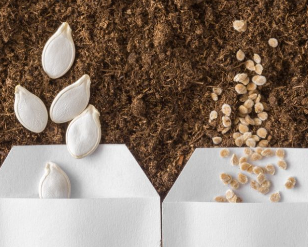
Domenghini also notes that winter is a good time to test whether old garden seed is still viable for the spring garden.

“Seed typically remains viable for about three years if kept in cool, dark, dry conditions, though there are exceptions,” Domenghini said. “For example, members of the carrot family (carrots, parsnips and parsley) have short-lived seeds that are usually good for only 1-2 years.”

A publication from the Colorado State University extension service, Storing Vegetable and Flower Seeds, has more detailed information about the longevity of specific species.

If unsure about your seed’s viability, here’s how to test it this winter:

  • Place 10 seeds on a paper towel moistened with warm water. Cover with a second moistened towel.
  • Roll up the towels and place them inside a plastic bag with several holes. Keep the bag in a warm location, such as the top of the refrigerator.
  • Remoisten the towels with warm water, as needed.
  • After one week, check for germination. Remove sprouted seeds and check again after another week.

“The percentage of seeds that sprout indicates the germination rate,” Domenghini said. “You can decide if this rate is acceptable, or if purchasing new seed is warranted.”

Domenghini and her colleagues in K-State’s Department of Horticulture and Natural Resources produce a weekly Horticulture Newsletter with tips for maintaining home landscapes and gardens.

Interested persons can subscribe to the newsletter, as well as send their garden and yard-related questions to [email protected], or contact your local K-State Research and Extension office.

Protect your identity this holiday season

0

It’s the season of giving, but make sure you don’t give identity thieves the gift of your personal information, says Andrew Zumwalt, University of Missouri associate teaching professor and Certified Financial Planner.

Thieves can use information such as your Social Security number, credit card data or account logins to open accounts, make purchases, drain funds or commit other fraud in your name, Zumwalt said. “Identity theft can damage your finances, credit score and reputation, and it often takes months to repair that damage.”

During the holiday season, more people are shopping, both online and in stores, which means more financial transactions, creating more opportunities for thieves to intercept data or slip in fraudulent activity unnoticed, he said. With busy schedules, gift hunting, travel and holiday stress, people may pay less attention to red flags such as suspicious emails, fake offers and other scams.

Protect your identity during the holidays

  • Review bank and credit statements promptly to catch unauthorized charges.
  • Be suspicious of unexpected emails or texts about package deliveries, tax refunds or “holiday deals,” especially from unknown senders.
  • Limit how much personal information you keep in your wallet or purse; avoid carrying sensitive documents unnecessarily.
  • When shopping online, double-check website URLs and avoid unfamiliar retailers.
  • Make photocopies of your credit cards, front and back, and put in a secure location.
  • Use strong passwords on your computer.
  • Check your credit reports at least once a year. You can get a free credit report annually: Fill out a request online or call 877-322-8228.
  • Make photocopies of your credit cards, front and back, and put them in a secure location.

If you suspect your identity has been stolen

  • File a report with the Federal Trade Commission at FTC’s Identity Theft website or call 877-438-4338.
  • Place an fraud alert on your credit report by contacting one of the three nationwide credit reporting agencies: Equifax, 800-685-1111; Experian, 888-397-3742; or TransUnion at 888-909-8872.
  • Notify the fraud departments at your credit card issuers, bank and other places where you have accounts.

Hemp Industry Applauds White House Leadership, Calls for Congressional Action to Protect 325,000 Jobs and Multi-Billion Dollar Sector

0

Today, Hemp Industry and Farmers of America (HIFA) would like to express deep gratitude to the White House for its leadership and engagement on critical issues facing the hemp sector. President Trump’s executive order gave vital breathing room to the hemp industry – farmers, business owners, and consumers, from seniors to veterans. The Executive Order highlights “the challenging legal landscape, including the recent changes to full-spectrum products,” and the need for commonsense regulatory solutions – not prohibition. Following months of productive dialogue between White House staff and representatives from the Hemp Industry Farmers Association (HIFA) and other industry leaders, stakeholders are optimistic that meaningful action is within reach to preserve an industry valued at between $30-70 billion.

The hemp industry has faced significant regulatory uncertainty in recent weeks, after Congress put hemp on the chopping block, an agricultural sector that supports more than 325,000 jobs across farming, manufacturing, distribution, and retail. Following this detrimental ban, the Hemp Industry is aligned with the White House’s call to improve access and inform standards of care. Over the past several months, HIFA and other industry representatives have participated in substantive meetings with White House officials to discuss pathways forward that balance regulatory concerns, public safety, and economic realities. The President’s Executive Order signals that the time for action is now, with the future of American hemp agriculture hanging in the balance. HIFA plans to double down on our outreach to Congress and expand support among elected officials.

This isn’t just about policy — it’s about people. Hundreds of thousands of hemp jobs are at stake across the country,” said HIFA Executive Director Brian Swensen. “We thank the President and White House staff for their time, their attention, and their willingness to engage with our team and industry leaders over these past months. Now we’re calling on Congress to step up and work with us to implement common-sense solutions everyone agrees are necessary, starting with a two-year extension on the existing one-year ban. Together, we can ensure this industry continues to thrive and support hundreds of thousands of American families for generations to come.”

Farmers, small businesses, and families from coast to coast are facing devastation after Congress. A hidden anti-hemp provision in the government funding package is leaving communities across the nation scrambling for answers. Thanks to their ill-judged approach, Congress has created a desolate future for the estimated $30-70 billion hemp industry.

Contact: Hemp Industry & Farmers of America
[email protected]

Buying safe, appropriate toys and gifts this holiday season

0

The holiday shopping season is here, bringing with it the hustle and bustle of searching for the perfect gift. When it comes to children, it is important to buy toys and gifts that are not only safe but also appropriate for the child’s age and development. That is why many organizations recognize December as National Safe Toys and Gifts Month.

Age Is Important

Silvia Vilches is an Alabama Extension early childhood development specialist at Auburn University whose focus area is children up to 5 years old. She said age is the first thing people should consider when buying for a child.

“You always want to pay attention to any safety recommendations out there for the age that you are buying for,” Vilches said. “In terms of child health, remember that the younger the child, the more likely they are to put their toys in their mouth, which is not necessarily a bad thing. Just make sure those items are safe.”

Many toys come with their own safety guidelines that often include an age recommendation for that product. Toys designed for younger children will often have the age recommendation listed on the outside packaging, making it easier for shoppers to select age-appropriate toys. There are some larger toys where people may not think to stop and consider if they are age appropriate, such as tricycles and bicycles. Just like smaller toys, Vilches said it is equally important to consider age when buying ride-on toys.

“It is not a good idea to buy a child an oversized ride-on toy, thinking that they will grow into it,” Vilches said. “If you give them something that is not the right size for their body, they will have a harder time controlling it, and that means that they are not as safe.”

Vilches said children 10 years old and younger have limited peripheral vision. Even with an appropriate-sized toy, people should make sure the child’s surroundings are safe when riding it. For example, people may set up a barrier at the end of the driveway to make sure their child doesn’t accidentally run into the street.

Boost Imagination

Age is not the only factor to consider when choosing gifts. For younger children, Vilches said people should consider buying items that will help in that child’s development.

“Generally, what you don’t want to do is pick a toy that is too narrow in what it does, such as a dollhouse with all premade elements,” Vilches said. “Instead, buy toys that they can assemble, because that sparks their imagination and helps them practice their fine motor dexterity.”

Simple toys like building blocks offer endless possibilities for a child. One day, they can build a house; the next day, they can build a tall tower. These simple toys can also be paired with other smaller toys and stickers to add variety.

“Remember that a child’s interest passes really quickly when they are younger, so what’s fun for a week might not be fun next month,” Vilches said. “Buying toys that let children use their imagination will potentially hold their interest for a longer time.”

Books are also great gift options for children to help with development. Vilches recommends buying books that have bright colors and simple pictures that people can point to and talk about with their child.

“Books are really great because they introduce language and conversation, enhancing a child’s comprehension as you talk to them about the pictures,” Vilches said.

Testing and Recalls

According to the U.S. Consumer Product Safety Commission, all toys intended for children 12 years old and younger must undergo testing and certification to ensure they are compliant with the applicable children’s product safety regulations. However, there are times where toys and other items are recalled because of safety concerns. The Consumer Product Safety Commission provides a searchable database for consumers that lists recalls and product safety warnings. People can find that at cpsc.gov/Recalls.

More Information

From child development to nutrition, Alabama Extension’s Human Sciences team has many resources for families. Visit aces.edu or contact your county Extension office to connect with an agent in your area.