Friday, January 16, 2026
Home Blog Page 103

Male tarantulas will be roaming about Kansas in September as they look for love

0

These misunderstood, wandering arachnids are often simply young males in search of love. Here’s where you might see them in fall 2025.

A hairy spider native to Kansas once was the namesake of a professional, minor league hockey team, the “Topeka Tarantulas.”

That team, based in the Sunflower State’s capital city, folded in 2005, a year after it was established.

But male tarantulas still leave their burrows and roam the rocky pastures and grasslands of Kansas each September in search of mates, at times crossing highways, says “A Pocket Guide to Common Kansas Spiders,” by Hank Guarisco.

Expert’s advice on tarantulas: Leave them alone

If you’re hiking or camping in the arid Southwest and West in the next few months, get ready for what could be the experience — or fright — of a lifetime.

Across the United States, in California, Colorado, Kansas, New Mexico and Texas, tens of thousands of tarantulas will being crawling out of their burrows in search of females — making for a fascinating, if a little creepy — display of the wonders of nature.

It’s tarantula mating season.

“If you’re lucky enough you can sometimes see them in hordes crossing the roads at certain times of the year,” said Dan McCamish, a senior environmental scientist with California State Parks.

His advice? Leave them alone.

“It’s a wild animal — it doesn’t want to be picked up and loved and hugged,” he said. “In general the species is very docile, but if you were to handle one they could bite you.”

While the idea of thousands of hairy, baseball-sized spiders picking their way through parks and campgrounds might give many people the heebie-jeebies, in general these misunderstood, wandering arachnids are simply young males in search of love.

And if they wander into your tent, they didn’t mean to.

“In truth they’re gentle, ecologically valuable animals,” said McCamish. “Mostly they’re interested in escaping from confrontations — especially with something they know could squish them.”

Here’s what to know about tarantulas during their mating season.

Where in the US do tarantulas live?

Tarantulas prefer dry climates and primarily live in Western and Southwestern states with arid and semi-arid habitats. They are prevalent in Arizona, California, Texas, New Mexico, Nevada, Utah, Colorado, Oregon and Washington.

But they’re in other places as well. South Florida has the Mexican red rump and the Texas brown can be found in Oklahoma and Missouri.

In Kansas, tarantulas are generally found in the southern and western parts of the state, being present in western Kansas as far north as Trego, Russell and Gove counties, said “A Pocket Guide to Common Kansas Spiders.”

There are 29 described individual species of tarantulas in the United States.

Common species include the desert blonde tarantula and the Texas brown (though Texas has 14 tarantula species). In Arizona, there’s even a variety with a fiery-red abdomen.

When are you likely to see tarantulas in the wild?

Tarantulas live in these areas year-round, but they mostly keep to themselves and their nests in the ground, so hikers and campers don’t see a lot of them.

“As with most things that live in the desert in the summer, they’re generally nocturnal,” McCamish said. “So unless you’re out in the middle of the night, which I don’t recommend for safety purposes, you likely won’t see them.”

Governor Kelly Proclaims August as Kansas Farmers’ Market Month

0

For Immediate Release:
August 1, 2025

Media please contact:
KDA Communications Office
785-564-6706
[email protected]

MANHATTAN, Kansas —In recognition of the important role farmers’ markets play in Kansas communities, Governor Laura Kelly proclaimed August as Kansas Farmers’ Market Month.

In both urban centers and rural communities, farmers’ markets give consumers access to fresh, locally grown produce and serve as an important link between food producers and consumers of Kansas products. Farmers’ markets also keep money in Kansas communities, which helps make small businesses stronger and positively contributes to local economies.

The number of farmers’ markets in Kansas has grown from 26 in 1987 to more than 119 registered farmers’ markets today. Farmers’ markets in Kansas can register with the Kansas Department of Agriculture as part of the state’s agricultural trademark program, From the Land of Kansas.

“We are excited about the growth and expansion of farmers’ markets across the state,” said Secretary of Agriculture Mike Beam. “Farmers’ markets serve as a great way for producers to connect directly with consumers and sell their products locally.”

KDA supports farmers’ markets by maintaining the Central Registration for Kansas Farmers’ Markets, which is shared with the public through an interactive map and market directory. KDA also provides educational resources through newsletters, workshops and webinars which help farmers’ markets across the state stay up to date with best practices including food safety regulations. KDA and From the Land of Kansas strive to serve Kansas farmers, ranchers, agribusinesses and consumers by expanding agricultural markets and providing support and assistance to help Kansas businesses grow.

Farmers’ markets are a vibrant part of many Kansas communities, and contribute to the health, well-being and quality of life for many Kansans. To locate a farmers’ market in your area, or to receive more information on how to register a farmers’ market please visit www.FromtheLandofKansas.com or email [email protected].

###

SUGGESTED CUTLINE: The Kansas Department of Agriculture was joined by several representatives of Kansas farmers’ markets as Governor Laura Kelly proclaimed August as Kansas Farmers’ Market Month. From left: Brittney Grother, KDA; Robin Dolby, KDA; Mary Tyler, Breadbasket Farmers Market in Topeka; Sammy Gleason, KDA; and April Rickman, Leslie Bishop, and Dian Gebhardt, all with the Farm and Art Market Downtown in Salina.

Governor Kelly Proclaims August as Kansas Farmers’ Market Month.pdf

Farmers Market Month Proclamation.jpg

Data driven decisions to improve herd performance

0

K-State beef cattle experts advocate for data as a valuable decision-making tool.

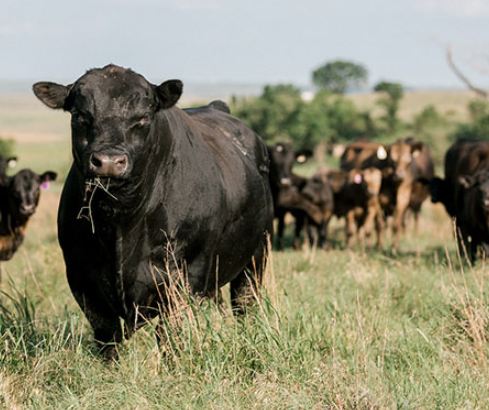
Like a coach studying game statistics to unlock a team’s potential, it’s equally important for cattle producers to track herd data to make informed breeding, feeding and marketing decisions.

Understanding what data matters most can be overwhelming. That’s why Kansas State University’s Beef Cattle Institute veterinarians Brad White and Bob Larson, along with agricultural economist Dustin Pendell – shared insights on setting data priorities for beef operations in a recent episode of Cattle Chat.

Although every operation is different, there are a few core metrics that are universally important. “These include pregnancy percentage, weaning weights, death loss percentage and sickness rate,” Larson said.

Tracking these numbers annually helps producers evaluate progress and catch potential issues early, he added.

“It’s really important to monitor whether we’re improving the herd, or if we’re already doing well, in order to maintain that success, and look for areas where problems may be creeping in before we fully recognize them,” Larson said.

White emphasized the connection between production data and rising input costs.

“Maintaining balance between expenses and performance is a challenge, especially as production costs continue to climb,” White said. “You can’t always target both decreasing expenses and increasing production.”

The experts agreed that the producer’s goals will influence what numbers matter most, but all producers need to be aware of the relationship between cost and return.

“You should always manage your expenses, but you also have to pay attention to the market conditions,” Pendell said. “Are they at record highs? What is the cost of putting on additional weight, and how does that compare to the price you’ll receive?”

Once a cattle operation reaches a profitable level, making further improvements requires closer attention to detail, said Larson.

“At that point, you really have to sharpen your pencil and weigh the cost-benefit of every input,” Larson said. “Some expenses don’t offer much return, while others — like nutritional inputs — can make a significant difference in maintaining body condition.”

Larson noted that if cows maintain consistent body condition year-round, additional feed may not be necessary. Tracking core data points — such as pregnancy rate, weaning weights, death loss and sickness — can help identify where changes are needed or confirm what’s working.

“These numbers help you monitor progress and catch potential problems early,” he said.

White added that as production stabilizes, cost-efficiency becomes harder to achieve —especially with today’s higher input costs.

With rising input costs and more complex decisions at higher production levels, K-State veterinarians and economists alike point to data tracking and cost analysis as useful tools for evaluating herd performance and input value.

To hear the full discussion about record keeping and advice on consumer demand, listen to the BCI Cattle Chat podcast online.

Managing weather-related problems in the vegetable garden

0

Warm temperatures and heavy rainfall can significantly affect the growth and yield of home vegetable crops.

Not all problems in the vegetable garden are caused by insect pests or diseases. Hot temperatures and heavy or inconsistent rainfall can lead to deformed fruit and low yields. Iowa State University Extension and Outreach horticulture specialists discuss common weather-related issues in the vegetable garden and offer tips for managing them.

According to Aaron Steil, consumer horticulture extension specialist, high temperatures, particularly those above 90°F during the day or 75°F at night, can cause blossom drop in crops such as tomatoes, peppers and green beans. Flowers may fail to form or fall off before pollination, leading to reduced yields.

“Temperatures above 85°F can delay ripening in vegetables like tomatoes, peppers and eggplant, causing fruit to remain green longer. Cool-season crops like lettuce, spinach and peas often stop growing altogether,” said Steil. “While soil is typically cooler than the air temperature, if it exceeds 86°F, potato tubers stop forming. Heat also causes incomplete or poor pollination in vine crops like cucumbers and squash, resulting in misshapen produce.”

Flavor is also affected by hot weather. Cucumbers may taste bitter, and crops like melons and carrots may have reduced sweetness as sugars are used at a higher rate in the heat, Steil noted.

Managing heat stress in crops is challenging, but Steil recommends deep weekly watering when conditions are dry to reduce plant stress and promote deep, resilient roots. Adding a layer of mulch helps lower soil temperatures and reduces water lost to evaporation.

Heavy or inconsistent rainfall can also cause problems in the vegetable garden.

“Tomatoes, particularly large-fruited varieties, may crack from rapid growth, especially under high temperatures and direct sunlight,” said Steil. “Cabbage heads can split after heavy rainfall as excess water creates internal pressure from quick uptake.”

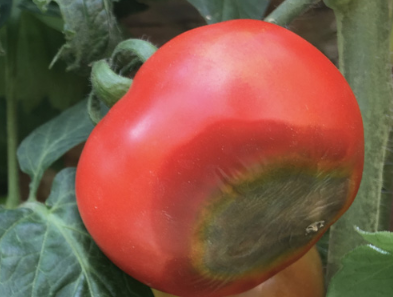
Inconsistent rainfall can lead to blossom end rot in tomatoes, peppers and summer squash. This begins with a brown or black spot on the fruit’s blossom end (bottom) because of a calcium deficiency. “The deficiency is caused by wide fluctuations in soil moisture, which impairs calcium uptake by the roots, he said. “Secondary infections follow, causing the fruit to rot.”

While rainfall cannot be controlled, consistent soil moisture can reduce these issues. During dry periods, water deeply once a week. Mulch can also help reduce evaporation from the soil surface. If fruit shows signs of blossom end rot, discard it. Damaged produce with no signs of decay is still edible, but ensure it is used or processed quickly, as it will not store well.

Ready or not: It’s time to plant the fall vegetable garden

0

Fall crops may be seeded directly or transplanted, says K-State horticulture expert.

It may be mid-summer, but veteran gardeners know it’s time to start planning the fall vegetable garden.

“Fall gardens may face additional pressures of pests and heat, but the flavor that comes from these late season crops are often better (than summer crops),” said Kansas State University horticulture expert Cynthia Domenghini.

She notes that gardeners should count the number of days to harvest, as well as the crops’ tolerance to frost, before deciding when to plant fall crops. Crops may be seeded directly, or transplanted into the garden.

“Growing transplants is a good choice when the temperature is too warm for starting seeds in the ground, assuming you have grow lights and space available for starting them indoors,” Domenghini said.

She provides some tips for successful fall crops:

  • When seeding crops directly into the garden, plant slightly deeper than recommended in the spring to take advantage of the cooler soil temperatures and moisture available.
  • Water more frequently to prevent the seeds from drying out.
  • Overhead watering often causes soil to crust, making it more difficult for young, tender plants to emerge. Prevent this by applying a light sprinkling of vermiculite or compost over the row after seeding, or use a soak hose or drip irrigation right next to the row to allow water to slowly seep into the ground.

Domenghini also suggests a timeline for planting fall crops:

Mid- July

Plant potatoes if you can find seed stock or have saved seed potatoes. Do not use freshly dug potatoes as they have built-in dormancy that will prevent growth. Also, grocery store potatoes are often treated, so they don’t sprout.

Cabbage, broccoli and cauliflower can be started from seed at this time. Choose a protected place where the soil can be kept moist and rabbits will not bother them. This will not be where they will grow the entire season; these crops will be transplanted in August.

Late July

Seed beets, carrots and beans.

Late July to early August

Seed spinach and long-season maturing lettuce. Leaf lettuce will be seeded later.

Second week of August

Transplant cabbage, broccoli and cauliflower to their final location.

Mid to late August

Seed radishes and leaf lettuce. There is no need to fertilize these crops before planting. Side-dress two weeks after transplanting, or four weeks after sowing seed, by applying two tablespoons of a 16-0-0 or one tablespoon of 27-3-3, 30-3-4 fertilizer (or something similar) per plant.

More information about fall gardening is available in the Kansas Garden Guide, available online from the K-State Research and Extension bookstore.

Domenghini and her colleagues in K-State’s Department of Horticulture and Natural Resources produce a weekly Horticulture Newsletter with tips for maintaining home landscapes and gardens.

Interested persons can subscribe to the newsletter, as well as send their garden and yard-related questions to Domenghini at [email protected], or contact your local K-State Research and Extension office.