Friday, January 2, 2026
Home Blog Page 14

The data behind breeding season success

0
K-State beef cattle experts say accurate records, clear plan are key to successful breeding seasons.

A successful breeding season doesn’t happen by chance. According to veterinarians at the Kansas State University Beef Cattle Institute, producers can improve herd performance by focusing on three essential steps: taking accurate records, making an intentional plan, and following through on that plan.

On a recent episode of the Cattle Chat podcast, BCI experts discussed how these steps work together to strengthen a herd’s long-term success.

“Good record keeping gives you the information you need to make smart management decisions,” K-State veterinarian Brad White said. “If you don’t know which cows calved early or which heifers bred on time, it’s hard to know where you’re succeeding or where you need to make changes.”

White emphasized that records are most valuable when they guide a plan built around specific goals.

“Once you’ve got your data, use it to set clear priorities,” he said. “If your goal is to shorten your calving season or improve conception rates, your breeding plan should reflect that.”

Veterinarian Bob Larson added that planning involves more than just picking bulls; he said it’s about understanding your herd’s current performance and setting realistic targets.

“A plan needs to be something you can actually implement,” Larson said. “Start with where your herd is today and make step-by-step changes that get you closer to your goals.”

Implementing that plan, the team noted, requires discipline and consistency. “It’s easy to write a plan down,” White said “The real work is in following through, (including) making sure your nutrition, breeding dates and health protocols match the plan you made.”

The veterinarians agreed that reviewing the plan regularly helps producers adjust to changing conditions and maintain progress.

“The best plans are living documents,” Larson said. “You should revisit them every season to see what worked, what didn’t, and how your records can help guide the next round.”

The episode also addressed selecting and saving replacement heifers, reminding producers that planning early pays off later.

“If you’re saving replacements, think about what traits you want in your future cow herd,” White said. “Your records will tell you which animals are worth keeping, and your plan will keep you on track to build the herd you want.”

They also detailed the value of genetics and keeping back replacements. Learn more about this topic and others on the K-State BCI Cattle Chat podcast, available online.
What producers can do to cut down bull conflict

0
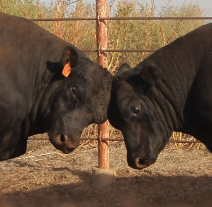
K-State beef cattle experts suggest several ways producers may want to consider housing bulls for minimal fighting.

Anyone who’s ever had a difficult roommate knows the struggle of sharing space — and according to Kansas State University beef experts, bulls aren’t much different.

On a recent BCI Cattle Chat podcast episode, K-State beef cattle experts discussed what producers can do to reduce conflict when co-mingling bulls.

“We really don’t have strong data that tells us the exact ‘right’ way to co-mingle bulls,” K-State veterinarian Bob Larson said. “But we do know the basics matter: Plenty of space, plenty of water and plenty of feed go a long way toward reducing aggressive behavior.”

Larson emphasized that pen and housing design is where producers have the greatest opportunity to prevent injuries.

“Pen design is probably where we have the most room for problems,” he said. “Make the pen bigger than you think it needs to be. Giving bulls extra space doesn’t solve everything, but it absolutely helps.”

BCI beef cattle nutritionist Phillip Lancaster also weighed in, noting that physical barriers can make a difference under the right conditions. “If you have the facilities, separating bulls with a solid fence can prevent a lot of fighting,” Lancaster said.

The experts also discussed how bull age and maturity levels can influence behavior. According to Larson, mixing bulls of different ages may actually reduce conflict.

“A yearling bull paired with a mature bull may have fewer problems because everyone knows their place a little better,” he said. “Hierarchy gets sorted out more quickly when the size and maturity differences are obvious.”

While no management strategy can eliminate all fighting, Larson said thoughtful planning can reduce both the frequency and intensity of conflict.

“You probably can’t prevent every fight, but you can create an environment that lowers the risk,” Larson said. “Space, resources and smart grouping decisions give you the best odds of success.”

The veterinarians ultimately concluded there is not significant research to justify if any of these methods are considered effective, but these are just suggestions. To learn more about this topic, as well as information about rural veterinary clinics and bull-to-cow ratios, check out the BCI Cattle Chat podcast.

Questions on these topics also can be sent by email, [email protected].

Theileria losses may qualify for USDA Livestock Indemnity Program

0

Beef producers who have lost cattle to Theileria orientalis may qualify for financial assistance through USDA’s Livestock Indemnity Program (LIP), says Craig Payne, University of Missouri Extension director of veterinary medicine.

The program provides payments to livestock owners when deaths exceed normal mortality due to certain weather events, predator attacks or eligible diseases. Because Theileria orientalis is a vector-borne disease without an effective vaccine or control practice, USDA lists it as an eligible cause of loss under LIP.

“If Theileria orientalis caused losses that exceed your herd’s normal mortality, LIP may help you recover a portion of your financial losses,” says Payne.

To apply, contact your local Farm Service Agency (FSA) office. The deadline to apply for losses incurred during 2025 is March 1, 2026.

You will be asked to provide records that verify the loss. Useful documentation includes veterinary or necropsy reports confirming Theileria orientalis, herd inventory records showing the number and class of cattle before and after the outbreak, and mortality records that show when and how many animals were lost. You will also need proof of ownership, such as calving, purchase or production records. FSA may ask for additional evidence such as photographs, sale or disposal receipts, or a veterinarian’s statement linking the deaths to Theileria.

Payments are made only for the number of livestock deaths that exceed the applicable type of livestock’s normal mortality. The amount is based on 75% of the average USDA-determined fair market value for each class of livestock. For 2025, the payment rate is $1,810.09 per adult beef cow, $2,353.12 per adult bull and $1,133.82 for non-adult cattle weighing 400-799 pounds.

More information

USDA to Expand Crop Insurance Access for Farmers and Ranchers, Boosting the Farm Safety Net

0

U.S. Secretary of Agriculture Brooke L. Rollins today announced major updates to federal crop insurance, reducing red tape for farmers, modernizing long-standing policies, and expanding access to critical risk protection beginning with the 2026 crop year. The Expanding Access to Risk Protection (EARP) Final Rule streamlines requirements across multiple crops, responds to producer feedback, and strengthens USDA’s commitment to putting America’s farmers first.

“President Trump is cutting burdensome regulations and strengthening the farm safety net to ensure the future viability of American agriculture. Across the Trump Administration, we are removing burdensome regulations that were strangling small businesses. For every new regulation, President Trump has eliminated a remarkable 48 – lifting a weighted blanket from the American economy,” said Secretary Brooke Rollins. “With this new rule, we are delivering real, meaningful relief by modernizing the system, expanding access to crop insurance, and making it easier, not harder, for farmers and ranchers to protect their operations and keep doing the work that keeps America fueled and fed. We are continuing to put Farmers First every step of the way.”

Reducing Regulatory Burdens

Improving Land Access Through Prevented Planting Relief

  • Removes the “insured” requirement from the “1 in 4” rule for prevented planting payments. Producers must still show the land was planted and harvested (or adjusted for an insurable cause of loss) in one of the previous four years.

Streamlining Production Reporting

  • Allows policyholders switching Approved Insurance Providers (AIPs) to submit production reports directly to their new provider, reducing confusion and paperwork.

Expanding Direct Marketing Options

  • Allows insurance under the Dollar Plan for direct-marketed fresh market tomatoes and peppers beginning with the 2027 crop year, reflecting specialty crop business practices in Northeastern states.

Simplifying Dispute Resolution

  • In accordance with Executive Order 14192, Unleashing Prosperity Through Deregulation, removes the “automatic nullification” rule and shifts fact-finding authority to the courts, reducing administrative burdens on policyholders and AIPs.

Deregulating Coverage Dates

  • Removes termination, cancellation, and end-of-insurance dates from federal regulations and places them in policy provisions, enabling more flexible, county-level updates.

Additional Policy Updates

One Big Beautiful Bill Act (OBBBA) Implementation

  • Incorporates provisions from Manager’s Bulletin 25-006.
  • Extends beginning farmer and rancher eligibility from 5 to 10 crop years.
  • Updates additional premium subsidy rates: 15% (years 1–2), 13% (year 3), 11% (year 4), and 10% (years 5–10).

Revenue Protection Clarifications

  • Establishes that harvest prices will equal projected prices when insufficient data prevents use of the approved methodology.
  • Creates a reimbursement process for policyholders who paid additional revenue protection premiums in such cases.

Crop-Specific Improvements

  • Fresh Market Tomatoes: Extends end of insurance period by one month in TN and SC to better cover late-season hurricanes (2027 crop year).
  • Fresh Market Peppers: Adds insurance dates aligned with northern growing seasons to support Dollar Plan expansion into Northeastern states.
  • Safflower: Moves the contract change date from December 31 to November 30, aligning with other spring crops and simplifying enrollment.

Effective Dates and Public Comment

The EARP Final Rule became effective Nov. 30, 2025, for crops with a contract change date on or after that date (2026 crop year) and for the 2027 crop year as specified. USDA will accept public comments until January 27, 2026.

Additional Information

Producers should contact their local crop insurance agent or visit the RMA website for guidance on how these updates may affect coverage options.

RMA supports American agriculture by providing world-class risk management tools through Federal crop insurance and education programs, offering coverage for more than 130 crops and continuously improving policies based on producer feedback.

KFU Members Gather to Elect Leadership, Honor Family Farm Supporters

0

MCPHERSON, Kan. – Kansas Farmers Union (KFU) members gathered in Wichita November 18-19 for its 118th anniversary convention to elect leadership, advance key policy priorities for state and federal government, and present awards to family farm agriculture supporters.

“Our recent state convention was superb,” KFU President Donn Teske said. “The group of speakers was awesome, and it’s always wonderful to have presenters who make the convention participants think, learn, and challenge themselves.”

Kansas Farmers Union Vice President Matt Ubel, Wheaton, was re-elected to a two-year term. Ubel is a generational farmer who raises row crops, cattle, and kids with his wife, Leah, near Wheaton, KS. Along with his brother, Matt owns and operates a custom application business. He is also active in local government at the county level.

KFU board members Jill Elmers, Lawrence, and Donna Pearson McClish, Wichita, were re-elected to three-year terms representing the North and South Districts, respectively. Elmers has owned and operated Moon on the Meadow farm near Lawrence since 2003 and raises 30-40 different kinds of certified organic vegetables, small fruits, herbs and flowers on her farm’s three acres and the 30-acre Common Harvest Farms she owns with partners. Pearson McClish is a multi-generation urban farmer; owner, and operator of Common Ground Producers and Growers, Inc., a unique mobile food hub that serves both urban and rural families.

Delegates elected to represent KFU at the National Farmers Union (NFU) Convention in New Orleans, LA March 7-9, 2026, include James Bowden, Gypsum; Donna Pearson McClish, Wichita; Sheila Kjellberg, Salina; Amanda Lindahl, Chapman; Jazelle Thomas, Wichita; and Scott Kohl, St. George. KFU Executive Director Nick Levendofsky, Courtland, will represent KFU on the National Farmers Union Policy Committee at the national convention.

“I am honored to serve in this role to represent KFU members and their grassroots policy at the national level,” said Levendofsky, “I look forward to working with other Farmers Union members from across the country to present and advance policies that benefit family farmers and ranchers and their communities.”

Recipients of the 2025 Ruth Hirsh Friend of the Family Farmer Award included Senator Mary Ware, Wichita and former Kansas State Farm Service Agency (FSA) Executive Director Dennis McKinney, Greensburg.

Senator Ware was elected to her first term in the Kansas Senate in 2018 where she represented parts of Wichita in Sedgwick County until her recent resignation. Senator Ware served as the ranking member of the Senate Agriculture Committee and championed many issues on behalf of Kansas family farmers during her time in the Senate.

Dennis McKinney was appointed by the Biden Administration to serve as the State Executive Director of the USDA Farm Service Agency (FSA) in Kansas in February 2022. McKinney is a Kansas farmer and cattle producer in southern Kiowa and northern Comanche counties and served as a Kansas State Representative and Kansas State Treasurer.

Wes Jackson is the recipient of the 2025 Linda Hessman Lifetime Achievement Award for Service to Rural Kansas. Jackson is a prominent environmentalist and plant geneticist known for co-founding The Land Institute, near Salina, KS. He has been a leader in the sustainable agriculture movement, advocating for ecologically based practices. “It was a pleasure and honor to have the opportunity to present the legendary Wes Jackson with our beloved Linda Hessman Lifetime Achievement Award,” President Teske said.

Tom Giessel, Larned, was honored for participating in his 50th consecutive Kansas Farmers Union Convention. Giessel, who recently retired from farming, serves as the amateur historian for National Farmers Union and is a regular presenter on Farmers Union history at national and state conventions. Giessel was presented with a framed, pewter Farmers Union medallion that was once part of the late NFU President Tony Dechant’s personal collection.

Jeff Downing, General Manager of Farmers Union Midwest Agency (FUMA) was the recipient of FUMA Insurance Agent of the Year. Downing has been part of the Farmers Union Insurance family for 21 years and will be retiring March 2026.

President Teske informed convention participants that he also intends to step aside at the end of his two-year term in 2026, “so the dynamic young leaders and board members who make up the organization can step up.”

About Kansas Farmers Union – Since 1907, Kansas Farmers Union (KFU) has worked to protect and enhance the economic interests and quality of life for family farmers and ranchers and their communities. Kansas Farmers Union represents its members, who are engaged in diverse farming and ranching pursuits, through education, legislation, and cooperation.