Tuesday, January 13, 2026
Home Blog Page 61

Lovina Shares the First Column She Penned

0

Lovina’s Amish Kitchen
Lovina Eitcher,
Old Order Amish
Cook, Wife &
Mother of Eight


October 1st, 2002 (twenty-three years ago) I wrote my first column. I thought it would be interesting to all the new and old readers. My mother penned the Amish Cook column for eleven years. I was a teenager at home when she started writing. After her sudden death on September 17, 2002 is when I started writing. In 2014 the name was changed to Lovina’s Amish Kitchen. I want to thank everyone who has encouraged me to keep writing. It’s not always easy to find time. It was even more of a challenge when my children were young. Looking at the ages they all were when I wrote the first column is hard to believe this much time has gone by. At the time we had six children from ages 2 months to 8 years old. I was 31 and now our oldest is that age. I write all my columns in one subject notebooks and have used well over 30 tablets.  Rest in peace dear mother! You were not only my mother but my best friend. And now here is the column I wrote on October 1,2002….

I am nervous and not sure how to begin this letter. It is very difficult for me to take over this column. I will never be able to write like my mother did but I will try my best. Mother is resting in peace now, but, oh how we miss her! Life will never be the same without my parents. In less than two-and-a-half years we lost them both. I often think of what Mom would always say, “God makes no mistakes”. We must go on with life and accept the changes that God sends to us. I will always cherish the good memories of my parents. I hope my husband Joe and I can raise our children the way they raised us. 

My sisters Verena and Susan came home with us the day after Mom’s funeral and spent one-and-a- half weeks here. It was nice to be together during this sad time. The home place seems so lonely now. 

Church services were held here last Sunday and we’ll have them here again next time, the week after next. Mom was greatly missed at the services Sunday. Mom always made the coffee for us girls whenever we had church at our house. 

I am 31 years old and am the sixth of eight children. Joe and I were married on July 15,1993 and we have six children. Elizabeth is 8 and in second grade. Susan is 6 and in kindergarten. Verena is 4 and my little babysitter when the other two are in school. Benjamin is 3 years old, Loretta is 2 and baby Joseph is 2 months old. Benjamin and Loretta keep me on the go. They are so full of energy, but I am so thankful they are healthy. 

My husband Joe has worked in a furniture factory in town for six years. I keep busy just tending to the little ones and trying to keep up with the cleaning, cooking, ironing, laundry and all that goes with raising a family. There is a lot of work but I wouldn’t want it any other way. 

My sister Liz and her husband Levi have church services at their house this coming Sunday. My sisters Verena, Susan, Emma and I and all of our children spent the day there helping prepare for church. A huge laundry was done (including her curtains). Windows were cleaned and pumpkins, which she raised in her garden, were canned. It was comforting to all be together and talk about the many good memories we have of our parents. That’s all we have left now. 

I hope you enjoyed reading my first column. God Bless!

To enjoy more photos and content visit Lovina’s Amish Kitchen on Facebook

Garden Macaroni Salad 

1- 16 ounce package macaroni 

2 cucumbers, peeled and diced 

4 tomatoes, chopped 

1 onion, finely diced

4 stalks celery, diced

3 cups of fresh garden peas or (15 -ounce) can peas, drained

1 cup mayonnaise 

Salt and pepper to taste

In a large pot of salted boiling water, cook pasta until tender, rinse under cold water and drain. In a large bowl, combine pasta, cucumbers, tomatoes, onion, celery, peas and mayonnaise. Mix well until all vegetables are coated lightly with mayonnaise. Chill and serve. 


Lovina’s Amish Kitchen is written by Lovina Eicher, Old Order Amish writer, cook, wife, and mother of eight. Her three cookbooks, The Cherished Table, The Essential Amish Cookbook, and Amish Family Recipes, are available wherever books are sold. Readers can write to Eicher at Lovina’s Amish Kitchen, PO Box 234, Sturgis, MI 49091 (please include a self-addressed stamped envelope for a reply); or email [email protected] and your message will be passed on to her to read. She does not personally respond to emails.
 

Getting Ready to Plant Garlic This Fall

0

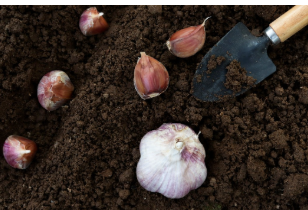
Fall is the ideal time to plant garlic. If you want large, flavorful bulbs next summer, planting in early October gives garlic time to establish roots before the ground freezes. Later fall plantings are possible, but yields tend to drop off. Planting in spring almost always results in much smaller bulbs and reduced yields.

Choosing the Right Variety

Garlic comes in two main types:

  • Hardneck varieties are best suited for Kansas. They produce sturdier stalks, often large cloves, vivid paper skins on the cloves, and a wide range of flavors from mild to sharp. Many hardnecks also send up flowering stalks (“scapes”) in spring, which are tasty and useful in the kitchen.
  • Softneck varieties (such as Silverskin or Artichoke types) include the kinds you often find at the grocery store. They are less suited to our climate in Kansas and typically don’t form a scape.

Some hardnecks adapt especially well to cold winters and cool springs; others are more tolerant of milder winters. Your location and winter severity will affect which variety works best for you.

Planting in the Fall

Garlic thrives in well-drained, fertile soil, ideally a sandy loam with a pH between 6.3 and 6.8. Before planting, loosen the soil and mix in compost; add phosphorus if a soil test shows deficiency. Break bulbs into individual cloves just before planting, leaving the papery skins intact, and set them about two inches deep with the pointed end up. Space cloves roughly six inches apart, with 12 inches between rows—or closer in raised beds. Water thoroughly after planting and apply mulch such as straw or leaves in late fall to protect the cloves through winter.


Caring for Garlic Through Harvest

In spring, remove mulch once frost has passed so the soil can warm, then feed with compost or a balanced fertilizer. Keep the bed weed-free and evenly moist, as garlic has shallow roots and struggles in competition or drought. Hardneck varieties will send up scapes in late spring—clip them off to encourage larger bulbs.

Garlic is ready for harvest from late June to mid-July, when about half the leaves have yellowed. Stop watering once three or four leaves have died back. Loosen the bulbs gently with a fork, cure them in a shaded, airy spot for two to three weeks, then trim the roots and cut stems back to about an inch. Store in a cool, dry place with good air circulation; mesh or paper bags work well. Properly cured garlic can keep for months, with refrigerated storage extending usability into winter.

Check out K-State Extension Sedgwick County’s publication on Growing Garlic (https://www.sedgwick.k-state.edu/gardening-lawn-care/documents/Growing Garlic.pdf) for more information.

Now is the Perfect Time for Tree Planting

0

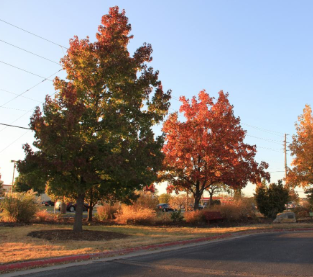
Fall is the ideal time to plant new trees and shrubs. The soil is warm, so roots quickly establish, and air temperatures are cooler, allowing new plants to suffer less stress. Fall rains also help reduce the maintenance needed to help new trees become successful in the landscape.

If you are looking for recommendations on what new tree to plant this fall, check out some of our great resources for selecting the perfect tree:

·        Preferred Tree List For South Central Kansas

·        Drought Tolerant Trees For South Central Kansas

·        Conifer/Evergreen Trees For Kansas

·       Trees For Windbreaks In Kansas

Most all of the recommended trees listed in our publications will be planted in our Sedgwick County Extension Arboretum, surrounding our office. We’d invite you to visit these our over 325 trees this fall to help you in your tree selection. You can also learn about these trees and see year-round pictures of the trees growing in our Arboretum through our online, interactive Arboretum Map.

Once you’ve found your perfect tree, here are a few more resources to help you maximize the success of your new tree:

·        Directions For Planting A Tree

·        Watering Newly Planted Trees

·        Mulching For Trees

If you have any questions about trees, or any gardening topics, feel free to contact our free Garden Hotline. You can call us at (316)-660-0190, send an email to [email protected], or stop by in person with questions or a plant sample. Our Garden Hotline is staffed Monday-Friday, 9:00 am – 12:00 pm and 1:00-4:00 pm.

More than 2,000 head entered in Kansas Junior Livestock Show

0

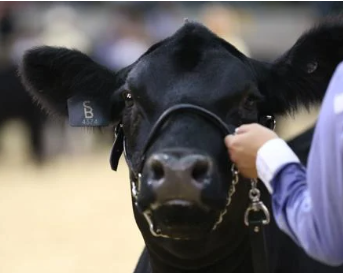
Youth have entered 2,104 animals in the 93rd Kansas Junior Livestock Show (KJLS), which will take place October 3-5 at the Kansas State Fairgrounds in Hutchinson. A total of 845 exhibitors from across the state have entered 183 market steers, 359 breeding heifers, 257 market hogs, 343 breeding gilts, 258 market lambs, 290 breeding ewes, 211 market goats and 203 commercial does.

KJLS will award cash to exhibitors of the top five animals in both market and breeding shows in all four species. Direct cash payouts will range from $2,500 to $250 for steers and heifers; $1,500 to $250 for market hogs and breeding gilts; $1,250 to $300 for market lambs and breeding ewes; and $1,250 to $300 for market goats and commercial does. New this year, KJLS will have a supreme female drive to select the top five breeding females of each species. Additionally, in the registered divisions of the heifer, gilt and ewe shows, bred-and-owned breed champions and reserves, as well as top five overall, will be chosen.

KJLS will present several scholarships during the show to exhibitors who have excelled academically, in community service and in 4-H/FFA. This is the 32nd year for the scholarship program, which has awarded a total of $577,550 to 398 exhibitors since 1993. Last year, a total of $23,000 was awarded to 13 individuals.

Separate from the selection of species champions, a showmanship contest will be held. The top showman in the junior, intermediate and senior divisions of each species will receive a buckle.

Exhibitors also have the opportunity to compete in the LEAD Challenge–an education, advocacy and leadership event that allows participants to learn about current issues being discussed within the livestock industry and apply that information in a competitive environment. Exhibitors will be divided into three age divisions: junior, intermediate and senior. All will give prepared speeches and participate in the LEAD Listen & Learn, showmanship, skills stations and a mock job interview.

In conjunction with KJLS, the Kansas Livestock Foundation (KLF) will sponsor a club calf show and sale. Steer and heifer prospects from some of the top club calf producers in the Midwest will be consigned. The event will take place October 4. Sale commission proceeds will go toward KLF Youth in Agriculture scholarships.

The Flint Hills Mid-America Classic Collegiate Livestock Judging Contest will be held October 5 in conjunction with the show. This event provides competitors the opportunity to sharpen their livestock evaluation skills, develop their critical thinking and decision-making abilities, and refine their public speaking skills. Both junior and senior colleges will participate.

For more information, including a full schedule of events, go to www.kjls.net.

Tofu For Brains

0
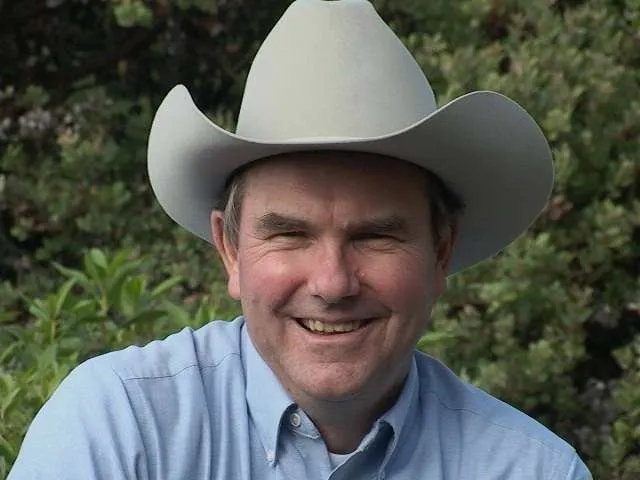
lee pitts
I admire many things about the first Americans. The Indians followed many practices that I think we should adopt, such as the way they named themselves. It was both colorful and practical.
In the old days when you heard an Indian’s name you knew something about that person. For example you just know that if Touch the Clouds were alive today he’d be playing center for the Chicago Bulls. If you  had to pick  Big Belly out of a crowd as he got off the airplane you’d have a good chance and Pain In the Face was probably not too pretty.
Today when you meet someone named Richard, Mary or Samantha does it tell you anything about that person? Of course not. But that was not the case with Indian names such as Wooden Leg, Hairy Moccasin, Big Foot, Two Hatchet or White Man Runs Him. Upon first meeting  Buffalo Woman you’d  know that she was not too good to look at but she’d keep you warm at night. And you’d never think of saying anything insulting when introduced to Bloody Knife or Long Sword. An Indian’s name meant something. Pontiac was named after an Indian and Tecumseh was also named after a Native American.
Indian parents didn’t choose their kid’s name out of a baby book even before they knew how the child would turn out. An Indian had to earn their name. Often times it was because of something they wore such as Black Shawl, Stripes On Dress or one of my favorites, She That Has Four Robes (Sitting Bull’s fourth wife).
It appeals to me that just because you were given a name at birth didn’t mean you had to keep it. Cochise as a kid was called One Who Yawns. Not a great name for a chief. Sitting Bull was first named Returns Again. When he had a child he named it Slow. Only later when the son proved himself in battle was he allowed to take his father’s name, Sitting Bull.
Indian names often told stories. A Cheyenne brave came riding into camp one day riding a mule and
 thus became Crazy Mule. I’d love to know the story behind an Indian whose name was  Particular Time Of Day or Bear That Scatters Enemies.
There was no organization to names either. You could use one word or several and there were no Juniors or Roman Numerals. I’ll bet you didn’t know that the brave who killed Custer was named simply Rain. Sitting Bull, Lone Bull and Jumping Bull were not even related even though they shared the same last name. I wish the Indians would have stuck with their system instead of trying to adapt it to ours. Henry Oscar One Bull just doesn’t sound right.
I think it would be a great practice to name our leaders of today the way the Indians did. In fact, there are plenty of old Indian names that would fit our leaders such as Low Dog, Cold Turkey, Two Faces, Moon Face, Walks Above the Earth, Crooked Mouth and Bull Head. When you met one of them for the first time you’d know that you were dealing with a politician.
Toying with the concept I came up with a few suggestions for some of today’s personalities in the news. Donald Trump could be Orange Hair, Hillary Clinton would be Big Pants (short for She Who Wears Pants In Family). Al Gore would be simply Head in Ozone.
In the old days Ross Perot would have been Big Ears,, Ted Turner’s new moniker would have been  Buffalo Breath and I always did like the name Hanoi Jane for his ex-wife. Ted Kennedy would have been Him That Swim Good and Jeff Bezos of Amazon fame who has been pushing fake meat would henceforth be known as Tofu For Brains.
On a personal basis I would call myself Writing Rider. Catchy don’t you think? It sure would have made my life easier than having a name like Pitts.