Wednesday, January 14, 2026
Home Blog Page 63

Just a Bit of Bark and Banter: Senior Year: Double the Joy, Double the Water Bowl

0

By Jennifer Long | Rural Messenger

“One senior is preparing for the future. The other two are reminding me to slow down and enjoy the now.”

When people hear “Senior Year,” they usually think of graduation caps, designated senior activities at school, and stacks of college brochures—and that’s exactly where we’re at. My daughter is in the thick of most of it. The kitchen table has become her command center, piled high with college campus tours, scholarship deadlines, and financial aid forms. Her daily chatter has shifted from TikTok trends to things like, “What’s the difference between a major and a minor?” 

It’s exciting. It’s emotional. It’s wildly expensive.

But there’s another set of seniors in our home, too—two of our four beloved dogs, Lucy and Brutus.

They’re not preparing for dorm life, but they are in their golden years. Lucy, our quiet little shadow, is laser-focused on securing the best nap spot (usually wherever the sunbeam lands). Brutus, the lovable goofball with a heart of gold, still attempts a heroic counter-surf from time to time, even if it now requires a running start and a prayer.

While our daughter is mapping out her future, Lucy and Brutus are fully present in the now. When she gets accepted into a college, we celebrate her future. When Lucy trots across the backyard with surprising spunk, or Brutus greets us with his signature full-body tail wag, we celebrate them—and the joy they bring to our lives in this very moment.

The contrast is striking. With our human senior, we’re juggling deadlines and college decisions. With our furry seniors, we’re watching for signs of discomfort, refilling the ever-present water bowl, and gently helping them up the stairs when their legs get tired. In a way, Lucy and Brutus are teaching us how to slow down—how to savor what’s right in front of us.

They’ve become the emotional anchors in a season of uncertainty. When college stress piles up, my daughter will collapse on the floor and wrap her arms around Lucy’s warm, sleepy body. When I’m overthinking the to-do list, Brutus jumps on my lap and reminds me to take a breath.

Senior year—whether it’s marked by campus visits or extra naps—is all about transition. For our daughter, it’s a leap into adulthood. For Lucy and Brutus, it’s a slow, beautiful glide toward peace and comfort.

As a mother, I’m learning to let go. Of my little girl who’s grown up. Of the dogs who once bounded across the yard and now prefer to nap through the afternoons. We’re trading constant action for quiet companionship. And somehow, that feels just right.

So while one senior in our house is dreaming of the future, the other two are curled up beside me, reminding us to embrace the now. Whether it’s cheering for a college acceptance or celebrating the simple act of Brutus climbing onto the couch unassisted—these are the moments. Big or small, they all matter.

And now, if you’ll excuse me, it’s time to refill a water bowl and proofread an essay about growing up, while two toy aussies nap gently at my feet.

The volunteer fire departments protecting rural Kansas face an emergency – finding enough joiners

0
Kansas is disproportionately reliant on volunteer firefighters. There are 499 departments across the state, 90% of them volunteer or mostly volunteer.. Among the 50 states, Kansas ranks 17th for the proportion of fire service provided by all-volunteer or mostly volunteer firefighters. But Kansas fire officials say finding new volunteers to sustain that service is increasingly difficult.
Way back in 1963, as he tells it, Steve Hirsch’s father traveled farm to farm in the rural areas surrounding Simpson, Kansas, to gather signatures in support of a rural fire district. He got the support of all but one of his neighbors, and the fire service was born.
Hirsch was just 1 year old.
“They wouldn’t let me put out fires for a while,” he says today.
That didn’t stop Hirsch. Today he’s an attorney by trade, but his passion is firefighting. He’s the training officer for Sheridan County Fire District No. 1 – an all-volunteer fire department – as well as treasurer for the Kansas State Firefighters Association and chair of the National Volunteer Fire Council.
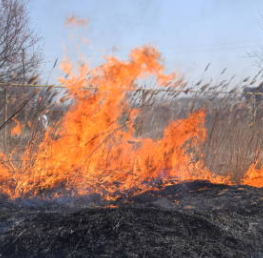
There are plenty of incidents needing the fire department’s attention in Sheridan County, in northwest Kansas. “No. 1 is gonna be field grass fires, pasture fires, outdoor wildland,” he says. The department gets about 70 calls a year.
The bigger job, though, might be ensuring there is a next generation of volunteer firefighters – in Sheridan County, in Kansas and nationally.
“Without a doubt one of the most serious challenges that we face in the volunteer fire service is retaining our firefighters and recruiting new ones,” he wrote in a January article for Fire & Safety Journal Americas.
Sheridan County is actually doing OK by that standard. The fire department has 100 volunteers, Hirsch says, serving a county with fewer than 2,500 residents.
“We have lots and lots of young people – good solid young people – who want to do for their communities what I wanted to do when I was younger, and that’s help out their neighbors when their neighbors were having the worst possible day,” he says.
Across Kansas and nationally, the story is different. Volunteer fire departments – a staple of rural America – are struggling to find volunteers.
When the National Fire Protection Association started its tracking in 1984, there were nearly 900,000 volunteer firefighters serving across the United States. In 2020, the most recent year for which there is comparable data, that number had dipped to 676,900.
Comparable numbers for Kansas are difficult to come by.
But the state is disproportionately reliant on volunteer firefighters. According to the National Fire Department Registry summary, there are 499 departments across the state – 78.6% are volunteer departments, and another 11.4% rate as “mostly volunteer” departments. Among the 50 states, Kansas ranks 17th for the proportion of fire service provided by all-volunteer or mostly volunteer departments.
Kansas fire officials say finding new volunteers to sustain that service is increasingly difficult. Fewer young people are joining up.
“It’s worse than I’ve ever seen it,” says Chad Russell, chief of Andover Fire and Rescue and president of the Kansas State Association of Fire Chiefs. “And I’ve been doing this for more than 35 years.”
If the trend continues, experts say, fire protection in rural areas of Kansas – more than 95% of the state – will be much more difficult to come by. That could mean lost lives and lost property in parts of the state already struggling to survive, potentially millions of dollars and community hopes up in smoke.
‘Community, pride and giving back’
Russel Stukey started his firefighting career in high school as a volunteer in Waverly, Kansas. It was different then, he says.
“My dad was a volunteer, so I started going to meetings with my dad,” he says. “I mean, heck, when I was in grade school, I just enjoyed it and a sense of community, pride and giving back.”
These days, Stukey is the chief of Riley County Fire District No. 1, which covers the entire county outside of the city of Manhattan. In addition to Stuckey, there are two deputies and an administrative assistant on the payroll.
Everybody else – roughly 130 volunteers spread out among 15 stations at outposts in places like Randolph (population 159) and Ogden (closer to 1,600) – is a volunteer. Those are folks who get pulled away from “kids’ ball games, birthday parties, the whole nine yards” to go serve their neighbors, Stukey says, in emergencies including “structure fires, grass fires, auto-extrication, basic first aid medical response in conjunction with the county ambulance service.”
He would like the number of volunteers in his department to be closer to 180. “We are not staffed nearly as well as we would like,” he says.
One problem? There simply isn’t as big a pool of potential volunteers in rural Kansas.
“The majority of volunteers at that time were ag producers, farmers, ranchers,” he says of his Waverly days. “Not that there weren’t guys from town. There absolutely were. But your biggest pool of labor was from the farmers in the area. And as farms have gotten bigger, there’s fewer farmers and smaller families.”
In that sense, then, the challenges besetting volunteer fire departments are an extension of longstanding demographic problems facing rural Kansas. Most of the state’s smaller counties are losing population, making it more difficult to draw teacherslawyersdoctors and other professionals to small towns.
Some small Kansas communities “don’t have any younger people in them anymore,” says Hirsch, “and so it’s very difficult for them to recruit new people” to their volunteer fire departments.
That’s not the end of the story.
Russell – the Andover chief who said volunteerism is the worst he’d ever seen – heads a “combination” force: career firefighters augmented by volunteers. His community, situated outside of Wichita, is growing quickly, more than doubling in population since the beginning of the century. The pool of potential volunteers shouldn’t be a problem.
But he believes social changes have put a stranglehold on the supply of volunteers.
“We get our social connection via the little computer in our pocket,” he says. “There’s times in my life where the fire departments that I’ve been involved in have not only done really great work, but they’ve also been a social club for the men and women who were a part of them. And it gave us a sense of belonging not only to the group, but also to the community.”
Now, he says, “that sense of belonging is absent, and we haven’t woken up to that yet.”
Stukey offers a similar diagnosis.
“I’d say for the last 15 years or 20 years, that there was less volunteerism” among potential volunteers, he says. “Less willingness of giving up their personal time.”
The reason all this matters is simple: A volunteer fire department is less resilient when it has fewer volunteers, less able to respond to blazes and other emergencies quickly and efficiently.
National fire safety standards suggest that a crew of 17 firefighters is needed to effectively fight a blaze in a 2,000-square-foot home, Russell says, and get to the scene within seven minutes.
“There are many, many, many fire departments in Kansas – and I would say across this country – who don’t have 17 members,” he says.
“Every person that you take out of that effective response force, that means more people have to do more jobs. So if we go to 16 (firefighters), then somebody is doing two jobs. And 15, two people are doing two jobs, and so on and so forth. So the more people you take out of that effective response force equation, the more dangerous it becomes – not just for the community, but also for the firefighters.”
WHO VOLUNTEERS
Out in Sheridan County, Hirsch says the robust volunteer force for his department is no accident. Yes, there is an ongoing culture of volunteerism, but there is also a degree of effort involved.
“There are a lot of places who struggle to get people, and we don’t have that problem,” he says, but that involves “24/7, 365-day recruitment, because we can’t ever get behind – can’t ever get behind the ball.”
Who to target? There are several types of people who become volunteer firefighters, Russell says.
The first: “The largest contingent are people who are just good,” he says. “They’re good people, and they just want to serve. So that is the majority. They want to serve their community. They want to serve humankind. I’m not trying to be grand about this. It is literally in their core that this is the way that they are serving and giving back to their community.”
The second: “Adrenaline junkies or something like that. Those folks don’t last that long, but we do have some folks that come through like that.”
And the third: “I have a chunk of folks that join volunteer fire departments to get education and training and experience, so they can get a job at a career fire department.”
Blake Bowman, a 29-year-old construction company owner in Riley County, arrived at the task with a mix of motivations. He joined Stukey’s department a year and a half ago, after seeing volunteer crews in North Dakota.
“Their volunteer fire department is just volunteers with sprayers,” he says. “It was kind of wild.”
Why did he join?
“Someone has to do it. It’s definitely an adrenaline rush – it’s fun to go put out fires, if you’re into that aspect of it. Working accidents isn’t fun,” he says.
Bowman also enjoys hanging out with, and learning from, older firefighters. “It’s always a good time listening to their stories. It gets your blood pumping.”
It’s difficult work, he says, that sometimes takes a toll on his young family. But Bowman believes it’s worth it.
“If a guy has a longing for community service,” he says, “you get that fulfillment for sure.” Saving lives and property offers “a feeling of accomplishment. When you do it, it sure feels like you’ve done something right.”
GETTING TO WORK
Once volunteers like Bowman do join, Stukey says, they have a lot of work to do.
“They’ve got to show up for training. It’s not just going on calls,” he says. “They’ve got to do their part and come help clean the fire station once a month … maybe help them do truck checks and then attend training so that they’re prepared and educated on how to respond to fires.”
So how to get a consistent, dedicated and renewable crop of volunteers who will stick around?
Hirsch’s solution: Start ’em young.
“Overall, there is probably an issue with (volunteer departments) not recruiting among young people, and we’ve got to do that,” he says. His department has an “explorer” program for 15- to 18-year-olds.
“You’re not perhaps hands-on, but they’re learning about the fire service,” he says. “it’s kind of like fishing. If you can set the hook in the fish, you can land them. What we’ve done with our young people too is trying to get them involved fairly early on so that they get as their so that they get that in their mindset.”
Too many volunteer departments don’t recruit young people, Hirsch says. “I know of departments that don’t care about recruiting the next generation,” he wrote in the journal article. “They are happy right where they are, with an aging membership.”
Stukey sees it a bit differently.
“I think volunteer departments in general have had to be more proactive in recruiting and figuring out how to reach that younger population better,” the Riley County chief said. “And so I think maybe that’s helped.”
All recruiting could use more than extra effort, though. Policy solutions would help.
“You know who really needs to know about this is the elected officials,” says Russell, “because they’re responsible for providing the resources that are needed at the local level.”
There have been state and local efforts across the country. In Ohio, a task force devoted to the issue resulted in the launching of an online recruitment portal this summer. Virginia’s Botetourt County has started a new program to pay volunteers up to $20 for each call they go out on, with additional bonuses for completing additional training and certification milestones. The town of North Tonawanda, New York, has begun offering $3,000 stipends to volunteers. Other municipalities are considering small tax credits for serving as a firefighter.
Resources could also come from the federal level. In May, U.S. Rep. Dan Goldman, a New York Democrat, introduced a bill in Congress that would make volunteer firefighters eligible for student loan forgiveness, expanding the federal Public Service Loan Forgiveness program that already provides relief to young government workers and nonprofit employees who work 10 years in their field and make 120 monthly payments on their loans.
Volunteer firefighters “deserve nothing less than the full support and resources afforded to all public servants,” Goldman said in a news release.
No action has been taken on the bill.
Putting out the ashes
Having somebody around to respond to an emergency is important to rural communities, Hirsch says. But helping volunteer departments survive goes beyond that.
“The fire department in the community tends to be the glue that binds that community together,” he says. “There are a lot of smaller towns that have lost their school. They’ve lost their grocery store. They may not even have a bank anymore. So they lose their community identity except for the fire department.”
As a practical matter, too, a shortage of firefighters doesn’t mean a shortage of fires.
“Depending on where it is, then you call the neighboring counties,” Stukey says. “We’ll call Marshall County or call Pottawatomie County or Clay County and say, ‘Hey, we got a fire up in the north’” and ask them to send “mutual aid” firefighters.
But that can be a problem as well.
When there aren’t enough firefighters, Hirsch says, “the neighbors are gonna have to pick up the pieces. And when I say ‘neighbors,’ I’m not just talking the fire department – I’m talking about the taxpayers in those neighboring communities who are actually shouldering the burden for the communities.”
Mutual aid, he says, “works OK until somebody figures out, ‘Wait a minute, why am I taxed for a fire department and the neighbor isn’t and we’re going to their calls?’”
Bowman is worried what happens when some of his older colleagues start to age out of the service.
“Once the older generation retires from it, we’re screwed,” he says. “I’m flexible, because I own my own business, but a lot of young guys don’t have the freedom to leave their job to respond to a call. The volunteers we do have have a limited window, it’s just evenings and weekends.”
Russell isn’t sure what happens next. The challenges go beyond a shortage of firefighters, toward broader questions of capacity. A new fire engine costs $1 million, he says. For small towns, “there is no way they can tax their constituents enough to pay for the service.”
“We have to start having honest conversations that the model that we’ve used since the ’40s and ’50s and ’60s is failing,” he says. “We are not going to be able to sustain this.”–

That might mean less service, making communities more vulnerable.

“There’s a model where you consolidate fire departments across the county, and instead of seven minutes, they get there in 27 minutes,” Russell says, “and they’re there to help clean up – to put out the ashes.”

By: Joel Mathis | KLC Journal
Joel Mathis is a freelance reporter who has written for The Journal since 2019. He has covered everything from birthright citizenship to the Kansas death penalty.

He writes for The Journal because it’s one of the few places left for Kansans to do deep-dive reporting on issues that affect Kansans.

Filing now open for Kansas Grain Sorghum Commission candidates

0

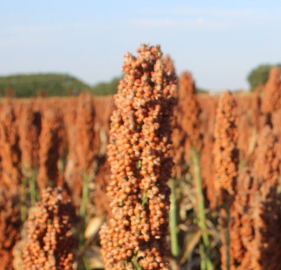
Grain growers in central Kansas who plan to campaign for a seat on one of the state’s five grain commodity commissions — corn, grain sorghum, soybeans, wheat or sunflowers — should be gathering petition signatures now to meet the November 30, 2025, filing deadline. Voting will take place in January-February 2026. The 2026 election will cover districts four, five, and six — or the central third of Kansas.

District Four: Clay, Cloud, Jewell, Mitchell, Osborne, Ottawa, Phillips, Republic, Rooks, Smith, and Washington counties.
District Five: Barton, Dickinson, Ellis, Ellsworth, Lincoln, Marion, McPherson, Rice, Rush, Russell, and Saline counties.
District Six: Barber, Comanche, Edwards, Harper, Harvey, Kingman, Kiowa, Pawnee, Pratt, Reno, Sedgwick, Stafford, and Sumner counties.

To be eligible to run, candidates must have been actively engaged in growing that commodity (corn, grain sorghum, soybeans, wheat or sunflowers) within the preceding five years and must reside in and represent the district where they maintain their primary residence. To be included on the 2026 ballot, candidates must gather 20 signatures from eligible growers, with no more than five signatures from any one county. Eligible growers are Kansas residents who will be at least 18 years old by January 1, 2026, and who have actively grown corn, grain sorghum, soybeans, sunflowers or wheat for the last three years.

Candidates may choose to collect signatures either on paper or online, or by using a combination of both. The online petition portal is available at: portal.kda.ks.gov/enrollment/CommoditiesCandidatePetition. After creating an account, candidates will receive a unique URL to share with eligible signors, who can then provide their contact information and sign the petition electronically. Paper candidate registration packets are also available from the Kansas Department of Agriculture or the grain commodity commissions.

Commodity commissions are grower-led organizations committed to supporting the economic viability of their industries and fostering continuous improvement in their respective commodities. Commissioners serve three-year terms, which will begin on April 1, 2026. They oversee how check-off funds are invested in areas of market development, education, promotion, and research.

For more information on Kansas commodity commissions, including voter registration, please visit the Kansas Department of Agriculture website at www.agriculture.ks.gov/CommodityCommissions.

4 Legged Puzzles

0
lee pitts
Back when I was a road agent driving 55,000 miles per year my favorite thing to do on long boring stretches of asphalt was to figure out what all the personalized license plates I passed meant. Some were easy like IMRICH, 4GETIT, ILVBEER, ILLSUE, U MAD, IOU, GOODOG and HAVAPUG (with a pug hanging out the window). But the ones I liked were the harder ones to figure out like SHE WON on a Mercedes obviously referring to a divorce settlement, THXELON on a Tesla, AUDIIOS on an Audi and GONA B L8 on an old clunker pickup. On a Ferrari I saw a plate that said STOLEN and on two different Corvettes I saw plates that read ZRO KIDZ and JUSTTRY.
In Illinois, which has the largest number of personalized license plates, I saw a black hearse that said EXPIRED.
On the wall of my home office is my favorite plate of all. I found it nailed to the wall of a mechanic’s shop and it would have been totally apropos on the bumper of all the Oldsmobiles I wore out going to cattle sales. It reads MY OFISS.
Just for fun can you figure out the following personalized plates? SO4CHN8, NEEDQB, HATCARPLS, GOELEC, UM FRYS, and one that should raise the hackles on every rancher: BEVGN. I better stop now because the spell checker on my computer is blowin’ steam and makin’ screechy noises.
The reason I bring up the subject of personalized plates is because reading them is very similar to reading brands, another thing I enjoy doing. I think I’d have made a good brand inspector even though it’s much harder with cattle than with cars because the brands can be found on six different locations and can be rocking, rolling, standing, walking, tumbling, running, flying, swinging, slashed, broken and can even be crazy. They can also be lazy, hooked, forked or may only consist only of dots like the  Two Dot and the Four Dot.
A lot of brands are totally unrelated to the people who own the cattle. For example, I know a fellow who owns a Lazy A brand and he is the hardest working person I know. There’s not a lazy bone in his body. And his first and last name don’t contain a single A. Ditto for the brand Crooked L that also belongs to a friend who is the most honest person you’d ever want to deal with.
My favorite type of brands are artistic picture brands like a four leaf clover, a cow’s head, scissors, hash knife, milliron, turkey track and wineglass. I collect branding irons and among my favorites are the pick and shovel (belonging to Alex Madonna), the Tejon which is the cross and the crescent which represents two religions and is believed to be the oldest brand ever found. I also have a Diamond A branding iron that I cherish. I even have an iron with three crosses on it. I don’t know who it belongs to now but Hernan Cortez, the Spanish conquistador who is best known for conquering the Aztecs and claiming Mexico on behalf of Spain in the 1500’s used to own it. I’m afraid the iron I have is not quite that old by about 500 years.
The holy grail for me would be to have an iron from the 101 Ranch, the MC, ZX, Four Sixes (6666), a runnin’ W from the King Ranch and, of course, the XIT. Most of you probably know the XIT belonged to the Farwell Brothers in Texas who built the state capitol in exchange for millions of acres in the Texas panhandle. XIT is an abbreviation for ten in Texas which was supposedly how many counties the XIT covered. However, it’s a little known fact that the XIT only received land in nine counties.
The brand that belongs to my wife and I in California is the US on the right hip. Such a brand makes people believe we are very patriotic, which we are, but what it really stands for is us, as in my wife and I. The United States also owns a US brand that it has always used to brand its mules. It too has a double meaning. Some insist it stands for the United States while others believe it stands for UnSafe at either end.

Between The SO and LD

0
lee pitts

I feel sorry for sale managers when they stop a sale and make a long speech telling the crowd the animal in the ring is the best bargain since the Dutch bought Manhattan from the Indians for some beads and $24 in cash. Then after the momentum of the sale has come to a complete stop he’ll hand it back to the auctioneer who, despite the speech, can’t find another bid anywhere.

That’s why it’s important to have an auctioneer and a ring crew who know intuitively when a person is done bidding. If you watch a bull sale closely you’ll see a ring man point to the out gate or shake his head meaning his bidder is done bidding. I used to use my flat hand in an underhand movement like I was pushing the animal out of the ring.

This is especially important in a video sale where the TV time can cost over three grand an hour and you want to sell as many lots as you can while still getting every dollar for the consignor. Now days where we often see bull sales with 500 bulls and a couple hundred females and you don’t want to be wasting any time.

Years ago we were selling a high dollar bull and the auctioneer thought we’d gathered up all the money we were going to get and he said “SOLD” and slammed his gavel down right before a ring man turned in another bid. It was obvious to everyone the bull had sold but the auctioneer made the mistake of saying, “You got me right between the SO and the LD” and he restarted selling the bull. The man who’d obviously already bought the bull once became very irritated and ended up buying the bull for $30,000 more than he’d paid the first time. He told the owner he’d never buy another animal at his sale as long as he employed the same auctioneer.

Guess who got fired?

I was the announcer for a big video company for 20 years and we had six World Champion auctioneers and I was on the block 95% of the time. In all that time I can’t remember two times that we had a similar incident because we had such good auctioneers and excellent ring men. We never wanted to sell a bidder out too soon but we didn’t want to beg and plead all day either. A good ring man knows instinctively when a bidder is done bidding and conveys this information to an auctioneer who usually trusts his judgement.

I read one time that people who’ve had abusive childhoods make excellent ring men because they’d had to read the mind of the abusive parent to know when to steer clear. I think there’s something to this theory because I learned to read my mean alcoholic father like a book to avoid a scolding, a swat or worse.

I enjoyed my 50 years as a ring man and made a study of it. I read a book a long time ago that said only one third of communication takes place through the spoken word and the book explained how to read a person’s tells and non-verbal behavior. If you watch car auctions on the Internet you’ll see practically on every lot a bidder will tell the ring man he’s through bidding but then goes on to bid several more times. To know when he or she really means it a ring man studies the bidder’s posture, gestures, and movements. If the bidder tells you they’re done while covering their mouth, scratching their nose, covering their ears or their eyes, or blinks a lot he or she will probably bid again. But if they offer you an open palm in the direction of the person they’re bidding against he or she is DONE and you can convey this information to the auctioneer with confidence. The same with a man turning to his wife and saying, “I’m through.”

He dang well better be.

Surprisingly when a bidder gets up and says, “I’M DONE!” while walking away that doesn’t necessarily mean he is. I’ve seen countless times where the bidder will stop, turn around and bid again.

Working ring is a lot like playing poker in the wild, wild west only the ring man doesn’t lose any money and no one gets shot. At least so far anyway.