Wednesday, January 14, 2026
Home Blog Page 71

KU News: School of Architecture & Design announces fall 2025 Architecture Lecture Series

0

From the Office of Public Affairs | https://www.news.ku.edu

Headlines

School of Architecture & Design announces fall 2025 Architecture Lecture Series

LAWRENCE — The University of Kansas School of Architecture & Design Fall 2025 Architecture Lecture Series begins this week with a lecture by Kay Sargent, an interior designer and author working at the forefront of workplace design and research. She will discuss how the growth of remote and hybrid work, coupled with artificial intelligence, has radically shifted the workplace. Her talk will take place at 4:30 p.m. Sept. 12.

KU wins grant to increase Lawrence campus awareness of university values

LAWRENCE — The University of Kansas won a nearly $700,000 grant from the Educating Character Initiative at Wake Forest University to help raise awareness and extend the impact of KU’s IRISE Culture Charter for the Lawrence campus. The IRISE Culture Charter was developed in 2023 to articulate five shared values — integrity, respect, innovation, stewardship and excellence — Jayhawks embody as members of the university community. Outreach will include service-learning activities, course modules and a publication.

Full stories below.

————————————————————————

Contact: Dan Rolf, School of Architecture & Design, 785-864-3027, [email protected]
School of Architecture & Design announces fall 2025 Architecture Lecture Series

LAWRENCE — The University of Kansas School of Architecture & Design Fall 2025 Architecture Lecture Series begins Sept. 12 with a lecture by Kay Sargent, an interior designer and author working at the forefront of workplace design and research.

The explosive growth of remote and hybrid work in recent years has forced companies and organizations of all sizes to radically rethink the concept of the workplace. Now coupled with the rapid integration of artificial intelligence (AI), there is an urgent need for workplaces to evolve to meet this moment. Sargent’s lecture, “Future-casting: Where are we now and how is the workplace evolving?,” will examine key factors that are currently or soon will be impacting the spaces where people work, live and play.

The KU Architecture Lecture Series welcomes architectural and experiential design leaders to the University of Kansas to illuminate new ideas and inspire purpose-driven design practice. Lecturers bring a wide range of expertise in areas such as sustainable building, digital environments, public interest design, historic preservation, health and wellness design, and more.

Fall 2025 lecture series events will take place at 4:30 p.m. in the John C. Gaunt Forum in Marvin Hall on the KU campus in Lawrence.

Sept. 12: Kay Sargent

“Future-casting: Where are we now, and how is the workplace evolving?”

Sargent is a practicing, licensed and certified interior designer, author, and director of thought leadership, interiors, at HOK. With 40 years of experience, she uses design to transform how and where people work. Sargent leads project teams that solve clients’ business and organizational challenges related to real estate business process, strategic planning, workplace strategy, change management and designing for inclusion. Sargent is author of the 2025 book “Designing Neuroinclusive Workplaces,” which addresses sensory processing, cognitive well-being and neurodiversity in the build environment and how to address it to create neuroinclusive spaces.

Oct. 17: Albena Yaneva

“The Venetian Experiment: An Ethnography of the Architecture Biennale”

Biennales — large international exhibitions held every two years — have occupied a central place in architectural discourse. The existing academic work on the biennale is scarce and commonly engages with curatorial themes and the transformative cultural agency of the event rather than the mechanics of planning and curating. Based on findings from an ethnographic study of the 19th International Architecture Exhibition of La Biennale di Venezia in 2025, titled “Intelligens,” Yaneva traces the work of curatorial assistants, exhibition designers, participants, graphic designers, editors, production and public program coordinators — not just the chief curator. Going beyond official press announcements and exhibition catalogs, Yaneva’s study directs attention to the whole “theatre of operations” of conceptual and technical work that takes place behind the scenes.

Yaneva is a sociologist and an architectural theorist whose research crosses the boundaries of science studies, cognitive anthropology, architectural theory and political philosophy. She is a professor at the Politecnico di Torino in Italy and adjunct professor at the Columbia University Graduate School of Architecture, Planning and Preservation. Yaneva is the author of eight books, including “Architecture After Covid” (Bloomsbury 2023) and “New Architecture of Science: Learning from Graphene” (World Scientific Publishing 2020), co-written with Nobel Laureate in Physics Sir Kostya Novoselov. She is the recipient of the Royal Institute of British Architects President’s award for outstanding research.

Nov. 14: Francesco Carota

“Across Worlds: Architectural Design and Research in the Age of Pluralism”

In an era marked by increasing cultural entanglements, global circulations and urgent socio-environmental challenges, architecture is compelled to rethink its epistemologies, methods and modes of engagement. This lecture explores how architectural design and research can embrace pluralism not only as a challenge to coherence, but as a generative condition for creative and critical practice. Drawing on projects and studies that span diverse scales, geographies and institutional contexts, the lecture will argue for an architecture that can operate across worlds: disciplinary boundaries, species, time frameworks and cultural realities. In this manner, the lecture will argue for a pluralistic ethos — an architecture that listens, adapts, and positions itself within broader struggles for environmental justice, spatial equity and epistemic diversity.

Carota is an assistant professor at the KU School of Architecture & Design and co-founder and CEO of the multidisciplinary design firm Calibro Zero. He also serves as an associate member at the KU Center for East Asian Studies and affiliate researcher at the China Room Research Group at Politecnico di Torino. A licensed architect and writer, his work has appeared in d+a, Domus, Vogue and many other publications. He is author of the books “China Goes Urban. The City to Come” (Skira 2021) and “New Silk Road: the Architecture of the Belt and Road Initiative” (Birkhauser 2025), the latter of which is currently featured at the 2025 Venice Biennale international architecture exhibition.


-30-

————————————————————————

KU provides fire, rescue and law enforcement training across Kansas.


https://ku.edu/distinction

————————————————————————


Contact: David Day, Office of Public Affairs, 785-864-0236, [email protected]
KU wins grant to increase Lawrence campus awareness of university values


LAWRENCE — The University of Kansas won a nearly $700,000 grant to help raise awareness and extend the impact of KU’s IRISE Culture Charter for the Lawrence campus.

The IRISE Culture Charter was developed in 2023 to articulate five shared values — integrity, respect, innovation, stewardship and excellence — Jayhawks embody as members of the university community. A committee co-chaired by university governance and administration leaders developed the IRISE Culture Charter and values with input from KU community members.

The three-year, $699,287 grant, titled “Character Development at KU: The IRISE Virtues Initiative,” from the Educating Character Initiative at Wake Forest University, will support KU’s efforts to bring greater awareness to the IRISE values, weave them into the fiber of the university culture and encourage KU community members to cultivate character within themselves. The grant follows a $46,040 capacity-building grant KU received last year from the Educating Character Initiative, titled, “KU IRISE: Values Adoption Initiative.”

“This latest grant will build on our initial work to develop a culture of character focused on the IRISE values as integral to the identity of being a Jayhawk,” said Nancy Snow, professor of philosophy and co-principal investigator on the grants.

During the 2024-25 academic year, Snow and Linda Luckey, assistant dean in the College of Liberal Arts and Sciences, led a group of IRISE Fellows on the Lawrence and Edwards campuses in exploring ways KU can more deeply embed the IRISE values in the university culture. The 12 faculty and staff IRISE Fellows were joined in that effort by a group of students and by the 2025 KU Staff Fellows cohort. The three groups met separately and collectively to ideate and plan ways to increase awareness of the IRISE values among students, faculty and staff. Those efforts culminated in the 2025 Staff Fellows Report, “IRISE for KU: Integrating IRISE Values into KU Culture.”

“We are committed to our vision to be an exceptional learning community that lifts each member and advances society,” said Barbara Bichelmeyer, chief academic officer/provost and executive vice chancellor. “Our vision is driven by shared values that guide our engagement with each other and foster care, support and a sense of belonging that is necessary to facilitate success for each member in the KU community. I’m thankful to the faculty, staff and students who have taken leadership on this initiative.”

Work under the new grant will focus on five main points of impact:

Ensure service-learning activities, student organizations and sorority and fraternity life include references to and instruction in the IRISE values.
Conduct a publicity campaign to raise awareness of IRISE values among all members of the university community.
Create 30 engaging and entertaining public-facing online course modules featuring the IRISE values.
Guide faculty to create or revise 30 courses that cultivate character in students.
Publish three articles and one edited special issue of a journal featuring KU’s IRISE work, as well as the work of others, in character development in higher education.

The three primary goals of the project are to raise awareness and instill the IRISE values and virtues into the fabric of the KU community, integrate character and values into the KU curriculum, and share findings from the work with colleagues at institutions around the world, said Kimberly Beets, co-PI on the project and research analyst in the Office of Analytics, Institutional Research & Effectiveness.

“We want to extend our insights and share our KU experiences with other researchers in a mutually beneficial exchange of strategies, plans and ideas,” Beets said. “We hope to continue ongoing collaborations with colleagues in the U.S. and abroad on the challenges and rewards of educating for character.”

The IRISE Culture Charter of shared university values aligns with the Educating Character Initiative’s focus on recognizing the importance of character education and integrating it into curricula and institutional cultures within higher education. Wake Forest’s Program for Leadership and Character announced $15.6 million in grants to 33 institutions “to enable institutional leaders, faculty and staff to infuse character in undergraduate curricula and programming in ways that align organically with their mission, context and culture.”

The grant provides support for KU’s Center for Teaching Excellence Fellows who will work with instructors to integrate the IRISE values and character virtues into courses across a wide range of disciplines.

“The aim is not only to create new courses or completely redesign existing courses in various departments,” Snow said, “but also to ensure those courses continue to be taught in the future.”

The Educating Character Initiative received grant proposals from 170 institutions, according to Wake Forest University. Other grant recipients include Baylor University, Pepperdine University, the University of North Carolina, the University of Virginia, Villanova University and a collaboration among California State University-Bakersfield, Harvard University, DePauw University, Santa Fe College, Stanford University and St. Philip’s College.

-30-

————————————————————————


KU News Service

1450 Jayhawk Blvd.

Lawrence KS 66045

[email protected]

https://www.news.ku.edu


Erinn Barcomb-Peterson, director of news and media relations, [email protected]


Today’s News is a free service from the Office of Public Affairs
 

KU News: KU designated National Center of Academic Excellence in Cyber Research

0

From the Office of Public Affairs | https://www.news.ku.edu

Headlines

Contact: Andrew Perkins, Institute for Information Sciences, 785-864-2284, [email protected]
KU designated National Center of Academic Excellence in Cyber Research

LAWRENCE — Researchers and faculty members at the University of Kansas’ Department of Electrical Engineering & Computer Science and Institute for Information Sciences (I2S) recently received redesignation as a Center for Academic Excellence in Cyber Research (CAE-R).

The prestigious designation by the National Security Agency (NSA) is awarded to Department of Defense schools, Ph.D.-producing military academies or degree-granting four-year institutions rated by the Carnegie Foundation Basic Classification system as a doctoral university.

The National Centers of Academic Excellence in Cybersecurity (NCAE-C) program is managed by NSA’s National Cryptologic School. Federal partners include the Cybersecurity and Infrastructure Security Agency, the Federal Bureau of Investigation, the National Institute of Standards and Technology/National Initiative on Cybersecurity Education, the National Science Foundation, the Department of Defense Office of the Chief Information Officer and U.S. Cyber Command.

“This is excellent news for the KU community and a tremendous accomplishment for our faculty members involved in the validation process,” said Perry Alexander, AT&T Foundation Distinguished Professor of Electrical Engineering and Computer Science and director of KU’s Institute for Information Sciences (I2S).

KU is the only institution in Kansas with both Center of Academic Excellence in Cyber Defense (CAE-CD) and Research (CAE-R) designations.

The university has robust offerings in the cybersecurity domain. It offers the cybersecurity engineering bachelor’s degree program, four other bachelor’s degrees in computer science, computer engineering, electrical engineering and applied computing, and an undergraduate certificate in cybersecurity. At the graduate level, KU’s Department of Electrical Engineering & Computer Science offers three master’s degrees and two doctorates.

I2S is KU’s hub for cybersecurity research and innovation. Its interdisciplinary projects span areas such as trustworthy AI, high-assurance systems, CPS security, network security and social dynamics, with funding from the NSA, Air Force Research Laboratory, DoE, NASA and industry partners. Several initiatives highlight KU’s commitment to excellence in cybersecurity education, research and workforce development:

KU is a Science of Security Lablet designated by the National Security Agency’s Research Directorate to conduct foundational research that advances the frontiers of cybersecurity.
KU receives federal grants to establish the Scholarship for Service program that provides full scholarships and specialized training for undergraduates and graduates in cybersecurity.
Students build and practice cybersecurity skills and participate in cybersecurity competitions through the Information Security Club (the “Jayhackers”).

In a letter confirming the designation to KU EECS professor Fengjun Li, National CAE Program Manager Renae Weathers cited KU’s “ability to meet the increasing demands of the program criteria” and that it “will serve the nation well in contributing to the protection of the National Information Infrastructure.”

Since September 2018, the National Cyber Strategy addresses the critical shortage of professionals with cybersecurity skills and highlights the importance of higher education as a solution to defending America’s cyberspace. According to the NSA website, the NCAE-C program aims to create and manage a collaborative cybersecurity educational program with universities that:

Establishes standards for cybersecurity curriculum and academic excellence;
Includes competency development among students and faculty;
Values community outreach and leadership in professional development;
Integrates cybersecurity practice within the institution across academic disciplines;
Actively engages in solutions to challenges facing cybersecurity education.

KU’s CAE-R designation was formally recognized at a designation ceremony over the summer. The designation will run through academic year 2030.

Li conducts research on behalf of KU’s I2S under the direction of Alexander. The mission of I2S is to sustain and grow national leadership in the creation, dissemination and commercialization of new technologies in computer systems, communication systems and radar systems.


-30-

————————————————————————


KU News Service

1450 Jayhawk Blvd.

Lawrence KS 66045

[email protected]

https://www.news.ku.edu


Erinn Barcomb-Peterson, director of news and media relations, [email protected]


Today’s News is a free service from the Office of Public Affairs
Our Other Immigration Problem

0
lee pitts

I bet you can’t guess what creature is the most dangerous in the world?

I thought it was wolves but it’s flies. That’s because they carry and spread more diseases than any other animal or insect in the world. Which begs the question… why didn’t Noah grab his big old fly swatter and kill both flies on the Ark when he had the chance?

I was reading about the flies that spread New World screwworm when I came up with an idea that could solve another deadly immigration problem that is spreading mayhem and murder throughout the west. Only this one is coming across our southern AND northern border. I am, of course, referring to wolves. I think we can use the same plan once used to eliminate screwworms from our country and use it to solve our wolf problem.

It seems we tried everything to get rid of the screwworm fly that was driving southern ranchers crazy prior to the 1960’s when some brainy scientist came up with the idea to release hundreds of millions of sterile male screwworm flies to mate with female screwworm flies. The only reason the plan worked to perfection is because monastic female screwworm flies only mate one time and if it’s with a sterile male fly instead of one shooting real bullets, no offspring result. So in one generation the flies are almost gone! The U.S. government spent millions of dollars building facilities to produce the sterile male flies just as they are doing now in an effort to stop the onward march north to America.

The northern movement of the fly is really no different than those big marches of illegal immigrant trains of people, many of them from central and South America, that came in under the Biden administration, only the screwworm flies can fly right through and over Trump’s border wall.

But what if we could use the same game plan with the wolves being imported from Canada and Mexico and turned loose to wreak havoc on the west? What I am proposing is the government should spend billions of dollars building three facilities, one each in Los Angeles, Chicago and New York that would produce millions of sterile male wolves to be turned loose all over the country to mate with the immigrant wolves that are presently murdering sheep, cattle and wildlife indiscriminately. We’re going to need a lot of sterile male wolves because the promiscuous hussies obviously breed more than one time in their lives.

I know what you’re thinking. Wouldn’t these sterile wolves still kill our cattle and sheep too? Under normal circumstances of course they would. Now here’s where I share with you the brilliance of my plan. Using gene editing and genetic modification we snip a few chromosomes from an old California hippie and put them into the genetic code of the wolves thus producing VEGETARIAN sterile male wolves. This would make it possible for American citizens to actually see and come in contact with the wolves they say they love so much, something that doesn’t happen now. Their only contact with their much beloved lobos now days is watching an animated Disney movie. And because they’d be vegetarians the ranchers wouldn’t have to worry about some wolf watching their kids and pets and counting calories, or about putting their children in cages at the bus stop for their safety. (Shouldn’t it be the other way around?)

We’d have to breed a lot of male sterile vegetarian wolves to overwhelm the intact male wolves and that’s why I think we should also clip and paste a few more chromosomes to make the sterile male wolves much bigger and more muscular so the female wolves would want to breed with them instead of the current crop of serial killers. Over time I believe this would eventually put an end to livestock depredation incidents and urban Americans wouldn’t have to worry about the wolves eating poor Poopsie Whoopsie or Cuddly Wuddly.

And here’s how sneaky smart I am. The first time an urban American sees some big old vegetarian wolf eating her award-winning roses or heirloom tomatoes he or she is going to demand that we send every wolf in America back to where they came from… Canada, Mexico or that place where the Devil dwells.


Fall is prime time to establish cool-season forages

0

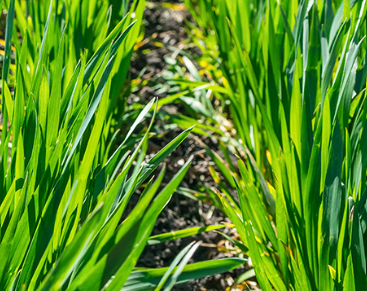
Fall offers the best opportunity to establish or renovate cool-season forages like tall fescue, orchardgrass and winter annuals such as brassicas, oats, wheat, rye and triticale. With strong cattle prices and improved cash flow, now is a smart time to invest in your forage base, says University of Missouri Extension agronomy specialist Tim Schnakenberg.

Scout and assess your fields

Evaluate forage stands for drought damage, overgrazing, weed pressure and poor species diversity. Watch for issues like excessive Kentucky bluegrass, Johnson grass or brushy species. Consider drainage, fertility and phosphorus levels. Walk your fields and take notes. If the stand looks thin or patchy, it may be time to renovate.

Choose the right establishment method

No-till seeding is preferred; it conserves moisture, reduces erosion and lowers costs. If using a rented drill, clean and inspect it thoroughly to avoid seed tube blockages. Practice using the drill before planting. Make sure seed flows evenly, and calibrate for accuracy.

Time planting with the weather

Fall droughts have made timing tricky, says Schnakenberg. While grasses tolerate later planting, legumes such as clover and alfalfa must reach the third trifoliate stage before frost. Watch the forecast. Avoid planting just before a light rain unless more moisture is expected soon.

Burndown vs. no-till

If your pasture is dominated by Kentucky bluegrass or other perennials, a full chemical burndown may be necessary. For summer annuals, you can drill directly or wait until they die back naturally.

Monitor seed depth and placement

Most cool-season perennials should be planted ¼ to ½ inch deep. Deeper planting may delay emergence, especially in dry soils. Get on your hands and knees to check seed depth. Use GPS or crisscross patterns to avoid gaps.

Low-tech and high-tech seeding options

Drone seeding is great for hard-to-reach areas. For low-tech methods, ensure good seed-to-soil contact. If broadcasting, it may be best to disturb the soil before broadcasting seed, says Schnakenberg. However, if letting livestock trample the seed into the ground, they can come in after broadcasting.

Don’t just scatter seed and hope; it needs contact with soil to germinate.

Use cover crops wisely

Cover crops like oats or rye can protect seedlings and reduce erosion, but don’t let them outcompete your main forage crop. Use low seeding rates for cover crops, and avoid harvesting them in spring if your goal is a permanent stand.

Planting timeline

  1. Late August: Oats and brassicas.
  2. Early September: Legumes.
  3. Mid-to-late September: Small grains for spring forage.

For more guidance, see MU Extension’s Cool Season Pasture Establishment Planning Budget, or reach out to your local MU Extension agronomy specialist.

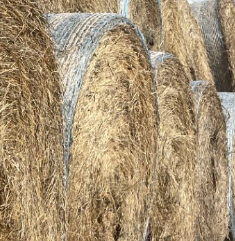
Estimating winter hay needs

0

Some basic rules of thumb to follow when determining the hay supplies you will need to sustain your cow herd over the winter and into next spring.

  1. Determine your average mature cow size. This can be done by weighing your 4- to 7-year-old cows and calculating the average weight. From mature cow size, we can approximate the amount of forage dry matter cows will need to consume per year or per day. For example: a 1,000-pound cow will consume about 26 pounds of forage dry matter per day. A 1,400-pound cow will consume about 36.4 pounds of forage dry matter per day.
  2. Determine your cow inventory.
  3. Estimate the amount of time you expect to be feeding cows.

From this information you can calculate the total amount of hay needed. For example: 100 cows weighing 1,400 pounds will consume about 3,640 pounds of hay per day. We should take into account that a certain amount of the hay fed will be wasted and there will be a certain amount of spoilage of each bale fed that won’t be consumed. With this in mind we will add another 10% to the daily total to bump it up to about 4000 pounds (2 tons) per day. Remember the amount of hay wasted or spoiled could be higher. If we are feeding hay carried over from last year, expect a higher percentage spoiled in each bale.

If we are expecting to feed hay from mid-October to mid-May, that is approximately 200 days of hay feeding. 4000 pounds of hay needed per day x 200 days equals a total of 800,000 pounds (400 ton) of forage dry matter that cows will consume over this time. If we are feeding or buying large rounds with an average weight of 1,250 pounds that equates to 640 (800,000 divided by 1,250) big bales needed to sustain the 100 cows.

If possible, purchase hay by the ton. It leads to less error in securing the amount of hay you will need to purchase or have on inventory. If buying hay by the bale is your only option, make sure to weigh enough of the bales to have an accurate representation of bale weight. Also, take into account the amount of spoilage of each bale. One of the upsides of hay baled this summer is less spoilage.

Other factors such as weather, stage of gestation or lactating versus dry cows will obviously impact nutritional requirements of cows from day to day. Many Oklahoma producers are fortunate to have more standing forage than normal as we evaluate pastures right now. This may reduce hay needs and move back the starting date of hay feeding this year.

Mark Z. Johnson is an Oklahoma State University Extension beef cattle breeding specialist