Monday, February 2, 2026
Home Blog Page 4468

Spring Grill Out Social at the Eisenhower Presidential Library

0

ABILENE, Kan. –  Shake off those winter blues at a Spring Grill Out Social on Friday, March 20 at the Eisenhower Presidential Library! The reception runs from 5 to 7 p.m. in the Library building and will include 1950s picnic fare and a cash donation bar.


Guests will have the opportunity to preview two temporary exhibits, a new Smithsonian traveling exhibit and the Arts Council of Dickinson County annual photography exhibit.


Patios, Pools, and the Invention of the American Backyard exhibit kicks off its four year journey at the Eisenhower Presidential Library. This Smithsonian traveling exhibit will be on display through May 31. Special thanks go to the Jeffcoat Memorial Foundation and the Richard Lowry Memorial Fund for making this exhibit possible.


“Helping Hands” is this year’s theme for the Arts Council of Dickinson County’s annual photography competition and exhibit. The competition is open to any amateur photographer in Dickinson County and the photos will be display through April 3. Contact the Arts Council of Dickinson County for additional details.


The Armour-Eckrich Meats Grill Team will be on site cooking Original Smoked and Cheddar Sausage Grillers. All of the side dish items are provided courtesy of the Arts Council of Dickinson County.

Buhler girls basketball lands coach, player honors

0

Buhler’s Jon McLean was named Coach of the Year and Jessice Steffan is Player of the Year for Division III of the Ark Valley Chisholm Trail League.

Alex Keller joined Steffan on the first team, while Kellie Burns was second team. Kilyn Domsch and Morgan Rohr were honorable mention selections.


Weather Volatility Shifts Fertilizer Effectiveness

0
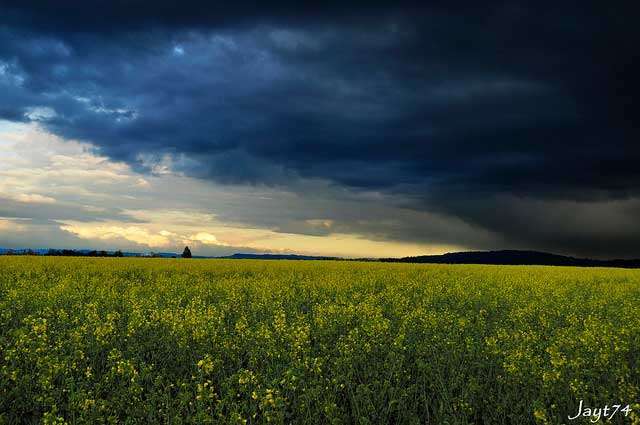
Photo credit: Jamie Taylor

Cary, N.C. (AgPR) March 12, 2015Increasingly volatile weather conditions may be changing how farmers handle their crop nutrients.

As weather patterns change, some farmers are finding they are losing more nitrogen from their fertilizers to the surrounding environment. In many cases, this is due to increased and unseasonal rainfall, followed by long dry spells and warmer winters.

“We’ve just come to more uncertain conditions, which is not an uncommon thing,” said Elwynn Taylor, climatologist and agronomist at Iowa State University.

“If we look at the history of corn yields since we started keeping records in the 1860s, we have had four 25-year periods of highly variable corn yields because of variability in the weather,” Taylor noted. “Those four periods were separated by four 18-year-long periods of consistent crop yields. I believe what we’re seeing is the beginning of a period of variable yields and weather.”

An increase in weather volatility means that bacteria and other microorganisms can become more active earlier than normal.

“We might get this really warm weather that we usually don’t have where the soil temperature goes up into the 50s in December,” Taylor said. “Microorganisms in the soil can begin to convert nitrogen to a form that can be lost. Usually if you put on nitrogen in the fall, it will remain with the crop and not be lost to microorganisms in the winter months.”

Kurt Seevers, technical services manager with Verdesian Life Sciences, agrees. “Increased temperatures allow soil bacteria that contribute to nitrogen loss to be active for longer periods of time,” he said. “Variability in rainfall may also play an increasing role in nitrogen loss, if we see heavy rains like we’ve had in some areas of the country the past couple of years. A combination of these factors could increase the likelihood of nitrogen loss.”

Nitrogen loss can lead to reduced yields and increase the potential for disease pressure due to less vigorous plants. Lost nitrogen can end up in ground water if it leaches from the root zone as nitrate, or it can enter the air as ammonia which isn’t good for crops.

Up to half of nitrogen applications can be lost through three main causes: leaching, volatilization and denitrification. It’s important farmers do something to protect their profitability and crops from a more volatile environment. Using a nitrogen stabilizer is one effective method.

“The use of nitrogen stabilizers is a common way to address potential nitrogen loss,” Seevers said. “Most work by reducing or eliminating the activity of the bacteria or enzymes responsible for metabolizing nitrogen into forms that are lost to volatilization or leaching, or are more readily tied up in the soil.”

Ryan Bond, Ph.D., vice president of marketing and technical development for Verdesian, said farmers need to be aware that not all products guard against all three types of nitrogen loss. NutriSphere-N® Nitrogen Fertilizer Manager is the exception.

“NutriSphere-N addresses volatilization, leaching and denitrification,” Bond said. “When the product is part of a nutrient management program, it will provide the best way for growers to minimize the loss of their nitrogen investment.”

Taylor agrees that due to the volatile weather conditions, nitrogen management products may be necessary. “With changing temperatures, microorganisms become more active in the soil. Nitrogen stabilizers protect your investment by giving your crop more opportunity to use those nutrients before the microorganisms do.”

For more information, contact your Verdesian technical sales representative or visit vlsci.com.

About Verdesian Life Sciences 
Founded in 2012, Verdesian Life Sciences offers patented biological, nutritional, seed treatment & inoculant technologies for high-value specialty crops, row crops, and turf and ornamental markets. Verdesian’s plant-health products, nutritional catalysts and seed treatments/inoculants help growers farm more efficiently to maximize yields. Verdesian’s technologies answer the needs facing agriculture including increasing pressures on food demand, supply and food safety. Verdesian remains committed to the research and development of environmentally sustainable products. Further information about Verdesian is available at vlsci.com.

Media Contact:
Stephanie Russell

Source: Verdesian Life Sciences 

Just in Time for Spring: New List of Perennial Flowers Available

0
The Prairie Bloom program at Kansas State University has released its 2015 list of recommended perennial flowers that have been field tested for three to five years. Pictured is the daylily variety ‘Rosy Returns’ which is on the list. K-State Research and Extension

K-State’s Prairie Bloom list includes flowers that are tested for 3-5 years.

OLATHE, Kan. – Meringue, Merlot and Bravado all have one thing in common. So do Hot Papaya, Ruby Giant and Lucky Star. They’re all cultivars of Echinacea, also called coneflower, and they’re all on Kansas State University’s new Prairie Bloom list of recommended perennial flowers.

Flowers that make the list have exhibited superior performance for three to five years or more in K-State’s bedding plant research trials in several locations around the state. The Prairie Bloom list is available online at Prairie Bloom Perennial Flowers.

“New this year are cultivars of peonies, crepe myrtle and forsythia,” said Robin Ruether, coordinator of the Prairie Bloom (perennial) and Prairie Star (annual) programs.

The new list is separated by those that grow best in the sun and those that prefer shade. Such flowers as asters, carnations, daylilies, irises, and ornamental grasses are included, as are hostas, shrub roses, and others. Each cultivar’s color, average height, width, and first week of bloom are also noted.

Prairie Bloom is not a commercial brand or product line, Ruether said. It’s a list made up of flowering plant varieties submitted for testing in the sometimes harsh prairie climate. Those that grow well – and not all of them do – make the list.

Ruether encourages gardeners to use the list to shop for specific varieties – not a generic daylily, but the daylily variety ‘Rosy Returns,’ for example.

More information about the Prairie Bloom and Prairie Star Flower programs is available at Prairie Star Flowers.

K-State Agricultural Economist Following Avian Influenza Developments

0
Photo credit: Tom French

Poultry bans by overseas buyers could weigh on pork and beef, as well as poultry prices.

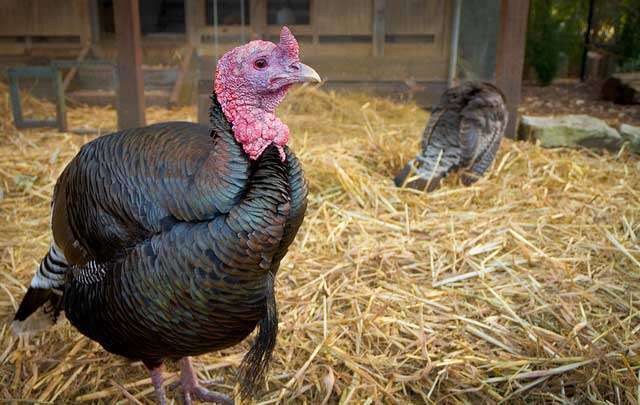
MANHATTAN, Kan. – News that more than 40 countries have banned poultry imports from Minnesota after a lethal strain of avian influenza was confirmed in a turkey flock there has now been compounded by news of confirmed cases in Missouri and Arkansas turkeys.

How long those bans are in effect and whether more countries stop buying poultry from Minnesota or other parts of the United States will determine what, if any effect the ban will have on poultry, beef and pork prices, said Kansas State University agricultural economist, Glynn Tonsor.

The outbreak linked to H5N2 avian influenza in Minnesota, confirmed by the U.S. Department of Agriculture’s Animal and Plant Health Inspection Service in early March, was the first finding in an area called the Mississippi Flyway. That outbreak killed 15,000 birds in about a week.

H5N2 has now also been confirmed at two commercial turkey farms in Jasper and Moniteau counties in Missouri and a commercial turkey flock in Boone County, Arkansas.

No human infections with these viruses have been detected, according to a March 10 APHIS statement, but state officials are working with poultry workers at the affected farms to ensure they are taking proper precautions.

“If additional countries make announcements banning U.S. poultry products from either specific regions or the country entirely, that would result in U.S. poultry products being diverted to other customers,” said Tonsor, who is a livestock market specialist with K-State Research and Extension. “In some cases this is other foreign customers and in other cases, more poultry will be consumed here domestically. In both cases, the diverted products going to alternative channels will occur at lower transaction prices. Otherwise they would have voluntarily been re-channeled already.”

As poultry prices decline from these events, he said, the spillover on both beef and pork is expected to be adverse for those industries.

“Narrowly, with lower poultry prices, we typically see pressure on pork and beef demand as the three meats are substitutes and collectively comprise the vast majority of red meat and poultry production and consumption,” said Tonsor, who is a livestock market specialist with K-State Research and Extension.

The biggest uncertainty, he said, is the exact duration and extent of poultry trade bans: “We know the directional impacts, but the economic magnitude is largely a function of the duration and extent which are yet to be established.”

In a March 11 statement, the Kansas Department of Agriculture said it is monitoring a control zone in southeast Kansas, including Cherokee and Crawford counties, after the avian influenza case was confirmed in Jasper County, Missouri.

Avian influenza exists naturally in many wild birds and can be transmitted by contact with infected animals or ingestion of infected food or water.

Kansas backyard poultry producers in the Crawford and Cherokee county area are asked to self-report their flocks to the Kansas Department of Agriculture at 785-564-6601, in order to help them monitor the situation and control any spread of the disease.

The combined value of U.S. production from broilers, eggs, turkeys, and the value of sales from chickens in 2013 was $44.1 billion, according to the USDA.

Information on the H5N2 avian influenza outbreak is available on the USDA APHIS website: http://www.aphis.usda.gov/wps/portal/?urile=wcm:path:/aphis_content_library/sa_our_focus/sa_animal_health/sa_animal_disease_information/sa_avian_health.