Monday, February 2, 2026
Home Blog Page 4473

Young Professionals of Reno County: Voice Team Meeting

0
young professionals

3.17.2015 from 5:30pm to 6:30pm 

Location: Cool Beans

Looking to get more involved with Young Professionals? We would love to have you join our Voice Team! This committee discusses current issues in Hutchinson and Reno County, educates members, and recommends advocacy steps to the Advisory Council.

All are welcome to attend!

We will be meeting at Cool Beans at 5:30 p.m. on Tuesday, March 17. Look for Kari Mailloux.

If you have questions, please email the Voice Team at [email protected].

Hutchinson Azzuri Spring Academy

0

Board Meeting – March 17, 5:30pm at Bob and Lou Peel Allied Health Center (1 E. 9th Street)

Spring Academy with Hutchinson Recreation Commission

  • April 6 through May 7

  • Mondays and Thursdays at 5:30pm and 6:30pm

  • Registration deadline is March 7

  • $50

Academy registration form can be found here. Register online here.

You can also register in person at any Hutch Rec facility or by phone at 620-663-6179.


Managing Turf in Shade

0

Turfgrasses differ in their capacity to grow in shade. Among Kansas turfgrasses, tall fescue is the best adapted to shade though it isn’t all that good. Although the fine fescues (i.e., creeping red, chewings, hard and sheep) have better shade tolerance, they lack heat tolerance and typically decline during hot Kansas summers. The warm-season grasses have the poorest shade tolerance, although zoysia does better than Bermuda or buffalo. Where shade is too heavy for fescue, there are other courses of action. The most obvious is to either remove trees, or to prune limbs and thin the tree canopies. Grass will do better under openly spaced trees than under closely spaced trees. Pruned limbs and thinned canopies will allow more sunlight to directly reach the turfgrass. If possible, raise the mowing height in the shade to compensate for the more upright growth of the leaves, and to provide more leaf area for photosynthesis. The thin, weak turf in the shade may tempt you to fertilize more. Remember the problem is lack of light, not lack of fertility. Too much nitrogen in the spring causes the plant to grow faster and may result in weak plants. The nitrogen rate for shaded grass should be cut back to at least half of that for grass in full sun. Late fall fertilization after tree leaves have fallen, on the other hand, is important for shaded cool-season turfgrasses and should be applied at a full rate. Irrigate infrequently but deeply. Light, frequent irrigation may encourage tree feeder-roots to stay near the surface, which increases competition between the trees and the turf. Restrict traffic in the shade.
Many times, the best choice for shaded areas is switch from a turfgrass to a more shade-tolerant plant. For example, English ivy and periwinkle (Vinca minor) are much more shade tolerant than any turfgrass adapted to our area. Another option is simply to mulch the area where turf doesn’t grow well. The trees will love the cool, moist soil and the absence of competition. (Ward Upham)

Pruning Raspberries and Blackberries

0

Raspberries and blackberries are perennial plants with biennial canes. In other words, a single plant will last many years but an individual cane will only live for two. In a cane’s first year, it will grow but will not produce fruit. The second year, it will fruit and then die. Though these canes can be removed after they have finished fruiting, many gardeners wait until now to remove them.
Dead canes are not difficult to identify. They are a much lighter color than live canes and are dry and brittle. These canes should be removed and discarded. The remaining canes should be thinned but the type of growth determines exactly how this should be done.
Black and purple raspberries and thornless blackberries tend to grow in a clump. Remove all the canes but 5 to 7 of the largest and healthiest in each clump. Cut back the remaining canes to living tissue if there was winter damage. Thornless blackberries will also produce a few suckers that come up some distance from the clump. These should be removed or dug and transplanted to increase the planting.
Red raspberries and thorny blackberries sucker badly and will fill the row with new plants.  Prune out small canes within the row so that there are strong canes 4 to 6 inches apart. Head back all the remaining canes to about 5 feet. Keep aisles free of new suckers during the summer by mowing.
We now have what is called everbearing red raspberries and everbearing thorny blackberries.  These are the exception to the rule in that they will bear fruit on first-year canes. Therefore, you can cut all canes to the ground in the winter and still have fruit. Examples include Heritage red raspberry and Prime-Jim, Prime-Jan and Prime Ark 45 blackberries.
For more detail and line-drawings that illustrate pruning techniques, see our publication titled, “Raspberries and Blackberries”
at http://www.ksre.ksu.edu/bookstore/pubs/mf720.pdf . (Ward Upham)

Every Bunny Loves Easter

0

chocolateBasket goodies and more for your celebrations


(Family Features) With Easter just around the corner, everyone is hopping to the candy aisle to pick up tasty treats. Celebrate the fun of the season with special sweets that everyone will enjoy.


With the never-ending selection of Easter candies to fill your baskets and dessert spreads, picking the best can be difficult. In fact, the National Confectioners Association ranks this springtime celebration as the nation’s second top-selling candy holiday.


A new addition to the candy aisle this spring includes a Nestlé Crunch candy line inspired by Charles Schulz’s beloved Peanuts characters, including Charlie Brown and Snoopy. These whimsical products join Nestlé’s existing collection of chocolate and sugar favorites that are sure to inspire creativity with gift baskets, egg hunts and sweet treats.


Also new this year, candy lovers can feel better about the chocolate they’re choosing. Nestlé Confections & Snacks has announced the purchase of certified, sustainable cocoa equal to the amount needed to produce the entire Easter chocolate collection for the season through the Nestlé Cocoa Plan, Nestlé’s global commitment to sustainable cocoa.  For the first time, U.S. consumers can purchase any products from Nestlé’s chocolate Easter collection and know that their purchase supports Nestlé’s commitment to better cocoa farming practices, improving social conditions and ethical sourcing.  All of Nestlé’s Easter chocolate collection will feature a Nestlé Cocoa Plan logo on-pack to help you make a choice this Easter that is delicious and sustainable.


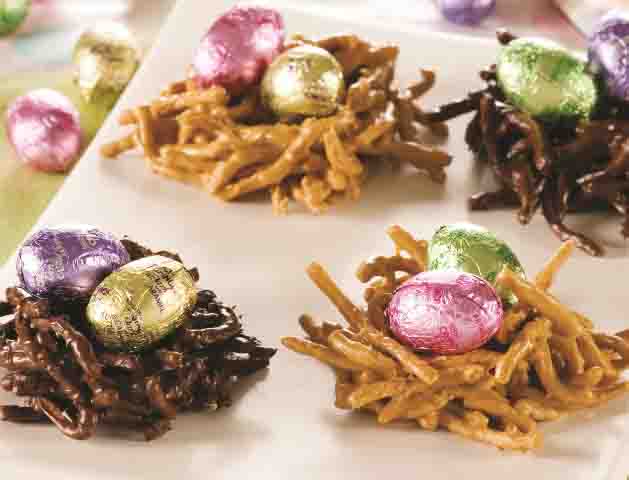
Do you have an Easter gathering to host or attend? Hop into the kitchen and whip up this simple recipe for Egg-Ceptional Easter Nests. Featuring Nestlé NestEggs, the bite sized NestEggs are available in a variety of flavors including Nestlé Crunch, Crunch Creamy Caramel, Crunch Peanut Butter and Butterfinger, providing plenty of options to please every palate.

For more Easter inspiration visit www.Facebook.com/NestleCrunch or www.Facebook.com/Butterfinger.


Egg-Ceptional Easter Nests

Prep time: 20 minutes

Total time: 21 minutes

Servings: 30


Wax paper

1 2/3 to 2         cups (11- to 12-ounce package) Nestlé Toll House Butterscotch or Semi-Sweet Chocolate Morsels

1/4                   cup creamy peanut butter

2                      cans (5 ounces each) chow mein noodles

30-60               Nestlé NestEggs, any flavor


Line trays with wax paper.

Microwave morsels in large, uncovered, microwave-safe bowl on medium-high (70 percent) power for 1 minute; stir. The morsels may retain some original shape. If necessary, microwave at additional 10- to 15-second intervals, stirring just until morsels are melted. Stir in peanut butter until well blended.

Add chow mein noodles to morsel mixture; toss until coated. Using ice cream scoop that measures about 2 rounded tablespoons, scoop and drop onto prepared trays then immediately shape into nests. Refrigerate until ready to serve. Before serving, place 1 or 2 candy eggs in each nest. Store prepared nests in covered container for up to 1 day.

Source: Nestlé