Thursday, January 29, 2026
Home Blog Page 4521

Eagle reports Halstead will lose its call center

0

The Wichita Eagle reports a call center in Halstead is shutting down, resulting in 30 layoffs effective March 6.

Its staff has provided support for the Kansas Department for Children and Families’ Child Support Services since 2008, the Eagle reports, but the contract was not renewed.

Ham and beans dinner to be held in Sedgwick

0

The Sedgwick Senior Center will be holding a ham and beans dinner at 5:30 p.m. Saturday, Feb. 28. There is a suggested donation of $5. The center is located at 107 W. Fifth St.

Create Your Own Bathroom Retreat

0

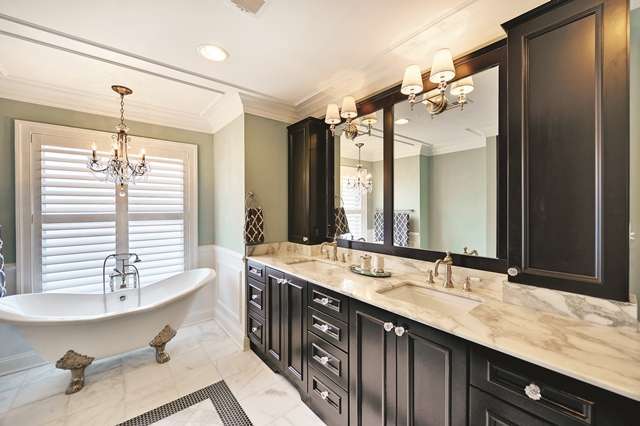
bathroom1(Family Features) With so much time spent in the bathroom, it is important to give that space a little TLC like the rest of the home. Almost everyone that enters your home sees your bathroom. From changing accessories to a total bath remodel, it is important that it receives a little refreshment. A bathroom should be an oasis, and the environment that it displays directly correlates with just how relaxing it is.


While this room is seen as a place of relaxation in the home, it should also be designed for function. Bathroom vanities and furniture pieces are a way to incorporate both atmosphere and storage. These are two factors that can be incorporated in any bathroom, large or small, because the key is maximizing space and creating a calm environment through decor and accessories.


Relaxation

Whether it’s coming home from a long day at work to a nice hot bubble bath or spending your morning getting ready and preparing for the day ahead, a bathroom is a place for a little peace and quiet. It is a retreat from the outside world, even if only for a moment. The environment desired should reflect individual style while still providing a calming presence. Wellborn Cabinet, Inc.’s Elegant Bath Collection provides the perfect selection of bathroom vanities and furniture pieces for everyone’s personal style in a variety of materials and finishes.


From formal to contemporary, it is easy to find beautiful cabinetry for your bathroom. As far as aesthetics, cabinetry sets the mood for the room. Bathrooms can take on a warm environment and showcase a beautifully stained cherry furniture piece with glass doors, or they can give off a clean, cool feel with a white painted vanity. Sometimes a simple change of hardware is all a space needs to give it a fresh look. When eye pleasing pieces fill the room, it is much easier to find your haven. One common misconception is that larger space equals a better bathroom. No matter the size, the key is having a well-designed bathroom that meets all needs. The smallest designs of bathrooms often give charm to the home.


Function

Wellborn Cabinet, Inc. has a numerous amount of storage solutions for bathrooms that maximize space including the U-shaped drawer. Being shaped in a “U” is perfect for storage under the sink. This unique design takes into account the plumbing that is found taking up space and provides the opportunity to use the storage in the back. With a simple pull, all items become accessible. Bathrooms range in all kinds of sizes; however, it is important to know that no matter how large or small, a bathroom can incorporate relaxation and function. Storage is key in a bathroom for stowing towels, personal accessories and other items. Instead of looking at a small bathroom as lacking storage, get creative and try finding space in places you never before thought about.


Tips for Decor

  • Get inspired. Find that special something that becomes the inspiration for the entire bathroom. For example, maybe it’s a tile or even a framed picture.
  • Keep it organized. After your creative storage ideas are put to use, restore items to their original position to keep a tidy room.
  • Use open storage. When done correctly, displaying items can provide the bathroom with character. Find clear bottles to store extra shampoo and body wash and store it in a cute basket on an open shelf.

For more ideas on how to make your bath a retreat, go to www.wellborn.com.

Source: Wellborn

Property taxes in Kansas: The tissue and torment of government

0
john marshal

Part 2

Gov. Sam Brownback’s plan to slash state spending for

schools comes from his overall mission to abolish the state

income tax; to cover the resulting revenue losses, he would

force massive cuts in the state budget. This can’t happen with-
out reducing spending for education, the largest single state

expense.

Brownback has directed the Kansas Legislature to abolish the

state’s current school finance law. To replace it, he has offered a

vague, two-year plan to send block grants to each school district

in amounts equal to their current state aid allotment. Depending

on the school district, the grants will cover from 65 to 80

percent of the schools’ operating costs. To pay the remainder,

districts will rely on local property taxes.

A tax on property was the first foundation for government

finance, written into the territorial constitution in 1859, 18

months before Kansas joined the union of states – long before

the state would have an income tax (1931), and even longer

before schools would become the state’s largest single obliga-
tion and expense.

The Kansas history of school finance is a litany of complex-
ity and passion, of the co-mingling of local and regional cul-
tures and economies, of the conflicting interests among patrons,

parents and politicians. But this history is also distinguished,

not long ago, by a remarkable package of compromises, the

incubation of historic reforms in state funding of local public

education.

The School Finance Act of 1992 demonstrated that legislators

had discovered, with considerable success, a way to manage

both education funding and the property tax that supports it. It

did not happen easily.

INITIALLY, PART of the trouble lay in human nature, and how

people tend to view government funding: Impose taxes so the

other person pays them. The trouble was compounded with

property taxes because the system seemed to lack all fairness.

Thirty years ago, Gov. John Carlin and the Kansas Legislature

placed a big part of the problem in the appraisal and assessment

of property, and decided to fix it. The plan, through a constitu-
tional amendment, was to classify property by use, assign it a

value, and limit assessment rates in various categories – utili-
ties, agriculture, residential, businesses and so forth.

At that time of pre-reform, property was to be appraised at

“fair market value” and assessed for taxing at 30 percent of that

value. But it had never really worked that way. Only utilities

were paying taxes based on 30 percent assessments because the

state was charged with utility assessments. For other property,

assessments were for county appraisers. And in far too many

cases, setting local assessments seemed to be a matter of throw-
ing darts at a board in the court house boiler room.

Appraisers were never able to keep up with the 30 percent

law. The ratio of sale price (market value) to appraised value

– the sales-assessment ratio – rarely if ever approached 30 per-
cent in any city, township or county.

Carlin convinced lawmakers of the need for a constitutional

amendment to accomplish two things: a massive, statewide

reappraisal of all property; and listing various classifications of

property for a range of assessment rates. Among the key clas-
sifications and rates: residential, 11.5 percent; mobile homes,

11.5 pct.; personal property, 25 pct.; businesses, 25 pct.; utili-
ties, 33 pct., and others.

One other classification was critical, at the time perhaps the

Constitution’s most necessitous: farmland would be appraised

by its ability to produce income and assessed at 30 percent. The

political and economic impact of this section was so significant

that the entire amendment, covering a dozen classifications,

came to be known simply as the “use-value amendment.”

This is because the amendment, approved by Kansas vot-
ers in November 1986, protects farmland assessments through

use-value property appraisal; taxes were (and are) determined

by the income derived from the land, not by its market value.

The amendment was to prevent owners from being forced to

sell land simply to pay the taxes on it. It was a critical reform,

exposing a glaring issue with property taxes, the chief compo-
nent in the system for funding local schools.

*

*

Protecting farmland

THE PROPERTY tax is generally viewed as a hangover from the

Pony Express days, the early years of Kansas settlement, when

property and the assessment of a “uniform and equal” levy were

to spread the cost of community services and improvements. It

was thought fair, then, because the extent of the tax reflected

the productivity of the land, not its market value, real of imag-
ined. Productivity of the land was the promise of Kansas. All

this changed as settlements became towns, and then cities, and

agriculture prospered. And good schools became important for

communities.

Although the property tax was written into the territorial

constitution ten years before Kansas became a state, the state

income tax was not adopted until the early 1930s.

Since then, property taxes have come to be seen as dated,

a relic of the Homestead Act. The tax is expensive to collect

and, as history notes, it is hardly uniform and rarely equal. It

has been revealed to have a negative social impact. Property

maintained and improved is taxed more; the inefficient and the

negligent are rewarded with lower taxes.

One premise in the issue of government finance is that the

property tax now is valid only in relation to property, not

people. That is, taxes on property might pay for rural roads and

bridges, for rural fire and water systems; in town, the property

tax would finance non-arterial streets, storm sewers, parking,

even subsidize low-income housing.

Taxes for people functions are in another class. These should

come from income and sales taxes and user fees collected

chiefly on a statewide basis. The cost of public schools, as sug-
gested in early reform debates, should relate not to the value of

land in a district but to the number of students to be educated. A

state-run and state-financed school system might not be a popu-
lar idea, but it seemed logical. The state was paying, on average,

nearly 70 percent of the cost in local districts, with local boards

in charge of operations.

PROPERTY TAXES have been tied tightly to the premise of

local control, although the income tax as a far better, more

equitable source of state revenue for local government. This

suggestion runs contrary to the feeling that local control is bet-
ter, that friends and neighbors can manage their towns more

reasonably than costly and troublesome bureaucracies. Usually

they do. But today’s friends and neighbors are no longer apt

to be tomorrow’s. Consider the transience of Kansans today;

many programs such as welfare, Medicaid, and transportation

have been on a state basis for years, supported by income or

sales taxes.

This runs counter to the governor’s dream of a state with no

income tax, a plan that invites a return to the past, to the days

of heavy reliance on the property tax and the hope that we can

continue to make some sense of it; local control would become

local rule with the state relegated to the status of bystander.

In reality, this may be seen as a momentous shift, the burden

of finance moved from one fellow to the other. The system will

always demand revenues, and history tells us that the system

relying on property taxes tended easily to get out of control.

And the price of that system too often has been inequitable

and discriminatory taxation with equally unfair results.

We fixed it once. The governor’s plan sets aside those

reforms. Kansas with no income tax is a state returned to the

1920s or before, to a heavy reliance on state and local property

taxes, before the roads were much good, before the farms had

electricity and the cities had decent water, before the state

shared revenue with cities and counties, and before the schools

were consolidated.

The income tax gave us the difference between SRS and the

poor farm, between the one-room school and low-enrollment

aid, between hunger and the school lunch, between walking or

staying on the farm and a ride on the bus, between the teacher

who cared and one who couldn’t afford to. Between a public

that hoped, and those who had given up.

– JOHN MARSHALL

(Next: Targeting rural schools)

Setting Goals Can Help Boost Your Savings

0

The 9th annual America Saves Week will be celebrated Feb. 23-28.

MANHATTAN, Kan. – Wanting to buy a new car or house? Perhaps you have your eye on something smaller, such as a new camera, tablet or other electronic device. Maybe your family is planning ahead for retirement or college tuition for the children.

Many things we want in life require money, and Elizabeth Kiss, family resource management specialist for K-State Research and Extension, said thinking about those goals helps motivate people to save enough money to reach them.

“America Saves Week is a great opportunity to step back and take a look at what you are saving for, how much you have already accumulated, and how much more you’d like to save,” Kiss said. “Savings can be a challenge, but it can be easier if we set goals.”

America Saves Week is an annual event in its 9th year that brings awareness to organizations and individuals about examining their savings status, managing their savings and promoting good savings behavior. It will take place Feb. 23-28.
Be strategic and realistic

According to the America Saves Week website, most Americans are not saving enough for retirement, and many households do not have enough money saved for emergency expenses, such as a car or house repair.

Not having as much money set aside as we would like to have can add stress to our lives, Kiss said, so although saving can be difficult, try to start small. Many times after developing the habit of regularly setting money aside in a savings account, savers will find themselves to be less stressed and have more peace of mind.

In addition to starting small, Kiss provided the following tips for savers to be more strategic and realistic:
1. Picture the goal.

Put a picture of your goal on the refrigerator or a desk to bring that goal to the forefront of your mind.

“To be successful, you need to think about why you want to save,” Kiss said. “Visualize that why. Once you have the big picture, think about what makes sense for your situation and how you might add to your savings a little at a time to achieve it.”
2. Make your savings goal attainable.

Given your current spending, think about what you might be able to shift around to free up money to put toward the goal. Think about what is reasonable for you past your fixed expenses, and then set a deadline for when you plan to have enough saved to reach the goal.

“You can make your savings automated or automatic,” Kiss said. “For me, automatic is that on the first day of the month, I transfer the money to my savings account. I decided I wanted to be the one to do that, because it gives me a sense of accomplishment. Some people want to have the transfer set up so they don’t have to think about it, which is automated.”
3. Reduce debt to increase net worth.

Other than putting money aside and watching it grow, consider paying down debt, especially high-interest debt. Budgeting can help find ways to pay down debt while simultaneously saving for other goals.

“As the level of debt goes down, you pay less interest and you have freed up money to use to meet other goals,” Kiss said.
4. Monitor any spending leaks.

Some spending is required, such as rent or house payments, insurance, utilities and groceries for the home. Spending leaks are regular expenses for “nice to have” items made by habit. These are often small expenses of less than $10 that add up over time.

“It’s the eating out and small expenses such as going to the pop or vending machine that are spending leaks,” Kiss said. “Once in a while that is fine, or if you plan and budget for it, then it’s part of your spending plan. But, if you think about those habits, you may decide they don’t serve you as well and you’re ready to use that money for something else.”
5. Build an emergency fund.

Research has shown that fewer than half of Americans could come up with $2,000 within 30 days to meet an emergency, so if you don’t have $2,000 set aside to access fairly readily, an emergency fund might be a good savings goal.

“Families with at least $500 saved in an emergency fund are found to be better off financially,” Kiss said. “A little bit of savings adds up over time, so even a small savings goal is better than nothing.”
More information

Although America Saves Week brings awareness of savings behavior, the America Saves and Kansas Saves websites are available year-round to provide tips and support to consumers. Consumers can also use these websites to pledge to save and sign up to get savings tips through text messages.

Story By: Katie Allen