Tuesday, January 27, 2026
Home Blog Page 4544

I remember: A time to love

0

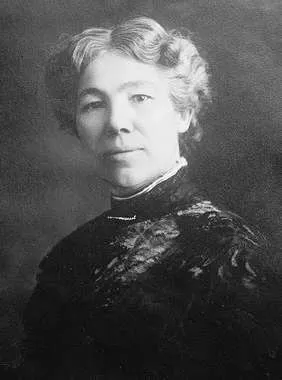
By Doris Schroeder

The word “love” is used a lot in society today, isn’t it? It would be wonderful if it was always in the right context. We have all heard people exclaiming “Oh, I love your dress, or hair, or your jewelry!” If one really took that literally, we would know they are not telling the truth…material things will not last and can be changed in an instant, for that reason, we really don’t love it with that intensity.

Newly married couples just love whatever their spouse does ‘until they get tired of it or it doesn’t work in the realm of everyday living. We all say things like

“ I love your recipe for desserts and could eat them all the time!” In actuality, that would make us sick and we know it.

I know I’ve use the word love many times in writing or talking…I love Hawaii, or seeing our family or having my cake and eating it too. John and I  both loved traveling to Hawaii and it was new to both of us. God must have arranged that  when one of our Carpet Dealers came up with a trip for all his clients and we could go for free. We even enjoyed a church service under the Banyan trees behind the old Moana Hotel, located by the ocean. That to us was a little bit of heaven, and I will always remember the magic of that land. We loved meeting people from different lands and getting to know them but that was really a temporary liking. He made it possible for us to go to Hawaii ten different times so you can understand our favoring  it.

In marriage, it works both ways, and adapt to the one we love. I always loved to write in one way or another. In our younger years, John even tried his hand at it and actually came up with an adequate memoir. To him, however, he loves sports and fishing

It does work both ways. I’ve never really enjoyed watching basketball and football games to the extent hubby does. Knowing how he takes pleasure in it,

I have tried to watch at least the games I know something about…like K-State. I can actually say truthfully, I  love watching them when they are winning. When they played in the Alamo Bowl on Dec. 27, however, I lost interest rather quickly during the first half when they could hardly score.

John also loves fishing and I don’t mind it if we can talk while we are waiting for the fish to bite but hubby says you have to be quiet so they will fall for the lure. That is not any fun and God did not create in me a desire to be quiet all the time!

I must admit that I don’t always spend enough time talking to God. When I do, however, He really gives the answers I seek!  Of course, He has his own opinion and I realize sometimes I have had to change my own mind because my ways were selfish. It has been proven to me over and over again that however God works a situation out that I had asked him to do, it was always way beyond my comprehension and it was always a perfect way. My trouble is, I sometimes try to do things on my own without seeking God’s wisdom.

The great thing about getting older is you can look back with some clarity and see how God has worked things out in your life and now you can see what He had in  mind. It is now I can even see why my parents did some of the things they did  and how they tried to teach me important life lessons.  I can even begin to evaluate different pastors we have had and how they taught us important Bible truths, either by what they said or didn’t say.

It is truly a calling from God to become a pastor…no one in his earthly mind would want to even try going through all the things that is asked of him without God doing the leading. If a pastor leaves God out even sometimes, he will really have to work hard to right the situation.

We members of Medora Community Bible Church are blest to have pastors who love the Lord and follow his leading through thick and thin. We are truly fortunate in this age of modernism.

John and I have enjoyed following God and doing what He has led us to do  through the years. We have done some things that could only be done in the power of God. Of course, we were not always perfectly in accord, but we knew what we had to do when we “messed up. Through it all, I know I have learned some patience.

I am, however, looking forward to a time when I will have all patience, and that, of course, is when I am in heaven.

As time flies by, as does our years, if we are still on this earth, I am convinced God has a reason for it. There is still something He wants us to do. Perhaps it is a time to point the way to someone, a time to share how God looks out for us through our years on this earth. We need to keep our eyes on Him as we keep on knowing it is definitely a time to love the way God has loved us.

Doris appreciates your thoughts and can be reached at [email protected]

Farm Profit Conference, February 19th at Council Grove

0
Frank J Buchman
Frank Buchman

By Frank J. Buchman


Mary KnappMarkets, weather and government intervention are the three biggest concerns of farmers and ranchers.


Appropriately, those are the topics set for discussion during the Farm Profit Conference at the fairgrounds east of Council Grove on Thursday evening, Feb. 19.


“This will be the second in this year’s series of Farm Profit Conferences for farmers and ranchers in the Midwest to be become better informed about topics affecting profitability in their production operations,” according to Kelly Lenz, coordinator of the programs, and longtime farm director for 580 WIBW, host for the sessions.


The Flint Hills Extension District is cooperating with 580 WIBW in presenting this meeting which will get underway at 5:30. “Doors open for farmers and ranchers to sign-up for a large assortment of valuable prizes given by sponsors to be awarded from drawings throughout the event,” Lenz said.


“A large number of displays will also presented by the evening sponsors and advertisers on 580 WIBW’s six daily farm programs attracting dedicated listenership throughout the Midwest,” he added.


Complimentary beef supper begins at 6 o’clock, and the educational program starts at 6:45.


Darrell HoladayHighlight of the conferences, according to Lenz, is always Darrell Holaday, Country Futures at Frankfort, who discusses farm markets live five mornings every week on the 580 WIBW Ag  Roundup program.


“Darrell keeps listeners on the edge of their seats, because he never pulls any punches, and evaluates the farm picture exactly the way he’s analyzed, and sees it,” Lenz clarified. His presentation this time has been titled “The Markets: Are We Having Fun, Yet?”


A frequent presenter at the 580 WIBW programs is Mary Knapp, assistant state climatologist from Kansas State University, who in a return engagement will give “The 2015 Weather Outlook.”


Aaron Popelka, vice president of legal and governmental affairs for the Kansas Livestock Association based in Topeka, is to review “WOTUS (Waters of the United States) and Kansas Tax Legislation.”


Aaron Popelka (Head Shot)-1This Farm Profit Conference is entirely complimentary from the sponsors and 580 WIBW, but plate count is essential so nobody goes without supper. Reservations must be made by calling the Flint Hills District Extension Office at Council Grove, 620-767-5136, or e-mail [email protected].


The first Farm Profit Conference hosted by 580 WIBW this year was at Rossville, and additional programs are set for Ottawa, March 4, and Westmoreland, March 18. Details will be forthcoming with reservations also needed.

Diversification Allows Seventh Generation Ottawa Farmer To Continue Family Tradition

0

By Frank J. Buchman

“I’m changing gears. I’m hopping on this machine to get some more work done, but I have time to visit now.”

When one of the farm partners has to be gone on other agriculture business, it puts more work on the ones staying at home.

“It sure cuts into the days when Dad’s gone, but my wife is always anxious to help, yet she has a part time job. And, Grandpa is ready to help, too, if I need it, even though he’s retired, and I try not to bother him that much.

“But, I’m really glad to be able to be part of this family farming operation,” Mark Wray stated emphatically while continuing to work farm ground.

“Grandpa grew up farming. Dad grew up farming. I grew up farming. Grandpa told me I am the seventh generation of the Wray family in farming. I’m lucky number seven,” added the Ottawa farmer proudly.

“We don’t have any kids, yet, but hopefully we’ll have the eighth generation, too. Every farmer’s dream is to have a family member follow in his profession, and I’m fortunate to have this great opportunity,” Wray appreciated.

Wray Cattle & Grain LLC is officially the Franklin County family operation of grandpa Jack, dad John and son Mark, with his wife Lacey.

“We all individually own land, and then rent from the LLC, which limits our personal risk,” Mark Wray explained.

For clarification, an LLC (Limited Liability Company) is not a corporation, but rather a legal form of a company that provides limited liability to its owners in many jurisdictions.

“It’s almost an essential legality of life in agriculture today, but we are still a family operation at heart, and all work closely together,” Mark Wray adamantly clarified.

However, to make the family farm all come together as it is today, and looks to continue into generations, has taken some adjustments, diversifications and expansions from what it was when Mark Wray came back to Ottawa from college.

“I graduated from K-State, in May 2010, with a degree in agronomy, and minor in animal science, moved in with my parents, and started my own seed dealership, to be able to be part of the family farm,” related Wray, who coincidently turned 27, on the day his tight farm schedule loosened enough for a most congenial reflection of his life on the farm.

“I always wanted to be a part of the family operation, but there just wasn’t enough to support us all, without having an additional source of income,” he explained.

When a neighboring farm came on the market, Wray felt fortunate, and acquired it personally to help expand and diversify operations.

“This place with a nice home is just a mile from my parents, has excellent facilities and provided us more grain storage. The cards came together,  just worked out, so it has been a perfect fit for me to become more involved in farming,” Wray admitted.

While diversification was essential, it became more readily viable with the young farmer’s real estate acquisition.

“We’ve expanded the cattle operations, and since Lacey, a farm girl, and I got married two years ago this spring, we’ve pretty much been in charge of the cattle, even though everybody helps out when needed,” said Wray, noting the cattle facilities are at his parent’s place.

A former state FFA officer, and also a KSU grad, Lacey (George) grew up working closely in family cattle operations near Uniontown in Bourbon County, and is now an instrumental part of that phase of the Wray program, her husband credited.

“Lacey is very patient person, and helps a lot,” he added.

“But, when Dad’s gone, it still keeps us busy, with cattle coming in to process, and then  keeping a closer eye on them for the first few days, too,” continued Wray.

“Grandpa owns about half of the land, but he’s gotten out of the day-to-day operations. Still, he always helps with moving machinery, driving trucks during harvest, whenever we need help, Grandpa does a good job, and we appreciate him,” Wray recognized.

While Jack Wray grew up on a farm, the present land holdings have been acquired since the 1960s. “Grandpa was in the military, too, so he was fortunate to have outside income to buy land, when it might have been tougher on some others to acquire property,” Wray evaluated.

“Dad has purchased land, too, but we do rent a lot. Our farmland acreage has varied, especially since there’s been a flex of land investors into the county, and they sometimes change tenants,” Wray said.

Land price spikes have caused neighbors to disperse holdings that have been in their families for several generations. “Some owners had never been personally involved in production, don’t have the feel for the land like we do, and saw higher values as time to make the cash register ring,” Wray critiqued.

While farmers in the past have often preferred to rent acreage by crop share, whereby the landowner pays half of the expenses and receives half of the crop, it is not that way in many operations today, including that of the Wray’s. “We do have crop share agreements with some landowners, and also cash rent land, which is our preference,” Wray said.

“We are sometimes bigger risk takers than the owners want to be, and by paying cash rent, we can market the grain crop when and how we want to, rather than having to confer with another outside party. It’s a whole lot easier for us to cash rent,” he stated.

Concerning his personal diversification, Wray admitted, “I never really thought about being a seed dealer, but it gave me the chance to come home to the farm, and still offers important income for the farm operation. Things have worked out quite well.” Syngenta, Ag Venture and Stine products are offered

“With corn prices down, my seed orders are off a bit this year, but I’m looking for sales to pick up as planting time nears,” he predicted.

“Still, I’ve always focused more on quality, rather than quantity, and try to do what’s right for the farmer. Seed really has been great for me,” Wray added.

With more than 2,000 acres of cropping operations, about one-half cash crop is in soybeans, with the remainder typically divided equally between corn and wheat.

“We also grow forage sorghum, have hay ground and rent a lot of pasture, too. It takes that for our cattle,” Wray informed.

Assessing crop acres, the young farmer tallied, “We have about 30 percent prime bottomland, but there’s mostly upland. It’s all dryland, and we are very conscientious in our management to maximize yields from everything we farm.”

Auto steering and land mapping are utilized for more precise seed, herbicide and fertilizer placement and productive efficiency. “We do use a lot of technology, but there’s plenty of room to improve,” he figured.

“We always try to purchase our inputs as economically as possible, and apply everything ourselves. The high prices make us even more conscious to make sure nothing goes to waste,” Wray contended.

With capacity for about 53,000 bushels of on-farm grain storage, the Wray’s do fill that with  grain at harvest time to be marketed when price levels might advance.

“Crop insurance is essential with all of the expenses to put a crop in the ground, and we contract some grain on the board, and then hedge with the futures market. It’s not a set thing, but we try to follow the fundamentals,” Wray explained.

Marketing decisions are a family matter. “Dad actually is closer to the grain side of it, but we all talk it over before anything is decided,” Wray commented.

Enrollment in the new Farm Program is immediate on most farmers’ minds as meetings are being conducted by Farm Service Agencies throughout the country to attempt to explain the opportunities, how binding they are and possible long term effects.

Like many farmers, most likely the vast majority, Mark Wray evaluated, “We have been to the FCA office, and the program is ‘too confusing,’ to put it as simply as possible. This is a revenue based program that is going to be difficult for lenders.

“Even when a farmer will receive a payment, we won’t get it until a year later. We don’t understand why it can’t be immediate, so farmers can acquire the level of crop insurance they desire, take more risk off the lender, and it wouldn’t cost the government any more, either. This is a complicated Farm Program,” he insisted.

“We have a growing and back grounding program, and feed about a 1,000 cattle a year, so we usually have around 400 to 500 head on hand. They get a higher roughage ration, therefore we  don’t feed that much of our own grain; and then send the cattle to a commercial feedlot to be finished,” Wray related.

Most of the cattle are purchased by Wray personally at sale barns in about a 70-mile radius of the headquarters, along with some purchased through order buyers.

Quality is sometimes not as important as price, but there has to be profit potential. “I prefer the good ones. It’s hard to make a purse out of a sow’s ear,” he commented.

“I do market the cattle to my best judgment, a lot through Superior Livestock, and we’re happy with that. Then, I also do forward contracting and hedging,” he noted.

Again commenting on lower grain prices, even compared to a year or so ago, Wray verified, “The markets have really still been good, at least according to Grandpa and Dad, when they talk  about some of the times they’ve seen and been through.

“These record cattle markets have been appreciated when we’ve sold, but it sure makes our investment, and risk a lot more, too. Impossible to have it good on both ends, it seems,” the young farmer analyzed.

Yet, he readily acknowledged, “Prices are always going to go up and down. That doesn’t always seem the way with inputs, but it’s part of being a farmer.”

Different people have different ideas. “Even with a family farm, there are varied opinions, but we always work it out, because the ultimate goal of everybody involved is to be good to the land and do what’s best for the farm,” said Wray, who also grew up as a leader in 4-H and FFA.

John and Brenda Wray have two other children.

“Erik has graduated from college and works for a senior living arrangement in Kansas City. It’s what he wants to do, but sometimes Erik comes home to help on the farm to get just away from the city life, not too often. Our sister Amanda is just a high school freshman, but she really likes the farm life, is in 4-H, shows livestock and helps out on the farm when her schedule permits,” Mark related.

All members of the family have been active in their community, agriculture and church organizations, serving in numerous leadership roles. John Wray is a member of the Kansas Soybean Commission, and was out of state recently in sessions working for the nation’s soybean growers.

The future of agriculture is positive, according to Mark Wray. “The world population is continuing to grow, and everybody has to eat. Farmers are the ones to produce the food all of these people must have, which is good for my family and our future,” Wray contended.

“Likewise, our intentions are to continue to grow the farm to help meet this food demand. Yet, there are possible limitations in crop acreage for us, because of the outside ownership of land, making availability quite uncertain, at least at the present. However, cattle have treated us very well, and I would expect that part of the program to expand,” he predicted.

Notably humble in his remarks, Wray said, “I’m not much of a philosopher, and I can’t predict the future, or we’d be rich. But, we can’t be greedy; that’s sure our philosophy. A farmer has to be patient, yet it’s impossible to hit the top every time.

“Commodities on the average will be lower, at some point, even though I’m not sure about land values; that’s harder to know.  We’re out to make a profit, but it all depends on what grows. We want to continue to grow, too, and diversification seems to be the way to do it,” he  continued.

“I’m really fortunate to do what I do, and I’m happy to do it,” Mark Wray, the optimistic seventh generation Franklin County farmer concluded.

Barton Baseball opens Biggs era with victory, Cougars return home 2-1 against Carl Albert State

0

The Barton Community College baseball team opened the 2015 season in Poteau, Oklahoma, with a doubleheader split Saturday at Carl Albert State College then won a pitcher’s duel tenth inning affair to close out the trip 2-1 on the host Vikings.  The Cougars began the season getting a 3-1 win for first year head coach Brent Biggs but dropped the second game 8-2.  Trailing by one into the eighth inning Sunday, Barton rallied to tie and pushed in a tenth inning winning run to capture a 3-2 victory.  Barton will carry its 2-1 record into next weekend’s home opener as the Cougars welcome the Cougars of Western Nebraska Community College for a four-game series.   First pitch for both the Saturday and Sunday doubleheaders set for 1:00 p.m. at Lawson-Biggs Field.

Sophomore Bryce Minor got the Cougars rolling leadoff with a single to begin the second inning.  Following Tyler Jennings being plunked by a pitch and a Tyler Hughes groundout, freshman Lance White put the Cougars on the board with a sacrifice fly to scoring Minor.  One batter later freshman Dylan Kuhn drove Jennings home as Barton jumped out to a 2-0 lead.

Carl Albert got their lone run in the bottom of the third as leadoff hitter Dalton McKaughan lifted one over the left field fence.

As the Cougar bats were silent for three straight innings, the combined pitching of Jordan Plank and freshman Jackson Rose, and Shane Adams protected the lead pitching out of jams.  Plank, an Emporia State University signee, got the starting nod and earned the win in the opener pitching four innings surrendering the lone run, two hits, while striking out two and walking just one.  Working a five-pitch inning, Rose took care of the fifth while Adams sent the Vikings down in order as well protecting the one run lead to the seventh.

Barton got a much needed insurance run in the top of the seventh as Jennings doubled to right field to set the table.  Following a Josh Farrington sacrifice, White came through with a big hit to right field scoring Jennings for the two run lead.

All-Conference pitcher and University of Tennessee Martin signee Alex Evans slammed the door on Carl Albert with a 1-2-3 seventh to secure the first win in the Biggs’ coaching era.

Grant Watkins began his sophomore campaign going 2-for-3 while White made his debut with two RBI going 1-of-2 from the plate.

In game two, a four-run second inning put the Cougars in a hole early.  Getting only two hits in the inning, the Vikings were aided by three walks and a hit batsman.

The Cougars cut into the deficit in the fifth getting a leadoff double by Trevor Turner then scoring on Watkins single to right field.  Another double to center by Turner in the sixth drove home Evan McDonald who reached being hit by a pitch then stole second as Barton cut the deficit in half.

A disastrous home half of the sixth inning doomed the Cougars as Carl Albert put up four runs on two singles, three errors, and a walk.

Blaine Hill took the loss for Barton lasting just one inning giving up four runs on one hit while walking three and striking out one.

Turner had two of Barton’s five hits in the game with doubles in the fifth and sixth inning driving in the lone RBI.

The teams returned to the diamond on Sunday for a single nine-inning game.  Left handed freshman Cody Brewer got the ball for his first collegiate start sending the Vikings down in order.  Carl Albert returned the favor in the home half of the second getting a single, stolen base, and a two-out single to center to take the early one run lead.

Getting runners aboard the first four innings, Barton finally broke through in the fifth.  McDonald and Jacob Richardson, who both had two hits on the day, strung back-to-back one-out singles followed by a passed ball setting up Turner’s ground out to shortstop plating McDonald to tie the game.

Jayme Lovelace, coming in to start the sixth, ran into some trouble in the seventh allowing Carl Albert to regain the lead.  Fiving up a leadoff single, Lovelace appeared to be out of the inning but a Cougar fielding error allowed the Vikings to take a one run advantage.

Watkins worked a one-out walk to reach base but was thrown out trying to steal second putting the cougars down to their last out of the inning.  Jennings came up with a big walk to keep the inning alive setting up freshman Seth Troll delivering the clutch two-out hit with a triple down the right line to tie the contest.

Mitch Malherbe made his debut in the home half, pitching out of a leadoff double jam with two strikeouts and inducing a groundout to short.

McDonald two-out single kept the Barton ninth alive, but trying to get himself into scoring position, McDonald was gunned out to end the inning.  Striking out the first Viking in the ninth, Malherbe plunked Alex Wheeland with Wheeland adding harm by stealing second on the next pitch.  Moving over to third on McKaughan’s fielder’s choice, Malherbe gave up a walk before striking out Seth Sandlin to end the threat.

With one-out in the tenth, Turner was hit by pitch then one-pitch later stole second base.  Watkins tapper to the mound proved costly to the Vikings as the ball in to first base skipped to the outfield allowing Turner to come around for the go-ahead run.

Evans came out of the bullpen for the second straight day and despite his own error allowing Carl Albert’s Brock Zanca to reach second base, settled in to induce a harmless fly ball and ground out to preserve the win for Malherbe.

Chronicles of The Farm Woman: Kansas American Cancer Society

0
Farm woman

A call has been issued for the organization of the Lyon County chapter of the Kansas division of the American Cancer society.  The public is invited to the meeting.  All persons who contributed one dollar or more to the cancer drive last spring are eligible to vote.

Cancer is the giant killer that stalks the earth today.  He may meet his match in the surgeon’s knife, x-ray or radium therapy, if these treatments are used in time.

Eleven or 12 years ago, doctors who had been working in the American Cancer society asked the General Federation of Women’s clubs to organize a field army to         disseminate existing knowledge about treatment of cancer.  These  doctors knew that if they could see the patients in time, many lives could be saved.  The women accepted the challenge.  The watchword of the field army became “Saving Lives.”  The theme of the army is “Fight Cancer with Knowledge.”

Progress has been made in these 11 years.  Many years ago cancer was a muted word, as consump-tion or tuberculosis had been a generation earlier.  The field army has seen to it that a piece of literature about cancer has been placed in nearly every home.  Cancer is no longer whispered as if in disgrace.  Doctors report that more patients are presenting themselves for early diagnosis.

In the past two years a  quarter million dollars has been raised by the field army in Kansas.  That much money called for incorporation.  The Kansas division of the American Cancer Society, Inc., was formed.  Now the Lyon County chapter of that society is to be duly formed.  Delegates will be elected to a district meeting where a district director will be elected.  The district directors in turn select additional directors at large.   All these folk with certain designated persons, the president of the Kansas Medical society, the state commander of the field army, the chairman of the State Board of Social Welfare, the superinten-dent of public instruction, the Secretary of the       State Board of Health, the chairman of the cancer committee of the state medical society, compose the Board of Directors of the Kansas division.

Although the name and details of organization may be changed, the purposes of the group will not be altered.  The aim is still to fight cancer with know-ledge; to provide funds for research and to urge frequent physical examina-tions.  Until cancer is conquered, this fight must go on.  More power to Mrs. Lucille Davis and Claudia Williams who, with their corps of helpers, are directing this work in Lyon County.