Tuesday, January 27, 2026
Home Blog Page 4548

Trapping and predator calling class at Tuttle Creek State Park

0
Photo credit: Diana Robinson

Learn ins and outs of hunting furbearers during free class

PRATT – Tuttle Creek State Park staff invite you to join them February 21 for an afternoon class on basic trapping and predator calling. The class will be held from 1 p.m. to 4:30 p.m. at the state park office, 5800 A River Pond Rd, Manhattan. All ages and skill levels are welcome, and there is no cost or preregistration required to attend. For more information on this class, contact park manager Todd Lovin at (785) 539-7941.

“Our hope is to get new folks interested and involved in this type of activity,” said Lovin. “And for those who are experienced, we hope this class will serve as a way to refine their skills and perhaps share techniques.”

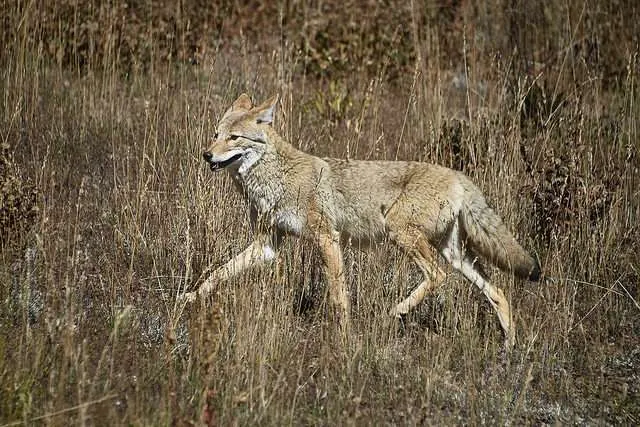
Kansas is home to 14 furbearer species that may be hunted and trapped during the furbearer season, including badger, bobcat, gray fox, least weasel, long-tailed weasel, mink, muskrat, opossum, raccoon, red fox, striped skunk, and swift fox. Beaver and otter may also be trapped. Although coyotes are not classified as furbearers, they may be hunted and trapped year-round.

This class will not certify participants for a furharvester education certificate, but information provided will be beneficial for those interested in completing a furharvester education class in the future. The Kansas Furharvester Education course can be completed online at ksoutdoors.com/Services/Education/Furharvester.

Source: Kansas Department of Wildlife, Parks and Tourism

Improvement of Riparian Areas and Water Quality Focus of New Project

0
The outcomes for the recently announced new $13 million USDA regional conservation partnership program will be to slow sedimentation into Kansas reservoir systems and to improve timber quality along these stream systems.

Kansas Forest Service and K-State are recipients of program funding.

MANHATTAN, Kan. — A new $13 million U.S. Department of Agriculture program designed to improve Kansas’ water quality, support wildlife habitat and enhance the environment was announced recently for Kansas State University and the Kansas Forest Service.

The program is part of $370 million in federal funding for the new USDA Regional Conservation Partnership Program (RCPP). In addition, these projects will leverage an estimated $400 million more in partner contributions—for a total of nearly $800 million—to improve the nation’s water quality, support wildlife habitat and enhance the environment.

The Kansas project will implement forestry best management practices on more acres and create a protection framework for remaining riparian forests in high-priority watersheds. The project will help sustain reservoir storage and wildlife habitat, improve the drinking water supply, and increase recreation opportunities.

In a USDA press release, agriculture secretary Tom Vilsack said these partnerships empower communities to set priorities and lead the way on conservation efforts important for their region.

“They also encourage private sector investment so we can make an impact that’s well beyond what the federal government could accomplish on its own. We’re giving private companies, local communities, and other non-government partners a way to invest in a new era in conservation that ultimately benefits us all. These efforts keep our land resilient and water clean, and promote economic growth in agriculture, construction, tourism, outdoor recreation, and other industries,” said Vilsack.

A total of 115 projects were awarded in all 50 states.
Putting Forestry on the Ground

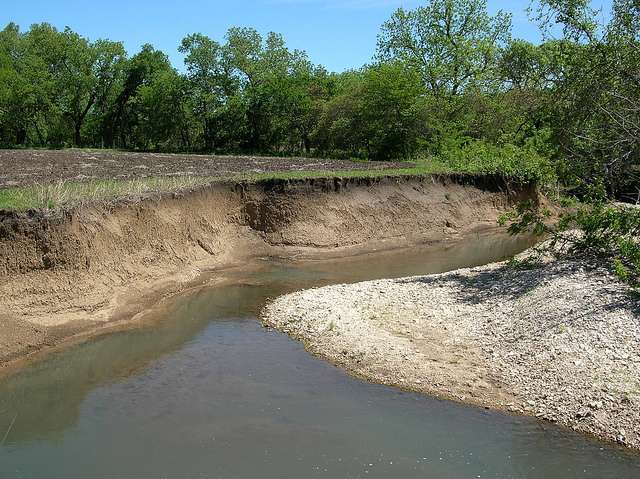
Mitch Lundeen, water quality forester with the Kansas Forest Service, said RCPP will include a significant tree planting component to help stabilize river banks, keep debris off the fields, and ultimately improve water quality by reducing sediment entry into streams.

“Over two-thirds of the Kansas water supplies are located in federal reservoirs. Unfortunately, loss of water capacity in these reservoirs due to sedimentation, will most certainly cause water shortages as demand continues to grow. It is a big deal to help reduce sediment from getting into our water supply,” Lundeen said.

Kansas State Forester Larry Biles said the program is designed to restore the riparian forest systems on the exposed stream banks in Kansas and to improve the riparian forests that currently exist.

“By improvement we will improve general species mix of the timber that is there and the quality of that through corrective pruning,” he said.

The second part of the program is the assessment of watersheds across the state.

“The assessments tell us first, where we have exposed stream banks; second, where existing timber is either too narrow to stabilize stream banks or the timber is of poor quality or species mix; and three, where we have a sufficient amount of high quality timber worthy of saving,” Biles said. “We either need to go in and establish timber because of exposed banks, have timber that needs improvement because of tree quality or species mix, or we need to sustain high quality timber.”

“Through that assessment, we will focus our efforts where the greatest water quality benefits can be obtained by either establishing stream-side forests or improving the health of existing woodlands,” he added.

The assessment will use aerial photography and GIS technology. “We will overlay that information with landowner information and through education, inform and contact these landowners about suggested improvements. We will write a plan for those interested,” Biles said.

The Kansas project will focus on the river systems that feed the high priority reservoirs, most of them are federal reservoirs, he said.

Expected outcomes of the project will be to slow sedimentation into Kansas reservoir systems and to improve timber quality along the stream systems.

“We have the opportunity to grow high quality hardwoods, but we need to get them established,” Biles said.

For more information, contact your local county extension offices, Natural Resource Conservation Service, Farm Service Agency or conservation district offices. More information is online at the Kansas Forest Service website.

One hundred special hunts offered for spring turkey

0

Interested hunters have until Feb. 23 to apply

PRATT – If you’re looking to make some memories this spring turkey season but are unsure where to go for a quality hunt, explore the Kansas Department of Wildlife, Parks and Tourism’s Special Hunts Program. Special Hunts provide access to public and private lands that are not open to unrestricted public access. One hundred special hunts for spring turkey will be offered this year and applications are being accepted now through 9 a.m. on Feb. 23. To obtain detailed information on all available hunts, and to download an application, visit: ksoutdoors.com/Hunting/Special-Hunts-Information.

Out of the 100 hunts available, 33 are open hunts (open to all), 39 are mentor hunts (both beginner and mentor may hunt), and 28 are youth hunts (youth hunt only). These hunts will occur on a variety of private lands, wildlife areas, city and county properties, and one national wildlife refuge. There is no fee to participate and application is open to residents and non-residents.

Successful applicants will be notified shortly after the random drawing has occurred. Hunters must still purchase all licenses and permits required by law.

For information on other spring turkey hunting opportunities, visit ksoutdoors.com and click “Hunting” and “Turkey Information.”

Source: Kansas Department of Wildlife, Parks and Tourism

Soybean researchers: Climate change suppressing U.S. yields

0
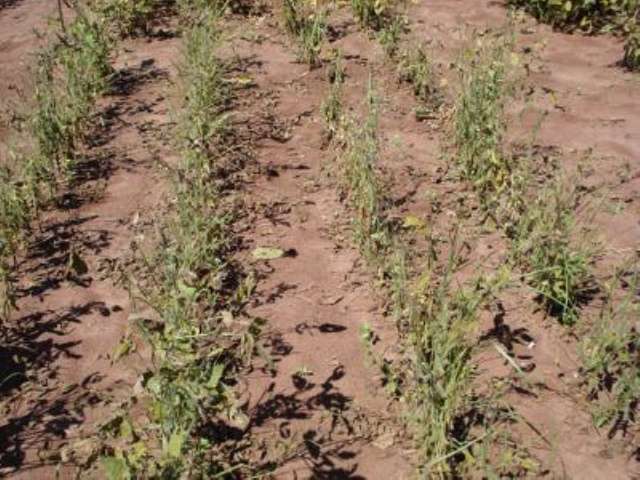
Soybeans with Rust
Soybean plants infected with soybean rust in soybean experimental plot. (IITA)
Climate change cost American soybean farmers an estimated $11 billion in unrealized potential yield in the past two decades, a newly published study says.

The study’s researchers included James Specht, emeritus professor of agronomy and horticulture at the University of Nebraska-Lincoln. Specht assisted lead researchers Spyridon Mourtzinis and Shawn Conley of the University of Wisconsin in developing and reviewing the study.

U.S. farmers have increased soybean yields in the past 20 years by about 1/3 of a bushel per acre per year, Specht said. Those gains, of about 0.8 percent a year, resulted from adoption of higher-yielding soybean varieties and improved farming methods.

But the gains would have been 30 percent higher if it weren’t for the higher temperatures and changing rainfall patterns resulting from climate change, the author-researchers concluded in their paper, which was published in Nature Plants. That works out to $11 billion in lost opportunity cost, they said.

“We’re doing OK, but we could have done a heck of a lot better without climate change,” Specht said.

The United States experienced a warming trend during the May-September growing season during the study period of 1994 to 2003. Rainfall patterns have changed as well, increasing in spring and fall but declining in June, July and August.

Mourtzinis and Conley compared soybean yields in 12 soybean-producing states to month-by-month temperature and rainfall changes. They found soybean yields declined by about 4.3 percent for every 1 degree F rise in average growing season temperatures.

They also found that changing rainfall patterns cut into soybean yields. They dropped when May, July and September were wetter than normal. They also dropped if June and August were drier.

The researchers appear to be the first to look at climate change’s state-by-state impact on agriculture during each month of the growing season. Previous studies have calculated global temperature changes and yield impacts by country.

“We were able to leverage decades of measured — not estimated — yield data from across the country, to account for agronomic and genetic yield advances and to isolate the impact of climate change on soybean yield and yield gain,” Conley said.

Successfully adapting to climate change depends upon where and when the crop is grown, Specht and the other researchers said. They found that some states saw improved soybean yields as a result of climate change, though not enough to offset the reduced yields seen in bigger producing states.

Specht said soybean production has recently increased in northern states and Canada because of warmer temperatures and changing rainfall patterns.

“This shift is a reflection of the impact of global warming,” he said. “Due to warmer springs and falls that allow for longer growing seasons in the Dakotas and southern Canada, soybeans now are being grown in places where in the past they could not be grown.”

The study’s authors estimated, for example, that Minnesota farmers saw an economic gain of about $1.7 billion over the past 20 years because of increased soybean yields resulting from climate change. However, Missouri farmers experienced smaller yields, reflecting a $5 billion opportunity cost.

“Our data highlight the importance of developing location-specific adaptation strategies for climate change based on early-, mid- and late-growing season climate trends,” the researchers concluded.

States studied were North Dakota, South Dakota, Minnesota, Wisconsin, Iowa, Illinois, Indiana, Ohio, Missouri, Kentucky, Arkansas and Mississippi.

The study was limited to non-irrigated soybean yields. Though Specht assisted with the study, Nebraska data was not included because a significant proportion of Nebraska’s crop is irrigated and the non-irrigated production data was not readily available.

Writer: Leslie Reed, University Communications

Photographing the Landscape

0

By: Eric Berg, Nebraska Forest Service

One of the wonderful things about taking photographs is that it forces us to stop, look at the details

and hopefully pay more attention to the world around us. Typically we tend to rush from one place to

another without even noticing the details of our ever-changing landscapes. Taking photos demands time

and intentionality, it causes us to slow down, gets us outdoors and helps us experience and truly see and

capture the beauty and detail of our landscapes.

With digital cameras, the process is far easier and less costly than it used to be. We can take hundreds

of photos at one time, with little to no expense, and revisit them later to select the best ones. So the

process doesn’t require the expense and purposeful, time-consuming effort it did when darkrooms and

costly film were part of the process. While technological advances have limited the need for careful

intentionality, they have opened up a broad range of opportunities for even the most amateur of

photographers.

What makes a good photo? That question can be as subjective as our personal preferences. But the

best photos elicit strong emotional reactions—sadness, surprise, anger or pleasure. Often they contain an

element of mystery, with the photo framed in a way that hints at something but doesn’t give the whole

story. They leave the viewer wanting more or give the viewer just enough information to fill in the gaps

with their own life experiences.

In terms of placement and focus, the old rule of thirds from photography courses still applies. The

most interesting elements in a photo tend to be the most compelling when they are slightly off-center and

not in the absolute center of the photo.

Good lighting is essential—whether it’s from the back, from the front or captured during that period

of “sweet light” which naturally occurs right before or after sunrise or sundown.

Landscapes are constantly changing and one of the advantages of taking photos is to make us more

aware of the amazing amount of change that occurs from one month or week or even moment to another.

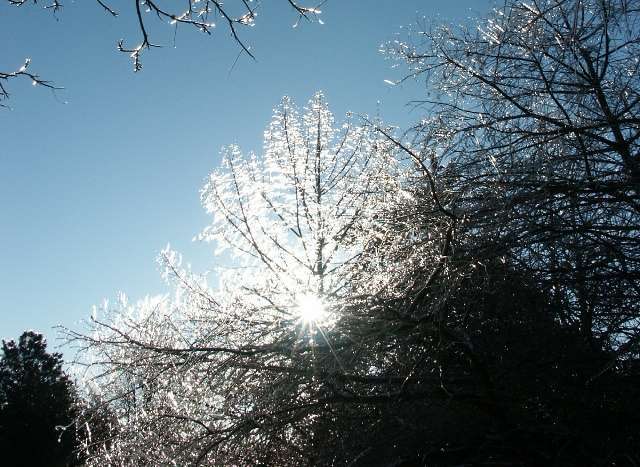
Lighting, temperature, moisture and the resulting frost, dew and color intensity can be significantly

different from one hour of the day to another. But these small changes can be visually compelling and

will reward anyone patient enough to notice and capture their impact.

It may not be gardening weather but, armed with a camera and a little bit of time, the rewards for

photographers can result in a harvest just as tangible.