Monday, January 26, 2026
Home Blog Page 4558

New fish attractors for Kansas lakes

0
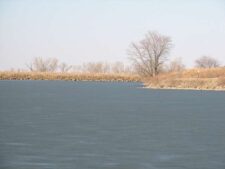
McPherson State fishing lake by: Steven Rodriguez

Synthetic structures are forty-eight cubic feet and can last more than 10 years

PRATT ­– Kansas Department of Wildlife, Parks and Tourism (KDWPT) fisheries staff will be launching a new program to increase the amount of fish-attracting structures in Kansas lakes. Traditionally, biologists have used cut trees to create brush piles to attract and hold fish, providing angling hotspots. However, attaching concrete blocks to trees can be labor intensive and time consuming and the trees don’t last very long once submerged in the water. The new specially-designed PVC structures are in the shape of a cubes three feet tall, four feet wide, and four feet deep. Cost-effective, easy to place and proven in other states, the new structures not only last more than three times longer than natural brush piles, but they also have been shown to hold as many fish as the natural counterpart without affecting water quality. Anglers can expect to see the implementation of these structures as soon as early February.

“Our goal is to produce 150-300 of these PVC cubes each year,” said Bryan Sowards, KDWPT fisheries programs specialist. “For 2015, structures will go in Milford, Wilson, Melvern, El Dorado, and Cedar Bluff, as well as a variety of other community and state fishing.” Sowards added the structures will immediately attract fish for angler harvest, but the overall goal is to accumulate enough structures to improve fish populations.

Known as “Georgia Cubes,” the structures were originally designed by the Georgia Department of Natural Resources (DNR). Stacking more than 50 feet of corrugated pipe on the PVC frame, Georgia DNR staff have been able to create optimum surface area to attract fish while still maintaining an open design. They have also found that the structures quickly accumulate periphyton, a complex mix of algae, fungi, and bacteria, which further attracts insects and fish – an ideal result for both fisheries staff and anglers.

Thanks to the involvement and commitment of Kansas B.A.S.S. Nation (KBN) clubs, KDWPT staff will have assistance in constructing and placing these cubes in select Kansas waters.

“These cubes will not only provide habitat for adult fish of all species, but also provide critical nursery habitat.” said Jeff Nolte, Conservation Director for KBN. “We at KBN are very excited and encouraged by the fisheries staff’s commitment to improving Kansas fisheries in general. We have had a great relationship with KDWPT in the past and this cooperative effort bodes well for a continued relationship that will benefit all fisheries, not just bass.”

Source: Kansas Department of Wildlife, Parks and Tourism

Roger’s View From The Hills: Oh That Early Spring Day

0
 “SUNSHINE ON MY SHOULDER
MAKES ME HAPPY”.
                                              John Denver
     There is such a nice thing that happens now and then in the late winter that really makes me happy.  It is that odd day or two that the cold, blowy, cloudy, winter days seem to be getting longer as I get longer in the tooth.  With the blood sugar that is always giving me problems I seem to be cold all the time.  Setting on the porch on summer days are a pure pleasure now instead of hibernating under the air conditioner of earlier years.
       Well this week I was able to take the dog out on the porch and I have gotten the same pleasure of a warm sunbeam that she does.  It is a great feeling to thaw out clear to the bones including my toes.
      Now part of the pure pleasure besides the sunshine is the TV turned off and the continual drivel of News is off and the quiet is so nice. I have the CD player on with silly stories by Andy Nelson.  As I am writing this the sun is starting to warm up one last time for now.  And I am handed a 21st century staple gun that needs loading.  After an hour of ruining my attitude it goes in the trash and the perfected design from the 1950’s is dug out and put back into service.
      Oh I can feel that sunshine now.  Soak up a batch of that vitamin D and snooze with the dog at my feet.  The Blizzard from Hell did not happen back east and the climate change people are trying to figure out how the fact that they can’t predict 12 hours that they can convince us that they can predict 50 years ahead.
      Sunshine on my shoulder makes me happy!!!!!

Rural Poll: Self-employment becoming more common in rural Nebraska

0

Lincoln, Neb., Jan. 29, 2015 — Many rural Nebraska households utilize self-employment and multiple job-holding to piece together their incomes, according to the Nebraska Rural Poll.

The 19th annual University of Nebraska-Lincoln poll was sent to 6,813 households in 86 Nebraska counties last spring. Results are based on 1,943 responses.

Data from the Bureau of Economic Analysis in 2012 show self-employment to be the fastest growing employment segment in Nebraska’s non-metropolitan counties. While the most recent recession may not have actually led to overall job losses in Nebraska, it may have accelerated the trend toward greater self-employment, especially in rural portions of the state, said Randy Cantrell, rural sociologist with the Nebraska Rural Futures Institute.

The 2014 poll backs up those findings in a series of questions about employment. The poll found that 75 percent of rural Nebraska households had at least one full-time job. Of the rural households with at least one person working, 43 percent derived part of their income from self-employment last year.

Self-employment is especially prevalent in or near smaller communities. Fifty-eight percent of respondents in or near towns with populations under 500 have at least one person in their household who is self-employed, compared to 31 percent of those in or near communities of 10,000 or more. Sixty-one percent of the self-employed households in or near the smallest communities have a farm or ranch, 48 percent have a farm-related business, 41 percent have a nonfarm business and 11 percent provide a contract service to a company.

“The increased prevalence of self-employment in more rural areas of Nebraska confirms the smaller role of large employers and the increased importance of small businesses and sole proprietorships in a diversified, entrepreneurial rural economy,” said Brad Lubben, assistant professor of agricultural economics.

Almost three in 10 self-employed households get at least 76 percent of their income from self-employment. Fifty-four percent get less than half their total household income from self-employment.

“Most of the self-employed households are relying on other sources of income. Self-employment is only one piece of their income,” said Cheryl Burkhart-Kriesel, associate professor and Nebraska Extension community vitality specialist.

This is demonstrated in the number of rural Nebraska households with multiple job-holding (having more jobs than adult members in their household). Just more than four in 10 employed rural Nebraska households have multiple job-holding by members of the household.

Multiple job-holding is also more common in smaller communities. Fifty-one percent of people living in or near towns with populations ranging from 500 to 999 have multiple job-holding in their household, compared to 37 percent of those living in or near cities with more than 10,000.

Other findings:


> 18 percent of employed rural Nebraska households have at least one member who telecommutes for at least one job.

> 28 percent of employed households report at least one member is overqualified for their job (has settled for a job they are overqualified for because nothing better is available).

> At least nine in 10 rural Nebraskans rate income for basic needs and being able to do work they enjoy as important or very important reasons in their decision to be employed.


The Rural Poll is the largest annual poll of rural Nebraskans’ perceptions on quality of life and policy issues. This year’s response rate was about 29 percent. The margin of error is plus or minus 2 percent. Complete results are available online at http://ruralpoll.unl.edu/report14.

With its 19-year history, the poll has a collection of data about rural trends and perceptions that is unmatched in the country, said Becky Vogt, survey research manager has worked on the Rural Poll since its second year.

Although the Grand Island area — Hall, Hamilton, Howard and Merrick counties — was designated a metropolitan area by the U.S. Census Bureau in 2013, the Rural Poll continues to include those counties in its sample. Dixon and Dakota counties were added to the poll this year.

UNL’s Department of Agricultural Economics conducts the poll in cooperation with the Nebraska Rural Futures Institute with funding from UNL Extension and the Agricultural Research Division in the Institute of Agriculture and Natural Resources.

Kansas Farmer Veteran Coalition Formation Exploration Forum to be Held February 10

0
kfu

Exploration forum to determine and hopefully create the groundwork for a Kansas chapter of the Farmer Veteran Coalition


MCPHERSON, KS Jan. 29, 2015 – On Tuesday, Feb 10th at 3:00 p.m. the Kansas Farmers Union, the Kansas Farm Bureau, and the Farm Credit Associations of Kansas will host a forum to explore the possibility and interest of forming a Kansas chapter of the National Farmer Veteran Coalition.


We feel that there is a need and an opportunity for veterans interested in entering agriculture to form a Kansas chapter and we have set up this forum to help jump-start the process.


Any entities interested in becoming a part of the Kansas Farmer Veteran Coalition chapter are encouraged to participate. Veterans, organizations, anyone who wants to become involved are welcome.


It is expected there will be a representative from the National Farmer Veteran Coalition in attendance to help start the process.


The meeting will be held in Manhattan Kansas at the Frontier Farm Credit building at 2009 Vanesta Place, Manhattan KS 66503. View on Google Maps.


Please RSVP to Donn Teske.

Broiler Hatchery

0
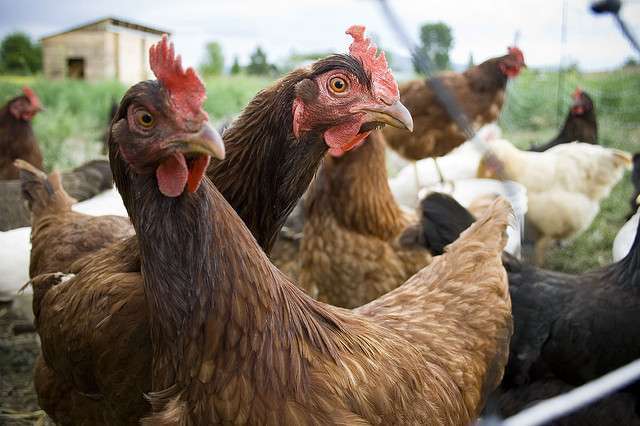
Photo credit: Katie Brady

ISSN: 1949-1840

Released January 28, 2015, by the National Agricultural Statistics Service
(NASS), Agricultural Statistics Board, United States Department of
Agriculture (USDA).

Broiler-Type Eggs Set in the United States Up 2 Percent

Hatcheries in the United States weekly program set 214 million eggs in
incubators during the week ending January 24, 2015, up 2 percent from a year
ago. Hatcheries in the 19 State weekly program set 206 million eggs in
incubators during the week ending January 24, 2015, up 2 percent from the
year earlier. Average hatchability for chicks hatched during the week in the
United States was 83 percent. Average hatchability is calculated by dividing
chicks hatched during the week by eggs set three weeks earlier.

Broiler-Type Chicks Placed in the United States Up 3 Percent

Broiler growers in the United States weekly program placed 175 million
chicks for meat production during the week ending January 24, 2015, up 3
percent from a year ago. Broiler growers in the 19 State weekly program
placed
169 million chicks for meat production during the week ending January 24,
2015, up 3 percent from the year earlier. Cumulative placements from January
10, 2015 through January 24, 2015 for the United States were 527 million.
Cumulative placements were up 3 percent from the same period a year earlier.

Broiler-Type Eggs Set – 19 Selected States and United States: 2014 and 2015
—————————————————————————-
————————————–
:                                    Week
ending
State
:—————————–———————————————-
——–
:December 20, :December 27, : January 3,  :
January 10, : January 17, : January 24,
:    2014     :    2014     :    2015     :
2015     :    2015     :    2015
—————————————————————————-
————————————–
:                                    1,000
eggs
:

Alabama ………………….:    28,214        27,757        28,380
28,668        29,141        28,687
Arkansas …………………:    21,446        21,989        21,765
21,283        21,716        21,176
Delaware …………………:     4,778         4,736         4,728
4,777         4,760         4,773
Florida ………………….:     1,225         1,224         1,223
1,225         1,223         1,221
Georgia ………………….:    34,884        34,472        34,493
34,306        34,515        34,183
Kentucky …………………:     7,961         7,942         8,014
7,964         7,929         7,851
Louisiana ………………..:     3,622         3,848         3,848
3,848         3,817         3,727
Maryland …………………:     7,907         7,924         7,874
7,763         7,739         7,695
Mississippi ………………:    17,921        17,828        17,632
17,253        17,416        17,993
Missouri …………………:     8,321         8,114         8,143
8,251         8,268         8,256
:

North Carolina ……………:    21,100        20,687        20,965
20,844        20,878        20,569
Oklahoma …………………:     6,273         6,189         6,270
6,613         6,260         6,611
Pennsylvania ……………..:     4,347         4,370         4,330
4,382         4,395         4,377
South Carolina ……………:     5,928         5,574         5,058
5,303         5,148         5,437
Texas ……………………:    14,887        15,036        14,967
14,872        14,990        15,089
Virginia …………………:     6,606         6,455         6,634
6,590         6,590         6,407
California, Tennessee,        :

and West Virginia ………..:    11,755        11,801        11,741
11,587        11,665        11,805
:

19 State total ……………:   207,175       205,946       206,065
205,529       206,450       205,857
Percent of previous year …..:       103           102           103
101           103           102
:

Other States ……………..:     8,319         8,223         8,156
8,176         7,806         7,793
:

United States …………….:   215,494       214,169       214,221
213,705       214,256       213,650
Percent of previous year …..:       103           102           103
102           103           102
—————————————————————————-
————————————–

Broiler-Type Chicks Placed – 19 Selected States and United States: 2014 and
2015
—————————————————————————-
————————————–
:                                    Week
ending
State
:—————————–———————————————-
——–
:December 20, :December 27, : January 3,  :
January 10, : January 17, : January 24,
:    2014     :    2014     :    2015     :
2015     :    2015     :    2015
—————————————————————————-
————————————–
:                                   1,000
chicks
:

Alabama ………………….:    21,776        21,925        22,413
21,724        21,189        21,962
Arkansas …………………:    19,375        19,483        19,317
19,179        19,009        18,481
Delaware …………………:     5,102         4,775         5,770
5,567         5,201         5,610
Florida ………………….:     1,427         1,328         1,342
1,340         1,355         1,227
Georgia ………………….:    27,336        26,889        27,027
27,168        26,610        27,378
Kentucky …………………:     6,146         6,135         6,012
6,455         6,280         6,667
Louisiana ………………..:     3,337         3,307         3,427
3,230         3,414         3,426
Maryland …………………:     6,061         6,496         5,931
5,634         5,711         5,857
Mississippi ………………:    15,052        14,415        14,985
14,947        14,907        14,577
Missouri …………………:     6,402         5,927         6,551
5,998         5,266         6,173
:

North Carolina ……………:    17,082        16,540        16,775
16,980        16,249        16,223
Oklahoma …………………:     4,146         4,980         4,425
4,175         5,493         4,418
Pennsylvania ……………..:     3,930         4,064         3,755
3,883         3,989         3,824
South Carolina ……………:     4,737         5,124         4,582
5,230         5,023         5,143
Texas ……………………:    12,278        11,329        11,759
12,286        12,160        12,508
Virginia …………………:     5,398         5,069         5,216
5,598         5,303         5,172
California, Tennessee,        :

and West Virginia ………..:    11,589        10,578        10,763
10,676        12,009        10,470
:

19 State total ……………:   171,174       168,364       170,050
170,070       169,168       169,116
Percent of previous year …..:       103           102           103
103           102           103
:

Other States ……………..:     6,000         6,348         6,304
6,372         5,975         5,939
:

United States …………….:   177,174       174,712       176,354
176,442       175,143       175,055
Percent of previous year …..:       103           102           103
103           102           103
—————————————————————————-
————————————–

Statistical Methodology

Survey Procedures: Data for broiler hatchery estimates are collected weekly
from all broiler-type hatcheries that hatch at least one million chicks a
year. Individual NASS field offices maintain a list of all known hatcheries
and update their lists on a continual basis. All hatcheries that meet the
minimum size criteria are given adequate time to respond to the weekly
survey. Those that do not respond are contacted by telephone. The weekly
United States total for chicks placed includes states receiving greater than
500,000 chicks annually for grow-out.

Estimating Procedures: All data are analyzed for unusual values. Data from
each operation are compared to their own past operating profile and to
trends from similar operations. Data for missing operations are estimated
based on similar operations or historical data. NASS field offices prepare
these estimates by using a combination of survey indications and historic
trends.
Individual State estimates are reviewed by the Agricultural Statistics Board
for reasonableness. Individual hatchery data are summed to State, 19 State
total, Other States, and the United States.

Revision Policy: Revisions are generally the result of late or corrected
data. Revisions made to the previous five-week’s data during the current
week are published in this report. Final estimates are published in the
annual Hatchery Production Summary released in April.

Reliability: Estimates are subject to errors such as omission, duplication,
and mistakes in reporting, recording, and processing the data. While these
errors cannot be measured directly, they are minimized through strict
quality controls in the data collection process and a careful review of all
reported data for consistency and reasonableness.

Information Contacts

Listed below are the commodity specialists in the Livestock Branch of the
National Agricultural Statistics Service to contact for additional
information. E-mail inquiries may be sent to [email protected]

Dan Kerestes, Chief, Livestock Branch ……………………………….
(202) 720-3570

Bruce Boess, Head, Poultry and Specialty Commodities Section …………..
(202) 720-4447
Alissa Cowell-Mytar – Cold Storage ……………………………….
(202) 720-4751
Heidi Gleich – Broiler Hatchery, Chicken Hatchery ………………….
(202) 720-0585
Michael Klamm – Poultry Slaughter, Turkey Hatchery, Turkeys Raised …..
(202) 690-3237
Tom Kruchten – Census of Aquaculture ……………………………..
(202) 690-4870
Kim Linonis – Layers, Eggs ………………………………………
(202) 690-8632
Sammy Neal – Catfish Production, Egg Products, Mink, Trout Production ..
(202) 720-3244
Joshua O’Rear – Honey …………………………………………..
(202) 690-3676

Access to NASS Reports

For your convenience, you may access NASS reports and products the following
ways:

All reports are available electronically, at no cost, on the NASS
web
site: http://www.nass.usda.gov

Both national and state specific reports are available via a free e-
mail subscription. To set-up this free subscription, visit
http://www.nass.usda.gov and in the “Follow NASS” box under “Receive reports
by Email,” click on “National” or “State” to select the reports you would
like to receive.

For more information on NASS surveys and reports, call the NASS Agricultural
Statistics Hotline at (800) 727-9540, 7:30 a.m. to 4:00 p.m. ET, or e-mail:
[email protected].

The U.S. Department of Agriculture (USDA) prohibits discrimination against
its customers, employees, and applicants for employment on the basis of
race, color, national origin, age, disability, sex, gender identity,
religion, reprisal, and where applicable, political beliefs, marital status,
familial or parental status, sexual orientation, or all or part of an
individual’s income is derived from any public assistance program, or
protected genetic information in employment or in any program or activity
conducted or funded by the Department. (Not all prohibited bases will apply
to all programs and/or employment activities.) If you wish to file a Civil
Rights program complaint of discrimination, complete the USDA Program
Discrimination Complaint Form (PDF), found online at
http://www.ascr.usda.gov/complaint_filing_cust.html, or at any USDA office,
or call (866) 632-9992 to request the form. You may also write a letter
containing all of the information requested in the form. Send your completed
complaint form or letter to us by mail at U.S. Department of Agriculture,
Director, Office of Adjudication, 1400 Independence Avenue, S.W.,
Washington, D.C. 20250-9410, by fax (202) 690-7442 or email at
[email protected].