Sunday, January 25, 2026
Home Blog Page 4583

The lowdown on loans

0
Photo courtesy of Getty Images

(Family Features) Borrowing money can help you manage your way out of a tight spot, but doing so without knowing all the facts can make your finances even tighter in the long run.


“When faced with a financial emergency, most people don’t think through how borrowing money might affect them down the line,” said Susie Irvine, president and CEO, American Financial Services Association Education Foundation. “With so many options available, it’s relatively easy to get a loan, but the impact on your credit and what it actually costs you over time can vary a great deal.”


Two common forms of small-dollar borrowing are traditional installment loans (TIL) and payday loans. Understanding how each loan works can help you make the right decision for your financial situation.


Traditional installment loans are used for various purposes, such as meeting family emergencies, purchasing home furnishings or consolidating other debts. These loans are generally short-term. Most traditional installment loans range from $500 to $3,500, with the borrower paying equal installments at regular intervals over a determined number of weeks, months or years. A typical monthly payment is around $125. With regular, manageable payments of principal and interest, the borrower has a clear roadmap out of debt.


Payday loans are repaid in a single balloon payment at the end of the loan period. This payment is usually due in less than 30 days, most commonly 14 days. Payday lenders do not assess ability to repay, relying instead on a postdated check or on similar access to a borrower’s bank account as their assurance that the loan will be repaid. Although payday loans may appear to provide a quick and easy solution, a traditional installment loan is a more financially sound choice for most people.


For more resources to help you better manage your money, visit www.afsaef.org.


Is an Installment Loan Right for Me?


When deciding whether to obtain an installment loan, consider the benefits and responsibilities. According to the American Financial Services Association Education Foundation, an installment loan:


  • Obligates future income. You’ll be required to set aside a certain amount of future income for loan payments.
  • Requires discipline. Borrowing wisely means not borrowing more than you can handle. Don’t let the thrill of buying or having a sum of cash obligate you to more than you can afford.
  • Makes it possible to meet unexpected expenses. The ability to borrow and make affordable payments can be helpful if an emergency arises that requires extra money.
  • Allows you to obtain products and services now and pay for them later. A loan can provide an opportunity to purchase bigger-ticket items and use them right away.


Keys to Credit Success


The American Financial Services Association Education Foundation offers this advice to help ensure that your interests are protected when you borrow money:


Budget your money. Provide your monthly spending plan when you meet with creditors. It will help them make a responsible decision about the amount of credit you can afford.


Shop, shop, shop. Compare the costs of credit from different creditors. Shop for credit like you would shop for anything else.


Beware of “now or never” offers. If it’s a good deal, it will probably still be there after you’ve had time to think about it. Don’t be pressured into making a quick decision.


Ask questions. Don’t sign on the line until all your questions have been answered.


Read the contract. Don’t sign a contract that you don’t understand or has any blanks. A signed contract with blanks can be completed as anyone wishes and it will be legally binding.


Keep your contract in a safe place. It’s important to keep all paperwork relating to your credit obligations. If questions come up later, you’ll have your agreement in writing.


Make your payments on time and in full. This is one of the best ways to build a good credit history. Repeated late payments will trigger late payment fees, and hurt your credit report, which will make it difficult to obtain future credit.


Additional products are not required to get a consumer loan. Optional products that may be offered for purchase with your loan include motor club membership, term insurance or warranties.


Terms to know


When you take out a loan, it’s important to understand the complete cost of repaying the amount you’ve borrowed. It’s a good idea to compare offers from multiple creditors, and understanding these terms will help you calculate the real cost of borrowing to get the best deal. Here is a list of common terms from the American Financial Services Association Education Foundation.


  • Amount Financed: The total dollar amount of the credit that is provided to you.
  • Annual Percentage Rate or “APR”: A measure of the cost of credit expressed as a yearly rate.
  • Credit Insurance: Optional insurance that is designed to repay the debt if the borrower dies or becomes disabled.
  • Finance Charge: The dollar amount you pay to use credit.
  • Fixed Rate Financing: The interest rate and the payment remains the same over the life of the loan. Equal monthly payments of principal and interest are made until the debt is paid in full.
  • Length of Payment: The total number of months you have to pay the credit obligation.
  • Late Payment Fee: A fee that is charged when payment is made after its due date.
  • Monthly Payment Amount: The dollar amount due each month to repay the credit agreement.


Source: ASFA

Newer fluorescent lights available for indoor gardeners

0

Many gardeners use fluorescent lights to start young vegetable and
flower plants during the spring or to grow certain houseplants all year
long.
Traditionally, we have used fixtures with T-12 lamps suspended a
few inches above the tops of the plants. However, T-12 lamps are fading
away due to newer lamps that are a better choice for indoor gardens.
These are known as T-8 and T-5 lamps. The number after the “T” refers to
the diameter of the lamp in eighths of an inch. Therefore, a T-12 lamp
is 12/8 or 1.5 inches in diameter and are what most people are familiar
with. A T-8 is 8/8 or 1 inch in diameter, and a T-5 is 5/8 of an inch in
diameter.
So, does a smaller diameter mean less light? Not at all. In fact,
the T-5 can be the brightest of the three.  Another advantage for these
newer lamps is they use less electricity per lumen. Our traditional
48-inch T-12 is rated at 40 watts. However, there are newer styles of
T-12’s that are 34 watts.  The T-8 is rated at 32 watts and the T-5 at
28 watts.

This sounds too good to be true. Are there drawbacks? Maybe so or maybe
not.  First is cost if you have to replace T-12 fixtures to convert to a
T-8 system.  However, newer fixtures may be able to handle either T-12’s
or T-8’s.  Therefore, if you purchased fluorescent fixtures in the last
few years, check to see if they are rated for T-8’s before replacing
them.  Note that lamp costs are comparable between T-12’s and T-8’s.
The T-5 lamps are significantly more expensive and cost over twice as
much as either a T-12 or T-8.
The question becomes, is it worth it? If you have a T-12 fixture
that is rated for T-12’s only and are satisfied with your results, then
maybe not. However, if you are investing in new fixtures or have
fixtures that can use either T-12’s or T-8’s, then go with the T-8’s.
They will use less energy, last longer and provide more light. b


By:  Ward Upham

Kansas Profile – Now That’s Rural – Bret Chilcott – AgEagle – Part 1

0
kksu
K-State Research and Extension, Candice Shoemaker

By Ron Wilson, director of the Huck Boyd National Institute for Rural Development at Kansas State University.
Have you ever wanted a birds-eye view? Wouldn’t it be great to have a viewpoint from up high, to enable us to see over a fence or in the middle of a field? Today we’ll meet an amazing company which is using robotic aircraft to provide that aerial view. The results are helping this remarkable company to grow in rural Kansas.

Bret Chilcott is the owner and founder of AgEagle LLC, a pioneering company in robotic aircraft.  Bret grew up in rural Kansas, on a Cowley County farm near Udall, population 786 people. Now, that’s rural.

“Growing up, I got paid by my dad and our neighbors for working on the farm,” Bret said. “But I blew all my money on flying lessons and model airplanes.” Maybe that was a sign of things to come.

Bret went to Cowley College and then to a career in the business world in Wisconsin. Eventually he wanted to get back to Kansas, so he came to Wichita and bought a hobby shop which sold and serviced radio controlled devices. He later went to work for Cessna and was then recruited to Cobalt Boats in Neodesha where he worked for 12 years.

While doing engineering at Cobalt Boats, he worked with composite materials. Then he started his own company in Neodesha, manufacturing composite parts for trucks and wind turbines.

One day one of his employees was reading the High Plains Journal. The employee saw an article about the work that Kansas State University was doing in unmanned aviation systems and suggested that Bret call K-State to see if the project needed composite parts. Bret did so, and the more he learned about this growing industry, the more excited he became.

He worked with K-State researcher Deon van der Merwe and others and came to believe that such technology could be commercialized for agricultural purposes. Based on the university science, he started to develop commercial applications of these ideas.

“We got so enthused about all this that we pivoted the entire company,” Bret said. He turned the company’s strategic focus toward the production and sale of robotic aircraft for agriculture.

“This is neither a drone, which is usually used for military applications and doesn’t come back – kind of like a drone bee – nor a UAV (unmanned aerial vehicle) which may go beyond the line of sight,” Bret said. “We produce robotic aircraft which always stay in line of sight.”

Bret built a prototype flying vehicle. “It was ugly,” he said with a smile. “We used gorilla tape and gorilla glue to hold it together.” But after he demonstrated how the aircraft could fly over fields and collect data, people started placing orders.

Bret’s new company was named AgEagle LLC. The company’s typical product consists of a flying wing which carries a near-infrared camera, a software system to handle the data, and a launcher to propel the robotic aircraft off the ground.

The launcher is a form of catapult which uses latex tubing. Once the robotic aircraft is loaded, a push of the button will launch it. “There are fancier launching systems out there, but we wanted something simple and functional,” Bret said.

The flying wing is battery-powered and is constructed of fiberglass, Kevlar, and carbon fiber materials. It is tailless, has a 56-inch wingspan, flies up to 40 miles per hour, and can cover 300 to 400 acres in 30 minutes. It typically flies up to 400 feet in the air.

The aircraft will take off at the push of a button, scan the field and land automatically. “No piloting skills are required,” Bret said. The camera captures infrared light from growing crops to indicate areas of stress, so producers can apply pest controls or nutrients precisely where they are needed.

For more information, go to www.ageagle.com.

Have you ever wanted a birds-eye view? AgEagle is making it possible. We salute Bret Chilcott of AgEagle for making a difference with innovative technology which is flying high.

And there’s more. AgEagle is benefiting farmers and the environment around the world. We’ll learn about that next week.

Broiler hatchery

0
Photo credit: Katie Brady

ISSN: 1949-1840

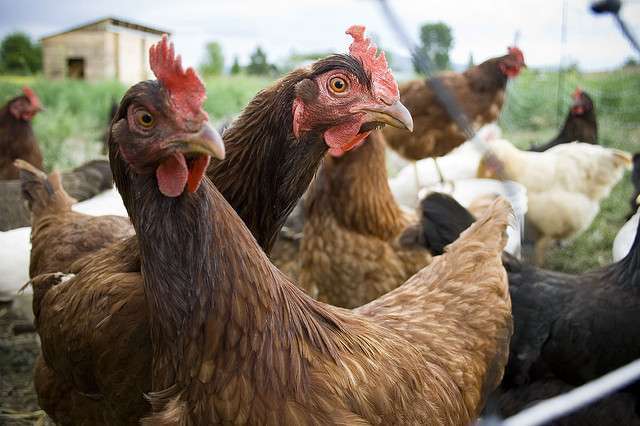
Released January 14, 2015, by the National Agricultural Statistics Service (NASS), Agricultural Statistics Board, United States Department of Agriculture (USDA). Broiler-Type Eggs Set in the United States Up 2 Percent Hatcheries in the United States weekly program set 214 million eggs in incubators during the week ending January 10, 2015, up 2 percent from a year ago. Hatcheries in the 19 State weekly program set 206 million eggs in incubators during the week ending January 10, 2015, up 2 percent from the year earlier. Average hatchability for chicks hatched during the week in the United States was 84 percent. Average hatchability is calculated by dividing chicks hatched during the week by eggs set three weeks earlier. Broiler-Type Chicks Placed in the United States Up 3 Percent Broiler growers in the United States weekly program placed 177 million chicks for meat production during the week ending January 10, 2015, up 3 percent from a year ago. Broiler growers in the 19 State weekly program placed 170 million chicks for meat production during the week ending January 10, 2015, up 3 percent from the year earlier. Broiler-Type Eggs Set – 19 Selected States and United States: 2014 and 2015 —————————————————————————- ————————————– : Week ending State :————————————————————————— ——– : December 6, :December 13, :December 20, :December 27, : January 3, : January 10, : 2014 : 2014 : 2014 : 2014 : 2015 : 2015 —————————————————————————- ————————————– : 1,000 eggs : Alabama ………………….: 28,570 28,714 28,214 27,757 28,380 28,668 Arkansas …………………: 22,102 21,961 21,446 21,989 21,765 21,283 Delaware …………………: 4,778 4,780 4,778 4,736 4,728 4,777 Florida ………………….: 1,223 1,223 1,225 1,224 1,223 1,225 Georgia ………………….: 34,283 34,278 34,884 34,472 34,493 34,334 Kentucky …………………: 7,877 7,962 7,961 7,942 7,942 7,933 Louisiana ………………..: 3,710 3,834 3,622 3,848 3,848 3,848 Maryland …………………: 7,900 7,929 7,907 7,924 7,874 7,763 Mississippi ………………: 17,395 17,952 17,921 17,828 17,632 17,253 Missouri …………………: 8,329 8,356 8,321 8,114 8,143 8,251 : North Carolina ……………: 20,840 20,982 21,105 20,702 20,946 20,937 Oklahoma …………………: 6,347 6,679 6,273 6,189 6,270 6,613 Pennsylvania ……………..: 4,601 4,477 4,299 4,324 4,282 4,430 South Carolina ……………: 5,242 5,177 5,928 5,574 5,147 5,293 Texas ……………………: 14,100 14,610 14,887 15,036 14,967 14,862 Virginia …………………: 6,120 6,507 6,606 6,455 6,634 6,590 California, Tennessee, : and West Virginia ………..: 11,685 11,316 11,755 11,793 11,734 11,800 : 19 State total ……………: 205,102 206,737 207,132 205,907 206,008 205,860 Percent of previous year …..: 102 102 102 102 102 102 : Other States ……………..: 8,255 8,234 8,319 8,223 8,178 8,114 : United States …………….: 213,357 214,971 215,451 214,130 214,186 213,974 Percent of previous year …..: 102 102 103 102 103 102 —————————————————————————- ————————————– Broiler-Type Chicks Placed – 19 Selected States and United States: 2014 and 2015 —————————————————————————- ————————————– : Week ending State :————————————————————————— ——– : December 6, :December 13, :December 20, :December 27, : January 3, : January 10, : 2014 : 2014 : 2014 : 2014 : 2015 : 2015 —————————————————————————- ————————————– : 1,000 chicks : Alabama ………………….: 21,932 22,748 21,776 21,925 22,413 21,714 Arkansas …………………: 20,756 20,086 19,375 19,483 19,317 19,179 Delaware …………………: 5,714 5,162 5,102 4,775 5,770 5,367 Florida ………………….: 1,311 1,487 1,427 1,328 1,342 1,336 Georgia ………………….: 27,178 25,889 27,336 26,889 27,011 27,240 Kentucky …………………: 5,940 6,639 6,146 6,135 6,079 6,445 Louisiana ………………..: 3,366 3,339 3,337 3,307 3,427 3,230 Maryland …………………: 6,174 6,434 6,061 6,496 5,931 5,816 Mississippi ………………: 14,797 14,962 15,052 14,415 14,985 14,947 Missouri …………………: 5,308 5,629 6,402 5,927 6,551 5,998 : North Carolina ……………: 15,639 17,142 17,082 16,540 16,682 17,154 Oklahoma …………………: 4,216 4,521 4,146 4,980 4,425 4,175 Pennsylvania ……………..: 4,000 3,860 3,892 4,025 3,717 3,886 South Carolina ……………: 5,558 5,080 4,737 5,124 4,563 5,214 Texas ……………………: 11,889 11,989 12,278 11,329 11,759 12,290 Virginia …………………: 4,806 5,111 5,398 5,069 5,216 5,628 California, Tennessee, : and West Virginia ………..: 11,721 10,625 11,589 10,358 10,763 10,619 : 19 State total ……………: 170,305 170,703 171,136 168,105 169,951 170,238 Percent of previous year …..: 103 103 103 102 103 103 : Other States ……………..: 6,322 6,070 6,000 6,348 6,304 6,362 : United States …………….: 176,627 176,773 177,136 174,453 176,255 176,600 Percent of previous year …..: 103 103 103 102 103 103 —————————————————————————- ————————————– Statistical Methodology Survey Procedures: Data for broiler hatchery estimates are collected weekly from all broiler-type hatcheries that hatch at least one million chicks a year. Individual NASS field offices maintain a list of all known hatcheries and update their lists on a continual basis. All hatcheries that meet the minimum size criteria are given adequate time to respond to the weekly survey. Those that do not respond are contacted by telephone. Estimating Procedures: All data are analyzed for unusual values. Data from each operation are compared to their own past operating profile and to trends from similar operations. Data for missing operations are estimated based on similar operations or historical data. NASS field offices prepare these estimates by using a combination of survey indications and historic trends. Individual State estimates are reviewed by the Agricultural Statistics Board for reasonableness. Individual hatchery data are summed to State, 19 State total, Other States, and the United States. Revision Policy: Revisions are generally the result of late or corrected data. Revisions made to the previous five-week’s data during the current week are published in this report. Final estimates are published in the annual Hatchery Production Summary released in April. Reliability: Estimates are subject to errors such as omission, duplication, and mistakes in reporting, recording, and processing the data. While these errors cannot be measured directly, they are minimized through strict quality controls in the data collection process and a careful review of all reported data for consistency and reasonableness. Information Contacts Listed below are the commodity specialists in the Livestock Branch of the National Agricultural Statistics Service to contact for additional information. E-mail inquiries may be sent to [email protected] Dan Kerestes, Chief, Livestock Branch ………………………………. (202) 720-3570 Bruce Boess, Head, Poultry and Specialty Commodities Section ………….. (202) 720-4447 Alissa Cowell-Mytar – Cold Storage ………………………………. (202) 720-4751 Heidi Gleich – Broiler Hatchery, Chicken Hatchery …………………. (202) 720-0585 Michael Klamm – Poultry Slaughter, Turkey Hatchery, Turkeys Raised ….. (202) 690-3237 Tom Kruchten – Census of Aquaculture …………………………….. (202) 690-4870 Kim Linonis – Layers, Eggs ……………………………………… (202) 690-8632 Sammy Neal – Catfish Production, Egg Products, Mink, Trout Production .. (202) 720-3244 Joshua O’Rear – Honey ………………………………………….. (202) 690-3676 Access to NASS Reports For your convenience, you may access NASS reports and products the following ways: All reports are available electronically, at no cost, on the NASS web site: http://www.nass.usda.gov Both national and state specific reports are available via a free e- mail subscription. To set-up this free subscription, visit http://www.nass.usda.gov and in the “Follow NASS” box under “Receive reports by Email,” click on “National” or “State” to select the reports you would like to receive. For more information on NASS surveys and reports, call the NASS Agricultural Statistics Hotline at (800) 727-9540, 7:30 a.m. to 4:00 p.m. ET, or e-mail: [email protected]. The U.S. Department of Agriculture (USDA) prohibits discrimination against its customers, employees, and applicants for employment on the basis of race, color, national origin, age, disability, sex, gender identity, religion, reprisal, and where applicable, political beliefs, marital status, familial or parental status, sexual orientation, or all or part of an individual’s income is derived from any public assistance program, or protected genetic information in employment or in any program or activity conducted or funded by the Department. (Not all prohibited bases will apply to all programs and/or employment activities.) If you wish to file a Civil Rights program complaint of discrimination, complete the USDA Program Discrimination Complaint Form (PDF), found online at http://www.ascr.usda.gov/complaint_filing_cust.html, or at any USDA office, or call (866) 632-9992 to request the form. You may also write a letter containing all of the information requested in the form. Send your completed complaint form or letter to us by mail at U.S. Department of Agriculture, Director, Office of Adjudication, 1400 Independence Avenue, S.W., Washington, D.C. 20250-9410, by fax (202) 690-7442 or email at [email protected].

Haven Names New Children’s Librarian

0

Elizabeth Preisser has been named the new Children’s Librarian for Haven Public Library.