Wednesday, February 4, 2026
Home Blog Page 301

USDA Launches Assistance Network to Support Financially Distressed Farmers and Ranchers

0

The U.S. Department of Agriculture (USDA) is announcing the launch of the Distressed Borrowers Assistance Network, an initiative designed to provide personalized support to financially distressed farmers and ranchers across the nation. Through a series of Cooperative Agreements, this national network will connect distressed borrowers with individualized assistance to help them stabilize and regain financial footing. USDA’s Farm Service Agency (FSA) made this announcement today at the Farm Aid Festival in Saratoga Springs, N.Y.

“I started my off-ranch career as a Farm Advocate, working hand-in-hand with other tireless farmer advocates. Having someone with experiences in ag finance help producers work through financial difficulties can be the difference between them losing the farm or prospering,” said FSA Administrator Zach Ducheneaux. “The Distressed Borrowers Assistance Network underscores our dedication to farmers and ranchers receiving the tailored support they need. These partnerships also illustrate that USDA acknowledges the importance of these advocates and sees them as part of the solution to ensure program access for all farmers, ranchers, and producers.”

Network partners include Farm Aid, Rural Advancement Foundation International, the University of Arkansas, the Socially Disadvantaged Farmers and Ranchers Policy Center at Alcorn State University, and the University of Minnesota.  Through this initiative, we are collaborating with community-based organizations to better serve financially distressed producers. Network partners will provide farm loan policy training to the community-based organizations so the organizations can work alongside FSA to help producers understand financing available through FSA, ensuring that when they visit an FSA office, the partner organization representative and FSA staff can better assist.

FSA, in collaboration with farm support organizations and land-grant institutions, will facilitate this network, which will provide the technical resources and guidance of USDA partners to experts from distressed and underserved communities. The network’s approach includes integrating knowledgeable service providers to deliver one-on-one support to borrowers so they can best make plans and understand options to overcome their financial challenges.

The Distressed Borrowers Assistance Network will address the immediate needs of distressed borrowers and provide comprehensive, wraparound services aimed at addressing the unique challenges faced by financially distressed producers. Once stabilized financially, these borrowers will be better positioned to access new opportunities and continue contributing to the agricultural economy. These investments will also build a system of service providers that can better support agricultural communities for years to come. Investing in a network of agricultural financing service providers to help bridge access to FSA loans is a benefit for rural and agricultural communities.

Additional Farm Loan Programs Improvements

FSA recently announced significant changes to Farm Loan Programs through the Enhancing
Program Access and Delivery for Farm Loans rule. These policy changes, to take effect Sept. 25, 2024, are designed to expand opportunities for borrowers to increase profitability and be better prepared to make strategic investments in enhancing or expanding their agricultural operations.

FSA also has a significant initiative underway to streamline and automate the Farm Loan
Program customer-facing business process. For the over 26,000 producers who submit a direct loan application annually, FSA has made several meaningful improvements including:
• The Loan Assistance Tool that provides customers with an interactive online,
step-by-step guide to identifying the direct loan products that may fit their business
needs and to understanding the application process.
• The Online Loan Application, an interactive, guided application that is paperless
and provides helpful features including an electronic signature option, the ability to
attach supporting documents such as tax returns, complete a balance sheet, and build
a farm operating plan.
• An online direct loan repayment feature that relieves borrowers from the
necessity of calling, mailing, or visiting a local USDA Service Center to pay a loan
installment.
• A simplified direct loan paper application, reduced from 29 pages to 13 pages.
• A new educational hub with farm loan resources and videos.

USDA encourages producers to reach out to their local FSA farm loan staff to ensure they fully understand the wide range of loan making and servicing options available to assist with starting, expanding, or maintaining their agricultural operation. To conduct business with FSA, producers should contact their local USDA Service Center.

More Information

To learn more about FSA programs, producers can contact their local USDA Service Center.
Producers can also prepare maps for acreage reporting as well as manage farm loans and view other farm records data and customer information by logging into their farmers.gov account. If you don’t have an account, sign up today.

FSA helps America’s farmers, ranchers and forest landowners invest in, improve, protect and expand their agricultural operations through the delivery of agricultural programs for all Americans. FSA implements agricultural policy, administers credit and loan programs, and manages conservation, commodity, disaster recovery and marketing programs through a national network of state and county offices and locally elected county committees. For more information, visit fsa.usda.gov.


Peppers from the Garden

0
Photo courtesy: KSU

Peppers from the garden can last several weeks stored in the fridge especially if they are kept moist.

They can also be frozen for longer term storage. Cut the peppers into slices or chunks and place in a single layer on a baking sheet. Freeze for one hour. This is called “flash freezing”.

The pepper pieces can now be stored in a freezer bag and won’t stick together in a clump. Although frozen peppers may be soft or even mushy when defrosted, they maintain
their flavor and work great for cooking.

Unripe remaining tomatoes

0

What should I do with the tomatoes that remain on my plants but aren’t
ripening?

Remaining tomatoes can be left on the vine to ripen as long as there isn’t a frost in the forecast, but ripening is slow at this time of year.

Green tomatoes that are full-sized can be harvested and placed in a paper bag to continue ripening indoors. You may notice a white, star-shape on the bottom of mature green
tomatoes. Green tomatoes that aren’t mature will not continue to ripen, but can be used for a variety of recipes.

Tomatoes with blemishes or cracks in the skin should be discarded to avoid contaminating others. Store ripe tomatoes on cardboard trays with newspaper between layers if stacked. If possible, keep the temperature close to 55 degrees F. Check periodically for rotting and remove tomatoes as needed.

How Grazing Corn Residue Affects the Soil

0

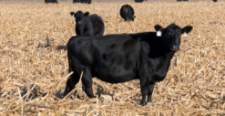
One of the most common concerns about grazing corn residue is that cattle will cause soil compaction. A long term grazing data (16 years) conducted at the University of Nebraska  has shown no compaction when grazing in the fall or the early spring. In this long-term study, grazing did not impact soil nutrient content. Which fits well with expected impacts given that cows in mid-pregnancy retain very little nitrogen, phosphorus or potassium. Thus, they excrete in manure and urine most of what they consume resulting in very little nutrients being removed from the land.  With long term grazing  there was an improvement in subsequent soybean and corn yields. This could have been due to the nutrient cycling being sped up as there is an increase in microbial biomass in the soil in the grazed areas.

More recently, a study was designed to test an extreme scenario for spring grazing. The thought was that if grazing was to cause compaction, it was most likely to happen when the soil is wet and thawed and when a high stocking density was used. The field was grazed at the recommended rate by starting in mid-February with 3 hd/ac for 45 days (normal stocking) or starting in early March with 9 hd/ac for 15 days (high stocking). Turn out of the higher stocking density groups was delayed until it rained to have the worst-case scenario. All groups were removed mid-March. There were some minor increases in bulk density (measure of compaction). The penetration resistance was also higher, and thus more down pressure had to be applied to get the soybeans planted. Down pressure applied at planting was 265 lbs in the non-grazed and 290 lbs in the grazed treatments.  Much of the increase in penetration resistance is due to the soil having less cover and thus less surface soil moisture. The planting speed was also reduced due to the surface roughness.  However, the subsequent soybean yields were still improved by grazing. While it is not recommended to graze late into the spring as this does have some downsides when it comes to planting, if cattle happen to be left out when a warm-wet spell occurs, there is no long-term damage to the land.

Overall, when managed correctly, grazing corn residue can be a win-win for both the crop and cattle producer.

Want to see the data for yourself? Check out these Nebraska Beef Reports:

Effect of Corn Residue Removal on Subsequent Crop Yields

Effect of long-Term Corn Residue Grazing on Soil Properties

Effect of Corn residue grazing or Baling on Subsequent Crop Yield and Nutrient Removal

Impact of Spring Corn Residue Grazing on Soil Physical Properties and Crop Yield

Saying goodbye to metal bangs tags and hello to EID tags

0

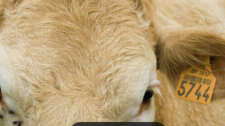
If your heifers are bangs tagged, those orange metal clips will soon be a relic of the past. Starting November 5, 2024, your veterinarian will not be tagging with metal clips, but instead will use electronic identification (EID) tags.

Veterinarians used metal clips to identify heifers receiving the brucellosis vaccine (“bangs”), and to identify animals moving between states.

In the spring of 2024, the Animal and Plant Health Inspection Service (APHIS) announced mandatory EID tags for certain bovine classes.  This builds upon the 2013 ruling that only requested visual ID tags.  The electronic version will be used to track and contain animal disease outbreaks, just as the metal identification clips did.

What is a USDA 840 EID Tag?

The EID tags replacing the metal clips are USDA 840, showing the country code for the United States (840), with the official USDA shield.  The remaining 12 numbers are unique to the tag/animal.  The 840 tags provide animal identification to trace animal movements in the event of an animal disease.  The 15 numbers can be visually read off of the EID button, or can be read with a computerized EID reader or wand.

There are other types of EID tags, but only 840 EID tags will fulfill the APHIS ruling to replace the metal clips.

What does the EID mandate mean for cattle producers?

  • Animals with the old metal tags already in their ears are “grandfathered in” and will not need new 840 EID tags.
  • “840 EID” tags can come as “buttons” with no hanging tag, as long as the 15- digit number is viewable on the top of the button.
    • The buttons can come with matching visual hanging tags.
    • Some “840 EID” tags should be placed in the middle rib of the ear, unlike the metal clips that were placed in the top portion of the ear.
      • This could be an issue if you have a visual tag in each ear, plus a fly tag in each ear. Adding an EID tag would make 5 tags per animal, and you may run out of room in their middle ribs.
      • Reach out to the tag manufacturer for tag placement recommendations.
  • Producers will need to establish a premise ID number or use the premise ID number of their veterinarian.
  • You or your veterinarian may put in 840 EID tags.  Your vet will put 840 EID tags only into animals that used to require a metal clip for identification.
    • For example, if a producer tags all their calves at weaning with 840 EID tags, your vet will record those EID numbers when they give the bangs vaccine to your heifers.  The vet would not have to put a new EID tag in.
    • Check with the sale barn on what records are required.
      • For example, if you are selling breeding heifers, records showing the EID numbers matching the “bangs” vaccination might be helpful.

What will change for your veterinarian?

  • After November 5, 2024, your vet will be tagging with 840 EID tags instead of the metal tags.
  • The United State Department of Agriculture (USDA) is providing a certain number of tags for each state, during the transition.  Veterinarians can receive tags for replacement animals.
  • If a disease is traced back to that veterinarian’s premise ID number, then the vet will work with the Department of Agriculture to track the path that animal.  Ideally, the EID tags will speed up the process and reduce losses during a disease outbreak.

More information can be found at the Animal Disease Traceability (ADT) website at: https://nda.nebraska.gov/adt/index.html .  The NDA will host an informational webinar on October 22, 2024 at 6 pm CT- to join the webinar, click here.