Thursday, January 15, 2026
Home Blog Page 32

My Head Hurts

0
lee pitts

I receive a lot of cowy periodicals from publishers who run my column and I try to read every one of them. I even read the farm magazines that don’t concern cows because I’ve always found every facet of agriculture interesting. My interest dates all the way back to high school where we had a library in the ag building. I spent a lot of lunch hours reading all the farm and ranch publications like the Western Livestock Journal and the Livestock Market Digest. Little did I know that one day I’d actually own one of those papers (the Digest). I even read Hoards Dairyman and always tried to place the judging class they had in every issue but after awhile I began to feel like a pervert checking out all the cow udders.

I loved looking at bull photos and tried to memorize all the important herd sires. My bedroom at home, which was actually a sunporch which doubled as my mom’s sewing room, was covered in bull pictures and I often wondered what her customers who came for fittings thought of all the bulls leering at them as they tried on their new clothes.

Back when we didn’t have EPD’s beef cattle were evaluated mostly on their phenotype and as a Junior Member of the Angus Association I sent away for three free posters that depicted what an ideal Angus bull, cow and steer should look like. These became the centerpiece of my art collection. As a sophomore in high school I could rattle off all the names of the best sires but then the continental breed explosion hit and with 35 breeds I became more confused than Joe Biden.

Today I can’t even keep up with all the purebred ranch names. There’s Man Herefords, Halfmann Red Angus and Assman Land and Cattle (I bet they like cattle with big butts.) There’s a King Ranch in Texas, California and New Mexico. There’s a Bear Creek, Wolf Creek and Oak Creek not to be confused with Town Creek. The famed R.A. Brown Ranch in Texas breeds some of the best red and black bulls but no BROWN ones, while Redd Ranches in Paradox, Colorado, is known for their Red Angus, Red Gelbvieh and red Simmental. There’s both a Funk and Fink who have among the finest purebred herds in America, the Funk family owns Express Ranches and the Fink Family owns Fink Family Genetics. As I slowly lose my memory you can see how I could get Dudley Brothers and Nunley Brothers confused as well as 12 Star and 5 Star. Don’t even get me started on the subject of Black Herefords, miniature Angus or genetically enhanced EPD’s. How is anyone supposed to remember all these EPD’s for every breed? You can’t compare the numbers across breeds unless you know calculus and every time I finally figure out what are good numbers for the Angus breed they come up with a bunch of new numbers, not to mention new categories.

What really blows my mind is that all these purebred outfits have to come up with hundreds of thousands of new names for the cattle they register. I don’t know how the biggest outfits come up with 2,000 or more names for their registered cattle EVERY YEAR. I know one ranch that named their cattle after U.S. Presidents one year and football players another year. Baxter Black even had a bull named after him and Baxter told me he considered it his highest honor.

Another publication I studied in our ag. library was the Quarter Horse Journal because one local horseman donated all his past copies. I love horse names the best and often find them funny, like Peptoboonsmal. Over the years I’ve kept a list of names I’d use if I ever became a big time Quarter Horse breeder and here’s just a sampling: Who Flung Dung,, Bedpan, Neutered, Abadapple, Better Than Terrible, Gesundheit, Pie Biter, The Flatulator, Horse Remorse, It’s Only Money, Jorge Palomino, Hubba Hubba, Stew Meat, 4DBirdz, Back Seat Driver, Lucky Sperm and Crow Bait.

If you ever see a racehorse at the track with any of these names you’ll know it’s me so if you want to double your money just take the cash you were going to bet, fold it in half and put it back in your pocket.

Veterinarian urges winter water care for pets and wildlife as winter nears

0

As winter weather settles into central Kansas, local veterinarian Dr. John Austin of Hutchinson Small Animal Hospital is reminding residents to take extra steps to protect pets and wildlife during freezing temperatures.

Austin said the season’s first hard freeze is a good cue for residents to check outdoor water sources. He noted that while fleas may finally be declining thanks to the cold, hydration is now the biggest concern for animals.

Austin encourages homeowners to keep fresh, unfrozen water available — not only for pets, but also for birds and wildlife.

“I keep a big bird bath heated all winter,” Austin said. “When temperatures stay cold and there isn’t any open water, it becomes even more important for wildlife like deer and birds to find a drink.”

For outdoor pets, Austin stressed that water access is more critical than food this time of year.

“You’ve got to keep a source of water that doesn’t freeze,” he said. “Whether you’re refilling it daily or using a heated bowl, don’t rely on technology alone — check it every day.”

The discussion also touched on increased sightings of deer and turkeys inside Hutchinson city limits. Austin said wildlife often follows drainage channels and undeveloped areas that run through town, especially in search of food and water.

The veterinarian also recommended suet cakes for winter bird feeding, calling them “high-energy, high-fat” nutrition that helps songbirds stay warm. Many residents, he noted, also enjoy using outdoor bird cameras to watch visiting wildlife.

“It’s a relaxing hobby and a great use of technology,” he said.

As temperatures continue to drop, Austin advises residents to monitor pets closely, maintain access to shelter and unfrozen water, and consider helping local wildlife by providing safe, accessible resources.


Farm Family of the Year 2025

0

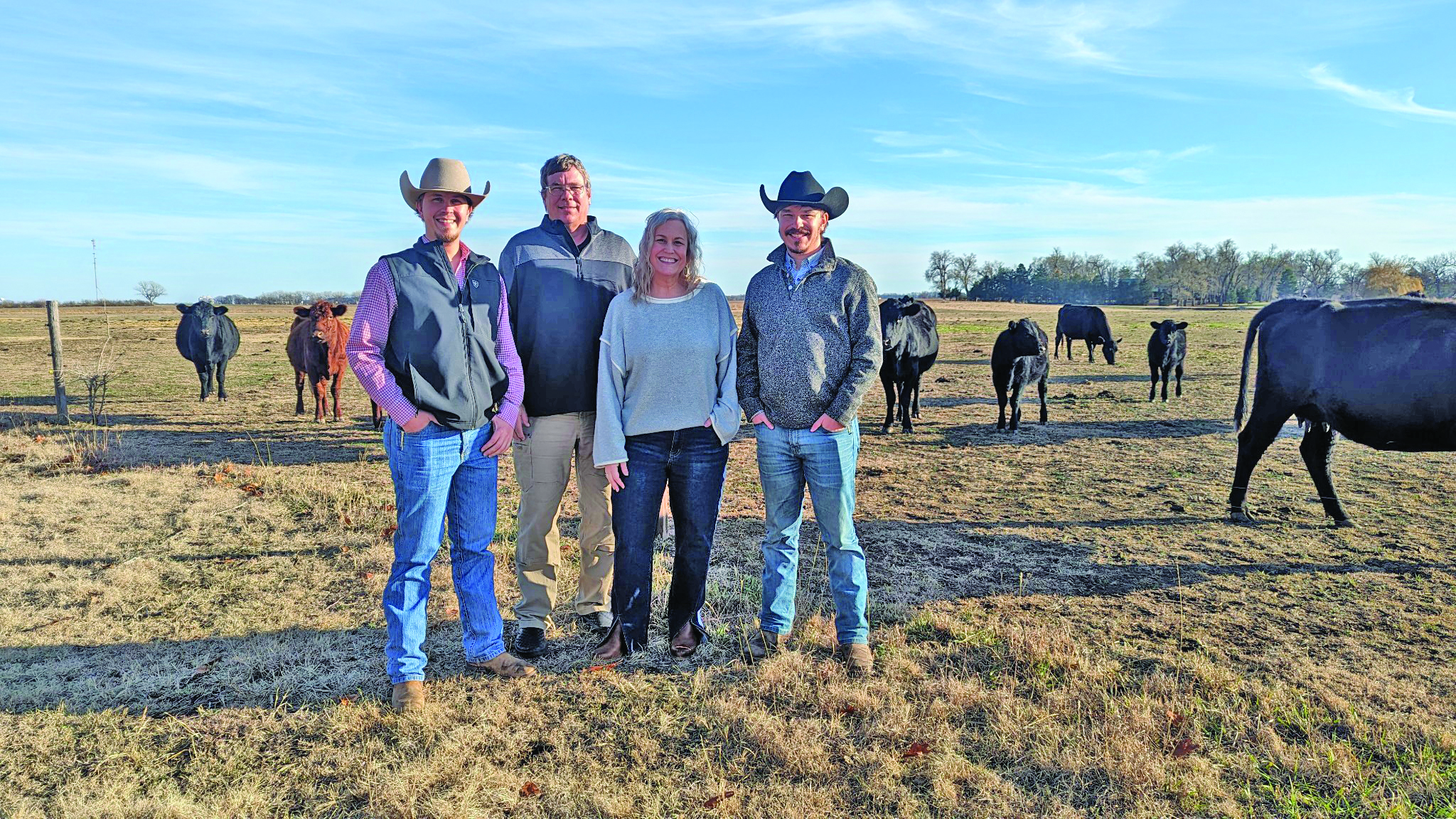
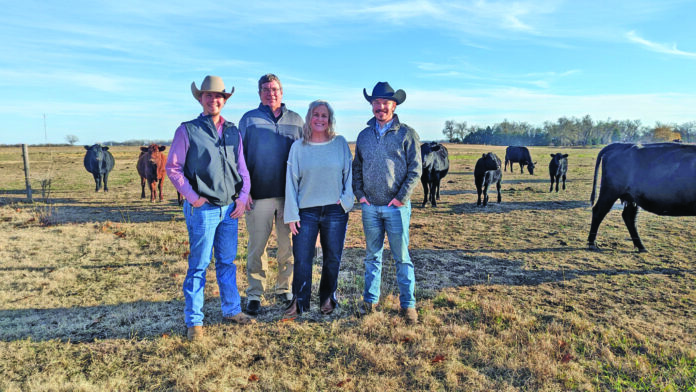
The Farm Focus Family Award began in 1985 as part of National Farm City Week. There have now been over 100 families in Reno County that have been recognized for their contributions to Reno County Agriculture. This year’s Farm Focus Family Award goes to the Royer family.
Bill and Kelly Royer, along with their sons Alek and Koby, represent six generations of farming in Reno and Harvey counties, with roots that trace back to 1886.
The Royer family primarily raises wheat, soybeans, and oats,  and maintains a small cow-calf operation. Bill has farmed full-time for 38 years, while also working part-time as a Senior Bank Representative at First National Bank of Hutchinson. He’s served on the local school board and continues to volunteer with Haven High School’s Clay Target team.
Kelly is an Account Manager and Senior Interior Designer at the John A. Marshall Company in Wichita. She’s also an active volunteer, lending her time to school, church, 4-H, and community events over the years.
Both Alek and Koby earned agricultural degrees from Kansas State University and returned home to help continue the family legacy. Alek operates a swathing business and volunteers as a firefighter, while Koby works part-time in seed sales with Ohlde Seed.
Recently celebrating their 30th wedding anniversary, Bill and Kelly are proud to farm alongside Bill’s parents, Bill Sr. and Leta, and their sons—three generations working together to meet the challenges and opportunities of modern agriculture.

Jenkinson says record harvest facing storage, market challenges

0

John Jenkinson says this year’s harvest delivered some of the best yields in years — but now the challenge is finding a place for all the grain.

Jenkinson said the 2025 harvest season went “smooth,” with nearly ideal weather and timely rains that boosted yields far beyond what many expected.

“We had rains at just the right time,” he said. “Just enough to get us to the next one. A lot of farmers around us are saying the same thing — the yields were absolutely way above what we expected.”

Record sorghum and corn — and nowhere to put it

But the strong harvest has created a new problem: storage.

Across western Kansas — from Colby to the Oklahoma Panhandle — Jenkinson said grain is piling up on the ground because elevators are full.

“I’ve seen farmers clearing off machinery lots just to pile their own crop on their own ground,” he said. “One elevator near us said they only had room for four more loads of milo and three of corn — then they were shutting the doors.”

With more grain still in the field, Jenkinson said the lack of storage highlights the urgent need for expanded markets and follow-through on trade agreements.

“We are awash in grain right now,” he said. “China has said they’d buy U.S. sorghum, corn and soybeans — but they’ve yet to do that. Meanwhile, they’re buying cheaper grain from Brazil.”

Brazil competition and ethanol demand

Jenkinson said Brazil’s lower production costs and the strength of the U.S. dollar are making American grain less competitive.

“We’ve got a big competitor in South America,” he said. “They can grow it cheaper, and China doesn’t see them as an adversary.”

Ethanol plants across western Kansas are running at full capacity and using as much corn and sorghum as they can, he said, but it won’t be enough on its own.

“We have to find new markets — both overseas and domestically — for all the grain we can grow,” he added.

Jenkinson also voiced frustration that a government-funded biofuel plant in Georgia recently purchased Brazilian product instead of U.S. grain. “They can actually buy Brazilian grain cheaper and ship it into the United States than you can buy American grain,” he said.

Farmers squeezed by input costs

Even with big yields, Jenkinson said farmers are barely breaking even because of high costs for fertilizer, fuel, chemicals and insurance. “If we hadn’t had those extra bushels, we would be facing a deficit,” he said. “Margins are tight, and we’ve got to turn that around.”

He warned that if conditions don’t improve, the U.S. risks losing too many farmers. “We do not want to get into a position where we’ve eliminated so many farmers that we have to start importing our food.”

Wheat crop looks good — but markets still lag

Despite concerns in other sectors, Jenkinson said this year’s winter wheat is off to a strong start. “All of our wheat is up and looking good,” he said. “Western Kansas wheat is in pretty good shape.”

Farmers and traders are awaiting the first USDA world supply-and-demand report since the government shutdown halted monthly data.

USDA offices scrambling after shutdown

The recent government shutdown halted much of the work at USDA’s Farm Service Agency (FSA), leaving farmers behind on necessary paperwork.

Jenkinson said local offices will need time to catch up. “They’ve missed a lot of work that usually gets done this time of year,” he said. “FSA employees are going to have to hit the ground running.”

Among the delayed tasks are 578 forms, crop reports, and insurance paperwork for 2026 wheat.

Farm bill stalled, bankruptcies rising

Congress has not yet passed a new farm bill, leaving producers without clarity on future price supports or risk-management tools. “Right now nobody has assurances,” Jenkinson said. “It’s critical that Congress gives us a direction.”

He said SNAP benefits will resume soon, but how that impacts the farm bill is still unclear.

As for bankruptcies, Jenkinson said Kansas hasn’t seen a spike — but the national picture is troubling. “Nationwide, yes, we’ve seen an uptick of two or three percent,” he said. “It’s a sad state of affairs.”

Closing outlook

Jenkinson said despite challenges, farmers remain committed — and hopeful that policymakers will act with urgency.

“We need trade deals, we need markets, and we need Congress to focus on agriculture,” he said. “We’ve got good people in the FSA offices and good farmers out here. We’re all looking forward to getting back to normal.”