Friday, February 6, 2026
Home Blog Page 329

Composting Tips

0

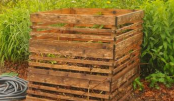
Composting at home provides gardeners with a free source of nutrient-rich soil amendment. Knowing what is in your compost is a great way to ensure
you are not introducing problems into the garden. Here are a few quick tips for success if you’re new to composting.

• Turn the pile at least once a month to rotate
materials from the center and promote decomposition. The pile will heat up as it decomposes and cool as
decomposition slows.
• Create a depression in the top of the pile to allow water to collect and slowly
seep through the layers of the mound.
• When deciding where to establish a compost pile, look for a water source. Water
is essential for efficient decomposition and close proximity to supplemental water
will allow you to keep the pile moist even during periods of drought.
• Smaller materials decompose faster. When possible, shred materials before
adding them to the heap especially “browns” such as dry leaves and twigs.
• Fats and meats should not be added to the compost heap. They will attract
wildlife.
• Grass clippings from a lawn treated with crabgrass killer should not be
composted. If crabgrass preventer or dandelion killer has been used on the lawn,
the clippings can be composted after the third mowing.
• Only add fresh plant material that is disease-free.

Dividing Peonies

0

If your peonies didn’t bloom as expected this year it’s possible
they need to be divided. Peonies don’t require dividing often, but
doing so periodically can promote healthier plants. You also get
the benefit of increasing your plant collection.

Cut stems just above the soil surface. Dig up the entire root
system and remove the soil from the roots. Divide the root clump
into small sections using a sharp knife. Each section should have
three to five buds and healthy roots. Sections with fewer buds will
take longer to bloom.

Choose a planting location that receives sunlight for at least half of
the day. Dig a hole large enough that the roots and buds will be
covered by one to two-inches of soil. Plants buried too deep may not flower. Backfill and water thoroughly. Space dwarf peonies at least two-feet apart and
standard peonies four-feet apart.

It may take a couple of years for the divided plants to return to full
bloom productivity. Kansas’ winters have periods of freezing and
thawing which can uproot plants. Protect newly divided peonies, by
covering them with a layer of straw, leaves or compost after the
soil freezes.

Fall Lawn tips

0
F_A

September is the best time to seed cool-season grasses.

Seeding New Lawns

o Use good quality, certified seed; avoid seed with significant levels of
“weed” and “other crop.

o Use recommended seeding rates and distribute well. Seeding at a rate
higher than recommended can cause issues with disease and
environmental stress.

o Good seed to soil contact is critical! Aeration prior
to seeding is one way to promote this. Topdressing
and raking to cover seed are some other methods
of enhancing seed to soil contact. Thatch build-up
will hinder seed to soil contact. See core-aerating
below is thatch is a problem in your lawn.

o Light, frequent irrigation is necessary the first few
weeks after planting and may be required several
times daily depending upon weather. Soil should
remain moist but not waterlogged.

o Minimize traffic on the area until seedlings are
ready to be mowed. Begin mowing once seedlings reach 3-4 inches tall.

Overseeding an Existing Lawn

o Prior to planting, mow the area low (1 to 1-1/2 inches) to reduce
competition with seedlings and help improve seed contact with soil.

o Apply fertilizer based on soil test results or use starter fertilizer at rate
recommended on the bag.

o Water light, but often keeping soil moist but not waterlogged.

Fertilize cool-season grasses.

o Use a quick-release source of nitrogen.

o Apply 1 to 1-1/2 pounds of actual nitrogen per 1,000 square feet.
Core-aerating

o Removes cores of soil to relieve compaction, speed up thatch
decomposition and improve water, nutrient and oxygen movement in soil.

o Soil should be moist but not saturated.

o Holes should be 2-3 inches apart and 2.5 to 3 inches deep.

o Cores can be left on the surface and will break down naturally

Does the Length of the Day Cause Your Body to Obey?

0

As we hurtle toward our fall time change, it makes me consider how the length-of-days and the increased or decreased amount of sunlight affects all life on this rock. Every living thing has an internal clock of some sort that helps regulate its life. It’s what tells butterflies and birds when to migrate and sea turtles when to lumber ashore to lay their eggs. My internal clock is very reliable as it relates to getting me up in the morning. I have an alarm clock by my bed like most everyone does, but I rarely have to use it. It seems I can just decide in my mind when I want to awaken and when that time rolls around, I awaken. We put our two little dogs to bed about ten PM every night and they also get a treat then. Their internal clock often tells them when it’s time for a snack, as they begin to stir and whine about that time every night, and you can nearly set your watch by it.

Wildlife has different worries in life which are all about survival, like when to begin growing their heavy winter coats or when to begin breeding to sustain their species. All studies and research say that those things are dictated by the amount of daylight in a day, technically known as photo-period. So as the days get shorter and thus the amount of daylight becomes less, it triggers changes in wildlife.

In deer, shortening days and reduced amount of daylight triggers the breeding season known to us as “the rut.” I spoke with now retired Big Game Coordinator for the state of Kansas, who explained to me how increased amount of darkness each day causes increased production of certain hormones in a deer’s body and thus the bodies of both male and female deer prepare for the breeding season. He also pointed out that moon signs and other factors may bring about increased deer activity and changes of behavior, but it is all ultimately controlled by the length of days (photo-period.) As a side note here, have you ever wondered why deer and all wildlife for that matter have their young in the spring and not fall, early winter or even year-round like some domestic livestock? God has programmed their bodies to react the way they do so all wildlife young are born in spring when everything in nature gives them the absolute best chance of survival.

Furbearers are also affected by decreased amount of daylight. Matt Peek, Furbearer Biologist for the state of Kansas explained to me how the photo period dictates when a fur bearer’s pelt becomes “prime.” Fur bearing animals grow an extra-thick, heavy coat to protect them from winter blasts, and when that coat is at its absolute fullest and best for fur harvesting it is called “prime.” Decreasing amounts of daylight initiates that growth. It could be sixty-five degrees clear into December, but the animals’ fur still grows and becomes prime in anticipation of the cold, no matter when it comes, so that the critters are prepared. Fur from different parts of the country varies vastly in quality, as fur from Idaho for example will always be thicker and more luxurious than fur from Florida. But no matter where a fur bearing animal lives, their fur still becomes prime and the timing of that is dictated by the amount of daylight.

I hate the bi-annual time changes; I wish we would just choose one or the other (I really don’t care which one) and then just leave it alone! But twice each year as I scurry around resetting the clocks on the microwave, etc. knowing full well I’ll have to do it again in 6 months, I stop for a moment and consider how the wild critters clocks just kinda’ reset themselves thanks to the wisdom of our Creator. Continue to Explore Kansas Outdoors!

Steve can be contacted by email at [email protected].