Saturday, February 7, 2026
Home Blog Page 339

10 Best Breathtaking Natural Wonders In Kansas That Should Be On Your Bucket List

0

Kansas Has It All

Kansas, also known as the Breadbasket State of America, is often imagined as having huge golden wheat and corn fields. Well, that’s not entirely wrong, but some of its natural wonders are not given the attention they deserve.

It has plain fields, surreal landscapes, awesome rock formations, cascading waterfalls, exciting hikes, and a lot of fun at any time of the year.

Arikaree Breaks

Okay, now for the land known for plain fields, this natural wonder is astounding. At Arikaree Breaks, the landscape dramatically transforms from flat plains to rugged canyons and rolling hills.

This 36-mile stretch of breathtaking beauty in the state’s northwestern corner, near the Nebraska border, was made by ancient rivers and shaped by time. You’ll see rugged canyons, steep ravines, and rolling hills covered by wind-blown clay and slit.

Little Jerusalem Badlands

Now, this one looks almost unworldly. Little Jerusalem Badlands is in Logan County, spanning over 330 acres.

Home to the largest expanse of Niobrara Chalk formations in the state, these stunning white rock formations, sculpted by erosion over 85 million years, create a dramatic landscape of spires, buttes, and cliffs rising to 100 feet high.

Wow, that’s huge! And you’ll find a rich fossil record of ancient sea creatures, showing glimpses into a time when this area was covered with sea.

Monument Rocks

Have you ever seen giant rocks in the middle of a plain field? In Gove County, Monument Rocks, also known as the Chalk Pyramids, rise majestically from the earth, reaching heights of up to 70 feet.

They genuinely look like the Stone Henge of Kansas. They are remains of the Western Interior Seaway, which once flowed here, leaving behind these giant geological limestone rocks. Even this is filled with fossils of ancient sea creatures, so be on the lookout.

Alcove Springs

If the previous one didn’t excite you, this one will. It’s a surreal natural water spring that cascades over a limestone ledge, creating a stunning waterfall.

The Alcove Springs on the Oregon Trail in Blue Rapids is an easy 0.4-mile hike where many travelers used to rest and replenish their water supply or sometimes even wait for the water levels to go down of the Blue River.

This lush landscape with cool waterfall and relaxing vibes makes for a perfect trip.

Pillsbury Crossing

Another magical waterfall is Pillsbury Crossing, just 6 miles southeast of Manhattan. Don’t picture a colossal waterfall, as it’s a low-water waterfall, but it has fantastic wildlife all around and framed flora and fauna.

This picturesque waterfall, where water flows over a flat limestone ledge, drops about 5 feet and creates a serene, 60-foot-wide cascade. Cool water plunging down a limestone henge gives it a relaxing and peaceful aura.

Cowley Lake Waterfall

If you’re looking for a quaint and serene spot for a getaway, you need to check out Cowley Lake Waterfalls. Within the Cowley State Fishing Lake area, these delightful falls are not as grand but have a natural charm.

The waterfalls cascade over a rocky outcrop at the edge of Cowley Lake, which spans approximately 1,500 acres, making it a popular spot for fishing and boating. Maybe pack a picnic and go fishing in the lake at these amazing waterfalls.

Gypsum Hills

Do you ever wonder why we don’t have red-colored hills instead of green? Well, Kansas has that. The Red Hill or Gypsum Hills are 42 miles long and renowned for their striking red and pink gypsum rock formations, which create a dramatic and colorful contrast against the flat plains.

They’re made up of dolomite, gypsum, sandstone, siltstone, and brick-red shales, thus their reddish tone. Rich in history, the area was once home to Native American tribes and remains significant to local ranching culture, so you must check them out.

Mushroom Rock State Park

You’ll be pleasantly surprised with this one, especially mushroom lovers. Now we’ve got red hills, but what about a giant mushroom-shaped rock in a park? A 27-foot-diameter mushroom-shaped rock, with several smaller ones around the park in Ellsworth County.

The “mushrooms” are formed from sandstone, where harder capstones of cemented calcium carbonate have resisted erosion better than the softer sandstone beneath, resulting in their iconic shapes.

Horsethief Canyon

This rugged beauty is in Kanopolis State Park in Marquette and is for everyone who loves deep canyons and a great hike with incredible views.

Horsethief Canyon has dramatic sandstone cliffs about 300 million years old, deep crevices, winding trails, and towering rock formations created by millions of years of erosion. Wildlife, such as deer, turkeys, and numerous bird species, roams the area too.

Flint Hills

The last one on the list has grass that grows up to 10 feet. Yes, it’s all-natural grass. Flint Hills is the last of tallgrass prairie ecosystems on Earth, located in eastern Kansas and extending into northern Oklahoma.

Steep hillsides, rocky outcrops, and broad valleys with over 70 species of grasses and 300 species of wildflowers are a beautiful site to enjoy. Why miss a chance to witness this magnificent landscape right here in Kansas?

The Places in Kansas Are Mindblogging

Kansas might be known as the Sunflower State, but it’s packed with more than endless fields.

Think again if you thought it was all flat plains! Kansas has jaw-dropping, history-rich wonders like serene waterfalls, massive mushroom-shaped rocks, fiery red hills, and tallgrass prairies with grasses that can reach up to ten feet high.

These underrated landscapes are pure gems, making Kansas a cool place to explore any time of the year!

Hutch Post Office to offer special postmark Aug. 22

0

HUTCHINSON, Kan. — The United States Postal Service has announced it will make available on August 22, 2024, a Pictorial Postmark, commemorating Antique Tractor Preservation Day in the State of Kansas, as proclaimed by Kansas Governor Laura Kelly.

The Postmark will be available August 22, 2024, by visiting the Hutchinson Post office at 128 E. 1st Ave., Hutchinson, KS 67501-9900

Out of area customers may submit a “Mail Order” request to:

Pictorial Postmark

Talking Tractors.com Station

128 E. 1st Ave. | Hutchinson, KS 67501-9900

“Mail order” requests must be postmarked no later than 30 days following the August 22, 2024, Commemorative Postmark date. All requests must include a stamped envelope or postcard bearing at least the minimum First-Class Mail postage.

Customers wishing to obtain the Commemorative Postmark, must affix stamps to any envelope or postcard of their choice, and address the envelope or postcard to themselves or others.

Michael Hinton, Founder of Antique Tractor Preservation Day and www.TalkingTractors.com, shared, “This Postmark, combined with the Proclamation Governor Laura Kelly awarded, are significant not only to Kansans but all those who have farming ancestors and/or current relations to farmers – both recognize the tractors of long ago; manufactured and used to farm with during a given era.”

TalkingTractors.com serves as a ‘virtual educational resource’ for those who share a like passion for preserving America’s heritage farm machinery for future generations. The Proclamation was issued on behalf of the people of Kansas, commemorating the state’s renowned agricultural heritage, and Kansas resident Michael Hinton’s passion for classic tractors.

Thousands of tarantulas will soon crawl through parts of Kansas and Colorado looking for mates

0

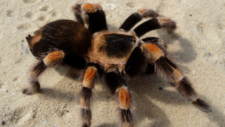
It’s the stuff of nightmares for some, but it’s simply summer in southeastern Colorado and southwest Kansas, where thousands — yes, thousands — of male tarantulas will make the trek to find a mate.

The Texas brown tarantula, with a leg span of about 4 to 5 inches, typically makes the journey from late August to October once it reaches sexual maturity at around 10 years old.

But there’s no need to bug out if you see the fuzzy eight-legged creature, as they’re pretty much harmless, said Mario Padilla, head entomologist at the Butterfly Pavilion and Insect Center near Denver.

“This specific group of tarantulas is completely docile. They’re not looking to harm humans,” he said.

Tarantulas may strike if provoked, but their venom is comparable to that of a bee sting.

The spiders are looking for undisturbed prairie rangelands, because that’s where females are often found.

According to a Pratt Tribune article in 2017, the arachnids are said to be thick sometimes along a highway near Medicine Lodge. So much so that bodies are heard crunching under tires in September.

Daren Riedle, Wildlife Diversity Coordinator at Kansas Department of Wildlife and Parks near Pratt, said it’s usually males that are seen crossing highways. The females stay put for the most part, he said.

Once a male finds a female, known to live in burrows, the male tarantulas will drum outside the opening.

Padilla said tarantulas are relatively solitary creatures, so, luckily, it’s unlikely that onlookers will spot waves of the fuzzy brown arachnids.

However, spider enthusiasts sometimes flock to the grassy region in hopes of spotting a tarantula or capturing one to keep as a pet. Motorists may even see one crawling across the road.

tourism website for nearby La Junta, Colorado, even offers a few tips for tourists hoping to spot the adventurers. Among them: Head out when it’s warm but not windy, and “things really pick up in the hour before sunset.”

Males typically don’t live long after the deed is done. Male spiders will live two or three months after reaching sexual maturity — if the females don’t eat them first.

Padilla added that while the tarantulas may give some the creeps, they munch on things that humans often consider pests, including cockroaches, beetles and other insects.

“There’s seriously no need to fear these creatures. They’re fascinating and just like us, just trying to live their daily lives,” Padilla said.

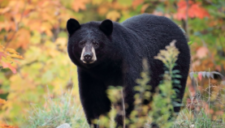
Black bear sightings increasing in Kansas, experts say

0

Experts with the Kansas Department of Wildlife and Parks say black bear sightings in the Sunflower State are becoming increasingly common.

Matt Peek, wildlife and research biologist with the KDWP, says while sightings are still rare, they aren’t as unusual as they might have once been, Topeka ABC affiliate KTKA reports.

Since 2015, Peek says there have been 10 confirmed sightings of black bears in Kansas.

“Prior to about 2,000, bears occurred very rarely in Kansas,” Peek told KTKA. “Since that time, we’ve had annual black bear visits to southwest KS pretty consistently. Apparently these bears find their way back to established range in other states by the fall. Beginning in about 2015, we started getting nearly annual visits in southeast Kansas, which mirrored the increase in bears that have taken place near Kansas in Missouri and Oklahoma.

Black bears are typically sighted in the southeast and southwest corners of the state due to the areas being in close proximity to established black bear populations in nearby states.

“We’re not aware of any resident bears living year-round in the state at this time,” Peek told the ABC affiliate. “Almost all of our confirmed bears have been yearlings and documented May-July when this age class separates from their mom and disperses from their natal home range. Confirmations outside of these 3 months have been very rare, and no cubs have been documented in modern times.”

The counties with the most sightings in the state are Crawford, which has seven, and Cherokee, which has five, according to Fort Hays State University.

The full list of sightings and observations of black bears in Kansas, most being recorded after the year 2000, includes the following:

Bourbon: 1; Chautauqua: 1; Cherokee: 5; Crawford: 7; Doniphan: 3; Douglas: 1; Greeley: 1; Hamilton: 1; Labette: 2; Mitchell: 1; Morton: 3; Saline: 1; Stevens: 1.

Peek told KTKA that there have been no reports of bad encounters with black bears in Kansas in modern times.

Bears, including grizzlies, were once common in Kansas’ eastern areas but were driven out by the late 1800s. However, the KDWP does keep resources online to help people who are concerned about black bears near them.

“People should not be worried about encountering a black bear in Kansas,” Peek said. “They’re still uncommon and primarily limited to the southern corners of the state.”

Anyone who thinks they may have evidence of a bear sighting in Kansas should make a report to the KDWP by contacting the Emporia Research and Survey Office at 620-342-0658. Evidence can consist of videos, photos and/or tracks.

Life gives us challenges!

0
KSU horticulture

Life gives us challenges! Some challenges are good for us but then there are lawn weeds. One of these weeds is yellow nutsedge! Yellow nutsedge is a relatively common problem in lawns, especially in wet years or in lawns with irrigation. Although it looks much like a grass, it is a sedge. Unlike grasses, sedges have triangular stems, and the leaves are three-ranked instead of two-ranked, which means the leaves come off the stems in three different directions. Yellow nutsedge is pale green to yellow and grows rapidly in the spring and early summer. Because of this rapid shoot growth, it sticks up above the rest of the lawn only a few days after mowing. This weed is a good indicator of poor drainage, but it can be introduced into well-drained sites through contaminated topsoil or nursery stock.


Nutsedge is less competitive in a dense, healthy lawn than in an open, poor lawn. Nutsedge is difficult to control culturally as it produces numerous tubers that give rise to new plants. Pulling nutsedge will increase the number of plants because dormant tubers are activated. However, it is possible to control nutsedge by pulling, but you must be very, very persistent. If treating with an herbicide, leave the nutsedge plants undisturbed so the herbicide can be maximally translocated to the roots and tubers. Several herbicides are available for nutsedge control. Products with halosulfuron and certain products with sulfentrazone are most effective.


Halosulfuron

Nufarm Prosedge

Gowan SedgeHammer +

Sulfentrazone

Ortho Nutsedge Killer for Lawns

Sulfentrazone + Prodiamine

Fertilome Weed-Out Nutsedge Control

Bonide Sedge Ender


The first application should go down in late spring to early summer. Applying later may allow tubers to develop which will not be well controlled. Repeat applications later in the season and in later years may be needed to obtain complete control.