Wednesday, February 11, 2026
Home Blog Page 397

Baffling airline rule

0
Thayne Cozart
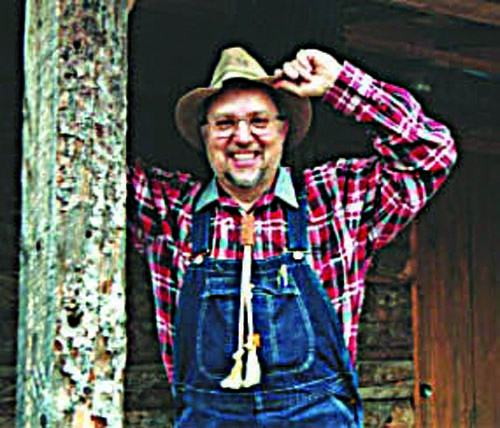
Milo Yield

Last week I used my entire column to tell the miserable tale of personal airline debacle on our air trip to Knoxville, Tenn., to the wedding of our grand-daughter. However, I put off until this week a discussion of a baffling airline travel safety situation that is not rigorously enforced by the ever-alert Transportation Security Administration (TSA).

I learned the hard way years ago that you can’t board an airline with a cheap pocketknife in your pocket. That’s becuz I had a pocketknife confiscated by the TSA at the airport in Wichita. The TSA will also confiscate metal fingernail clippers — too dangerous to carry on an airliner or in airport concourses.

Now I will admit that it would be possible, but not easy, to kill or maim a fellow airline passenger with a pocketknife. However, in my long lifetime I’ve never once heard about someone killing or maiming someone with finger nail clippers. A fingernail file? Perhaps. But not clippers.

Which brings me to the point about the baffling TSA overlook when it comes to air travel safety. In my old age, whenever I expect to walk a goodly distance, I take along a very nice walking stick that I bought at a curio shop on the Grand Canyon four years ago. Since I expected to have to walk quite aways in the Dallas-Ft. Worth airport on our trip, I took along my walking stick.

Now, my walking stick is four-feet long and about an inch and a half in diameter at the head. It weights a couple of pounds at least. While technically it’s a walking stick, it could serve equally well as a cudgel stick — a club if you choose. If I had a mind to do harm to someone, my cudgel stick would serve the purpose quite effectively. In short, it would be easy to clunk someone in the head with my walking stick. It would be far easier to cause personal injury with my walking stick than it would with my pocketknife or fingernail clippers.

But, do you know what? The ever-vigilant folks at the TSA — without hesitation or question — happily escorted my walking stick through their security check line. I picked it up with my billfold and shoes and kept it with me throughout our lengthy airport delay ordeal. I carried it on to the plane and stored it in the overhead bin. I could have clunked any number of obnoxious persons I encountered, but I didn’t.

However, I can report that my dangerous walking stick provided me a sense of personal security just in case I happened to need it. Glad the TSA didn’t confiscate it!

***

A faithful rancher reader, ol’ Manny G. Kowkamps, from Bennett, Colo. — with beef enterprises in both Colorado and Wyoming — wrote me a personal letter this week thanking me for opposing the introduction of wolves and Grizzly bears into mountainous cattle country. Both of those predatory critters love the taste of fresh-killed beef.

Manny sez that in Colorado it’s all the “woke” folks, from the governor on down, who advocate for wolves and bears. I’d wager a guess that few, if any, of them have personally laid eyes on the ravaged remains of a bovine critter painfully and frightfully brought down alive and eaten by those predators. I doubt very much that their squeamish stomachs and animal-loving hearts could handle the sight. But, they might imagine what happened through the eyes of the beef critter, rather than through the eyes of the predator.

Anyway, ol’ Manny says that “speaking up” is about the only way he has to hopefully bring about change. He also mentioned that part of his “speaking up” is to apply bumper stickers to his vehicles that read “Shoot, Shovel and Shut-up.” He says when Colorado “woke folks” ask him about the bumper stickers, he tells them it’s for “perverts, pedophiles, and politicians.” He gave me two such stickers and I attached them to my old, decrepit UTV.

***

I know it’s after Memorial Day, but I didn’t become aware of the following patriotic poem until just a few days ago. It wuz written by my old high school English, Literature and Drama teacher, ol’ deManza Rhymer. Yep, he’s considerably older than me and he’s still kickin’ and creatin’ in Kansas City. Here’s his Memorial Day poem:


Ode to Those Who Fought

In days of yore, when freedom’s flame
Did flicker low, and tyranny’s name
Did reign supreme, a heroic band
Did stand and fight, with hearts so grand.

Their cause was just, their will unbroken,
Their courage unshaken, their hearts unspoken.
For they knew that democracy was the key
To freedom’s door, where all may be.

These brave souls fought with strength and grace,
Their voices raised, their hearts in place.
They stood against the tide of hate,
And fought for what is right, for what is great.

Today, we must honor their memory,
And heed their call to stand in unity.
For if we do not, democracy’s light
May fade away, and darkness takes its flight.

So let us stand, and fight for what is right,
For democracy’s sake, and for our sight.
For if we do not, we shall surely fall,
And tyranny will stand tall.
***

These words of wisdom for the week come from the aforementioned Manny G. Kowkamps: “Take a deep seat, a short rein, and a far-away look and never eat or drink anything you can’t pronounce.” Have a good ‘un.

The Big Pink Blob

0
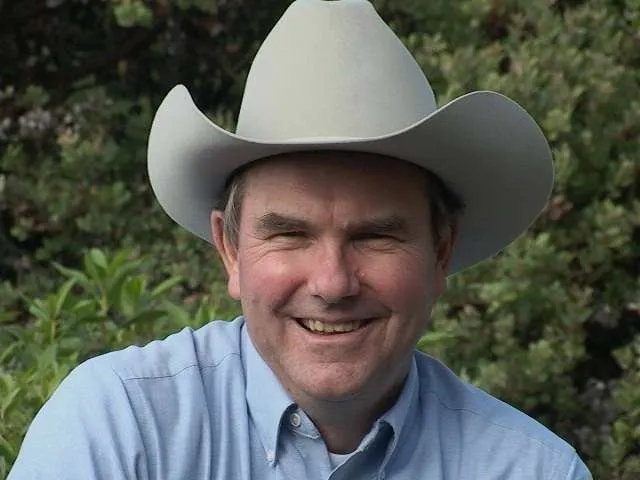
lee pitts

I’m a big Temple Grandin fan and in one of her articles Temple explained how a sudden scary event in an animal’s life, when it happens for the first time, can create “fear memories that can last a lifetime.

The first time I hauled my wonder horse Gentleman I had to do it in the only trailer available to me: Grandpa’s old two horse trailer that he won at a roping in the 1940’s. Gentleman loaded easily enough but then he had to try to remain in an upright position while straddling the trailer axle and without putting too much weight on the floorboards because they were rotten. If it wasn’t for the accumulated manure there wouldn’t have been any structure for Gentleman to stand on at all.

Gentleman did not enjoy that first trip in the old trailer and when I opened the tailgate he pulled back with such force he broke the rope halter and came flying out of there. When I finally caught him a mile away Gentleman was still shaking like a meadowlark trying to pass a peach pit. As a result a fear memory was imprinted on Gentleman’s brain and henceforth not even the offensive line of the Kansas City Chiefs, several four by four fence posts, a skid steer and an assortment of chains, ropes and a garden hose could have gotten him to load.

Temple didn’t say so but I think fear memories can also be imprinted on the human brain. Because I didn’t have a lot of money to start out with I raised sheep instead of cattle figuring I’d do my learning and experimenting with cheaper stock. It turned out to be a wise move because I needed more experience in calving heifers and cows. So I learned on sheep. I found it relatively easy to grab on to the head and two front feet of a lamb and after making sure the feet belonged to the right head I could pull a lamb.

By the time I had three seasons of lambing out a flock of sheep behind me I felt ready to tackle cattle. I’d taken a course in artificial insemination and felt I knew my way around the inside of a cow and so I started out with what I called “one-shot” cows, figuring these old grannies wouldn’t have any problems with calving and I could gradually learn on the job. But this idea of starting with older cows instead of bred heifers presented its own set of problems. One day while Gentleman and I were checking on the cows I was shocked to see an old cow with a gigantic pink blob hanging out her butt. It was my first experience with a uterine prolapse and I was so stunned by the big pink blob that it created a fear memory in my brain that has never gone away.

My vet was tied up elsewhere so I called on my neighbor Jeep to come help put this 30 pound mass back inside the cow where it belonged. We got the cow standing up in my squeeze chute and did the best we could cleaning the filthy blob, than Jeep said we needed a five pound sack of sugar to coat the blob to reduce its size. I don’t know how we did it but we managed to make the blob disappear. But then we had another problem: how do we keep the cow from giving birth to her own uterus again as she was attempting to do. Jeep then requested a Mason jar that we filled with water and put the lid on real tight. Then Jeep had me put this jar inside the cow hoping the weight of the water in the jar would keep the uterus inside. Finally I sewed up the vulva of the cow, allowing her enough room to pee but not enough for her to give birth to her uterus again.

After she’d fattened up a bit she looked pretty good so I sent the old gal to the auction, completely forgetting that I hadn’t removed the Mason jar like I was supposed to. I’ll bet a real fear memory was created in the next rancher (who probably bought her as a “one shot” cow too) when the old gal gave birth to twins… a calf and a Mason jar.

Senior Citizens Encouraged to Apply to Receive Checks to Buy Fruits, Vegetables, Herbs and Honey at Farmers Markets in Reno County

0

Low-income Kansas seniors may be eligible for a program that provides coupon
vouchers to purchase fresh, unprocessed fruits and vegetables and honey at farmers markets in selected counties throughout the state.

The Kansas Senior Farmers Market Nutrition Program (KSFMNP) is providing low-income seniors who meet age and income requirements with $50 in coupon vouchers to purchase fresh fruits, vegetables, herbs and honey from authorized farmers at local participating farmers markets. Coupon booklets containing 10 vouchers worth $5 each will be distributed.

To be eligible to receive KSFMNP coupon vouchers, the following criteria must be met:

1. Age: A senior must be 60 years old or older, or at least 55 years old and a member of an Indian Tribal Organization, on the day the money is issued.
2. Income level: A senior’s annual gross household income (before taxes are withheld) must be at or below 185% of the federal poverty level. For example, a household of one must have an annual gross income at or below $27,861, or a monthly gross income at or below $2,322.

The Kansas Senior Farmers Market Nutrition Program application process in Reno County will again be conducted by telephone. However, those who do not have a telephone may visit the Reno County Department of Aging at 120 W Avenue B in Hutchinson for assistance. The application period begins June 18, 2024.

To apply, Seniors may call 620-694–2985 or 620-694- 2909 beginning June 18, 2024, between the hours of 8 a.m. and 5 p.m. M – F. No early calls will be accepted.

A limited number of coupon vouchers are available and will be distributed on a first-come, first-served basis. For more information about the Kansas Senior Farmers Market Nutrition Program, call the Reno County Department of Aging at 620-694-2911.

Eligible foods to purchase with the KSFMNP checks from authorized farmers at participating farmers markets are defined as “fresh, nutritious, unprepared, locally grown fruits, vegetables, locally produced honey and herbs for human consumption that are produced in Kansas under normal growing conditions.”

The Senior Farmers’ Market Program is a project of the U.S. Department of Agriculture (USDA) Food and Nutrition Service (FNS). The program is coordinated by the Kansas Department of Health and Environment (KDHE), which is collaborating with local partners to identify and distribute coupon booklets to eligible seniors.

The program is currently available in the following counties: Allen, Anderson, Atchison, Barton, Bourbon, Brown, Butler, Clay, Cloud, Chase, Cherokee, Cheyenne, Coffey, Cowley, Crawford, Decatur, Dickinson, Doniphan, Douglas, Ellis, Ellsworth, Finney, Franklin, Geary, Harvey, Hodgeman, Jackson, Jefferson, Jewell, Johnson, Labette, Leavenworth, Linn, Lincoln, Lyon, Marion, Marshall, McPherson, Miami, Mitchell, Morris, Nemaha, Neosho, Norton, Osage, Osborne, Ottawa, Pawnee, Pottawatomie, Prairie Band Potawatomi Nation,
Rawlins, Reno, Republic, Rice, Riley, Saline, Sedgwick, Shawnee, Sheridan, Sherman, Stafford, Smith, Sumner, Thomas, Wabaunsee, Washington, Wilson, and Wyandotte.

This institution is an equal opportunity provider.

KDA Animal Health to Host Regional Workshops

0

The Kansas Department of Agriculture’s Division of Animal Health will host regional meetings across the state this summer to discuss critical topics related to the livestock industry in Kansas. KDA encourages livestock owners, veterinarians, and county officials to attend to learn more about how animal disease response plans may affect them.

Each workshop will include two sessions. The afternoon session (1:00–4:00 p.m.) is intended for emergency management professionals and county officials; discussion topics will include the role of the county in a disease response, livestock truck rollover, disposal and sheltering. The evening session (6:00–8:00 p.m.) will be for veterinarians and livestock producers; discussion topics will include animal disease traceability, secure food supply planning and disease response plans. A networking dinner will be held between sessions, which is open to all attendees.

Locations for the workshops are:

June 11: El Dorado — Butler County Community (4-H) Building

June 12: Fort Scott — Cleaver/Boileau/Burris Agriculture Hall at Fort Scott

Community College

June 18: Hutchinson — Kansas State Fairgrounds

June 26: Scott City — Western Kansas Child Advocacy Center

June 27: Dodge City — Ford County 4-H Building

July 10: Colby — City Limits Convention Center

July 11: Hays — Ellis County Emergency Management Office

The workshops are free, including the networking dinner, but registration is required. Go to agriculture.ks.gov/AnimalHealthOutreach or call 785-564-6608 to register for either of the two sessions.

Kansas will be the first state to let foster teens pick a family without losing foster care benefits

0

Older foster children in Kansas who face aging out of care will soon be able to choose their own families. In the past, they had to sometimes choose between being adopted or keeping important foster care benefits like free college tuition.

WICHITA, Kansas — When Alexandria Ware was a teenager, she would often spend time outside with Jim Whittley, who she affectionately called her “papa.”

She would join him while he worked outside, and he would sometimes take her to Riverside Park in central Wichita for picnics. They had a special bond, and that’s important for someone like Ware whose life was in flux during her childhood.

“People don’t understand how important it is,” Ware said, “to have one person that shows up for you, no matter what. Even when you don’t feel lovable.”

But Whittley, who died in 2022, was not legally Ware’s grandfather. He was part of the family who took Ware in when she was in the state’s care as a foster child. The Wellington-based family could have adopted Ware, but the Kansas foster care system left her with a hard decision.

Ware, who is now 31, said she had to choose between a permanent family or keeping her federal foster care benefits, including free college tuition. If the Whittley family did adopt her, she may not have been able to afford attending Kansas State University.

Ware and the Whittleys chose college, and she ended up as one of many Kansas foster children who aged out of the state’s care at 18 before finding a permanent legal home.

If Ware had a better choice, she said she would have picked Jim Whittley to be her permanent custodian. She said he was always there for her during the highs and the lows of her teen years.

“He accepted everyone with love,” Ware said. “And made sure people knew they were supported.”

Thanks to Ware and other former foster children, Kansas teens in foster care may not be forced to make such a hard decision.

A new Kansas law — known as SOUL Family Legal Permanency — will soon allow foster children between 16 and 18 to choose a relative or a close friend to serve as their permanent custodian while also keeping their foster care benefits.

Prior to the new option, older foster children could be placed with foster parents or put up for adoption. They could also be reunified with their birth parents. But many children end up bouncing around homes and aging out of care without being adopted when they turn 18.

Some former foster children in Kansas said that the state’s few options for finding a permanent home led to dangerous situations, like homelessness.

But by listening to their lived experience and suggestions for change, Kansas officials hope the new legal permanency option provides teen foster children with lifelong connections and a safety net.

Need for change

The Annie E. Casey Foundation, a national nonprofit focused on improving the lives of kids, created the concept by bringing together foster children from across the country to share their experiences.

That group found that the standard permanency options for foster children — adoption, legal guardianship and reunification with birth parents — helps many children across the country, but let a significant amount slip through the cracks.

The organization reports about 50% of children in the U.S. foster care system, about 20,000 children each year, age out of care without a permanent living arrangement.

The foundation then pitched the concept to Kansas because of the state’s higher rate of children aging out of foster care. Republican Representative Susan Concannon told lawmakers on the House floor that about 60% of Kansas foster children age out.

“So because Kansas’ number is exceptionally high,” Concannon said, “they chose to work with Kansas on this legislation.”

In Kansas, former foster children worked with legal experts and advocacy groups for about two years to adapt the concept for the state. They landed on the law that establishes the SOUL Family permanency option, which allows the older foster teens to pick their families. An example would be a teen picking a relative like an aunt or uncle, or a close family friend, like a teacher or pastor, to be the legal custodian.

The custodian is appointed through a court order that the teen agrees to. They will have all the parental rights for the child, except for the right to put the child up for adoption or the obligation to pay for child support.

The arrangement provides a parental figure for the teen while also allowing them to continue receiving their federal and state foster care benefits and funding. It also allows the teen to keep a legal connection to their birth parents, which would otherwise be terminated when a child is adopted.

Advocacy groups that supported the idea said it provides older foster children a chance to establish a life-long family relationship with an adult, which is a crucial safety net for children and young adults.

Rachel Marsh, CEO for the Children’s Alliance of Kansas, said too many Kansas teens are aging out of foster care without those kinds of connections. The state and the former foster children who crafted the bill needed to be creative to find a new solution that addresses the gaps in the system.

“The best indicator of long term success as an adult,” Marsh said, “is having a positive adult connection when you’re a young person.”

No safety net

Aging out of care leads to dire consequences for foster children and that’s been borne out by those who helped craft the new law.

Marquan Teetz of Wichita is one of several former foster children who helped craft it. When he was 16, Teetz refused to be placed in another foster home and left the state’s care before he was an adult. That separated him from his younger brother, who was still too young to leave the state’s care.

Teetz, who is now 22, said if he had the SOUL Family option, he would have picked his great aunt to be his legal custodian. And that would have allowed him to stay connected to his brother as well.

Instead, he wound up homeless for about two years.

“(I was) stuck in survival mode,” Teetz said. “Instead of having back up, support, (you have to) just survive on your own every day.”

Patrick Fowler is a public health researcher for Washington University in St. Louis. He focuses on preventing homelessness and how it affects children and families. Fowler said studies show a disproportionate amount of foster kids who age out of care face homelessness when they leave the foster care system.

He said young adults make mistakes and then lean on their families to survive them. Like moving home with their parents when they lose a job. But those who age out of foster care do not have that support.

“It’s a bad situation,” Fowler said. “They experience violence, sexual trauma and are more likely to get involved in substance abuses.”

Some foster children can face those dangers before they are even adults. Kristen Nicole Powell, another former foster child in Kansas who helped craft the law, said she entered foster care when she was 13 after running away from her father. She said running away was a coping mechanism for her.

Amid her times running away, Powell eventually fell in with the wrong crowd and was sex trafficked. She was arrested and charged with prostitution as a minor. Powell said she felt trapped by the judicial and foster care system.

When she turned 16, her foster care case was terminated. She said she was then “the juvenile justice system’s problem.”

Powell, who is now 26 and lives in Oregon, said she may have avoided all of that trouble if she had a positive adult relationship in her childhood. Coincidentally, she met one while she was in juvenile detention.

Powell said Carol Gorges, a chaplain for the juvenile detention center in Wichita, showed her unconditional love, no matter what she did. Powell said she would have picked Gorges to be a custodian, but she didn’t have that option.

“Because of the way the system was set up,” Powell said, “the only time that I actually really had contact with her was when I was in juvenile detention.”

Better outcomes

The new law will go into effect on July 1. State officials believe foster children could begin taking the legal steps to establishing those connections almost immediately. As of December, more than 500 Kansas foster children older than 16 were expected to age out of care without a permanent home.

Tanya Keys, deputy secretary for the Kansas Department for Children and Families, said the new option may decrease that number and lead to Kansas kids spending less time in foster care.

“We hope with this that we have a greater percentage of older youth,” Keys said, “who are leaving foster care with a legal, permanent connection.”

The law received broad bipartisan support. When Democratic Gov. Laura Kelly signed the bill into law during a ceremonial event, she celebrated with lawmakers from both sides of the aisle.

And Republican Sen. Beverly Gossage, who pushed for the bill in the Kansas Senate, filmed speeches from the former foster children on her phone like a proud grandparent.

Kelly said she was thankful for the work of the foster children who developed the new law and that the Annie E. Casey Foundation picked Kansas to be the first to enact it.

“Kansas is leading the way in bringing about positive changes to the foster care system,” Kelly said, “and we have the opportunity to change lives in a tremendous way.”

Reported by Kansas News Service. ksnewsservice.org.