Wednesday, February 11, 2026
Home Blog Page 400

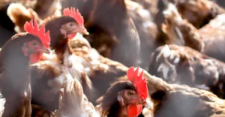
Highly contagious Avian flu seen in Kansas birds and cattle this year. Here’s the latest.

0

The lethal and highly contagious avian influenza has been detected this year in birds and cattle in Kansas.

The disease, also known as “bird flu” and H5N1, has infected only one Kansas flock of birds in recent months, after infecting 15 in December and January, said the website of the Kansas Department of Agriculture.

The disease was additionally identified as being present in two Kansas commercial dairy herds in March and two more in April, the KDA said.

What Kansas counties have avian flu hit this year?

Federal guidelines require all birds to be destroyed in any flock where HPAI is detected to try to slow the spread of the disease and alleviate the birds’ suffering, said Heather Landsdowne, KDA’s director of communications.

Symptoms among birds include coughing, sneezing, nasal discharge and other signs of respiratory distress; lack of energy and appetite; decreased water consumption; decreased egg production and/or soft-shelled, misshapen eggs; a lack of coordination; and diarrhea.

Avian flu between Dec. 4 and Jan. 19 affected five flocks in Mitchell County in north-central Kansas, four in Rice County in central Kansas, two each in McPherson and Barton counties in central Kansas and one each in Shawnee and Pottawatomie counties in northeast Kansas, the KDA website said.

The KDA quarantined all 15 premises involved but has since lifted those quarantines, it said.

Avian flu was then detected April 9 in a flock in Grant County in southwest Kansas, which remains under quarantine, the KDA said.

What about dairy cattle?

The KDA announced March 25 that the first two cases of avian flu in Kansas commercial dairy operations had been identified.

Two additional Kansas herds reported positive tests for bird flu in early April, the KDA said April 29, adding that the illnesses weren’t expected to pose a risk to the public. Dairies may only sell milk from healthy cows.

The KDA didn’t reveal the locations where avian flu was found in dairy cattle.

Avian flu symptoms are restricted mostly to late-stage lactating cows and include a drop in milk production, loss of appetite, and changes in manure consistency, it said.

What’s the risk of avian flu to people?

The risk of Avian flu to people is thought to be low.

USDA statistics service cancels some agriculture reports, and lawmakers push for return

0

Anna Pope
Harvest Public Media

The U.S. Department of Agriculture’s National Agricultural Statistics Service recently announced it is discontinuing a few market surveys due to budget cuts. Some lawmakers and industry groups have expressed concern and want the decision to be reversed.
Farmers, ranchers and agriculture groups will no longer be able to get county estimates for crops and livestock from the U.S. Department of Agriculture.
The department’s National Agricultural Statistics Service is stopping those estimates this production year, along with the July Cattle report and the Cotton Objective Yield Survey.
Troy Joshua, director of NASS’  Statistics Division and executive director of USDA’s Agricultural Statistics Board, said the decision was not made lightly.
Joshua said NASS received the new budget six months into the fiscal year at a level 22% lower than what was requested. That amounted to an 11% cut, or roughly $23 million below last year’s budget.
“We expected a cut, but we didn’t expect it to be that deep of a cut,” Joshua said.
Before canceling the reports, he said the department made internal adjustments, including cutting back on travel and stopping modernization projects. The county crop and livestock estimates cost about $7 million to run annually, while the cattle survey costs about $550,000.
“If we get the funding for next year, we would love to bring those projects back,” Joshua said, “because we see that those projects are very useful and beneficial to the agricultural communities.”
A bipartisan group of more than 70 federal lawmakers expressed concern in a letter sent to USDA Secretary Tom Vilsack asking him to reverse the decision. They stated that the reports offer transparency and market anticipation for the whole agricultural sector.
“While we recognize that NASS has seen a modest year-over-year appropriations reduction, we hold that the costs to industry will be more adverse than the cost savings NASS may realize through cessation of these reports,” the letter stated.
Legislators requested NASS officials work with Congress and stakeholders to find other cost cutting routes and continue publishing the surveys. In the letter to Vilsack, lawmakers pointed out the division made plans to stop the July Cattle survey in 2016 but brought it back after facing opposition to the move.
How those report
s are used
Every year, the statistics service conducts about 450 surveys on 200 commodities, according to the USDA’s budget summary for the 2024 fiscal year.
Ben Brown, a University of Missouri extension economist and research analyst with the Food Policy Institute, said NASS’ information is the “gold standard” and uses it in different ways to inform their work.
He said it takes a lot of manpower and money to do the type of data collection the service provides. Meanwhile, budget cuts have been seen across USDA agencies.
“Some of the other agencies have discontinued grant opportunities that they have done with cooperators, like cooperative agreements” Brown said. “And so, costs are going up and USDA is handling that in a variety of different ways.”
The July Cattle report is the second survey published annually that describes the nation’s cattle herd. Another cattle report is published in January.
Tanner Beymer, the senior director of government affairs for the National Cattlemen’s Beef Association, said the July Cattle report is important, because it provides an understanding of what the year’s calf metrics look like. For instance, he said right now there are fewer cattle, which is pushing prices higher.
“Our members have had about five or six years of difficulty making a profit, and so this is very welcomed,” Beymer said, “but it’s difficult for us to forecast how long that’s going to last without access to tools like these NASS reports.”
Beymer believes there are cost-cutting opportunities the statistics service did not examine thoroughly enough, including digitizing surveys.
“When you’re sending out thousands and thousands of paper surveys to farmers and ranchers, that does start to add up pretty quick,” he said. “And I think that there are some digital options they can look at; they can look at different sampling methods that can forecast that information out.”
NASS held a recent webinar to highlight other data points the service offers.
Going forward, Joshua said people can reach out to their state NASS offices or the national headquarters, and they will continue to provide quality data.
This story was produced in partnership with Harvest Public Media, a collaboration of public media newsrooms in the Midwest. It reports on food systems, agriculture and rural issues.
https://www.kcur.org/news/2024-05-16/usda-statistics-service-cancels-some-agriculture-reports-and-lawmakers-push-for-return

Keeping mosquitoes in check

0

Jacob Klaudt
K-State Research and Extension news service

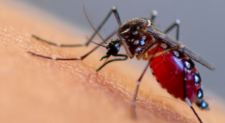
Recent warming temperatures and wet weather patterns have created ideal conditions for mosquitoes, said Kansas State University entomologist Raymond Cloyd.
“There are a lot of situations (near the home) where standing water is around,” he said. “We need to be aware of mosquitoes.”
Cloyd suggests clearing out the breeding environments used by mosquitoes to help mitigate their numbers near homes.
“The way we approach mosquito management is source reduction, that is, remove all stagnant water from bird baths, old tires, wheelbarrows, or anything that holds water for an extended period of time,” he said.
Other ways to get rid of mosquito breeding grounds, according to the K-State Research and Extension publication, Pests That Affect Human Health: Mosquitoes and West Nile Virus: Eliminate artificial water-holding containers. If that is not possible, empty buckets, cans, bottles, used tires and other containers at least once a week.
Fill or drain tree holes, stumps and puddles.
Irrigate gardens and lawns carefully to prevent water standing for more than a few days.
Check for water trapped in plastic covers on boats and swimming pools.
Make sure rain gutters are clean and do not hold water.
People can also use a wide variety of repellents to lessen the presence of female mosquitoes during the times they’re most active, according to Cloyd.
“If you’re going to be out at dusk and dawn, spray your body with a repellent such as DEET, Picaridin or IR3535,” he said.
Permethrin acts as another form of female mosquito control that affects them directly, but it must be applied properly to ensure human safety.
“Permethrin is an insecticide, but you don’t spray it on your skin,” Cloyd said. “You spray it just on your clothing. When you come back inside take a shower (after application).”
Mosquito management can also occur during the early phases of the insect’s life cycle using a larvicide in the form of mosquito dunks or bits.
“You can put mosquito dunks and bits in water to kill mosquitoes in the larval stage,” Cloyd said. They’re completely harmless to pets and fish; all they kill is mosquito larva. So if you have a pond that’s not agitated or a bird bath you don’t want to change, you can throw in these mosquito dunks or bits. They’ll eat it then they’ll die.”
He added: “Dunks and bits are stomach poisons that contain the active ingredient, Bacillus thuringienesis (subspecies kurstaki, or Btk). Btk is a soil-borne bacterium that only kills mosquito larvae. It will manage mosquito larval populations for one to four weeks after application.”
More information about mosquito management is available at local extension offices in Kansas.

Lettuce Eat Local: Getting into a bit of an onion pickle

0

Amanda Miller
Columnist
Lettuce Eat Local

It beckoned irresistibly in the evening light, that glass pitcher of bright pink liquid on the drinks table. The little girl with the ponytail and the thirsty eyes carefully poured herself a cup, and brought it up to her lips for a sip. 

I could see the whole thing happening from a distance, yet due to the nursing baby in my arms, was powerless to stop it — or at least that’s my slightly sadistic excuse. Brian was right there refilling the mint tea pitcher; he could have stopped her, but I’m sure it was his similarly morbid curiosity that silenced his restraining voice. We watched with bated breath.

Because someone had moved the pink pitcher from its intended location and extremely helpful label, and instead of being the deliciously fruity beverage I’m sure she expected, this was actually onion juice. 

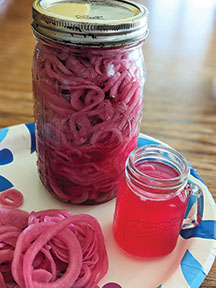
Yes, onion juice, or rather, pickled red onion brine. 

Brian said her face immediately reflected the horror that seems appropriate for a child expecting a sweet swallow and getting a vinegary, salty gulp. I don’t know who she was, but she has good parents, because though I’m sure she felt compelled to spew out and toss the offending drink, she politely controlled her reaction and gingerly carried the cup away with her, eyes wide and still reeling in shock. She managed to preserve both her own dignity and drinks-server Brian’s, perhaps sacrificing her tastebuds in the process. 

As they say, don’t drink the Kool-Aid. 

The problem is, some people were. Voluntarily, nonetheless! Which is why it was out there in the first place; people in the kitchen kept sampling the onion juice and being surprised at how gorgeous and (purportedly) good it was. Acidic, salty, a little sweet, and very oniony: basically red-onion-flavored gatorade, full of electrolytes and bonus anthocyanins. What’s not to like? 

Well, for me, actually a lot. I can’t eat raw onions; I don’t have an allergy, but my stomach doesn’t digest the certain sugar in the allium family, so raw onions, shallots, chives, etc and all forms of garlic are out for me. I also now associate their flavor with feeling bad, so while I didn’t mind making the pickled onions, drinking the juice sounds like a particular level of torture to me. 

But that’s clearly not what everyone thought, as the “onion gatorade” pitcher was almost empty by the time the little girl came up to it. This was all taking place as I was catering an annual several-hundred-person farm party evening at a local dairy farm, and what I had anticipated being plenty of pickled onions ran out last year in minutes. We played it real safe this year, mandolining and quick-pickling almost fifty pounds of onions. (Thank goodness we made the mint tea afterwards, giving the prep room a more refreshing, less eye-burning and nostril-clearing, aroma.)

We did not run out this year. But we sure went through a good quantity; people loaded up their taco bowls with the tangy, crunchy, hot pink onion rings. Pickled onions are a surprisingly versatile garnish, adding color, flavor, and texture to anything from sandwiches to salads to charcuterie boards. Memorial Day marked the start of grilling season, and pickled onions want to be at every cookout. They are quick and easy to make, requiring little time and few ingredients, and keep for weeks in the fridge. 

Oh, and did I mention they also provide a bonus great beverage? Just maybe make sure you label it. Or don’t. 


Pickled Red Onions

You can’t have pickled red onion juice without making pickled red onions, and while the juice can only maintain its appeal for a few sips, the onions can be your friend for a long time (although you might lose a few other friends in the process, depending on the resultant breath situation). Keep a jar at the ready in the fridge and you’ll be surprised how many occasions you’ll find to pull them out — and not just to gaze at their beauty or trick your guests with the Kool-Aid. This is a great base recipe, but you can play with using apple cider vinegar, or honey, or adding fresh thyme, or whatever. 

Prep tips: a mandoline makes majestically quick work of getting evenly thin slices, but as always, I remind you to use proper caution and ensure those slices are only onions and not fingers.

2 pounds red onions, sliced thinly into rings

1 ½ cups water

1 ½ cups white vinegar

⅓ cup white sugar

1 ½ tablespoons fine salt

Put onions in a widemouth glass jar(s) or stainless steel bowl. Heat remaining ingredients just to a simmer, stirring to dissolve the sugar and salt. Pour carefully over the onions, adding a little water/vinegar if you need more liquid to cover the slices. Let cool before refrigerating (in a tightly lidded container).