Wednesday, February 11, 2026
Home Blog Page 402

“Early intervention”

0

It has been a few years since my children were babies! Having spent my youth as a babysitter and a career in pediatrics, I was pretty comfortable in watching the developmental of babies, toddlers and young children. ( Teenagers are another story for another day!!) That isn’t always the case for young parents who may not have experience with this age group.

Babies develop in a somewhat predictable fashion. As you think of a newborn, you might think of the poor neck control which changes drastically over the next few weeks to months. Perhaps you think about the cooing, babbling and words that may start in the 8-10 month time frame.

As the parent, grandparent or care provider It is important to know the basic milestones so that you will be aware of a child who may have developmental delays and may need assistance. Early intervention is a system of services that helps babies and toddlers with developmental delays or disabilities. Early intervention focuses on helping eligible babies and toddlers learn the basic and brand-new skills that typically develop during the first three years of life, such as:

· physical (reaching, rolling, crawling, and walking);

· cognitive (thinking, learning, solving problems);

· communication (talking, listening, understanding);

· social/emotional (playing, feeling secure and happy); and

· self-help (eating, dressing).

The Grants for Infants and Families program (Part C) awards formula grants to the 50 states, District of Columbia, Puerto Rico, the Department of the Interior, and Outlying Areas to assist them in implementing statewide systems of coordinated, comprehensive, multidisciplinary, interagency programs and making early intervention services available to children with disabilities, aged birth through two, and their families. Under the program, states are responsible for ensuring that appropriate early intervention services are made available to all eligible birth-through-two-year-olds with disabilities and their families, including Indian children and families who reside on reservations geographically located in the state.

(Center for Disease Control- CDC- Early Intervention website)

To help monitor a child’s developmental milestones, the CDC has put out a free development tracker app. The app offers photos and videos to guide you. This is an excellent way to follow your child’s progress and intervene if needed. The earlier the intervention, the better for the child.

If you have concerns about your child’s development, speak to your primary care provider who will help you with a referral for services.

Joanie S. Holm, R.N., C.N.P. is co-founder and president of Healing Words Foundation that supports Prairie Doc® programming. Follow The Prairie Doc® at www.prairiedoc.org and on Facebook featuring On Call with the Prairie Doc® a medical Q&A show providing health information based on science, built on trust for 21 Seasons, streaming live on Facebook most Thursdays at 7 p.m. central.

KU News: New grant will fund study on preemption’s effects on health, economic disparities in Kansas City

0

From the Office of Public Affairs | http://www.news.ku.edu

Headlines

Contact: Carrie Caine, Institute for Policy & Social Research, 785-864-9102, [email protected]

New grant will fund study on preemption’s effects on health, economic disparities in Kansas City

LAWRENCE — Knowing that economic and racial disparities are correlated with poor health and lower life expectancy, in 2015 Kansas City area policymakers tried to increase the local minimum wage. Yet, after the Kansas City Council passed its ordinance, the Missouri Legislature countered with a bill restricting local governments from setting a higher local minimum wage than the state.

This one example highlights the legal doctrine known as preemption, the ability of a higher authority of law to override the decisions of a lower one – in this case, the precedence of state laws to override local policy.

The Robert Wood Johnson Foundation and the Urban Institute’s Policies for Action program has awarded more than $382,000 to researchers at the University of Kansas and the National Academy of Public Administration for a study of how such preemptive public policies may be contributing to economic insecurity and health inequities in the Kansas City area. The research team will use policy narrative analysis and participatory modeling to study how state preemption affects the economic, housing and health insecurities of communities of color in Kansas City.

Sharp economic disparities exist in the Kansas City area. U.S. Census Bureau data shows that homeownership rates for white residents are 3 to 5 times higher than rates of Black homeowners and that the average annual income of Black workers is 19-27% less than weekly wages for white workers in the region. An Urban Institute report shows that economic hardship is correlated to poor health, and these gaps contribute to stark health disparities in the region. The City Health Dashboard reports the average lifespan for Black residents is between 4.5 and 6.2 years shorter than the average lifespan for white residents.

Chris Koliba, Edwin O. Stene Distinguished Professor of Public Administration, Policy & Governance in the School of Public Affairs & Administration at KU, and Nancy Augustine, director of the Center for Intergovernmental Partnerships at the National Academy of Public Administration, will lead the study.

“We are excited that the Robert Wood Johnson Foundation saw fit to award us this grant to develop a better understanding of the ‘narrative ecosystem’ shaping the policy debates regarding state preemption and locally generated responses to health, wage and housing disparities in the K.C. metro region,” Koliba said. “We hope to surface how policymakers, advocates and those most impacted by state preemption narrate why and how these policy actions are impacting wage earners, employers, renters and landlords.”

The research team will engage members of the community, advocacy groups and service providers to learn how they think about policies that disproportionately affect communities of color.

“We hope to share the different ‘narrative ecosystems’ surrounding these policy actions with those most impacted by them by partnering with community-based organizations serving communities of color in the region,” Koliba said.

In addition, the partnership between Koliba and Augustine as principal investigators for this project reflects a new direction for the National Academy of Public Administration. The academy supports federal, state, local and tribal governments and other organizations through research and resources.

“The relationship between local, state and federal decision-makers is a critically important area of study as communities seek to improve public health and economic outcomes,” said Terry Gerton, president and CEO of the National Academy of Public Administration. “The more we understand about how preemption impacts everyday people, the better equipped governments at all levels will be to work towards solutions that empower everyone. We’re excited to partner with the University of Kansas on this important work.”

The Institute for Policy & Social Research supported the proposal and will manage the project.

-30-

————————————————————————


KU News Service

1450 Jayhawk Blvd.

Lawrence KS 66045

Phone: 785-864-3256

Fax: 785-864-3339

[email protected]

http://www.news.ku.edu


Erinn Barcomb-Peterson, director of news and media relations, [email protected]


Today’s News is a free service from the Office of Public Affairs

KU News: KU research examines why athletes use authenticity in personal branding, how personal life influences brand

0

From the Office of Public Affairs | http://www.news.ku.edu

Headlines

Contact: Mike Krings, KU News Service, 785-864-8860, [email protected], @MikeKrings

KU research examines why athletes use authenticity in personal branding, how personal life influences brand


LAWRENCE — Seemingly everyone has a personal brand these days, especially elite athletes. The ways athletes build and manage their brands online both in ways they can control and ways they cannot — like how people comment on Patrick Mahomes’ personal life — are at the center of research from the University of Kansas.

Nataliya Bredikhina, assistant professor of sport management in KU’s School of Education & Human Sciences, has published a pair of studies looking at why authenticity is central to building an athlete’s brand and how athletes’ personal lives are also a part of their human brand. The findings can help marketers and athletes alike understand the factors at play in presenting oneself to the world.

Written with co-authors Thilo Kunkel and Ravi Kudesia of Temple University, the research was published in the Journal of Sport Management.

Authenticity in athletes’ personal branding

Authenticity has long been viewed as paramount to building a personal brand. People want to see who a person genuinely is in their day-to-day life. Previous marketing research has focused on how consumers perceive brand authenticity but focused little on how brand producers strategize authenticity.

“Authenticity in marketing has become a big topic,” Bredikhina said. “Nowadays consumers aren’t just looking for the biggest or most popular brand but something that means more. The focus has generally been on the consumer. We’re asking what is authenticity from the producer’s perspective.”

Bredikhina interviewed 30 elite athletes in sports such as volleyball, tennis, bodybuilding and triathlon about how they manage their personal brands and why. Authenticity routinely came up as an important factor to the athletes, but how they negotiate what is authentic and how to achieve it was not routine.

“What do people want to see? If I were in their shoes, what would I want to see? What do I want to show? What do I want to look back on and see on my social media? I have found this internal dialogue a little bit complicated,” an Olympic bronze medalist in softball said in one of the interviews.

Bredikhina, a former Division I tennis player, said the athletes primarily marketed themselves via social media. The medium was seen as a way to present aspects of themselves that are not covered by traditional media. Respondents said authenticity was important to them because without it, it would be more difficult to garner attention or achieve their goals.

And those goals were about more than just getting attention or promoting their competitions. Several athletes reported online branding allowed them to land endorsement deals, sponsorships and was a way to make additional income.

“Being able to find their voice and engage with their audience, for some, was a matter of survival in their sport,” Bredikhina said. “For example, triathlon is a very expensive sport with equipment costs in the thousands of dollars. Without being able to get sponsorship, some athletes would no longer be able to compete.”

Athletes interviewed were what are sometimes referred to as “nanoinfluencers” or “microinfluencers,” ranging in followers from under 10,000 to approximately 30,000.

Respondents reported they felt a need to present themselves authentically, posting not only about their sport, but about their daily lives. However, that also came with risks.

In addition to the nearly ubiquitous negative comments of social media, athletes voiced concerns over invasion of privacy from fans. There was also a perceived external expectation to share vulnerabilities such as how athletes dealt with injuries, poor results in competition and life’s disappointments, but such content carried both the potential of supportive engagement as well the risk of negative feedback.

Similarly, some athletes reported being approached with gambling-related requests.

Despite the potential pitfalls, athletes generally reported they felt being authentic was the best way to achieve their brand goals. And the athletes were learning through trial and error, as they largely did not employ marketing agencies to help generate content and manage their brands, but performed those tasks themselves, in addition to their athletic endeavors.

Bredikhina said she hopes to examine how negotiating authenticity in personal branding affects athletes’ psychological well-being in future research.

“The topic of authenticity kept coming up with the athletes, but they were trying to achieve it in different ways,” Bredikhina said. “In trying to reconstruct the psychological process of how we build authenticity, we found there were internal and public pressures on how to achieve it. With these athletes, that’s where the most complex negotiations took place.”

Romance in the socioecology of an athletic brand

Superstar athletes and their marketing teams present the aspects of their lives they want fans to see. But they have limited control over how people view their social lives away from the field of play.

To address the socioecological aspect of a human brand of a famous athlete, Bredikhina and co-authors analyzed consumer responses to three Facebook posts from ESPN regarding the personal life of Kansas City Chiefs quarterback Patrick Mahomes and his then-fiancée, Brittany Matthews.

The authors focused on three posts by ESPN announcing the couple’s engagement, pregnancy announcement and a post featuring Matthews’ comment on Mahomes’ ranking among NFL quarterbacks. The results shed light on the socioecological aspect of the “human brand” of a famous athlete.

“Personal brands are so rich. There is a human identity that comes into play,” Bredikhina said. “We have so many expectations in relation to gender norms, how people should behave, race and more. There is acknowledgement that these celebrity brands are human, and consumers are looking at celebrity athletes’ social circles, not just their athletic performance.”

Authors analyzed 5,115 comments from the three posts. When analyzing how consumers perceive Brittany Mahomes, predominant themes included that she was a problematic presence for Mahomes, a woman only interested in his money or a “ride-or-die chick.”

Interestingly, perceptions of Matthews informed perceptions of Mahomes’ brand. When analyzing how consumers perceive the quarterback, primary themes included a trapped celebrity athlete, racial inferiority and alpha masculinity.

While it is common to find negative comments online, many of those intended to be positive carried with them troublesome reinforcement of stereotypes and societal norms. Examples included those claiming Matthews was a better evaluator of quarterback talent than professional scouts and others that said Mahomes was such a successful player due in part to having a dedicated wife to take care of the household.

Few comments recognized Matthews for her own accomplishments, including playing professional soccer and being highly involved in the fitness industry.

“We found that, even though this is just one element of his life, the roles consumers assign to his romantic partner influence their perceptions of the athlete’s role on the field, as well as the rest of his brand,” Bredikhina said.

Written with co-authors Katherine Sveinson of the University of Massachusetts-Amherst and Elizabeth Taylor and Caroline Heffernan of Temple University, it was published in the journal European Sport Management Quarterly.

The findings help illustrate how an athlete’s personal life and reaction to it are part of brand equity for the individual and entities that are within their sphere. The human brand is embedded in societal norms, the data showed.

“A human brand is a story. This isn’t just a brandmark, but it integrates multiple aspects of a person’s life,” Bredikhina said. “I think, inevitably, if there is a romantic partner that we know of, they will be part of the story. These posts were very heteronormative, and there was a lot to unpack about how we present and perceive women in the roles of athletes’ wives and girlfriends and how that influences the athletes’ brands.”

-30-

————————————————————————


KU News Service

1450 Jayhawk Blvd.

Lawrence KS 66045

Phone: 785-864-3256

Fax: 785-864-3339

[email protected]

http://www.news.ku.edu


Erinn Barcomb-Peterson, director of news and media relations, [email protected]


Today’s News is a free service from the Office of Public Affairs

Public Health Advisories for Kansas Lakes Due to Blue-Green Algae

0

The Kansas Department of Health and Environment (KDHE) and the Kansas Department of Wildlife and Parks (KDWP) have issued a public health advisory due to blue-green algae.

A harmful algal bloom (HAB) may look like foam, scum or paint floating on the water and be colored blue, bright green, brown or red. Blooms can develop rapidly; if the water appears suspicious or there is decaying algae on the shore, avoid contact and keep pets away. These toxins can be absorbed by ingestion, inhalation of aerosols and even skin contact. Symptoms vary depending upon the type of exposure (e.g. direct contact, ingestion, inhalation) but can include rash, vomiting, diarrhea, fever, sore throat, and headache. If you, or your pets, come into contact with algae rinse the area with clean, fresh water. Suspected HAB-related health incidents, whether human or animal, regardless of season, should be reported at kdhe.ks.gov/1163.

Active Advisories

Warning

  • Atchison State Fishing Lake, Atchison County
  • Harvey County East Lake, Harvey County
  • Marion Lake (Reservoir), Marion County

Watch

  • Lake Shawnee, Shawnee County
  • Lovewell Lake, Jewell County
  • Webster Lake, Rooks County (Added May 31)

Lifted

  • Herington City Lake (Old), Dickinson County
  • Marion County Lake, Marion County

Hazard status indicates that a harmful algal bloom is present, and extreme conditions exist.

When a hazard is issued, KDHE recommends the following precautions be taken:

  • Signage should be posted at all public access locations.
  • It is recommended that either a portion of the lake or the entire lake or zone, be closed to the public.
  • In some cases, the adjacent land should be closed as well. Actual setback distances will be determined on a site-specific basis, if necessary.
  • When partial closures (i.e., beach or cove) are issued, the remaining lake or zone area will carry a warning status.

Warning status indicates that conditions are unsafe for human and pet exposure.  Contact with the waterbody should be avoided.

When a warning is issued, KDHE recommends the following precautions be taken:

  • Signage should be posted at all public access locations.
  • Inhalation of spray or aerosols may be harmful.
  • Lake water is not safe to drink for pets or livestock.
  • Lake water, regardless of blue-green algae status, should never be consumed by humans.
  • Water contact should be avoided.
  • Fish may be eaten if they are rinsed with clean water and only the fillet portion is consumed, while all other parts are discarded.
  • Do not allow pets to eat dried algae.
  • If lake water contacts skin, wash with clean water as soon as possible.
  • Avoid areas of visible algae accumulation.

Watch status means that blue-green algae have been detected and a harmful algal bloom is present or likely to develop. People are encouraged to avoid areas of algae accumulation and keep pets and livestock away from the water.

During the watch status, KDHE recommends the following precautions be taken:

  • Signage should be posted at all public access locations.
  • Water may be unsafe for humans/animals.
  • Avoid areas of algae accumulation and do not let people/pets eat dried algae or drink contaminated water.
  • Swimming, wading, skiing and jet skiing are discouraged near visible blooms.
  • Boating and fishing are safe. However, inhalation of the spray may affect some individuals. Avoid direct contact with water, and wash with clean water after any contact.
  • Clean fish thoroughly with potable water and eat fillet portion only.

Advisories are Lifted when cell densities and toxin concentrations dissipate to levels below the Watch thresholds.

KDHE investigates publicly accessible bodies of water for blue-green algae when the agency receives reports of potential algae blooms in Kansas lakes. Based on credible field observation and sampling results, KDHE reports on potentially harmful conditions.

If you observe a scum or paint-like surface on the water, small floating blue-green clumps or filaments in the water, or if the water is an opaque green, avoid contact and keep pets away. These are indications that a harmful bloom may be present. Pet owners should be aware that animals that swim in or drink water affected by a harmful algal bloom or eat dried algae along the shore may become seriously ill or die.

For information on blue-green algae and reporting potential harmful algal blooms, please visit kdhe.ks.gov/HAB and check out our interactive story and informative video.

Mosquito season: How to control and prevent bites

0

Entomologist discusses all things mosquitoes – from types to tips to protect yourself.

That familiar buzz and bite means mosquito season in Texas is here, according to a Texas A&M AgriLife entomologist.

Sonja Swiger, Ph.D., Texas A&M AgriLife Extension Service entomologist and professor in the Texas A&M College of Agriculture and Life Sciences Department of Entomology, Stephenville, said biting mosquitoes are a seasons-long problem that often changes based on the environment.

Swiger said the species present and whether mosquitoes are simply a nuisance or a disease vector likely depends on the environmental conditions. Temperature plays a role in mosquito emergence, but water availability is a major contributor to what mosquito species might be reproducing around your home.

The annual mosquito boom

Rainfall, especially with multiple storm systems that have saturated and flooded areas around the state, can significantly contribute to a boom in mosquito populations, Swiger said.

“People are seeing, and should expect to see, quite a bit more mosquito activity in the next days and weeks,” she said. “Our focus is going to be disease carriers that typically become a problem in late summer and early fall. However, all this rain has created plenty of habitat for floodwater and container species.”

Swiger divides mosquitoes into three categories – floodwater, container and stagnant – with emergence related to the environment they prefer.

Some mosquitoes prefer clear floodwater that collects in ditches. Others prefer to develop immature larvae in water that collects in items around the house like wheelbarrows, buckets and birdbaths. Stagnant puddles in hot, dry weather are the preferred developmental environment for other mosquitoes, including species that carry diseases like West Nile virus.

“Mosquitoes come in waves and can overlap as the season progresses,” she said. “It can help to understand what type you are dealing with, how to do your part to control them around your home, and how to protect yourself and your family because we are in mosquito season.”

First wave: floodwater mosquitoes

Floodwater mosquitoes are the first to emerge after rain events, Swiger said.

Heavy rains leave the ground saturated and create standing puddles in ditches and low spots in fields and lawns. Floodwater mosquito larvae emerge quickly after water becomes available. Eggs are placed there by females and wait for water, sometimes two to five years before rainfall reaches them depending on the species, Swiger said.

Floodwater mosquitoes are typically larger and more aggressive. These types of mosquitoes are often the persistent biters from dawn to dusk, Swiger said.

“The potential for standing water could make their habitat more widespread, which will make them a greater issue for more people than normal,” she said. “Any location that is holding water, even in saturated grassy areas, could be a breeding ground.”

Swiger said females lay more eggs in the moist soil around puddles, and either more larvae emerge or they go dormant and wait for water to return. Subsequent rains can wash larvae downstream but can also trigger dormant mosquito eggs.

Second wave: container mosquitoes

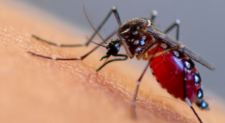
Container mosquitoes, which include the Aedes species identified by its black and white body and white striped legs, typically emerge next. Female mosquitoes lay eggs in anything holding water – from tires, buckets and wheelbarrows to gutters, unkept pools and trash cans. They prefer clearer, fresher water, and females are constantly looking for good sites for larvae to develop.

Container mosquitoes like Aedes are daytime feeders but can be opportunistic at nighttime when large groups of people gather, Swiger said.

“Any time after a rain, it is good to make a round on the property to look for anything that might be holding water,” she said. “It just takes a matter of days for these mosquitoes to go from egg to biter, so they can become a problem pretty quickly.”

Aedes aegypti larvae and pupae prefer water captured by containers like buckets, birdbaths and old tires, anything that can hold enough water to develop into adults. 

Third wave: Culex mosquitoes

Culex, a mosquito species that prefers stagnant pools of water with high bacteria content, typically emerge as waters recede and dry summer conditions set in and create development sites in low-lying areas. These are the disease carriers that concern the public and health officials, Swiger said.

It is not easy to forecast their emergence because their ideal environment can be washed away by additional rains or dried up by extreme heat and drought, Swiger said.

In rural areas, bogs, pooled creek beds or standing water in large containers such as barrels, trash cans or wheelbarrows can make a good habitat for Culex. In the city, mosquitoes can develop in small pools in dried up creeks or other low spots, but most urban issues occur underground in storm drains where water can sit and stagnate.

“It’s difficult to predict when or where these mosquitoes might become a problem,” she said. “Widespread heavy rain makes it even more difficult to predict.”

How to repel mosquitoes from yourself, children and pets

Swiger said reducing mosquito numbers in your location and the use of spray repellents are a good start when it comes to protecting yourself from bites. Covering exposed skin with long-sleeved shirts and long pants help as well.

Making recommendations for protecting people or locations from mosquitoes can be tricky, Swiger said. She does not recommend any repellents or mosquito repelling products that are not approved by the Centers for Disease Control and Prevention.

Anecdotal evidence exists that alternatives like essential oils repel mosquitoes, Swiger said. Spatial repellent devices like Thermacell are popular, however some people may balk at the chemical particles the units emit to create a barrier around a person or space.

Plants like citronella, geraniums, lemongrass, lavender, lantana, rosemary and petunias have been shown to repel mosquitoes, but Swiger said the distribution limits effectiveness for protecting a space. The number of plants and the location among other factors would weigh heavily into their effectiveness.

Candles and other smoke-based repellents fall into a similar category as plants, Swiger said.

“Protecting yourself with any spray-on, CDC-approved repellent like DEET, picaridin or lemon eucalyptus oil is my best recommendation anytime you go outside for an extended period,” she said. “Personal protectants are the only certainty against bites.”

Swiger said pets should be removed from areas with mosquito infestations. Small children should not be taken outdoors for long periods if mosquitoes are an issue because they can have adverse reactions to mosquito bites, and spray products should be used sparingly on them, especially babies. There are age restrictions for most repellents; no repellents on babies less than 2 months old and do not use lemon eucalyptus oil on children 3 and under.

“This time of year, it’s just best to limit their exposure to mosquitoes,” she said.

How to control, prevent mosquitoes

Controlling mosquitoes after widespread, heavy rains is difficult because their habitat can be so unpredictable, Swiger said. Container mosquitoes are a bit easier – remove the habitat by dumping the water or treat the water with granular or dunk larvicides.

“Empty containers filled with water as much as possible and look for standing water that can be drained or where dunk larvicides can be effective,” she said. “It’s just a matter of, how far do you take it before other options are necessary?”

Sprays or barrier treatments that kill adult mosquitoes are another option, but effectiveness is limited, Swiger said. Products that homeowners can apply only last 24 hours. Professionals can apply longer-lasting barrier products – typically pyrethroid-based or organic products – but their effectiveness degrades with time.

Some groups and municipalities initiate mosquito abatement programs, especially when major outbreaks occur or mosquitoes become a health risk, but they are temporary as well, Swiger said. They typically spray at night to kill adult mosquitoes, and the residue burns off in the sunlight after dawn.

“Some cities and counties do a pretty good job staying on top of mosquito control, but it can be an overwhelming task, and weather can hinder effectiveness,” she said. “The best thing to remember is to protect yourself when outdoors for extended periods, reduce sites where mosquitoes can develop as much as possible in your space and then be mindful of areas nearby that might become problematic.”