Wednesday, February 18, 2026
Home Blog Page 477

USDA Provides Emergency Conservation Funds to Help Texas Farmers Recover from Wildfires

0

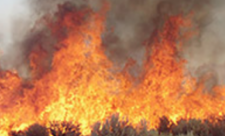
The U.S. Department of Agriculture (USDA) is opening a special disaster sign-up for $6 million in additional funding through the Environmental Quality Incentives Program for producers in the Texas panhandle who have been impacted by recent wildfires. Producers must submit applications to USDA’s Natural Resources Conservation Service (NRCS) by April 8, 2024, to be considered for this funding opportunity.

“The Natural Resources Conservation Service in Texas is prepared to assist landowners with their efforts to address resource concerns caused by the recent wildfires,” said Kristy Oates, NRCS State Conservationist in Texas. “Loss of vegetation not only affects forages for livestock and wildlife habitat, but it can lead to increased soil loss due to erosion from wind and water. We know many of our Texas producers were hit hard by this disaster and we are here to help.” 

Assistance includes practices aimed at replacing damaged infrastructure such as fencing and water resources, as well as management and recovery of affected lands. Eligible practices for the wildfire disaster funding include:

  • Access Control
  • Prescribed Grazing
  • Obstruction Removal
  • Emergency Animal Mortality Management
  • Fence
  • Water Facilities
  • Pumping Plant
  • Livestock Pipeline
  • Range Planting
  • Cover Crop
  • Critical Area Planting
  • Conservation Cover
  • Grazing Land Mechanical Treatment
  • Heavy Use Area Protection
  • Mulching
  • Structure for Water Control
  • Pasture and Hay Planting
  • Upland Wildlife Habitat Management
  • Wildlife Habitat Planting
  • Woody Residue Treatment

For more information about applying for EQIP assistance or help with evaluating land to address concerns following the wildfire, landowners and managers should contact their local USDA Service Center.

NRCS Assistance for Communities

NRCS also administers the Emergency Watershed Protection (EWP) program, which provides assistance to local government sponsors with the cost of addressing watershed impairments or hazards such as debris removal and streambank stabilization.

The EWP Program is a recovery effort aimed at relieving imminent hazards to life and property caused by floods, fires, windstorms and other natural disasters. All projects must have an eligible project sponsor. NRCS may bear up to 75% of the eligible construction cost of emergency measures (90% within county-wide limited-resource areas as identified by the U.S. Census data). The remaining costs must come from local sources and can be in the form of cash or in-kind services.

EWP is designed for installation of recovery measures to safeguard life and property as a result of a natural disaster. Threats that the EWP Program addresses are termed watershed impairments. These include, but are not limited to:

  • Debris-clogged waterways
  • Unstable streambanks
  • Severe erosion jeopardizing public infrastructure
  • Wind-borne debris removal.

Eligible sponsors include cities, counties, towns or any federally recognized Native American tribe or tribal organizations. Sponsors must be able to provide the local construction share, obtain permits and site access and agree to perform operations and maintenance of the constructed projects. Willing sponsors must submit a formal request (by mail or email) to the state conservationist for assistance within 60 days of the natural disaster occurrence or 60 days from the date when access to the sites become available. For more information, potential sponsors should contact their local NRCS office.

In addition to EWP, Conservation Technical Assistance is another valuable service that NRCS can provide following a wildfire. NRCS technical assistance can help fire victims with planning cost-effective post fire restoration practices.


Spring Holidays are a Treat, Don’t Let Bacteria Ruin Your Feast

0

It’s a special time of year, where friends and family from coast to coast will gather for a rare occurrence: the three major holidays of Easter, Eid, and Passover all falling within the spring season. People who observe these faiths will gather with friends and family to enjoy traditional meals.

“The holiday season is a special time to gather with friends and family and enjoy traditional meals,” said USDA Under Secretary for Food Safety Dr. Emilio Esteban. “Whether you’re celebrating your Easter dinner with ham, Eid lunch with lamb, or Seder meal with brisket, remember to keep food safety at the forefront.”

These holiday meals often have cultural significance and may require foods to be prepared early, so that religious obligations are completed prior to gathering and enjoying the meals. This provides an extended opportunity for foodborne illness to ruin major holiday dishes. The U.S. Department of Agriculture’s (USDA) Food Safety and Inspection Service (FSIS) wants to keep your celebrations going with some tips on how not to be at risk for foodborne illness.

Here are six pieces of advice from the USDA to keep your holiday meals safe:

#1 Keep Hands Clean Before, During, and After Food Prep

Handwashing is the first step to avoiding foodborne illness. In a recent USDA study, 96% of handwashing attempts failed due to not including all the necessary steps. Wash your hands for at least 20 seconds with soap and water before and after handling food and when switching between ingredients.

#2 Prevent Cross-Contamination of Surfaces and Foods

Cross-contamination is the spread of bacteria from raw meat and poultry onto ready-to-eat food, surfaces, and utensils. Avoid this by using separate cutting boards — one for raw meat and poultry, and another for ready-to-eat foods such as fruits and vegetables. Clean and sanitize any areas where meat and poultry have touched before and after cooking. Cleaning with soap and water physically removes the germs, and sanitizing kills any that may remain. Many different sanitizers can be used: an easy homemade version is to make a solution of 1 tablespoon of liquid chlorine bleach per gallon of water, or you can use a commercial sanitizer or sanitizing wipe.

#3 Thaw Meat and Poultry Safely

Leaving any frozen package of meat or poultry for more than two hours on the counter at room temperature is dangerous. Even though the center of the package may still be frozen, the outer layer of the food is in the “Danger Zone” between 40 and 140 F — a temperature where foodborne bacteria multiply rapidly and cause foodborne illness. Plan for refrigerator, cold water, or microwave thawing instead.

#4 Cook to a Safe Internal Temperature

Color is never a reliable indicator of safety and doneness. Use a food thermometer to ensure the following safe internal temperatures:

  • Cook fish to 145 F.
  • Cook beef, pork, lamb and veal steaks, chops and roasts to 145 F. For safety and quality, allow meat to rest for at least three minutes before carving or consuming.
  • Ham, fresh or smoked (uncooked): 145 F
  • Cook ground meats, including beef, pork, lamb and veal to 160 F.
  • Cook egg dishes to 160 F.
  • Cook poultry (whole or ground) to 165 F.

When reheating already cooked meat, poultry or egg items that have cooled, they should be reheated to at least 165 °F. USDA recommends reheating cooked meat, poultry or egg products on the stove top, in the oven, or in a microwave.

#5 Keep Hot Foods Hot, and Cold Foods Cold

Food should not be left in the Danger Zone for more than two hours (called the two-hour rule). After two hours, bacteria can reach dangerous levels that can cause foodborne illness. Perishable foods, such as kebabs or brisket, should be discarded if left out for longer than two hours.

To prevent food waste, refrigerate or freeze perishable items within two hours, or keep hot foods hot and cold foods cold. Keep cold foods at a temperature of 40 F or below by keeping food nestled in ice or refrigerated until ready to serve. Keep hot foods at a temperature of 140 F or above by placing food in a preheated oven, warming trays, chafing dishes or slow cookers.

#6 Use or Freeze Leftovers within Four Days

Leftovers (including appetizers, side dishes and main courses) should be stored within two hours of cooking. Divide leftovers into smaller portions and refrigerate or freeze them in shallow containers, which helps leftovers cool quicker than storing them in large quantities. Place leftovers into airtight containers to help keep bacteria out and retain moisture.

Leftovers can be kept in the refrigerator for three to four days or frozen for three to four months. Although safe indefinitely, frozen leftovers can lose moisture and flavor when stored for longer times in the freezer.

If you have food safety questions, call the USDA Meat and Poultry Hotline at 1-888-MPHotline (1-888-674-6854), email [email protected] or chat live at www.ask.usda.gov from 10 a.m. to 6 p.m. Eastern Time, Monday through Friday.

It’s time to embrace the power of flowers this spring

0

There’s no time like the present — especially when it comes to plants for a spring garden. Much of the state has experienced early spring weather, which means the sooner you can get to certain garden tasks, the better off your yard will be.

For everyone who has “embraced the ugly” and practiced pruning restraint, now is the time to start making your garden beautiful for spring, said Larry Stein, Ph.D., Texas A&M AgriLife Extension Service horticulture specialist at Uvalde and professor in the Texas A&M College of Agriculture and Life Sciences Department of Horticultural Sciences.

“If you’ve got new growth, simply cut the old shoots back to the new ones,” Stein said. “The old shoots will then offer the new shoots a bit of protection from the wind for now.”

But Mother Nature can be fickle, so gardeners should also be prepared to cover delicate plants should a spring frost occur. Plants already blooming or showing significant growth may also be better off being pruned later.

Top Garden Tips for March

Stein offered the following tips for gardeners this month:

1. Early March is the time for pruning evergreens and summer-flowering trees and shrubs. However, you may want to take a wait-and-see-approach this year with your spring-flowering trees and shrubs and postpone a prune until they finish blooming.

2. Reference Aggie Horticulture for your area’s average last killing freeze date. Remember that killing freezes can occur after this date. Plant warm-season vegetables from seed, according to the planting guide on Aggie Horticulture.

3. Waiting to prune fruit trees due to the early spring is also fine if you plan to wait and see what kind of fruit crop is set and then prune to thin the crop.

4. Prepare beds for planting flowers and vegetables if you haven’t done so yet. Consider using a garden tiller to speed up the process; however, a garden fork and some muscle will still do an excellent job. For every 100 square feet of bed area, work in a several-inch layer of either compost, pine bark or sphagnum peat moss, plus 5 pounds of balanced fertilizer.

5. Tomato and pepper plants started outdoors from seed can grow so quickly that they will catch up with commercial plants within a few weeks. For many gardeners, this is the only way to obtain rare or heirloom varieties. Because this has been a winter with erratic weather patterns, keep an eye on young tomato transplants so they may be covered if the threat of a late frost occurs. Don’t be in a hurry to set out young pepper plants; wait until the temperatures seem to be settled.

6. Beware of close-out sales on bare-root trees and shrubs. The chance of survival is rather low on bare-root plants this late in the season. Your best bet at this time of year is to depend on container-grown plants for landscape use.

Increase your flower power

Stein said there are practices gardeners can implement for landscape flowers and wildflowers for the upcoming season.

“Enjoy spring blooming wildflowers and do not mow until they have set and realized their seed,” he said. “Also, remember wildflowers will respond to fertilizer just as other plants do.”

March is also a time to thin larkspur and other wildflower seedlings. Plants will bloom much better if thinned to about 4 inches apart. Transplant or share the extras with gardening friends.

Stein said spring flowers and wildflowers may also need some water if conditions have been dry.

“If you have not had a 1-inch rain or so recently, go ahead and give them at least half an inch of water,” he said.

Baskets of petunias and other annuals can be hung for another dimension in landscape color. Plant dahlia tubers in fertile, well-drained soil. Select and order caladium tubers as well as geranium and coleus plants for late April and early May planting, but do not plant caladiums until the soil temperature reaches 70 degrees.

“Blue plumbago can be planted now for season-long low-maintenance color,” Stein said. “It is usually cold hardy to Zone 8 and in sheltered places elsewhere.”

Although tolerant of sunny conditions, blue plumbago prefers a little protection from the hot afternoon sun. It is quite drought tolerant and blooms from spring till frost.

Stein said if you have one attractive begonia plant you love, you can make the most of it and multiply it by carefully rooting stem cuttings.

Summer and fall flowering perennials also need attention now. Before they initiate their spring growth, dig and divide them. March is also an ideal time to repot overgrown container plants as well as plant containers of tropical plants for a stunning display of summer color.

As camellia and azalea plants finish blooming, fertilize them with an azalea-camellia fertilizer. Use the product label as the guide to the amount. Check mulch on azalea and camellia beds and add where needed. Also make sure to fertilize roses every four to six weeks until September.

Stein said in North Texas, there is still time to plant seeds of favorite annuals in flats to be transplanted outdoors when all danger of frost is past.

Time to plant potatoes in Kansas

0

For Kansas gardeners, St. Patrick’s Day means something much more than donning a favorite green outfit and heading to local celebrations.

Traditionally, the Irish holiday signals the date for planting potatoes.

“Actually, anytime from mid- to late-March is fine for potato planting,” said Kansas State University horticulture expert Cynthia Domenghini.

“Be sure to buy seed potatoes rather than using those bought for cooking. Seed potatoes are certified disease free and have plenty of starch to sprout as quickly as soil temperatures allow.”

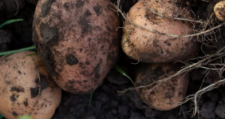
Domenghini notes that most seed potatoes can be cut into four pieces – “though large potatoes may yield more,” he said. Each seed should weight between 1 ½ to 2 ounces, and likely more than one eye.

Each pound of seed potatoes should yield 8 to 10 pieces, according to Domenghini.

“Cut the seed 2 to 3 days before planting so that freshly cut surfaces have a chance to suberize, or toughen, which provides a protective coating,” Domenghini said. “Storing seed in a warm location during suberization will speed the process.”

Domenghini recommends planting each seed piece 1 to 2 inches deep and 8 to 12 inches apart in rows.

Though it is important to plant potatoes in March, they emerge slowly,” she said. “It is often mid- to late-April before new plants poke their way through the soil. As the potatoes grow, pull soil up to the base of the plants. New potatoes are borne above the planted seed piece and it is important to keep sunlight from hitting the new potatoes.”

Domenghini said exposed potatoes will turn green and produce a poisonous substance called solanine. Keeping the potatoes covered will prevent this.

Domenghini and her colleagues in K-State’s Department of Horticulture and Natural Resources produce a weekly Horticulture Newsletter with tips for maintaining home landscapes and gardens. The newsletter is available to view online or can be delivered by email each week.

Interested persons can also send their garden and yard-related questions to Domenghini at [email protected], or contact your local K-State Research and Extension office.

Kansas pet board takes steps on identifying regulations for doggy day cares and kennels

0

The Kansas Pet Animal Advisory Board held preliminary discussions on regulating pet boarding facilities to keep animals staying at them safer.

“We have seen an increase in licensees and we’ve seen an increase in complaints in that category,” said Heather Lansdowne, director of communications for the Kansas Department of Agriculture. “It involves a lot of nonrelated dogs comingling together and can be potentially problematic.”

Most stays at dog boarding facilities go off without a hitch, but there have been injuries and deaths of dogs reported in Kansas facilities. Last year, an Olathe family lost both of their dogs while boarding them at a facility called Lucky Paws.

“Dogs in general are inherently dangerous because they have teeth and claws, so in any boarding or kennel-type situation the staff is at risk of being bitten,” said Julie Castaneda, a member of the Kansas Pet Animal Advisory Board who runs a boarding facility.

The discussions centered around the more expansive laws governing other states’ dog day cares, namely Iowa and Colorado. Iowa mandates certain sizes for communal play areas, temperament screenings before admitting a dog into group activities, obtaining medical history and a limit of 30 dogs to a single playgroup.

Kansas has less stringent requirements for its dog boarding facilities, and its regulations are more tied to safe facilities rather than the specific practices of facilities. The biggest safety concerns, though, are often in how staff manage dogs in their care.

“The biggest issue is that a lot of people don’t know enough about dogs to be caring for them,” Castaneda said.

It’s early in the process, but at the board meeting, panelists mostly wanted to stay away from such stricter regulations as staff-to-animal ratios and square footage of facilities.

“If you’re a well-run day care, there’s just so much that you’re managing and you’re very aware of body language and behavior and how much that plays a part, which is why I said from the beginning that education, training and managing staff are what keep dogs safe,” Castaneda said.

There are hard rules that will be considered, like requiring supervision during off-leash play.

The number and nature of pet boarding facilities has dramatically changed over the past 30 years, and modern kennels can include luxuries like one-on-one play time, grooming, special dog treats and supervised group play. The old school kennels are more spartan and may just include a place for the dog to stay.

The rise of more amenity rich doggy day cares coincides with more being spent on dogs in general. In 2020 Americans spent almost $100 billion on pet-related goods and services. And the American Pet Products Association estimates that number could reach $275 billion by 2030.

“We as a society have evolved in terms of making our animals our family, and people want to provide for them as a family member and take into account their social needs and their emotional needs and their physical needs,” Castaneda said.

The Pet Advisory Board’s discussion is just the first step in potentially regulating dog boarding facilities, and it is expecting to speak about it again at its next meeting before creating a more concrete list of policy recommendations. From that point, the board will solicit feedback before making final recommendations.

As reported in the Topeka Capital Journal