Sunday, March 8, 2026
Home Blog Page 715

The big shaft

2
john marshal

Over the past 20 years, the legislature has denied more than $1.5 billion in property tax relief owed to Kansas cities and counties and ordered by state law. The money, now as much as $100 million annually, is derived from the Local Ad Valorem Tax Relief fund, framed in statutes that date to 1937, reinforced in the 1960s and enhanced in 1992.
For several decades, legislators routinely complied with the law, known as a “demand transfer.” It requires that 3.63 percent of state sales tax revenues be moved to the fund and returned to local governments in two transfers ‒ in January and July. Distributions are based on local population (65 percent) and property valuation (35 percent).
The law was created to stabilize and reduce local property levies, a payback to cities and counties for acting as a state tax collector.
*
The legislature has routinely suspended the transfer each year since 2004, sidestepping its obligation. During those 20 years, local officials and advocates repeatedly asked lawmakers to adhere to law and share the revenue. Each year, the answer was no.
Melissa Wangemann, a lawyer for the Kansas Association of Counties, told the House Tax Committee in 2015 that lawmakers had shorted local governments by nearly $797 million since 1992, when they began to cut ‒ but not abolish ‒ the tax revenues owed to local governments. Of that total, an unpaid $742 million had accumulated between 2004, and 2015, when Wangemann testified.
In the eight years since her testimony local governments have been shorted another $776 million ‒ on recent average, $95 to $97 million per year.
From 2004 through this year, at least $1.5 billion in local tax relief has been sluiced away by legislators.
*
Soon after her election in 2018, Gov. Laura Kelly, a Democrat, made the request for local revenue sharing, and has repeated the appeal in annual budget proposals. The Kelly administration estimates that the state will collect about $2.8 billion in state sales taxes next year. The city-county portion, 3.63 percent by law, is $101.64 million.
Last September, before the 2023 legislative session, House Democrats introduced a three-part plan to lower property taxes; the plan included refinancing the local property tax reduction fund.
The Democrats’ plan was to replenish the fund with $54 million and double the amount for four more years to offset (somewhat) the decades of nonpayment.
The plan was ignored.
*
The legislature since 2004 has been dominated by large Republican majorities that have become increasingly conservative and influenced by hardcore special interest lobbies. Republicans today hold an 85-40 majority over Democrats in the House of Representatives and rule the Senate, 29-11.
Thanks to Kelly and a handful of GOP moderates, the state’s $9.4 billion operating budget carries a $1.7 billion (“rainy day”) reserve; atop this, the estimated budget balance is expected to increase to $2.6 billion in the budget year beginning July 1.
Republicans are eager to spend the Democrats’ savings. GOP legislators have long advocated income tax relief, especially for corporations and wealthy individuals. Their proposed flat rate for state income taxes, with great benefit to big business and high incomes, did not survive the governor’s veto this year. This plan is not dead.
Income tax relief, including the flat tax, multiple new exemptions and deductions, are likely focal points for the party’s 2024 election campaigns. Republicans are roused by the state’s multi-billion dollar surplus. They long for a spending spree that doles out billions in income tax cuts, an imaginary give-away fundamental to their election-year politics. No mention of local taxes, or local tax relief.
Meanwhile, local property and sales taxes continue to increase. A lot of the state’s multi-billion dollar surplus might be seen as money sluiced from local taxpayers.
The idea behind property tax relief is that the health of local government is crucial to the health of the state; without strong cities and counties, we cannot have a strong state.
Republican legislators seem to believe that local taxes are local matters; a billion, $2 billion hoarded in Topeka is the stuff of old statutes. Cities and counties, and the law, can wait.



An Overdose of Nonsense

0

People’s refusal to use Ivermectin to treat COVID 19 because it’s a “horse medicine” is like refusing to eat corn because it’s a hog feed. I’ve had three cowboy friends with COVID 19 who treated themselves with appropriate doses of Ivermectin and all three got better within two days!

Years ago I wrote a feature story about how Ivermectin was the only drug found to effectively treat river blindness in Africa. River blindness is a parasitic infection that can lead to permanent blindness and Ivermectin is given to entire communities living in endemic areas in Africa. The natives don’t refuse to use it because it’s a “horse medicine” as they prefer not to go blind.

Although I’m not condoning or recommending it (wink, wink), drugs that are used on animals have long been used on humans especially, with people who work with animals, like ranchers and veterinarians. Have you ever heard of sulfa, penicillin, prednisone, lidocaine, and a laundry list of other drugs where the animal and human versions are exactly the same? I’ve got to admit there were times I was tempted to give myself a shot of LA 200.

Prior to the 20th century doctors mostly used the “puke, purge and bleed” style of medicine.

The Hispanics called their doctors “matasanos” which roughly translated means “killer of the healthy.” A couple hundred years ago the only anesthetics were whiskey and opium and a lot of voodoo medicine was practiced. For example, rattlesnake venom was thought to cure leprosy, but first you had to survive the “milking” of the rattlesnake. Grease from beef tallow was used as salves, and potions made from the contents of cow’s stomachs were used to treat a variety of ailments and diseases. The great cowman, Charles Goodnight, believed that buffalo fat would cure anything. And you didn’t have to get a prescription from a doctor to get these concoctions as it wasn’t until the 20th century that doctors began writing prescriptions that only a pharmacist could decipher.

For over a century now Americans have been overdosing on stupidity and prescription medicines. I, for
example, am currently on 12 different prescriptions including a very expensive one. You know where it comes from? It’s ground-up pig pancreas and without it I can’t digest any food. That’s right, I wouldn’t be alive today if it weren’t for swine. I’m supposed to take two pills with every meal and was advised by my doctor not to take more than 20 of the pills per day, which makes me wonder how many times a day he thinks I eat.

When I think about humans taking animal drugs I am reminded of the old story about the rancher with the expensive bull who wouldn’t breed any cows because the bull was running low on libido. The vet prescribed some pills for the bull to cure the problem. When a friend asked the rancher what was in the pills the rancher replied, “I don’t know but it tastes like peppermint.”

For some reason, as a child I always thought my mother was trying to get rid of me so I didn’t trust any pills she gave me, even an aspirin, unless she took one first. I wasn’t the only one who did this. I’m a fan of the writings of Dr. Robert Miller and have known about him for a long time, even before I started reading his stories in Western Horseman. I grew up about 30 miles from Dr. Miller’s vet clinic and he enjoyed a sterling reputation and was regarded as America’s James Herriot. He was an exceptional vet for virtually every species, including zoo animals. In his book, “Yes, We Treat Aardvarks”, Dr. Miller told about the time he was called upon to treat a sick gorilla named Jerry who begged for the tablets that Dr. Miller got him to swallow after some initial resistance.

As Dr. Miller wrote, “That was the end of Jerry’s problem, but his master didn’t fare as well. I saw him a week later.”
“How are you Jim?” Dr. Miller asked.

“Not too good,” he answered. “I’ve been awfully constipated, the light bothers my eyes, and my mouth’s terribly dry. Been sittin’ in the bathroom all week with the lights out, drinking like a fish. But Jerry is fine! He always takes his medicine… just as long as I take some first.”


Insight: Securing Agriculture

0

Greg Doering
Kansas Farm Bureau

The official dedication and ribbon cutting for the National Bio- and Agro-Defense Facility in Manhattan this week is very welcome news. It also makes me feel old since the process to get here has taken nearly the entirety of my adult life.
Also known as NBAF, the facility is a state-of-the-art lab that will research animal diseases that can also infect humans and develop vaccines and anti-virals for some very nasty bugs. The facility is the replacement of the Plum Island Animal Disease Center off the coast of New York, which is more than six decades old. NBAF will investigate diseases like African Swine Fever, Nipah Virus, and foot and mouth disease (FMD), among others.
FMD is among the most contagious, infectious diseases in the world, and an outbreak in the U.S. would cost billions of dollars to the livestock industry alone. Vaccines exist for individual strains, but there’s so many different varieties it’s impossible to fully protect against.
The center of the country may seem like an odd choice for a facility that will study some of the most dangerous diseases that threaten our food supply, agricultural economy and public health. But NBAF will anchor the so-called Animal Health Corridor between Manhattan and Columbia, Missouri. The region is home to more than 300 animal health companies and accounts for 56 percent of total worldwide sales in the industry.
NBAF will further leverage the existing networking, collaboration, education and training already present in the area to not just protect but strengthen our food supply. The research will extend beyond known pathogens to emerging diseases to better understand their impact on livestock and humans.
The lab biosafety designation is the highest level possible, making it the first of its kind in the U.S. dedicated to studying animal diseases. As recent history has shown, such pathogens can spillover to affect humans so the research is critical for early identification to minimize the impact on public health.
While the ribbon cutting marks the end of construction and testing of the building, it will take another year or two for the scientific mission to become fully operational. Once it does, it will also provide round-the-clock diagnostic testing to quickly identify suspected pathogens. The diagnostic lab will also provide training to federal and state veterinarians so they can better understand how outbreaks occur and how to combat them.
It’s been nearly 20 years since the federal government first announced it was seeking to replace the Plum Island facility. Those two decades are full of twists and turns in the site selection and funding processes, but NBAF is poised to protect the nation’s food supply and human health from diseases both old and new for the coming decades. In short, Kansas will be at the center of securing agriculture for the foreseeable future.

Boat safe with these 10 safety tips

0

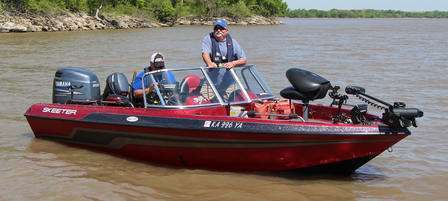
During National Safe Boating Week, May 20-26, Nebraska Game and Parks reminds boaters to brush up on safety rules in preparation for peak boating season.
Follow these 10 tips reduce the risk of incidents and help ensure a safe and enjoyable day on the water.
Take a boater safety course — Though it’s only a legal requirement for those born after Dec. 31, 1985, consider completing the Nebraska boating safety course to learn the top things you need to know about navigating Nebraska waters, what to do in an emergency and more. Find an in-person or online class at OutdoorNebraska.gov; search for “boater education.”
Check equipment — Before you launch, ensure your boat or kayak is in good running condition and all essential equipment is present, including a life jacket for every person on board. Paddlers of kayaks or canoes also should physically inspect their planned take-out point to make sure it is accessible.
Tell someone your plans — Before leaving home, let someone know where you are going and when you expect to return. Consider carrying a cellphone in a waterproof pouch, as well, in case an emergency occurs.
Wear a life jacket — Make your life jacket a statement piece and wear it, as it does no good stowed away if an emergency occurs. Children under age 13, those using personal watercraft and those being towed on skis or similar device must wear a U.S. Coast Guard-approved personal flotation device; it’s required by the law.
Be wary of surroundings — According to the National Safe Boating Council, nearly a quarter of all reported boating accidents in 2021 were caused by operator inattention or improper look-out. Pay attention to other boats, personal watercraft, swimmers, stumps and other hazards. Speeds in excess of 5 mph are prohibited if within 30 yards of any other vessel, swimming area or dock. If padding a kayak or canoe, be aware of possible debris below the surface or under bridges.
Have all required safety equipment — Life jackets, throw cushions, fire extinguishers and bailing devices are required on most boats. An engine-cut-off device or switch also is a good idea.
Avoid alcohol — Nearly one-third of all recreational boating fatalities occur when someone is Boating Under the Influence, a criminal violation enforced in Nebraska. Always designate a sober driver.
Watch the weather — Storms can pop up quickly in Nebraska. Check the weather in advance and monitor it during the day, if necessary.
Avoid hypothermia — Even though temperatures are rising, the water still can be cold. Hypothermia is caused by exposure to cold weather or water. Take caution to prevent hypothermia.
Keep it legal — Make sure you’ve registered your boat and, if a nonresident, purchased an Aquatic Invasive Species stamp at OutdoorNebraska.gov. Also remember anyone operating a motorboat or personal watercraft in Nebraska must be at least 14 years of age. Learn more about Nebraska’s boating regulations at OutdoorNebraska.gov; search “Go boating.”
National Safe Boating Week is the annual kick-off of the Safe Boating Campaign, a global awareness effort that encourages boaters to make the most of their boating adventure by being responsible.