
Wednesday, March 11, 2026
Home Blog Page 743

KU News: Study shows families making choices that perpetuate segregation in city with school choice policy

0

From the Office of Public Affairs | http://www.news.ku.edu

Headlines

Study shows families making choices that perpetuate segregation in city with school choice policy
LAWRENCE — Even though Brown v. Board of Education outlawed school segregation in 1954, racially segregated schools have persisted in practice. In recent years, the decades-long trend of white flight to suburbs has reversed in some areas as some white residents are moving to city centers. New research from the University of Kansas shows that in one such city that also has school choice policy, families are making decisions that perpetuate school segregation despite more opportunities for integration.

‘Cabaret’ examines themes as relevant as ever, opening April 20 at KU Theatre
LAWRENCE — A large crew, cast and ensemble will stage “Cabaret” April 20-23 and April 25-30 at the University of Kansas, including Kansans from Basehor, Hesston, Lawrence, Maize, Marion, Olathe, Overland Park, Shawnee, Topeka and Wichita. Although “Cabaret” is currently sold out, University Theatre will update any ticket availability on its website April 11.

Full stories below.

————————————————————————

Contact: Mike Krings, KU News Service, 785-864-8860, [email protected], @MikeKrings
Study shows families making choices that perpetuate segregation in city with school choice policy
LAWRENCE — Even though Brown v. Board of Education outlawed school segregation in 1954, racially segregated schools have persisted in practice. In recent years, the decades-long trend of white flight to suburbs has reversed in some areas as some white residents are moving to city centers. New research from the University of Kansas shows that in one such city that also has school choice policy, families are making decisions that perpetuate school segregation despite more opportunities for integration.
Washington, D.C., is a major metropolitan area with a school district policy that allows parents to choose the school their children attend. Data has shown that white families are returning to the city’s core in recent years, and while in theory that could lead to more integrated schools in a city with racially diverse populations, a new study shows that is not happening. As families regularly move amongst schools to get the most desirable one, they do not use their voice in attempt to improve schools and even game the lottery system that is designed to assign to students equitably among systems.
Bryan Mann, assistant professor of educational leadership & policy studies at KU, was lead author of a study that interviewed nine white parents about how they chose their children’s schools. This was part of a broader study that interviewed 20 parents and triangulated findings with GIS mapping and quantitative data. This portion of the study used Exit, Voice, Loyalty, a framework common in organizational theory and political research. It examines why people choose to stay with or leave an organization. Exit is reflected by those who choose to leave, loyalty is reflected by those who stay, and voice is represented in the choice to advocate for changes and improvements to a system. The study, written with Annah Rogers of the University of West Alabama, was published in the journal Urban Education.
“When you think about community-driven school reform, you think about loyalty and how parents use their voice to change things. I was curious about the school ecosystem in D.C. that has gentrification and if it still tracks with these ideas of loyalty and voice,” Mann said. “Here people can exit a school or exit the system altogether and go to a private school. We found those who have the tools to exit or work within the system to move are more likely to move. That’s part of what exacerbated school segregation.”
The study focused on in-depth interviews with parents who recently moved into the city and whose children attended district schools. Part of a larger study focusing on gentrification and its effects on school integration and choice, it asked parents what they valued in a school and how they behaved in making their choices. Interviewees expressed logistical values such as commute time. Several said they wanted to avoid schools near downtown as that would exacerbate commute time because of heavy traffic. However, those with the means reported making alternate plans to work around such concerns in ways like flexible work schedules if that allowed them to get their child in a desired school. Parents also said they largely valued schools that feed from one elementary into a prestigious middle school, and they largely valued bilingual curriculum. Low-performing schools were said to be schools to avoid, not improve. Few parents mentioned racial makeup of schools, though the ones who did indicated schools with large minority populations were to be avoided.
In terms of behaviors, parents frequently reported playing the school system’s lottery every year. The lottery is intended to distribute students evenly among schools, based on available seats and where a family lives. But parents reported entering their children each year in hopes they would get selected for the one they wanted most. They even reported gaming the system, which it is set up to avoid, using tactics such as establishing a mailing address close to the school they wanted.
“This shows there is competition between children for spots in schools. This is different than competition between schools for children. Competition for spots undermines improvements and equality for schools,” Mann said. “Families showed that with all the ways they compete. It’s a lottery system that is supposed to be fair and ‘ungameable.’ But they still found ways to try to get the schools they viewed as prestigious.”
Parents also routinely mentioned the importance of “playing the long game.” If their student didn’t get the school they wanted one year, they would try again in each subsequent year in hopes of getting their child to a more desirable school to then feed into a better middle school. The lottery system includes public and charter schools, and when students did not get the school they wanted, they also reported having an easier time changing schools in transition grades such as pre-K/kindergarten, fifth and ninth grades. In addition to manipulating the system, others reported a willingness to move out of the city to avoid schools they didn’t want or sending their children to private school.
“Exit is the default, and disloyalty is the norm,” Mann and Rogers wrote about the findings that showed parents rarely used their voice in an attempt to improve schools and preferred leaving schools or the system.
The strategies and choices of parents in the study are important to consider, as “the long game remains separate and unequal,” the authors wrote. Census data shows that in 1954, D.C. public schools enrolled 57% Black/minority and 43% white students with complete segregation. The Brown decision led to white flight on a large scale, and by 1990, the percentages were 96% and 4%, respectively. Gentrification from 2000 to 2019 shows that trend reversing, but not equally, as the authors cite data that shows white enrollment in D.C. schools was 11.9% in the 2018-19 school year, even though white city population had increased to 39.6% in 2020. Racial segregation is persisting in the city’s schools, the data shows.
The results should be considered as part of the national debate about school choice policy and indicate that it tends to result in continued school segregation as affluent families and those with means navigate the systems to their benefit instead of working to improve schools viewed as less prestigious. Even when parents voiced concern about other children, communities and schools, the market-based school and housing system encouraged them to advocate for improving choice mechanisms rather than improving the schools themselves.
“If the ideal is a fully integrated school system, it’s barely trending in that direction, and it is not reaching the ideal,” Mann said. “These lessons are important because policymakers across the country are debating similar ideas, and understanding the outcomes of such policies is vital. This can be an early indicator of what to expect with these types of choice policies. People don’t often talk about what happens when parents are competing for spots in schools. Here it resulted in continued segregation, and we were able to get a better understanding of how families made the decisions that led to it.”
-30-
————————————————————————
The official university Twitter account has changed to @UnivOfKansas.
Refollow @KUNews for KU News Service stories, discoveries and experts.


————————————————————————

Contact: Lisa Coble-Krings, Department of Theatre & Dance, 785-864-5685, [email protected], @KUTheatre, @KUDanceDept
‘Cabaret’ examines themes as relevant as ever, opening April 20 at KU Theatre
LAWRENCE — The University Theatre’s sold-out season finale opens with a big, inviting party. That’s one reason why Act 1 of “Cabaret” is so adored and a reason the musical’s ending hits so hard, said Markus Potter, director and assistant professor in the University of Kansas Department of Theatre & Dance. “It’s fun, until it’s not.”
“Cabaret” takes audience members to the Kit Kat Club and Fraulein Schneider’s boarding house in Germany 1930 with the rise of Nazism as the backdrop. The show compels audiences to ask what they would do if faced with the threat of hate and oppression or if they saw that a friend’s ignorance and apathy might cost them everything, Potter said.
“‘Cabaret’ doesn’t show us the horrors of the Holocaust; instead, it shows how hard it was to even imagine those horrors until it was too late to stop them,” said Henry Bial, professor in the theatre & dance department, whose research centers on the portrayal of Jewish people in theatre and popular culture. Bial will play the role of Herr Schultz, the love interest of Schneider, who will be played by Laura Kirk, associate teaching professor in the department.
All performances in the run are currently sold out. Shows are April 20-23 and April 25-30 on Stage Too! in Murphy Hall. Stage Too! is a configuration of the Crafton-Preyer Theatre where both the audience and playing area are on stage. It provides a more intimate setting.
The box office encourages patrons to check its website Tuesday, April 11, as any ticket availability updates will be announced at that time.
The production’s highly celebrated musical score gives fuel to choreography by Michelle Heffner Hayes, professor of dance, who has deviated from Bob Fosse’s original work. Musical direction is provided by Ryan McCall, musical director and lecturer in the department.
Students are working side-by-side with faculty in the areas of performance, design, direction and stage management. Some of these company members are featured in Willkommen: A Companion Podcast to The University of Kansas’s Cabaret.

Potter serves as the artistic director in the department, where he has recently directed productions of “The Christians,” “Changemakers” and the Kansas Repertory Theatre production of “Chasing Gods.” Additionally, he serves as the acting artistic director of Center Rep theatre in the Bay Area. Potter received an Outer Critics Circle Award nomination and the New York Times Critics’ Pick for the off-Broadway production of “Stalking the Bogeyman” at New World Stages. He is the founding artistic director of NewYorkRep and served as interim artistic director of Theatre Aspen. Read more about Potter’s directing projects.

Hayes holds a doctorate in critical dance studies from the University of California-Riverside. There, she choreographed solo and group works in both the postmodern and flamenco dance traditions. She also performed with the postmodern dance companies of Susan Rose and Stephanie Gilliland as well as the flamenco company of Armando Neri. While executive director of cultural affairs at Miami Dade College, Hayes taught jazz dance and expressive movement for actors in the internationally recognized bilingual theatre program Prometeo. Read more about Hayes.
The scenic designer is recent KU alumna Leah Mazur, whose participation in “Cabaret” is made possible by the Ronald A. Willis Visiting Scholar/Artist Fund, set up in honor of the late professor emeritus. The creative team is rounded out by Cassandra Ludlum, senior in theatre design and history of art from Topeka, costume designer; Ann Sitzman, faculty member and technical coordinator in the department, lighting designer; Tiffani Hagan, doctoral student in theatre studies from Spartanburg, South Carolina, intimacy choreographer; Paul Meier, professional accent/dialect coach, founder of Paul Meier Dialect Services and professor emeritus, dialect coach; Paul Laird, professor of music, as consulting musicologist; Jonah Greene, doctoral student in theatre studies from Fayetteville, Arkansas, dramaturg; and Jenna Link, production manager and faculty member in the department, stage manager.
In addition to Kirk as Fraulein Schneider and Bial as Herr Schultz, the cast consists of Katherine Leverenz, sophomore in theatre performance and speech, language & hearing from Houston, as Sally Bowles; Olly Mitchell, sophomore in theatre in culture & society from Maize, as Emcee; Diego Rivera-Rodriguez, senior in theatre performance and film & media studies from Lawrence, as Clifford Bradshaw; Asher Suski, senior in theatre performance and linguistics from Ames, Iowa, as Ernst Ludwig; Allison FitzSimmons, sophomore in theatre performance and psychology from Lincoln, Nebraska, as Fraulein Kost; Paul Ruf, first-year student in biochemistry from Overland Park, as Bobby/ensemble member; Brody Gable, sophomore in music therapy from Roca, Nebraska, as Victor/ensemble member; Charles Nordquist, senior in theatre performance from Marion, as Herman/ensemble member; Johnny Dinh Phan, senior in dance and chemistry from Overland Park, as Hans/ensemble member; Anna Avery, senior in strategic communication from Overland Park, as Lulu/ensemble member; Jordan Nevels, junior in theatre performance from Overland Park, as Rosie/ensemble member; Anna Shelton, sophomore in dance from Hesston, as Texas/ensemble member; Basia Schendzielos, junior in French and Francophone studies from Shreveport, Louisiana, as Fritzie/ensemble member; Olivia Johnson, senior in mathematics and dance, as Frenchie/ensemble member; Allison Rader, first-year student in theatre performance from Shawnee, as Helga/ensemble member (understudy for emcee); Myles Hollie, junior in theatre performance from Richmond, Virginia, as Max/ensemble member; and Rachel Meyer, senior in theatre performance from Topeka, as customs officer/ensemble member. Additional members of the dance ensemble are ShonMichael Anderson, first-year student in theatre performance from Wichita; Lane Barrette, senior in theatre performance and political science from Basehor; Hannah Gassman (understudy for Herr Schneider), junior in voice and theatre from Deerfield, Illinois; Brandon Heflin (understudy for Herr Schultz and Ernst Ludwig), first-year student in microbiology and pre-pharmacy from Olathe; Gracie Hernandez, first-year student in theatre performance from Overland Park; Christie Phillips, junior in psychology and dance from St. Louis.; Madi Seelye, first-year student in dance and pre-nursing from Lawrence; and Maya Welde (understudy for Fraulein Kost), first-year student in Spanish and theatre performance.
In addition, the band will provide accompaniment from on stage. The band consists of McCall on piano, Robert Vandivier on trumpet, Brady Gell on trombone, A.J. Bonci on guitar/banjo, Clarke Russell and Clare Hawkins on bass, Julia Reda and Grant Owen on drums, and Jenny Clink and Wesley Rhodes on reeds.
The University Theatre and University Dance Company are production wings of the University of Kansas’s Department of Theatre & Dance, offering six public productions throughout the academic year. The University Theatre and University Dance Company productions are funded in part by KU Student Senate, and the theatre’s season is supported by Truity Credit Union.

-30-
————————————————————————

KU News Service
1450 Jayhawk Blvd.
Lawrence KS 66045
Phone: 785-864-3256
Fax: 785-864-3339
[email protected]
http://www.news.ku.edu

Erinn Barcomb-Peterson, director of news and media relations, [email protected]

Today’s News is a free service from the Office of Public Affairs
KU News: International Jayhawk Festival will celebrate KU’s global community on April 13

0

From the Office of Public Affairs | http://www.news.ku.edu

Headlines

International Jayhawk Festival will celebrate KU’s global community on April 13
LAWRENCE — The University of Kansas will come together to celebrate its diverse global community at the International Jayhawk Festival from 3 p.m. to 5:30 p.m. April 13 in the Burge Union, forums C and D. Representing cultures from around the world, the event will have activities, games, crafts and performances, as well as the distribution of T-shirts and international snacks. Students, staff, faculty and community members are invited to attend the free event.

KU scientist named a fellow of Ecological Society of America
LAWRENCE — Jim Bever, University of Kansas Foundation Distinguished Professor in the Department of Ecology & Evolutionary Biology and a senior scientist at the Kansas Biological Survey & Center for Ecological Research, is one of seven scientists across the U.S. who have been named fellows of the Ecological Society of America this year.

Two KU juniors to compete for Astronaut Scholarships
LAWRENCE — Two outstanding University of Kansas undergraduates — Audrey Rips-Goodwin, of Overland Park, and Kate Wienke, of St. Louis, will compete for prestigious Astronaut Scholarships, worth up to $15,000. The six surviving members of the Mercury 7 mission founded the Astronaut Scholarship Foundation in 1984 to encourage students to pursue scientific endeavors to keep the U.S. on the leading edge of technology.

Full stories below.

————————————————————————

Contact: Christine Metz Howard, International Affairs, [email protected], @KUintlaffairs
International Jayhawk Festival will celebrate KU’s global community on April 13
LAWRENCE — The University of Kansas will come together to celebrate its diverse global community at the International Jayhawk Festival from 3 p.m. to 5:30 p.m. April 13 in the Burge Union, forums C and D.
Representing cultures from around the world, the event will have activities, games, crafts and performances, as well as the distribution of T-shirts and international snacks. Students, staff, faculty and community members are invited to attend the free event.
In its seventh year, the International Jayhawk Festival highlights KU’s diverse student body, importance of global citizenship, the value of international education and the need for global awareness.
Comprehensive internationalization is one of five core foundations informing Jayhawks Rising, KU’s multiyear strategic planning process. More than 1,700 international students from over 100 countries attend KU. Additionally, KU ranks 24th among U.S. public research doctoral institutions in the percentage of students who have studied abroad.
At the festival, more than 45 student groups or academic units will be present, offering intercultural activities, demonstrations and global trivia. Students can meet with advisers from study abroad, discuss academic programs with area studies representatives and language departments, connect with foreign language clubs, explore international career opportunities and learn about international student organizations.
A highlight will be international performances, including those that represent Peruvian, Indonesian, Brazilian and Chinese cultures. The International Student Association will host an international fashion show.
The Pederson Grants for Global Engagement, funded by KU alumna Christine Pederson, provided $200 grants to support the involvement of nine student clubs and organizations interested in representing their countries and cultures at the festival. With the funds, the groups can purchase items that will help in sharing, celebrating and educating festivalgoers about their group’s language and cultural traditions.
The International Jayhawk Festival receives support through the following contributing university sponsors: Applied English Center; Center for East Asian Studies; Center for Global & International Studies; Center for Latin American & Caribbean Studies; Center for Russian, Eastern European & Eurasian Studies; Department of French, Francophone & Italian Studies; Global Business Initiative; Global Business Studies; Indigenous Studies; Institute for International & Global Engagement; International Affairs; International Support Services; Kansas African Studies Center; KU Libraries; Middle East Studies; Office of Diversity, Equity, Inclusion & Belonging; Office of Multicultural Affairs; Office of the Provost; Open Language Resource Center; Pederson Grant for Global Engagement; Spencer Museum of Art; Student Union Activities; Study Abroad & Global Engagement; and University Career Center.

-30-
————————————————————————
The official university Twitter account has changed to @UnivOfKansas.
Refollow @KUNews for KU News Service stories, discoveries and experts.


————————————————————————

Contact: Kirsten Bosnak, Kansas Biological Survey & Center for Ecological Research, 785-864-6267, [email protected], @KUFieldStation
KU scientist named a fellow of Ecological Society of America
LAWRENCE — Jim Bever, University of Kansas Foundation Distinguished Professor in the Department of Ecology & Evolutionary Biology and a senior scientist at the Kansas Biological Survey & Center for Ecological Research, is one of seven scientists across the U.S. who have been named fellows of the Ecological Society of America (ESA) this year.
The society announced its 2023 fellows on April 5. Its fellowship program recognizes the many ways in which its members contribute to ecological research, communication, education, management and policy. This year, the society’s governing board confirmed seven new fellows and 10 new early career fellows.
Fellows are members who have made outstanding contributions to a wide range of fields served by ESA, including, but not restricted to, those who advance or apply ecological knowledge in academics, government, nonprofit organizations and the broader society. They are elected for life.
Bever integrates theory with empirical tests of population and community dynamics of plants and microbes. He received his bachelor’s degree, master’s degree and doctorate from the University of Illinois, the University of Michigan and Duke University, respectively. He developed the plant-soil feedback experimental and theoretical approaches to understand the soil microbiome influence on plant community structure. His work contributed to a growing awareness of the role of soil pathogens and mutualists in plant species coexistence, succession, biodiversity-ecosystem function relationships, invasion and native plant restoration. His work also tests forces influencing the dynamics and stability of the mycorrhizal mutualism.
ESA established its fellows program in 2012 with the goal of honoring its members and supporting their competitiveness and advancement to leadership positions in the society, at their institutions and in broader society. Past ESA fellows and early career fellows are listed on the ESA Fellows page.
ESA will formally acknowledge and celebrate its new fellows for their exceptional achievements during a ceremony at ESA’s 2023 Annual Meeting in Portland, Oregon.
The Kansas Biological Survey & Center for Ecological Research houses a diverse group of ecological research and remote sensing/GIS programs at KU. It also manages the 3,300-acre KU Field Station, a resource for study across the university.
-30-
————————————————————————
Subscribe to KU Today, the campus newsletter,
for additional news about the University of Kansas.

http://www.news.ku.edu
————————————————————————

Contact: Erin Wolfram, Academic Success, 785-864-2308, [email protected]
Two KU juniors to compete for Astronaut Scholarships
LAWRENCE — Two outstanding University of Kansas undergraduates are representing KU in the Astronaut Scholarship program.
The six surviving members of the Mercury 7 mission founded the Astronaut Scholarship Foundation (ASF) in 1984 to encourage students to pursue scientific endeavors to keep the U.S. on the leading edge of technology. Astronauts from the Mercury, Gemini, Apollo, Skylab and Space Shuttle programs have joined the foundation, which has awarded $4 million in scholarships to more than 400 of the nation’s top scholars.
KU’s 2023 nominees:
1. Audrey Rips-Goodwin, a junior majoring in chemistry and mathematics and minoring in psychology
2. Kate Wienke, a junior majoring in physics
With the support of the ASF, up to two KU undergraduate students will be selected to receive up to a $15,000 scholarship during their junior or senior year. Nominations were sought from faculty members in all STEM disciplines — science, technology, engineering and mathematics — for students with exceptional academic records and considerable research experience. A committee coordinated by the Office of Fellowships and chaired by Steven Hawley, KU professor emeritus of physics & astronomy and former astronaut, selected the university’s candidates for the award. The winners of the scholarship will be announced later this spring.
The ASF board of directors selected KU to join the program based upon the excellence of the university’s STEM academic programs for undergraduates and the strong research capabilities and opportunities for undergraduate students. Admission into the scholarship program is highly competitive, and only the top research universities in the country are chosen to participate.
Audrey Rips-Goodwin, from Overland Park, is the daughter of Cheryl Rips and Stanley Goodwin and a graduate of Blue Valley Southwest High School. She is majoring in mathematics and chemistry and minoring in psychology with plans to pursue a doctorate in neuroscience and conduct research in neuroscience/neuroeconomics of addictions, eating disorders and obesity. In 2021, Rips-Goodwin contributed to a large series of studies examining how age-related increases in phosphodiesterase 11A4 contribute to age-related cognitive decline and Alzheimer’s disease under Michy Kelly at the University of South Carolina. Rips-Goodwin is a co-author of a paper based on this research, which is currently in review. In 2022, after transferring to KU, she joined Tera Fazzino’s lab and determined the accuracy of reported energy content of hyper-palatable foods, combining her research interests in both chemistry and psychology and leading to two presentations. In 2022, she was named a Kansas Idea Network for Biomedical Research Excellence program scholar to conduct independent research. In summer 2023, Rips-Goodwin will participate in a National Science Foundation Research Experience for Undergraduates in the Department of Mathematics at Lafayette College in Easton, Pennsylvania. She is also a student ambassador for the KU College of Liberal Arts & Sciences, a Bricker ChemScholar and a Frances H. Gayetta Lensor Scholarship recipient, awarded to an exceptional female student majoring in chemistry. Outside of research and academics, Rips-Goodwin serves as a weekend volunteer at Children’s Mercy Hospital.

Kate Wienke, from St. Louis, is the daughter of Libby Clabaugh and Steve Wienke and is a graduate of Webster Groves High School. Majoring in physics, Wienke aspires to earn a doctorate in astrophysics and lead a team conducting research on astrobiology or exoplanets. She also plans to teach at the university level and start a mentorship program for young gender and racial minorities in physics. In 2021, within Ian Crossfield’s KU ExoLab, she compared the densities of exoplanets with the elemental abundances of their stars. She presented this research at the KU 2022 spring Undergraduate Research Symposium. Currently, Wienke is conducting research with Jessie Christiansen on using Spitzer Phase Curve Analysis to detect an atmosphere on the Super Earth-HD within the NASA Exoplanet Science Institute. In September 2022, she was one of 36 students invited to participate in Caltech’s FUTURE of Physics for junior and senior undergraduate gender minorities in physics. Wienke is an honors ambassador and University Scholar and served as the project leader on a team examining diversity, equity, inclusion and belonging within the KU Department of Physics. She also serves as a co-captain for the Women’s Rugby Club and was a member of the KU rowing team her freshman year. Wienke has received numerous accolades including the KU Gene R. Feaster Physics Scholarship and KU Francis W. Prosser Physics Scholarship and was on the 2021 Academic All-Big 12 Rookie Team for achieving a 4.0 GPA while participating as a Big-12 athlete. Most recently Wienke was named a 2023 Goldwater Scholar.

-30-

————————————————————————

KU News Service
1450 Jayhawk Blvd.
Lawrence KS 66045
Phone: 785-864-3256
Fax: 785-864-3339
[email protected]
http://www.news.ku.edu

Erinn Barcomb-Peterson, director of news and media relations, [email protected]

Today’s News is a free service from the Office of Public Affairs
KU News: Kate Wienke, St. Louis junior studying physics, receives 2023 Barry M. Goldwater Scholarship

0

From the Office of Public Affairs | http://www.news.ku.edu

Headlines

Contact: Erinn Barcomb-Peterson, KU News Service, 785-864-8858, [email protected], @ebpkansas
Kate Wienke, St. Louis junior studying physics, receives 2023 Barry M. Goldwater Scholarship
LAWRENCE — A University of Kansas junior in physics is KU’s newest Barry M. Goldwater scholar.
Kate Wienke, of St. Louis, received the honor that recognizes achievements in the STEM fields, making her the 77th KU undergraduate to be given a Goldwater scholarship since they first were awarded in 1989. Wienke, the daughter of Libby Clabaugh and Steve Wienke, is a graduate of Webster Groves High School.
“We are delighted for Kate, and we are thrilled for the opportunity to congratulate her on being named a Goldwater scholar,” said Chancellor Douglas A. Girod. “Kate has demonstrated an outstanding record of scientific achievement as an undergraduate, and we look forward to seeing her continue to excel in the future. Additionally, I want to express my appreciation to the many faculty and staff who help students like Kate thrive at KU so they can earn their degrees and improve the world as KU alumni.”
Congress established the Goldwater scholarship program in 1986 in tribute to the retired U.S. senator from Arizona and to ensure a continuing source of highly qualified scientists, mathematicians and engineers. The only students eligible for nomination are sophomore- and junior-level students with outstanding academic records, significant research experience and high potential for careers in mathematics, the natural sciences or engineering.
Wienke aspires to earn a doctorate in astrophysics and lead a team conducting research on astrobiology or exoplanets, as well as to teach at the university level and start a mentorship program for young gender and racial minorities in physics.
Beyond the financial support the Goldwater offers, Wienke said the award also will expose her to the expansive network of former and current Goldwater scholars and connect her with more experienced colleagues in her field.
“The Goldwater really does open doors,” she said.
As an undergraduate, Wienke has already made her mark in physics. In 2021, within KU researcher Ian Crossfield’s KU ExoLab, Wienke compared the densities of exoplanets with the elemental abundances of their stars. She presented on this research at the KU 2022 spring Undergraduate Research Symposium.
Wienke spent last summer doing research at the California Institute of Technology, which she said was one of the most valuable experiences she’s had both personally and academically. One of the surprising lessons she learned was that research is not necessarily how it looks in the movies, with physicists dashing around on an hour of sleep with an endless to-do list.
“There is still plenty of work to be done, and I had my fair share of late nights,” Wienke said. “But I also spent hours just waiting for my code to finish running or to get an email back from a colleague. I definitely received a lesson in patience.”
In September 2022, she was one of 36 students invited to participate in the Caltech’s FUTURE of Physics for junior and senior undergraduate gender minorities in physics. She is now conducting research with Jessie Christiansen on using Spitzer Phase Curve Analysis to detect an atmosphere on the Super Earth-HD within the NASA Exoplanet Science Institute.
At KU, Wienke is an honors ambassador and University Scholar, and she served as the project leader on a team examining diversity, equity, inclusion and belonging within the KU Department of Physics & Astronomy.
She also serves as the co-captain of the Women’s Rugby Club and was a member of the KU rowing team her freshman year. Wienke has received numerous accolades, including the KU Gene R. Feaster Physics Scholarship and KU Francis W. Prosser Physics Scholarship, and she was on the 2021 Academic All-Big 12 Rookie Team for achieving a 4.0 GPA while participating as a Big 12 athlete.
Wienke’s advice to fellow students who aspire to receive nationally competitive scholarships is to get involved with their passions, not just what makes a student look good on paper.
“Let the 13-year-old in you that loves science peek through,” she said. “The Goldwater, like many scholarships, is merit-based, but they want to see the passion for science and research, too. I got involved in research I found interesting and ended up with the most amazing mentor, Professor Crossfield, who has guided and supported me since the day I stepped into his office.”
KU students interested in applying for Goldwater scholarships next year should contact the Office of Fellowships via email.

-30-

————————————————————————

KU News Service
1450 Jayhawk Blvd.
Lawrence KS 66045
Phone: 785-864-3256
Fax: 785-864-3339
[email protected]
http://www.news.ku.edu

Erinn Barcomb-Peterson, director of news and media relations, [email protected]

Today’s News is a free service from the Office of Public Affairs
Kansas Horse Council Honors Veterinary For Service To Horse Industry

0

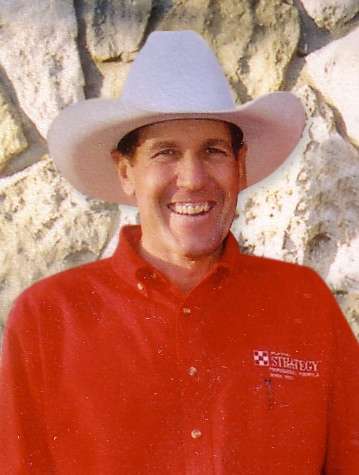
Dr. Justin Janssen was presented the 2022 Bud Newell Award by the Kansas Horse Council (KHC) during the EquiFest of Kansas in Salina.
Honoring KHC founder Bud Newell, the award recognizes an individual who “has gone above and beyond for the equine industry of Kansas.” KHC Board President Kallie Emig made the presentation.
Dr. Janssen grew up in central Kansas and graduated from Kansas State University with his Bachelors in 1970 and finished his doctorate of veterinary medicine in 1972.
He opened Janssen Veterinary Clinic in Sheridan, Indiana, in 1977 with his wife Mary Janssen. He sold his clinic and moved his family back to Kansas in 2007. Throughout his career, Dr. Janssen has remained involved in several national and regional equine organizations.
He’s been chairman of the Hoosier Horse Fair, the Indiana High School Rodeo Association, and the Indiana Veterinary Medical Association. Dr. Janssen been an active member and contributing leader of the American Association of Equine Practitioners and the American Quarter Horse Association to just name a few.
“I could list a great number of other organizations and committees in which Dr. Janssen has dedicated his time and years of wisdom to, but we are here today to recognize his efforts within our very own Kansas equine industry,” Emig said.
First and foremost, Dr. Janssen served six years on the Board of Directors for the Kansas Horse Council including two years as president.
“He served as chairman for EquiFest of Kansas for five years and under his direction guided the KHC to bring the entire planning and execution of the event in house, as well as, guided the move of EquiFest to Salina.
“The impact and the changes Dr. Janssen made to the KHC are still present as we continue to pursue the direction and goals he selflessly guided us towards for several years, including the Legendary Horseman,” Emig said.
In addition to his time with the KHC and EquiFest, Dr. Janssen has served on the Livestock and Meat Industry Council, or the LMIC, for the last 13 years and is currently serving as the Vice President.
The LMIC is a Kansas organization working primarily with Kansas State University in which they are dedicated to promoting the development and growth of all segments of the livestock industry.
Through the LMIC, Dr. Janssen is heavily involved with the production of hosting the Stockmen’s Dinner the night before Cattlemen’s Day as well the Family and Friends Reunion in the fall, both events promoting involvement with the Animal Science Department at K-State.
Most recently, Dr. Janssen has spearheaded the campaign to build a new multipurpose Equine Facility at K-State. Not only has he been a key part in formatting the building plans, Dr. Janssen has spent time enlisting significant donations for this project, as well as, presenting the campaign on behalf of the LMIC at the Annual Governor’s Ag Summit meeting hosted by the Kansas Department of Agriculture in 2022.
Among his heavy involvement with the KHC and the LMIC, Dr. Janssen also helped establish the Kansas Equine Practitioners Group, to share in continuing education within equine veterinary medicine.
In addition, he is a veterinary mentor for the Future Equine Veterinarians at Kansas State. “You may be thinking that Dr. Janssen must spend most of his time volunteering on these committees and working towards the betterment of the equine industry of Kansas…. and he does,” Emig said.
“But I will now convince you that in fact serving the equine industry of Kansas seems to be the only thing Dr. Janssen does.”
In his spare time, he would tell you that he works on his hobbies, but even his hobbies are targeted at serving, volunteering, and donating to the equine industry.
Dr. Janssen has designed and continues to fabricate multiple portable equine stocks for veterinary medicine practice and sells them to veterinarians locally and across the United States.
The KSU Veterinary Health Center Equine Field Service Team has benefited from Dr. Janssen’s portable stocks for several years as they’re individually made by Dr. Janssen in his shop right outside his home.
In addition, he uses his skills in metal work and woodwork by donating items every year to the Kansas Horse Council Foundation such as hat racks, jewelry racks, bridle hangers, and saddle stands.
He also has built the rocking horses, teeter totters, and other toys used in the Kiddie Korral and generously donates the use of them each year for EquiFest.
“I could keep going about all the great things Dr. Janssen does, but I believe it is already undisputed the amount of time, effort and ultimately the effect Dr. Janssen has had on the equine industry of Kansas and that it is quite substantial,” Emig said.
“Thank you, Dr., Janssen for your commitment to the betterment of the Kansas equine industry with the Kansas Horse Council, as recipient of the 2022 Bud Newell Outstanding Service Award.”

CUTLINE
Dr. Justin Janssen was presented the 2022 Bud Newell Outstanding Service by Kallie Emig, president of the Kansas Horse Council, during the EquiFest of Kansas in Salina.

Clowning Around Just Comes Naturally For Generational Lifetime Kansas Rodeo Family Man 10 Times Clown Of Year

0
Frank J Buchman
Frank Buchman

Justin Rumford is a ten-time Professional Rodeo Cowboy’s Association (PRCA) Clown of the Year who grew up in the rodeo business.
He attended his first National Finals Rodeo when he was six years old. Rumford knew then and there that he was destined to be in the rodeo arena.
Rumford’s rodeo career is long and distinguished before he became a clown. He went to the National High School Finals and competed in the Central Plains Region for college rodeo. He made the college finals in both saddle bronc riding and steer wrestling.
Rumford went on to compete in pro rodeo where he made the Prairie Circuit Finals in the steer wrestling multiple times.
Rumford’s clown career happened quick. After a clown was unable to make it last minute, Rumford was asked to “just give it a shot” in Pretty Prairie, Kansas. He borrowed a barrel and a wireless microphone for one performance.
“I was like wow this a thing, man this is maybe something I want to do,” Rumford said.
In 2011, he made the decision to go forward with being a rodeo clown. It kept him involved with rodeo where he already had a relationship with a lot of people that he would end up working with.
Rumford’s career took off quickly after he got his card in 2011. He won PRCA Clown of the Year in 2012 and for the next nine consecutive years.
“I think that my career just hit when it was supposed to. I’m pretty blessed to just be there when I was supposed to be there,” he said.
Rodeo has been a part of Rumford’s life forever. It is full of friends turned family and his memories and stories are worth more than the buckles.
His grandpa Floyd Rumford Jr. started in the rodeo contracting business in 1946 and annually produced rodeos throughout the Midwest.
Justin Rumford’s dad, Bronc Rumford was the world’s youngest champion bareback bronc rider when three-years-old. Bronc went on to an illustrious career in every phase of rodeo from diverse competition championships, to stock contracting, to picking up, and well beyond.
Justin Rumford is the most decorated rodeo clown in the PRCA with many unforgettable moments.
Peering through the reflective glass at his past, Justin Rumford was a comedy act waiting to happen.
As a high schooler in south-central Kansas, his actions oftentimes proved to be a mix of his small-town raising. A life lived on the rodeo trail and a hunger for a good time.
He carried that on to the next level when he attended Northwestern Oklahoma State University in Alva. And it was a big part of his lifestyle in the early stages of his rodeo career.
There isn’t anything in rodeo that the man hasn’t done. He’s been a bullfighter and a pickup man and a bronc rider and a bulldogger.
He’s roped calves and roped steers, and through every layer of his life, he told funny tales, oftentimes about his own life. It made his transition into a popular rodeo clown that much easier.
Rumford, lives in Ponca City, Oklahoma, with his wife and their triplets,
“We like having Rump around, because he’s funny and he’s a lot like the rest of us,” said Jeremy Carman, chairman of the volunteer committee that produces the annual Guymon, Oklahoma, rodeo. “He is a great fit for our rodeo and the people who live out here in the Panhandle. He’s really one of us.”
Whether he’s telling reride stories behind the chutes or entertaining the crowds who pile into rodeo arena, it’s Rumford being Rumford.
It’s the way he was as a 16-year-old in Abbyville, Kansas; it’s the way he is in his mid-40s. The stories are different, but they’re still comical.
“He’s very easy to work with, because he understands rodeo so well,” said Ken Stonecipher, a longtime committee member and one of the announcers who calls the action in Guymon. “He understands what we need as a rodeo production, and he knows the right times to turn on his microphone and entertain the fans.
“It’s almost like he’s visiting with each person in the stands. He makes it comfortable and funny. There’s just something special about the things he does.”
It’s the reason why he’s been named the PRCA’s Clown of the Year 10 times over his relatively short career in greasepaint. Rumford’s storytelling and comedic techniques have come from a lifetime of experiences.
He utilizes all that for RümpChät, a popular podcast he does with another rodeo personality, Josh “Hambone” Hilton, who is the sound director in Guymon, Oklahoma, each May.
“It’s not just a rodeo podcast, but it’s very agriculture,” Rumford said. “We have a lot of farmers, ranchers and oilfield workers who listen. We’re a blue-collar, beer drinking-man’s podcast.”
What’s said on air sometimes transitions into the rodeo arena, and vice versa. With a personality where life imitates art, Rumford is quite at home around bucking horses and timed-event steers.
“I totally adjust everything,” he said. “You don’t want to push somebody on what they want to hear. When you’re in die-hard rodeo country, you have to feel it out and see what happens. They’re rodeo-savvy, but they like to party. They are my kind of people.”

CUTLINES
Justin Rumford is a 10-time PRCA Clown of the Year, but what he does in the arena is what he does in his everyday life. He’s simply an entertaining person, and he will prove it again at the Guymon, Oklahoma, Pioneer Days Rodeo in May.
(Ted Harbin photo)

Before he ever became a clown, Justin Rumford was entertaining folks in Guymon, just doing so behind the scenes. He and his vibrant personality return to for the Pioneer Days Rodeo, May 5-7.(Ted Harbin photo)