
The Celebration of Life for Sherry Teter, of Buhler, who died February 9, 2023, will be 2 p.m. Saturday, March 18, 2023, at Bethany Church of the Nazarene, 408 N. Kent Rd., Hutchinson.
In lieu of flowers, memorials may be made to Bethany Church of the Nazarene or Harry Hynes Memorial Hospice, in care of Elliott Mortuary, 1219 N. Main, Hutchinson, KS 67501.
Sherry Teter

Bolting and Buttoning in Cole Crop Plants

Broccoli, cabbage and cauliflower are cole crops that have a tendency to bolt (go to seed) or button (produce an extremely small head) if plants are not grown properly. These crops need to be kept actively growing through their production cycle, including growing transplants from seed. If they slow down due to under-fertilization or are stunted due to overgrowing their container, buttoning or bolting is more likely. Therefore, be sure to properly fertilize plants grown from seed and ensure they have enough light. The easiest way to fertilize transplants is to use a potting soil with fertilizer already added. Light may be more of a challenge. Often natural sunlight is not sufficient unless the plants are in a greenhouse. Therefore, additional light is often needed. Click here for a video on how to build a grow light.
If you are not growing your own transplants but rather selecting plants later in the month for transplanting, choose small, stocky, dark green plants. Even after transplanting, these plants need to be well-fertilized. Fertilize at transplanting with a starter solution and continue to fertilize every 2 to 3 weeks until harvest. Both buttoning and bolting are irreversible. Once a seed stalk starts for form, nothing can be done to force the plant to produce a normal crop.
Ward Upham, Extension Agent
Time to Plant Potatoes Approaching

St. Patrick’s Day is just around the corner, so it is time to think about getting seed potatoes in the ground. Actually any time from mid- to late-March is fine for potato planting.
Be sure to buy seed potatoes rather than using those bought for cooking. Seed potatoes are certified disease free and have plenty of starch to sprout as quickly as soil temperatures allow. Most seed potatoes can be cut into four pieces, though large potatoes may yield more, and small less. Each seed piece should be between 1.5 and 2 ounces. Seed pieces this size will have more than one eye.
Each pound of potatoes should yield 8 to10 seed pieces. Cut the seed 2 to 3 days before planting so freshly cut surfaces have a chance to suberize, or toughen, and form a protective coating. Storing seed in a warm location during suberization will speed the process. Plant each seed piece about 1 to 2 inches deep and 8 to 12 inches apart in rows. Though it is important to plant potatoes in March, emergence is slow. It is often mid- to late-April before new plants poke their way through the soil. As the potatoes grow, pull soil up to the base of the plants. New potatoes are borne above the planted seed piece, and it is important to keep sunlight from hitting the new potatoes. Exposed potatoes will turn green and produce a poisonous substance called solanine. Keeping the potatoes covered will prevent this.
Ward Upham, Extension Agent
Shear Agony

I’ve had some crappy jobs in my life. I’ve picked citrus with a bracero crew from Mexico and I’ve waded through pig poop for less than minimum wage but by far the worst job I’ve ever had was shearing sheep. I did it because I could shear on weekends and evenings when I wasn’t working in the oilfields. You could say, sheep helped pay for my sheepskin. (Are they even called that anymore? )
I always arrived on time and wired my motor to the cattle racks on my grandpa’s old Ford Econoline which embarrassed me to even be seen inside the cab which, by the way, I shared with the motor. I’m not exaggerating… THE MOTOR WAS INSIDE THE CAB! Don’t ask me why I would one day pay grandpa $600 for the only truck I’ve ever owned that wasn’t a GM product. But I gotta say, as long as you kept the windows open to avoid asphyxiation, old Herbie was the best pickup I’ve ever owned.
I still have nightmares about one shearing job which began innocently enough when a gentleman who ran the ‘zoo’ in the county park on the outskirts of town called and said he needed 10 ewes sheared. I told him that I charged $2.00 per head if the owner didn’t watch and $3.00 if the owner did observe. And I GOT TO KEEP THE WOOL. I was always emphatic on that stipulation.
Upon arrival at the park I was led to a motley group of livestock that the zookeeper insisted were sheep. Trust me, there are 914 breeds of sheep in the world and none of these were them! For one thing they were a chocolate color and the wool was in really large folds that would be a nightmare to shear. Their ugly faces were covered with wool too which was also a nightmare. The zookeeper said he’d like to watch but he could not help me catch the wild things because he had a bad back.
Of course he did!
Normally I prefer to shear the way the Aussies do with the sheep sitting on their butt between my legs but I realized right away that I’d have to rely on the Mexican style of tying them up. I also learned on the very first head why the sheep were chocolate flavored. It was because their coat of wool was packed with dirt from laying around the pen which was completely devoid of any type of vegetation. Normally I would stop to sharpen my expensive blades every sixth ewe but I couldn’t even get through with one animal before I had to stop to change blades. I found it was impossible to shear them without nicking them a few times and every time I did the zookeeper would wince and say, “Is that really necessary? Since you cut them so much,” he said, “I’ll expect no objection to my request that you also trim their feet?”
I’ll be the first to admit it looked more like I’d skinned the sheep, not sheared them. I used up a quart of KRS on the wounds and for the first and only time in my career I had a sheep die on me. She was a toothless old witch and any ovine coroner in the land would excuse me from fault but I thought the zookeeper was gonna have a coronary on me, which is how I’m sure the ewe died. The bad news was that the ewe waited to die until after I’d sheared her and I couldn’t possibly charge for shearing a dead sheep, now could I?
Then I got the BIG surprise of the day. Chained to a tree was a 300 pound monster of a ram that I was told was six years old and had NEVER been sheared! When I was done with him, long about sunset, we had a slight disagreement about who got the wool… I CERTAINLY DIDN’T WANT IT! Adding insult to injury, the zookeeper told me I’d have to invoice the county in order to get paid, which I did immediately. Three months later I got paid.
We in the cattle industry say, “There is nothing dumber than a sheep except the man who owns one.” After this experience I’d have to say, “There is nothing dumber than a sheep except the man who shears them.”
Mountain lion sightings increasing in Kansas, here’s where
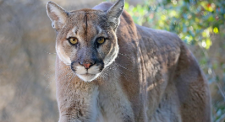
Mountain lions are on the prowl and showing up more often in Kansas, biologists say.
KSNT 27 News spoke with Kansas Department of Wildlife and Parks Biologist Matt Peek about recent mountain lion sightings in the Sunflower State. As it turns out, this big cat has been spotted roaming near populated areas with greater frequency in just the past few years.
So what does this mean for Kansans and should it be a cause for concern? See below to get the full breakdown on what experts are saying about this American predator.
Mountain lions are known by many names, according to National Geographic . These include puma, cougar, catamount, panther, red tiger and deer tiger. They usually measure 1.8 to 2.4 feet in height with males coming in at three to 6.5 feet in length and 125-220 pounds while females measure out at three to 5.5 feet in length and 75-140 pounds, according to the U.S. Fish & Wildlife Service (USFWS).
The most recognizable feature of a mountain lion is its long and heavy tail which measures almost two-thirds the length of the head and body, according the USFWS. They can jump 20 feet in the air and leap distances of 40 feet horizontally. Their diets consist of a mix of small and large game and farm animals: squirrels, beavers, raccoons, coyotes, rabbits, birds, opossums, cattle, deer, pig, porcupine, elk or moose.
Sightings of these animals in Kansas, while having recently increased, are still rare. Mountain lions are also frequently mistaken for domestic cats and bobcats along with coyotes and dogs on occasion, making confirmed sightings difficult, according to the KDWP.
Recent sightings
Peek told KSNT 27 News that the KDWP has always kept tabs on mountain lion activity in the state and has noticed an increase in recent years. The first confirmed sighting of a mountain lion in modern times occurred in 2007 when one was shot and killed in Barber County. Before that, the last mountain lion documented in Kansas was killed in 1904 in Ellis County.
Peek said current evidence indicates that the mountain lions being seen in Kansas are “dispersers.” This means they are traveling through Kansas in search of a place to live, often coming from Nebraska or further north from South Dakota and the western states. The majority of these lions are young males who have to travel as staying in their home range could get them killed by an adult male. However, these big cats do not stay for long before moving on.
“What this means is in most cases when a lion has been confirmed in an area, it has moved on by the next night and is unlikely to return to that area again,” Peek said. “Some have moved hundreds of miles across the landscape, presumably in search of suitable habitat that is occupied by resident lions of the opposite sex.”
Peek released the below chart showing where confirmed mountain lion sightings have been recorded by the KDWP over the past 16 years. In total, there have been 50 since 2007 with the most recent sightings occurring in Riley County just two weeks ago, according to Peek.
Several sightings in recent times were reported by the KDWP across the state. In 2019, the KDWP reported that a dead mountain lion was found in Rooks County, prompting an investigation by state officials. In 2020, a mountain lion was caught on camera in Kiowa County making it, at the time, the 21st confirmed sighting since 2007. The sighting of another mountain lion in Wichita in 2021 brought the number to 36, indicating a sharp rise in confirmed sightings in the past three years.
“Since 2007, we’ve had over 50 mountain lion confirmations in the state,” Peek said. “This includes confirmations of some mountain lions that were documented multiple times. About half of all confirmations have occurred in the past 3 years, so there has been an increase, but there is still no evidence that resident mountain lions exist in Kansas – meaning those living and staying in an area with an established home range.”
While the number of lions seen in Kansas is increasing, Peek said this isn’t something that should be a big concern to most Kansans. Incidents where a lion is aggressive towards a human are rare in states where they are more common, according to the U.S. Geological Survey . Peek said there are precautions people can take to protect their pets and children but encounters with mountain lions are so unpredictable and rare that the precautions aren’t warranted.
“Even in cases where a lion was known to have been in Kansas, they are likely to be present in that area for a very short time, and generally keep moving across the landscape,” Peek said.
An increase in the presence of mountain lions is seen as beneficial by the USGS. A mountain lion population is considered to be an indication of a healthy ecosystm as they can help regulate prey species abundance and promote biodiversity.
Peek said mountain lions are capable of moving hundreds of miles and one that was killed in Connecticut in 2011 was confirmed to have traveled more than 1,000 miles from its home in the Black Hills of South Dakota.
Nearby Missouri has also been experiencing an increase in mountain lion sightings recently as well. The Missouri Department of Conservation confirmed four sightings of mountain lions within the first month of 2023. Like Kansas, it is believed that there is no breeding population present and the cats are simply moving through the state in search of better places to live.
