Tuesday, March 17, 2026
Home Blog Page 826

THE DOG ATE MY HOMEWORK

0

“IGNORANCE OF THE LAW EXCUSES NO MAN FROM PRACTICING IT.”

Addison Mizner


Now please park your blue or red sign and act like an impartial juror for a minute.

The headlines now are about Joe leaving classified files in his Think Tank at Penn State and in his home office, and now in a cabinet in the garage where he keeps his Corvette. These were papers from when he was Vice President.

President Trump had boxes of files and other things packed by the GSA and moved to his home at Mar Largo, where the National Archives were sorting them to be sent to the archives in Washington.

Exhibit A – Vice President of the United States has no authority to declassify Confidential and Top Secret files.

Exhibit B – President of the United States can declassify any file with no restrictions or formal procedures.

Exhibit C – Former Vice President Joe Biden’s lead attorneys found the files and turned them over to the Justice Department.

Exhibit D – Former President Trump who was letting the National Archives decide what to take, was raided by 30 FBI agents with full gear and rifles to seize what was kept under lock and key and did not allow the Attorney’s to be present on the property.

Exhibit E – Agents went through Mrs. Trump’s closets, underwear drawers, and their son’s bedroom for any ‘hidden files’.

Exhibit F – No FBI was seen at either location of President Biden’s file locations.

What is your unbiased conclusion?

My 2 cents worth – There is a double standard in our justice system. This is why people hate politics and those who practice it.

I will not get into all of the ‘coincidences’ and conjecture, there are plenty doing that now. When We the People actually start putting our feet down and drain the swamp of all the corruption and scandal, we will not see anything better than what we have been getting the last decade.

Just think, all of those students that the education system has churned out are now setting on the brink of taking over.

Scares the hell out of me.

Never turn down a “freebie”

0
Thayne Cozart
Milo Yield

There’s a old country saying, “Never look a gift horse in the mouth.” The corollary to that old saying for aggie columnists, like me, is, “Never turn down ’freebie’ humorous stories that make your life easier.”
That’s what happened to me this week when I opened an e-mail from my high school English Teacher, ol’ Parse deFrayze, who lives in retirement in Kansas City. His e-mail contained two funny stories that I’m gonna use because my brain is in low gear to come up with story ideas this week.
I have no idea of the origin of either story, so I can’t give proper attribution. But, here goes:
***
A freshly ordained rural minister, Rev. Saul M. Reeder, new to his humble country church in Missouri, was making the rounds of his potential parishioners. One of the first he encountered was a sweaty, rustic farmer working in his field.
Being concerned about the farmer’s soul, the Rev. Reeder asked the man, “Are you laboring in the vineyard of the Lord today, my good man?”
Not even looking at the preacher and continuing his weeding work, the farmer replied, “Naw, these are soybeans.”
“You don’t understand,” said Rev. Reeder, “Are you lost?”
“Naw! I’ve lived here all my life,” answered the farmer.
“Are you prepared for the resurrection?” the frustrated reverend asked.
This caught the farmer’s attention and he asked, “When’s it gonna be?”
Thinking he had made some religious progress, Rev. Reeder replied, “It could be today, or tomorrow, or the next day.”
Taking a handkerchief from his back pocket and wiping his brow, the farmer remarked, “Well, don’t mention it to my wife. She don’t get out much and she’ll wanna go all three days.”
***
Here’s the second “freebie” story: A seed company salesman is driving through his territory and sees a sign in the front yard of a neat rural house: “Talking Dog for Sale.”
That piques his interest and, thinking he might conjure up a new seed customer, he rings the doorbell and, after a bit of small talk, the farmer tells him the talking dog is in the backyard and to go take a look.
So, the salesman goes into the backyard and sees a black mutt just lolling comfortably in the shade.
“You really talk?” the salesman asks cautiously.
“Yep,” the mutt replies.
“So, what’s your story?” the salesman persists.
The mutt nonchalantly scratches behind an ear and says, “Well, I discovered this gift pretty young and I wanted to help the government, so I told the CIA about my gift, and in no time they had me jetting from country to country, sitting in rooms with spies and world leaders, because no one figured a dog would be eavesdropping.
“I was one of their most valuable spies eight years running. But, the jetting around really tired me out, and I knew I wasn’t getting any younger and I wanted to settle down and raise a family.
“So, I signed up for a job with the Transportation Security Agency at the airport to do some undercover security work, mostly wandering near suspicious characters and listening in. I uncovered some incredible dealings there and, eventually, was awarded a batch of medals and a gold-plated feed bowl.
“Had a wife, a mess of puppies, and now I’m just retired,” the dog concluded.
The salesman is amazed. He goes back to the front porch and asks the home owner what the price is for the dog.
The owner says, “Ten smackeroos.”
The salesman says, “This dog is amazing. Why on earth are you selling him so cheap for just $10?”
The owner replies, “He’s such a liar. He didn’t do any of that stuff.”
***
Well, when my Ainsworth, Neb., pickup truck buyer, ol’ P. Lowe deRhode, came yesterday to take the truck home, I got paid in three kinds of bread. One was money and the others were a pair different kinds of loaves of luscious homemade bread made by his wife. Thanks, folks, and I hope you made it home safe and sound.
And, since Lowe, didn’t want to take the blue hard-plastic pickup bed cover with him, I’ve got it for sale cheap. Anyone interested can e-mail me at [email protected].
***
This week, my big chance to enhance my retirement funds appeared lost, but then reappeared. Let me explain. I bought three $2 tickets to enter the Mega Millions lottery for more than a BILLION bucks. And, sadly, my number wasn’t picked in the drawing. I’m still poor. But, nobody won, so I’ll buy a couple more tickets for the next Mega drawing and get a second chance to help pay off the national debt.
***
Words of wisdom for the week: “If you don’t have a sense of humor, you probably are lacking any sense at all.” Have a good ‘un.

Older Just Gets Better

0

“Time flies whenever one is busy and having fun.”
It’s a familiar comment with truthfulness. Yet, even more strikingly in maturity is the question: “Where has all the time gone.”
With another candle on the cake, thoughts of days and now years gone by are revisited.
Years one to four are unmemorable other than photos, but times forward are joyfully reflected.
What’s so amazing is how incomprehensibly great the seven decades plus have been.
Earliest childhood fascinations without exception have come to reality and far beyond. Being a cowboy was always the most important objective.
Of course, cowboy has various meanings, and not “the best,” whatever that means, personal goal has been most satisfyingly met.
Wearing boots, jeans, hat, and riding a horse every day qualifies this definition of being a cowboy.
Along the way there’s been carrying groceries, education, friendships, career, ranching, writing stories, and most importantly family.
With maturity the one thing that stands out above anything else is how little can be completely understood.
When a teenager, everything was known about everything. Today nothing is really known about anything.
Yet with becoming old hopefully has been increased wisdom. Danny Webster says wisdom is “quality and soundness of action based on experience, knowledge, principles, and ‘good’ judgement.”
Certainly older, lifetime record of incalculable mistakes should make any cowboy a tiny bit wiser?
“The ten years between 25 and 35 are far shorter than the four years between 14 and 18,” somebody said. Time travels at the same speed as it always has but seems to race faster in maturity.
Uncountable the mentors, heroes, heroines, cowboys, cowgirls, coworkers, and family who are now most deservingly acknowledged and heartfelt appreciated.
Always serious about life’s endeavors, now foregoing seriousness somewhat in anticipating a celebration with Dolly Parton.
A radio co-worker’s Dolly cardboard statuette gift is displayed on the ranch office desk. She’s prettier, richer, older, and other assets, so giving her a “Happy Birthday” call.
Another year older deeper in debt, don’t look or get around like a kid, but still think and feel the best ever.
Following some old folks’ advice: “Don’t worry about yesterday or tomorrow, live today to the fullest.”
Reminded of Isaiah 65:18: “No more old people who don’t enjoy a full lifetime. Anything less than 100th birthday will be missing too much.”
+++ALLELUIA+++
XVII–3–1-15-2023

Higher Interest Rate Forecasts Could Mean Return To Tougher Times For Agriculture

0

“It’s impossible to forget the exuberant interest rates of 1982.”
Many younger farmers today didn’t experience when bankers were loaning money freely, so it seems, at 18-percent interest.
Despite longevity, generations, and successes of many agriculture operations, it was impossible to operate at that rate.
Land values and commodity prices dropped dramatically. The farmers and ranchers were forced out of business by foreclosure.
Cringing feeling of those days gone by is unstoppable with recent forecasts of increasingly higher interest rates.
“Agriculture operators must expect higher interest rates to persist for several years as part of efforts to quash inflation”
That’s according to a team of agricultural economists, who admitted the highest interest rates in years will complicate farm finances.
The analysis comes from agricultural economists Gary Schnitkey and Nick Paulson at the University of Illinois and Carl Zulauf of Ohio State University.
“Farmers will pay more when they borrow money, and face higher break-even levels on investments,” they forecasted.
“Agriculture operators will feel downward pressure on the value of farmland, their largest asset,” the economists predicted.
Of course, these impacts will make the business of agriculture more difficult. However, the team pacified that claiming: “Rising interest rates will only present severe issues to a small number of agriculture firms.”
Extent of financial stress will depend on how high interest rates increase and how long they remain at elevated levels.
The Federal Reserve raised interest rates repeatedly last year to combat high inflation. The annual inflation rate was 7.1-percent at the latest count.
At the end of 2022, the federal funds rate, the overnight lending rate among banks, was 4.33-percent. Then, the economists clarified: “There are definite prospects of more increases into 2023,”
Last year’s sharp increases ended a period of low interest rates that began during the Great Recession in 2008. That was reinstituted during the coronavirus attack in 2020.
“Overall, farmers should expect higher interest rates than existed from 2008 to 2021, and should plan accordingly,” advised the economists.
As an example, they said an inflation rate of 2 to 4-percent a year would suggest a 10-year Treasury bond rate of 4 to 6-percent. That would equate into interest rates of 7 to 9-percent on agricultural debt.
The Federal Reserve has a goal of limiting inflation to 2-percent annually over the long run.
At present, the (United States Department of Agriculture) USDA’s 10-year agricultural baseline assumes a bank prime rate of 6.6-percent this year. Then running at 5.1-percent in most of the following years.
The prime rate is the interest rate that banks charge their most creditworthy customers. It is the foundation for the interest charged on loans, credit cards, and lines of credit.
Hypothetically, 3 percentage points would equate to 8-percent interest on an operating loan. The higher rate charged on $800 an acre would add $12 an acre to corn production costs.
Similarly, a 3-point increase would add $28 an acre to break-even for installing a tile line costing $1,000 an acre.
“Higher interest rates generally lead to lower asset values,” said the economists.
While farmland values could be affected, there are countervailing factors. They include profitable returns on farmland and investors’ opinion that land is a better hedge against inflation than financial assets.
“A large decline in farmland prices in 2023 is not likely,” the economists said.
+++30+++

CUTLINE
Higher interest rate forecasts could mean return to tougher times for agriculture.

How to Tell Poison Ivy and Virginia Creeper Apart in the Winter

0

Ward Upham
K-State Research and Extension news service

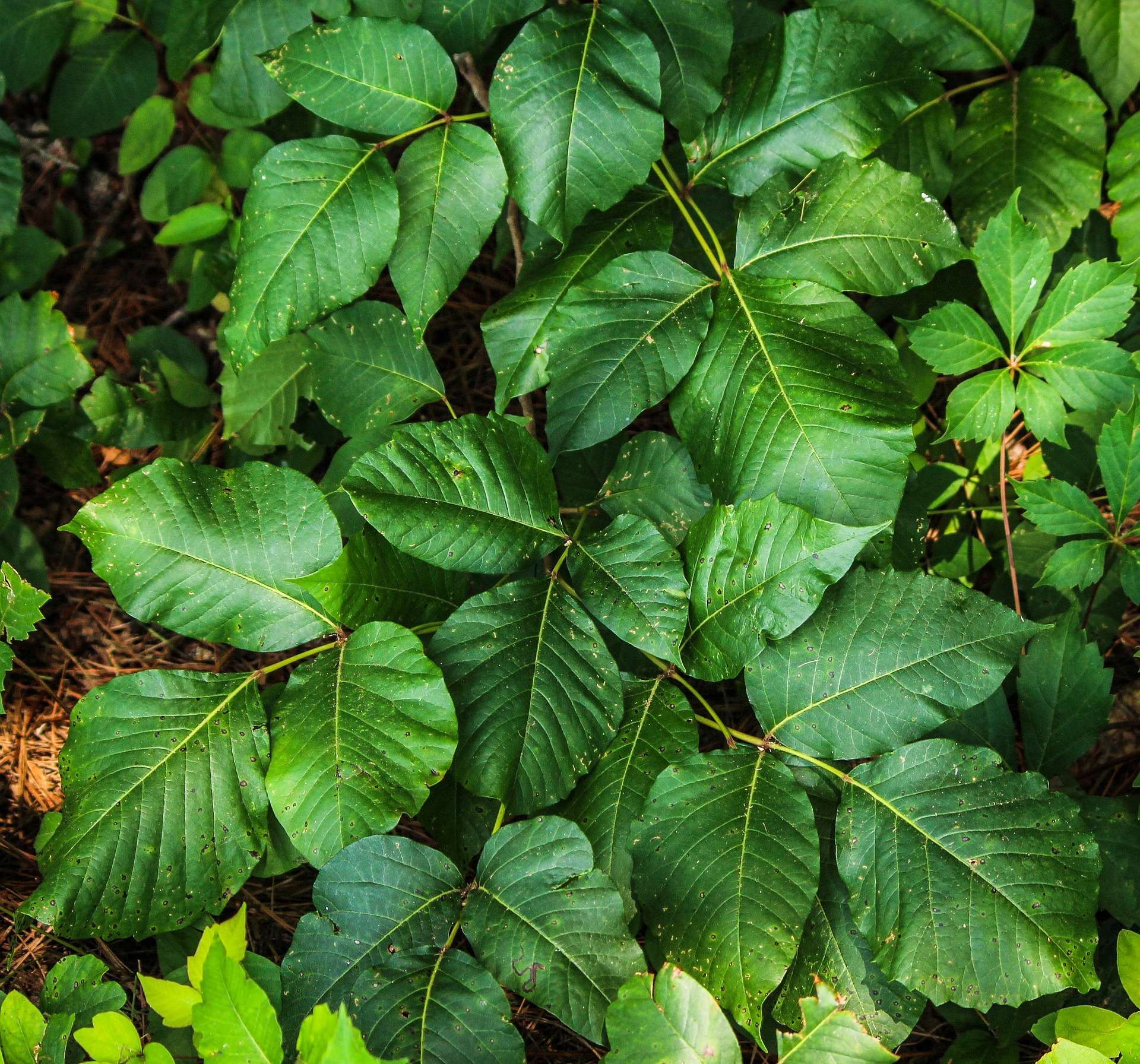
During the growing season, these plants are easy to tell apart as Virginia Creeper has five-leaflets per leaf and Poison Ivy has three. However, during the winter, distinguishing between the two vines can be more difficult as the leaves have dropped. The reason it is important to be able to tell the difference is that Poison Ivy causes a rash in most people but Virginia Creeper does not. First, let’s cover some facts about Poison Ivy.
– Urushiol is the oil present in Poison Ivy that causes the rash.
– Urushiol is present in all parts of the plant but especially in the sap.
– Urushiol can cause a rash from 1 to 5 years after a plant has died.
– The amount of urushiol that covers the head of a pin can cause a rash in 500 people. The stuff is potent.
– Poison Ivy can grow as a ground cover, a shrub or a vine. We are concerned with the vine in this article.
– Using a chainsaw on Poison Ivy in the winter can release sap which makes a rash more likely. This is worse on warm days where there is more sap rise.
So, how do you tell the two apart? This is actually easy once you know what to check. Look at the aerial roots on the vines of Poison Ivy and Virginia Creeper. They resemble hairs on Poison Ivy but are plumper on Virginia Creeper and are about the size of a pencil lead.
Native Plant
Publications
We have information on establishing and maintaining a native plant area on our website. Go to https://hnr.k-state.edu/extension/horticulture-resource-center/publications/ and click on “Native Plants.” It includes a publication from a collaboration among K-State Research and Extension – Douglas County (KSRE), the Grassland Heritage Foundation (GHF), and the Kansas Rural Center (KRC) titled “Planting Natives in Northeast Kansas. Also included is a publication from the Agronomy Department titled “Establishing and Managing Native Prairie Plants in Small Areas.” A native plant list is also provided as well as a publication on developing a small Scale Monarch Butterfly Habitat from the Southwest Research and Extension Center.
Pecan Blog
Dr. William Reid, the Pecan Research and Extension Specialist for Kansas and Missouri for 37 years, has an excellent blog on growing pecans in Kansas and neighboring states. In retirement, Dr. Reid is tending his 30 acre pecan orchard and continues to blog his observations. The blog is titled “Northern Pecans.”
If you are at all interested in pecans, this is a blog you must visit. Excellent photography accompanied by Bill sharing decades worth of experience makes this a gold mine of information. The URL is http://northernpecans.blogspot.com/
Conservation Trees from the Kansas
Forest Service
The Kansas Forest Service offers low-cost tree and shrub seedlings for use in conservation plantings. Plants are one to two years old and sizes vary from 8 to 18 inches, depending on species. Two types of seedlings are offered; bareroot and containerized. Containerized provide a higher survival rate and quicker establishment. Orders are accepted from now through May 1st, but order early to ensure receiving the items you want.
Orders are shipped beginning in mid-March. Approved uses for these plants include windbreaks, wood lots, wildlife habitat, timber plantations and educational and riparian (streambank) plantings. They may not be used for landscape (ornamental) plantings or grown for resale.
All items are sold in units. Each single species unit consists of 25 plants. For example, a unit of Eastern red cedar has 25 trees per unit. Though a single species unit is most commonly purchased, four special bundles are also available including a quail bundle, pheasant bundle, eastern pollinator bundle and western pollinator bundle.
Tree planting accessories are also available including marking flags, root protective slurry, rabbit protective tubes, weed barrier fabric and tree tubes. If there have been problems with deer browsing on young trees, the tree tubes are a must.
For details and an order form, go to: http://kfs.mybigcommerce.com/all-items/ Note that there are three pages of items that are accessed by clickable links at both the top and bottom of the listing. Order forms are also available from local K-State Research and Extension offices.