Wednesday, March 18, 2026
Home Blog Page 838

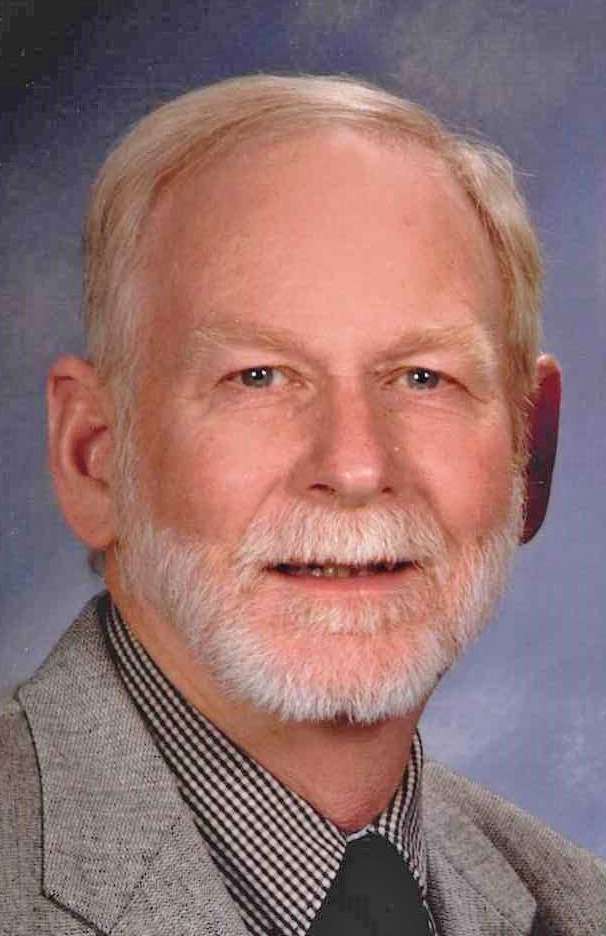
Thomas E. “Tom” Clayman

0

Thomas E. “Tom” Clayman, 70, died January 4, 2023, with his wife, Sandy, by his side. He was born April 15, 1952, in Richmond, IN, to James C. and Martha Jeanne (Koontz) Clayman. On June 3, 1972, he married Sandra “Sandy” Kay Lohr, in Nevada, OH.  

Tom graduated from Eaton High School in Eaton, OH. While working for Mid-States Wool in Ohio, he was transferred to Hutchinson for a “short period of time”, and he never left. He and his wife, Sandy, have made Hutchinson and the Reno County Community their home for over 40 years. Twenty years ago, Tom became co-owner of Kauffman Seeds. Kauffman Seeds was named the 2022 Agri-Business of the Year by the Reno County Chamber of Commerce. While Tom loved the seed business, his first passion was sheep, especially Montadales. Tom raised, judged, and showed thousands of sheep all over the United States including county and state fairs in addition to national shows. When showing sheep Tom gave freely to others by giving sound advice and offering a helping hand when possible. 

Tom was a member of the Montadale Sheep Breeder’s Association, Oklahoma Genetics, Kansas Crop Improvement Association, and Reno County 4-H Club. These are just a few of the organizations in which he was active. Tom was on the Board of the Montadale Sheep Breeder’s Association, where he had served as president. He was a member of Emanuel Lutheran Church, Hutchinson. 

Tom is survived by his wife of over 50 years, Sandy of Hutchinson; son, Michael Clayman and wife, Cassey of West Memphis, AR; daughter, Michelle McMillon and husband, Christopher of Old Hickory, TN; sister, Nancy Kramer and husband, Phillip of Eaton, OH; and three grandchildren, Wyatt Clayman, Willow Clayman and Abigail McMillon; and several nieces and nephews.

He was preceded in death by his parents.

Funeral service will be 10:00 a.m., Tuesday, January 10, 2023, at Emanuel Lutheran Church, 140 East 30th Avenue, Hutchinson, KS with Pastor Del Strecker officiating. Interment will follow in Elmer Cemetery. Friends may call on Sunday from 1 to 8 p.m., and on Monday 9 a.m. to 3 p.m. at Elliott Mortuary. The family will greet friends on Monday from 5 to 7 p.m. at Emanuel Lutheran Church.

In lieu of flowers, please send memorial contributions to Emanuel Lutheran Church or Montadale Sheep Association, in care of Elliott Mortuary, 1219 N. Main, Hutchinson, KS  67501. 
KDA Offers Farmers’ Market and Direct-to-Consumer Virtual Workshop Series

0

The Kansas Department of Agriculture and K-State Research and Extension (KSRE) will offer virtual workshops February 6-10, 2023, to assist farmers’ market vendors and managers, and also for those wanting to sell food products directly to consumers. The workshop series includes five online Lunch and Learn sessions.

“Over the past two years, we’ve seen an increase in people’s enthusiasm for locally sourced food, and these workshops will address common questions and concerns for farmers and small businesses who are embracing these opportunities to reach local consumers,” said Londa Nwadike, food safety specialist with KSRE and the University of Missouri. “It’s also important for farmers to understand certain legal, safety and financial parameters before choosing to sell either directly to the consumer or at a farmers’ market.” In 2022, more than 95 farmers’ markets were registered with KDA’s Central Registration of Farmers’ Markets.

Dates and topics for each Lunch and Learn online session are as follows:

  • Monday, Feb. 6, noon to 1:00 p.m.: Accepting EBT/SNAP and Double Up Food Bucks
  • Tuesday, Feb. 7, noon to 1:00 p.m.: Meat and Poultry Regulations; Kansas Value Added Meats Lab
  • Wednesday, Feb. 8, noon to 1:00 p.m.: Kansas Sales Tax Information
  • Thursday, Feb. 9, noon to 1:00 p.m.: Food Safety Regulations; Kansas Value Added Foods Lab
  • Friday, Feb. 10, noon to 1:00 p.m.: Kansas Senior Farmers Market Nutrition Program

KDA’s weights and measures program will offer free scale certification with a paid registration to an online workshop.

Registration for the February virtual workshops is now open. The cost is $5 per participant. Register at www.fromthelandofkansas.com/FMWorkshop.

For more information, contact Sammy Gleason, KDA’s From the Land of Kansas marketing manager, at 785-564-6759 or [email protected]. The workshops are funded by the Kansas Center for Sustainable Agriculture and Alternative Crops and the Kansas Sustainable Agriculture Research and Education Program, as well as by sponsors KSRE and KDA.

KDA is committed to providing an environment that enhances and encourages economic growth of the agriculture industry and the Kansas economy. Kansas farmers’ markets not only provide a fresh food source, but also stimulate the local economy. The Kansas Ag Growth Strategy has identified training for small companies via workshops as a key growth outcome for the specialty crop sector. The farmers’ market/direct-to-consumer workshops will provide education through partnerships to help make Kansas farmers, ranchers and agribusinesses more successful.

###

KDA Offers Farmers’ Market and Direct-to-Consumer Virtual Workshop Series.pdf

Kansas Rural Center uses Local Food Promotion Program Grant to Build “Central Kansas Food Corridor”

0

As part of its mission to promote the long-term health of the land and its people, the Kansas Rural Center (KRC) is pleased to announce its recent acceptance of a Local Food Promotion Program grant from the USDA’s Agricultural Marketing Service (AMS).

This project will see KRC and partners, Common Ground Producers and Growers, Kansas Wesleyan University and St. John’s Baptist Church of Salina working to create a “food corridor” along Interstate 135 that bridges Wichita and Salina in central Kansas, in which a new food hub will be established. Over the next three years KRC will work to bring farmers together to form a new food hub organization to assist with the aggregation and marketing of locally produced agricultural products and deliver them throughout the region. Additional work will be done to connect with food purchasers and wholesale markets and make sourcing local products easier for buyers.

“We’re excited to continue our work of supporting small farmers and rural communities with this food hub project!” said Ryan Goertzen-Regier, the Farmer Engagement Coordinator for the grant. “By forming an organization that will assist existing farmers with scaling up, marketing, and delivering their local food products I hope to see the barriers to entering farming reduced for young and beginning farmers as well, who otherwise may have an extremely difficult time getting their farm businesses up and running.”

Other aspects of the project will focus on delivering fresh produce and local foods to food deserts and other areas with low access to healthy foods. The food hub’s distribution network will assist easier movement of local food throughout the region.

“Working together is the key to building thriving communities, and we’re thrilled to be working with Common Ground Producers and Growers, Kansas Wesleyan University and St. John’s Baptist Church of Salina to strengthen local food systems across central Kansas,” said Kansas Rural Center’s Executive Director, Tom Buller.

In the upcoming months Kansas Rural Center staff will be gathering with farmers and ranchers from across a twelve county region to begin assessing farmer interest and capacity for the formation of the food hub and what legal structure it should utilize. Parties interested in becoming a seller or buyer of local foods in Sedgwick, Reno, Butler, Harvey, McPherson, Marion, Rice, Ellsworth, Saline, Dickinson, Ottawa and Lincoln counties can stay informed by signing up for Kansas Rural Center’s mailing list at https://kansasruralcenter.org/newsletter or contacting [email protected].

Funding for “Building the Central Kansas Food Corridor: Creating a Food Hub and Delivery Network to Serve Communities Along Interstate 135 in Kansas and Increase Food Access” was made possible by the U.S. Department of Agriculture’s (USDA) Agricultural Marketing Service through grant AM22LFPPKS1095-00. Its contents are solely the responsibility of the authors and do not necessarily represent the official views of the USDA.

For more information about the Kansas Rural Center, visit https://kansasruralcenter.org/, call 866-579-5469, or email [email protected].

Farm and ranch theft on the rise

0

During a recent Kansas State University Research and Extension meeting on cattle theft awareness in Wilmore, Kansas, Special Agents James Pinegar and Josh Winkler presented ways the Livestock and Brands Investigations Unit can help ranchers recover stolen livestock and steps producers can take to head thieves off at the pass.

Time is of the essence when livestock turn up missing. They may be on the neighbor’s place, and they may not. Justin Goodno, Barber County Extension livestock specialist, emphasized keeping in touch with neighbors as finding out those missing cattle aren’t in a nearby pasture months later will do no good.

Many livestock thieves will steal trucks and trailers to haul stolen cattle counties or states away to feed their habits. Whether they’re trying to pay off gambling debts or drug addiction, there is little recourse for producers if they don’t take basic measures to protect their livelihood.

“Lock your gates and brand your cattle as much as you can,” Winkler said.

Ear tags are the first things thieves dispose of when taking livestock. Brands can be branded over but doing that in Kansas takes the act from a property crime, where the punishment depends on the criminal history of the offender, to a felony.

“There are 18,000 registered brands in Kansas,” Pinegar said. “I bet less than half of those are used.”

The Kansas Department of Agriculture has a searchable brand website at bit.ly/3PdAKob that can be used to determine an animal’s homeplace.

Whether there is an extra cow in your pasture or there are fewer cows than there should be, getting law enforcement involved is the producer’s best first step. Law enforcement can often find the rightful owner of the stray or they can begin the investigation into the missing stock.

It’s at this point the producer needs to leave things alone. That means not touching any evidence at the scene, including but not limited to cigarette butts and odd feed bags, which may give authorities information on the animals’ whereabouts.

Armed with that information, the LBIU alerts its extensive network of other law enforcement offices, livestock markets, and livestock associations to any identifying brands or markings of the stolen livestock.

The LBIU can also fly a drone along fence lines to see if there are any breaks in the fence or draws where cattle might be hiding out.

One of the more technological tools at their disposal is a Google geo-fence warrant. Winkler explained that the agency picks four longitude and latitude locations around the crime scene and determines the timeframe that crime was committed. Once they obtain a signed search warrant through the local district court, they send it to Google online. Google will tell them any devices, which are usually cell phones but can be any equipment that requires cellular data, that were within the geo-fenced area during the established timeframe. With the help of Google Earth, investigators can eventually show roads that were traveled, a specific direction of travel, and the date and time the devices were used.

“Thieves can be 200 to 300 miles away in just a few hours,” Pinegar said. “Then they’ll get full face value the next day at a market.”

If a producer would rather not risk valuable cattle being taken, often in broad daylight, cameras can be installed on the property and gates can be locked.

Sergeant Sara Boor, Barber County Sheriff’s Department, suggests using an old game camera that doesn’t work anymore as a decoy. With the decoy camera mounted somewhere the thieves can see it, a working camera can be mounted in a hidden location allowing it to possibly catch a clear picture of a license plate or the thief’s face.

Another way to foil a thief’s plans is to be armed with as much information as possible. That means getting an accurate head count when cattle are unloaded at the pasture and noting the date as well. Check the cattle regularly and keep track of when you check them. These dates and data can mean getting back the investment you’ve made.


Lovina Shares Four Snack Recipes

0

Lovina’s Amish Kitchen
Lovina Eitcher,
Old Order Amish
Cook, Wife &
Mother of Eight


This week I will share some recipes. Everything is extra busy with preparations for the wedding of daughter Susan and Ervin. Plus, it’s right around the holidays. Our church district will have services on Christmas Day and a potluck afterward. It is always a nice time to have fellowship with the church family. 

As we draw close to the holidays, let us remember that Jesus is the reason for the season. Rejoice in the miracle of Christmas and take comfort in his peace and grace. 

Wishing you a blessed Christmas and a new year full of promise!

Sweet Crunch Mix

8 cups Chex cereal

3 cups popped popcorn

2 cups broken pretzels

1 cup peanuts

½ cup butter

¾ cup brown sugar

¼ cup Karo syrup

1 teaspoon maple flavoring

Mix the cereal, popcorn, pretzels, and peanuts in a large bowl. Combine the butter, brown sugar, syrup, and maple flavoring in a pan and cook over medium heat for 5 minutes. Pour over the cereal mixture, stirring until all pieces are evenly coated. Bake for 45 minutes at 250 degrees, stirring every 15 minutes. 

Mustard Pretzels

2 pounds pretzels (tiny twist)

½ cup butter

4 teaspoons Worcestershire sauce

1 tablespoon mustard

10 teaspoons (heaping) powdered sugar

10 teaspoons dry mustard

1 ¼ teaspoon garlic powder

1 tablespoon turmeric 

Melt the butter, Worcestershire sauce, and mustard together on the stovetop or in the microwave. Place the pretzels in a large bowl and pour the butter mixture over the pretzels, stirring until pretzels are well coated. Spread the pretzels out on large cookie sheets. Sift the powdered sugar, dry mustard, garlic powder, and turmeric together several times; then sift some over pretzels. Stir and sift more over pretzels. Stir well. Bake at 325 degrees for 20 minutes. Stir often while baking. 

Cinnamon Popcorn

3 quarts popped corn

1/3 cup butter

¼ cup sugar

¾ teaspoon cinnamon

¼ teaspoon salt

Place popped corn in a large baking pan and set aside. In a small saucepan, combine the remaining ingredients and cook over low heat until butter is melted and sugar dissolved. Remove from heat. Add to popped corn and toss lightly to mix well. Bake at 300 degrees for 15 minutes or until hot and crisp. 

Taco Bean Dip

8 ounces salsa

8 ounces sour cream

16 ounces refried beans

1 cup sharp cheddar cheese

1 cup lettuce, finely shredded

1/4 cup green onions, chopped

2 tablespoons black olives, sliced

Mix together or layer and serve with tortilla chips. 

Lovina’s Amish Kitchen is written by Lovina Eicher, Old Order Amish writer, cook, wife, and mother of eight. Her newest cookbook, Amish Family Recipes, is available wherever books are sold. Readers can write to Eicher at Lovina’s Amish Kitchen, PO Box 234, Sturgis, MI 49091 (please include a self-addressed stamped envelope for a reply); or email [email protected] and your message will be passed on to her to read. She does not personally respond to emails.