Friday, March 20, 2026
Home Blog Page 870

Wheat Scoop: Kansas Wheat discusses HRW market opportunities during crop quality seminars in South America

0
Kansas Wheat

Contact: Marsha Boswell, [email protected]

For audio version, visit kswheat.com.

There is something fishy happening in Ecuador, but it is a good growth opportunity in a market that already appreciates Kansas hard red winter wheat, thanks to the relationships built by Kansas Wheat and U.S. Wheat Associates (USW), the wheat industry’s export market development organization.

“One of the interesting stories is that a lot of high protein hard red winter wheat is going into fish food,” said Aaron Harries, Kansas Wheat Vice President of Research and Operations, who joined USW staff for a series of crop quality seminars in South America in early November. “In Ecuador, specifically, they’re using it to feed shrimp. And in southern Chile, they’re using it to feed salmon.”

Aquaculture is a rapidly growing market in South America, thanks to imports from an equally expanding Chinese market. Salmon are top feeders, so feed pellets must float so salmon will come to the surface and eat. Shrimp are the opposite — they are bottom feeders — but feed pellets still need to sink slowly. HRW wheat fits the bill in helping with buoyancy and providing high protein content.

“They use high protein HRW wheat because they want higher protein content for the fish food,” Harries said. “They can also use soybean meal, but wheat has a viscosity that makes the pellet float. So that’s a market we’ll certainly be exploring and making sure we’re getting them the product they want to meet these needs.”

Fish food was a hot topic during the USW crop quality seminars, but the main event featured the results of the 2021 Crop Quality Report, the latest in a series of reports by USW. Each year, the organization gathers thousands of samples throughout the harvest season and at export locations to analyze for wheat, flour and end-product qualities. These results are compiled into an overall report for all six wheat classes and broken down into individualized reports by wheat class.

After the report is finalized, USW conducts crop quality seminars to dive deep into the information with global customers, like the ones Harries participated in this November in Colombia, Ecuador, Peru and Chile. Harries also discussed prospects for next year’s wheat crop and addressed challenges from the strength of the U.S. dollar, high competition from corn and soybean exports, problems on the Mississippi River, potential rail strikes and other issues.

“In terms of HRW wheat, we had good news to deliver as far as the quality of the crop — just excellent milling and baking quality,” Harries said. “Of course, the downside of that is price. The market competitiveness of hard red winter wheat is just not great right now.”

While the seminars provide a wealth of information, they also allow state wheat commission staff, U.S. farmers and USW staff a chance to meet with the best customers for U.S. wheat. In Colombia, Harries had the chance to reconnect with millers that had traveled to Kansas as part of trade teams — some as recently as this past summer and some from a decade earlier. These relationships, when combined with transparent crop quality data, help secure long-lasting, steady customers.

“These meetings are important because when you meet face-to-face, the buyer can sense the transparency that we provide to our marketplace,” Harries said. “We don’t pull the wool over their eyes; we tell them exactly how things are in person so they can judge our message. And I think they do have confidence in us.”

Whether HRW is destined for fish food or bread, the trading relationships built through this exchange of information help build lasting markets for Kansas wheat producers in South America.

“This is a set of customers that really like U.S. wheat and they’re looking for value opportunities,” Harries said. “They’re trying to get creative on how they use U.S. wheat, whether it’s in blends or their milling process, but they like the quality of wheat and they try to make it work, even if the price is high.”

Learn more about how Kansas Wheat works with U.S. Wheat Associates to promote HRW around the world at https://kswheat.com/international-buyers.

###
Written by Julia Debes for Kansas Wheat
 

Almena Farmer Gets Conservation Award For Dedication To Land, Water, Wildlife Resources

0

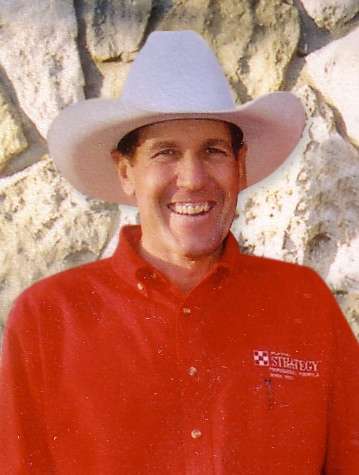
Michael Thompson of Almena has been selected as the recipient of the 2022 Kansas Leopold Conservation Award.
Presented in honor of conservationist Aldo Leopold, the award recognizes farmers, ranchers and forestland owners for land, water, and wildlife resources conservation.
In Kansas, the award is presented annually by Sand County Foundation, American Farmland Trust, Kansas Association of Conservation Districts, and the Ranchland Trust of Kansas.
Thompson grows crops and raises beef cattle at Thompson Farm and Ranch in Norton County with his father and brother. He’s a vocal advocate for soil stewardship.
Thompson was announced as the recipient of the award at the Kansas Association of Conservation Districts’ annual convention in Wichita. He receives $10,000 and a crystal award.
Earlier this year, Kansas landowners applied or were nominated for the award. Finalists also included Ray and Susan Flickner of Wichita, Kevin Karr of Emporia, and Glenn and Barbara Walker of Brookville.
The first Kansas Leopold Conservation Award was presented to Sproul Ranch of Sedan in 2015. Last year’s recipient was Dwane Roth of Holcomb.
In his influential 1949 book, A Sand County Almanac, Leopold called for an ethical relationship between people and the land. He said, “It is an evolutionary possibility and an ecological necessity.”
Sand County Foundation presents the Leopold Conservation Award to private landowners in 24 states for extraordinary achievement in voluntary conservation.
Like the five generations before him, Michael Thompson grew up knowing the challenges of farming and ranching in northwest Kansas. There were crop failures brought on by harsh weather. Michael also remembers the scars left by tillage on semi-arid soil.
As young adults, Michael and his brother Brian were told there wasn’t a future for them at Thompson Farm & Ranch.
However, the avid learner and experimenter knew there had to be a more efficient way to raise crops and cattle.
Michael began researching land stewardship and soil improvement. He knew his family’s land could no longer afford to lose more topsoil from wind and rain.
Studying peer groups across Kansas, Michael realized benefits of diverse cover crop rotation using no-till practices and rotational grazing.
Keeping farm fields covered with growing vegetation year-round would infiltrate water instead of letting it wash away.
No fan of cattle in his youth, Michael has come to see their role in a holistic, regenerative system. Their manure delivers nutrients to native rangeland as well as corn, soybean, and wheat fields.
The program was started small with a few acres of cover crops and some electric fencing.
Grazing cover crops provided another source of feed for beef cattle. This provided an unexpected benefit of giving existing pastures and rangeland more time to rest and grow. The extra rest produced a more robust and diverse stand of native grass species.
Growing cover crops coupled with a no-till system improved earthworm activity and soil life. An increase in nutrient cycling allowed for less fertilizer use. Improved water infiltration meant crops and forage grew even in years of drought.
Ultimately, rebuilding worn-out soils proved essential in allowing Michael and Brian to return home to farm with their father, Richard.
Knowledge and lessons learned by Michael are shared with other farmers and ranchers and at conferences worldwide. He’s a founding member and chairman of the Kansas Soil Health Alliance. President of No-till on the Plains, Michael is also a supervisor on the Norton County Conservation District Board.
A kindergarten teacher before returning to the farm, Michael serves as a mentor in the Watershed Restoration and Protection Strategy. Kansas farmers and ranchers are connected for improving water quality.
In extreme droughts or after heavy rains, Michael often digs below ground to examine root structure and worm channels. What happens deep within soil determines what grows above ground while soil management is key to enduring weather extremes.
Part of the National Association of Conservation Districts’ Soil Health Champions Network, Michael doesn’t claim to be an expert.
“The path to lasting success is often through failure,” according to Michael Thompson of Almena.
His peers say this makes Michael Thompson an authentic, accessible, and passionate voice for conservation.
+++30+++

CUTLINE
Michael Thompson of Almena has been selected as the recipient of the 2022 Kansas Leopold Conservation Award.

Boxed Beef

0
lee pitts

Years ago I got a call from a college student who was doing his Senior Project in order to graduate. He told me he had a groundbreaking idea and wanted my opinion of it. I asked him what his BIG IDEA was and he replied, “containerized shipping.” As the son of a long haul trucker I had to break the news to him that his idea was already being implemented as everything from cheap Chinese toys to apples and oranges are now shipped in modules that can easily be craned on to a truck’s trailer or a railroad car.

“I realize that,” he said. “My idea is to use those same containers to haul livestock.”

Whoa! Now that was a new idea! I suppose the caller wanted to duplicate Fred Smith’s outlandish scheme he outlined in a Yale economics class paper that earned him a C grade. The caller wanted to do for livestock what Fred Smith had done for important paperwork and packages when he later created Fed Ex based on that college paper.

“Shipping livestock in containers is the dumbest idea I’ve ever heard,” I told the young man. “That’s something a lonely sheepherder might think up but certainly not an intelligent cattleman.”

Believe me, if it would have been a great idea I’d have stolen it and with all the money I made I would’ve bought a big, beautiful ranch where it rains on a semi-regular basis and I would have stocked it with the prettiest cows you ever laid your eyes on. I’d have bought a fairly recent model pickup with a heater and air conditioner that work, a dog that didn’t chase cows and a horse that did; maybe even a brand new vacuum cleaner for my wife.

I proceeded to outline all the reasons why containerized shipping for livestock would never happen. “Ranchers would have to buy these containers and have a big crane at the ranch to load them. Then they’d ship them to an auction market which would also have to have several big cranes like those that dot the landscape in Long Beach and Seattle. That would be a sizable investment and would probably be a deal breaker right there. They’d have to unload the cattle to sell them and then load them again to ship them and it has been my experience that getting cattle to enter a dark confined space is hard enough the first time but to have to do it multiple times would drive a man to drink. Besides, what’s the benefit?”

“I’ve interviewed several truckers for my paper and they all said that one of their biggest problems is finding back-hauls. With my system that problem is eliminated.”

“Not really,” I replied. “It’s not like you can pour a bunch of oranges into a container previously used to haul hogs. At least not without giving the oranges a rather rank aftertaste.”

“You don’t get it, do you?” said the student. “The trucker would unload hog modules in California and load other containers holding citrus, computers, veggies or cheap stuff from China. Bingo, the problem of backhauls is solved.”

“Have you actually tried picking up a container with cattle in it? What about the acid rain that falls out if you get my drift? Not to mention what happens when the load shifts and hogs or feeder cattle start falling from the sky. I’m sorry but I think you should probably pick another topic.”

You can imagine my surprise years later when I put together a load of Polled Hereford heifers to be shipped to Japan. When I arrived at the airport in Oakland I found out they were to fly there in shipping containers that looked remarkably like those you see on trucks now days. A couple years after that I did a story about lambs being shipped here by the boatload from Australia that fattened on the trip over and they were handled exactly like containerized cargo. I was shocked and disgusted to discover that your average wether from Australia has been on more cruises than I have.

The young college student who called me with his BIG IDEA never phoned again but I wouldn’t be surprised if he’s the Australian gazillionaire sheepherder who owns the ships bringing all those lambs here in containers.

Mining Bitcoin, excuse me what?

0
Image by WorldSpectrum from Pixabay

Trent Loos
Guest Columnist

For months I have been hearing people talk about Crypto Mining and I could not for the life of me understand what exactly that means. Last weekend I drove to Eagle Pass, TX to assess the border crossing situation (which we will discuss soon) but first this whole Crypto Mining situation has captured my attention. I got a call saying I needed to come to Ulysses, KS and check out this new crypto mining operation that recently hosted an open house. I missed that event but because I showed up, I did get a visual of what exactly is taking place.
The first thing you notice is that a little substation was built directly in front of the location and power, in this case, is supplied by Pioneer Coop. I was told that it was supposed to be powered by methane from neighboring natural gas production but instead electric from the local co-op is supplying their power.
Before I go on, I might bring to your attention that in 2021 China issued a nationwide ban on most crypto mining for a number of reasons but at the top of their list was the extreme amount of electricity that was needed and how it would prevent them from meeting their neutral carbon goals. I might remind you that China has just completed it’s 9 th coal fired power plant with 3 more under construction and yet the crypto mining is considered an ecological concern.
For the record, I have zero concern about coal as a source of electricity. I truly believe the demonization of that industry only plays right into the fact that the government is trying to control our lives. In fact, I have recently learned that 82% of the world’s electricity is derived from coal and 1.79% from solar and wind. Natural gas and coal are the two reliable sources of electricity that should be embraced instead of rejected.
So back to the crypto mining operation at Big Bow, KS. This location, with five small buildings full of computers running 24/7, is paying $600,000 per month in electric bills. I found that hard to believe but then I did a deeper dive and learned that one, just one, digital transaction required 1739 kwh of electricity. To put that into context, each transaction is equal to the household use of the typical American family for 2 months. That is just ONE transaction and these computers do millions by the minute.
I have found some other publications talking about the future of crypto mining and here is a summary of what they had to say:
The process requires immense computing power, with energy consumption equivalent to the demands of countries such as Finland. It also results in massive carbon emissions—an estimated 90.76 million tons annually, comparable to the carbon footprint of Greece.
In recent years, operations have moved to the U.S. as previous hubs such as China have banned Bitcoin mining. They’ve become concentrated in Texas, with its deregulated energy grid, as well as in New York. Respectively, the two states account for 14% and 19.9% of Bitcoin’s computing power within the United States.
As I was driving through Texas, just north of Floydada, I drove past another crypto mining sight under construction. It looked just like they were building a CAFO. You have to wonder if crypto mining is already pulling 2% of the nation’s electricity, where is this headed?
Since seeing this firsthand, I have spoken with a number of people who are investing in the bitcoin development world. Each one of them has told me that they are extremely energy intense but have not generated an ounce of concern about consuming too much of our electricity. Honestly, that is not how I see this shaking out.
Furthermore, it appears that all of this leads us down the path of eliminating our national currency and forcing us into using global digital currency, which I certainly do not agree with. So where will the buck stop on bitcoin mining? The verdict is still out.
Link to article
[email protected]

Image by WorldSpectrum from Pixabay

Safe Leftovers

0
Image by Larry White from Pixabay

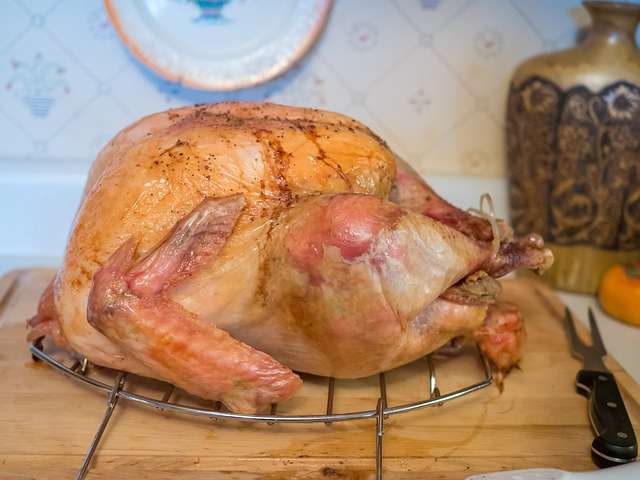
Getting ready to host and cook a large meal for a crowd of family or friends takes a lot of planning and preparation. Oftentimes we get so focused on the meal that we forget to also plan for the leftovers. To ensure that leftovers are safe to eat, make sure the food is cooked to a safe temperature and refrigerate leftovers promptly. The two main causes of foodborne illness are 1) not cooking food to safe temperatures, and 2) leaving food out at an unsafe temperature for too long. Safe handling of leftovers is very important to reduce foodborne illness.

According to Karen Blakeslee, food scientist and director of Kansas State University’s Rapid Response Center of Food Science, Clostridium perfringens is one of the most common foodborne illness sources with about 1 million cases in the U.S. each year. Common symptoms are diarrhea and stomach cramps within 6-24 hours of eating contaminated food.

To prevent foodborne illness such as Clostridium perfringens and have safe leftovers, the first step is cooking the food safely. Use a food thermometer to make sure that the food is cooked to a safe, minimum internal temperature. Red meats such as beef, pork, lamb, and veal need to be cooked to a minimum internal temperature of 145 degrees Fahrenheit. Ground meats, including ground beef, need to be cooked to a minimum internal temperature of 160 degrees Fahrenheit. All poultry, which includes chicken, turkey, pheasant, and duck must reach an internal temperature of 165 degrees Fahrenheit.  

Step two is to keep foods out of the temperature danger zone. Bacteria grow rapidly between the temperatures of 40 degrees and 140 degrees Fahrenheit. Once the food is cooked and set out to consume, it is recommended to refrigerate or discard any food left out at room temperature for over two hours. Cold perishable foods, such as deli meat or deviled eggs, should be kept at 40 degrees or below. Using warming trays, slow cookers, or setting a platter of food over ice would help keep these foods out of the temperature danger zone while serving many with a large table spread. 

When storing leftovers, make sure they are placed in a sealed, covered container for best quality and safety. Covered leftovers help keep bacteria out, moisture in, and prevent leftovers from picking up odors from other foods in your refrigerator. Leftovers can be safely stored in the refrigerator for 3-4 days, or frozen for 3 to 4 months. Freezing longer can result in a decreased quality food product. 

The third step is to reheat leftovers to a safe internal temperature of 165 degrees. This vital step is also important to prevent any foodborne illness. When reheating in a microwave, be sure to cover your food and rotate the food partway through heating to ensure even heating. Covering food while reheating helps retain moisture; sometimes adding liquid is needed to prevent your food from being too dry. Food thermometers can be found at your local grocery store, Wal-Mart, and sometimes hardware stores. 

For more information about food safety during the holidays visit the K-State Rapid Response Center website at https://www.rrc.k-state.edu or call Harvey County Extension at 316-284-6930.

Image by Larry White from Pixabay