From the Office of Public Affairs | http://www.news.ku.edu
Headlines
KU researchers launch new Kansas ecosystems online teaching tool
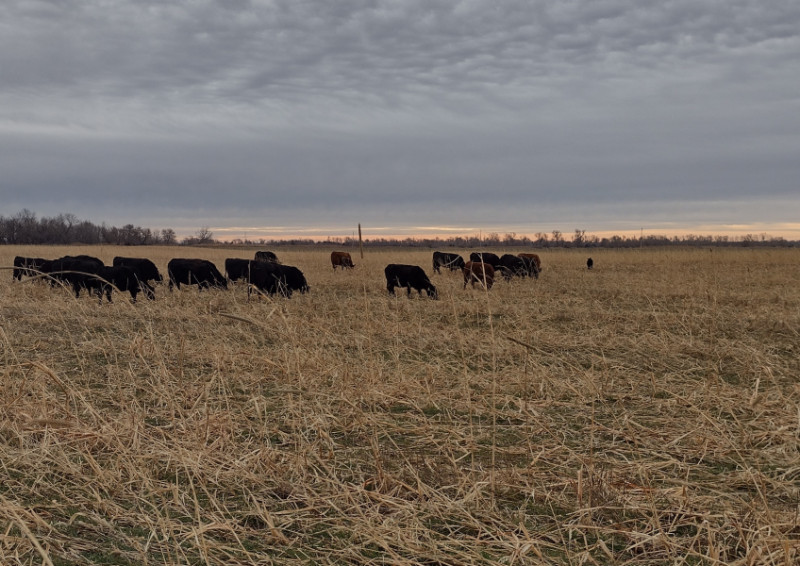
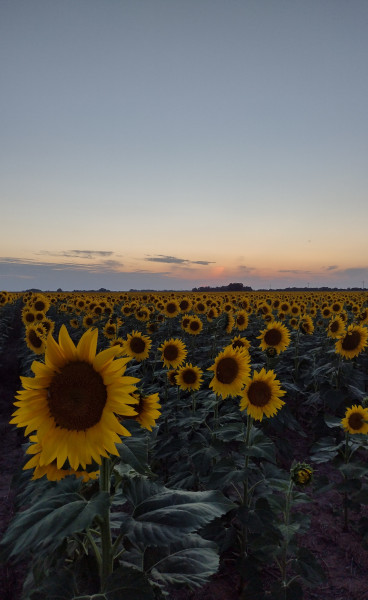
LAWRENCE — University of Kansas researchers have created the ArcGIS StoryMap Mapping Kansas Ecosystems to draw attention to the wide range of landscapes across the state — and serve as an online resource in classrooms, libraries and homes, for all ages. Through a mix of photos, videos, conversational text, history and interactive maps, the site dives deep into the modern landscape and the “ecosystem influencers” that shape it.
Three Jayhawks invited to attend White House Native American events
LAWRENCE — The University of Kansas and the Office of Native American Initiatives is proud to share that three KU students — Kylie Kookesh (Tlingit), Delilah Begay (Diné) and Hayley Harman (Prairie Band Potawatomi) — were invited to and attended two prestigious events in Washington, D.C., on Nov. 14 and 15. Native youth from across Indian Country joined together to attend the annual White House Tribal Youth Forum hosted by the White House, United National Indian Tribal Youth (U.N.I.T.Y.) and the Center for Native American Youth (CNAY) at the Aspen Institute.
KU Study Abroad & Global Engagement selected for IIE American Passport Project
LAWRENCE — This fall, 95 University of Kansas freshman students will receive free U.S. passports as part of the IIE American Passport Project, a grant initiative sponsored by the Institute of International Education. IIE contributed grant funds for 25 passports, with donations through KU Study Abroad & Global Engagement funding the remaining passports for Pell Grant-eligible KU students.
Full stories below.
————————————————————————
Contact: Kirsten Bosnak, KU Field Station, 785-864-6267, [email protected], @KUFieldStation
KU researchers launch new Kansas ecosystems online teaching tool
LAWRENCE — Dana Peterson hopes the new ArcGIS StoryMap Mapping Kansas Ecosystems will draw attention to the wide range of landscapes across the state — and serve as an online resource in classrooms, libraries and homes, for all ages.
“Here in northeastern Kansas, we think of one landscape: green, hilly, a mix of woodland and grassland,” said Peterson, an assistant research professor focused on remote sensing at the Kansas Biological Survey & Center for Ecological Research. “But Kansas has incredible variety of different grassland ecosystems, and different types of woodlands and wetlands, some native and others human-created. This StoryMap provides a great entry point to these ecosystems.”
Peterson and research colleague Jennifer Moody created the extensive website using the StoryMap multimedia platform. Through a mix of photos, videos, conversational text, history and interactive maps, the site dives deep into the modern landscape and the “ecosystem influencers” that shape it. An embedded web application, Kansas Ecological Systems Map and Field Sites, enables users to explore 49 mapped land cover types.
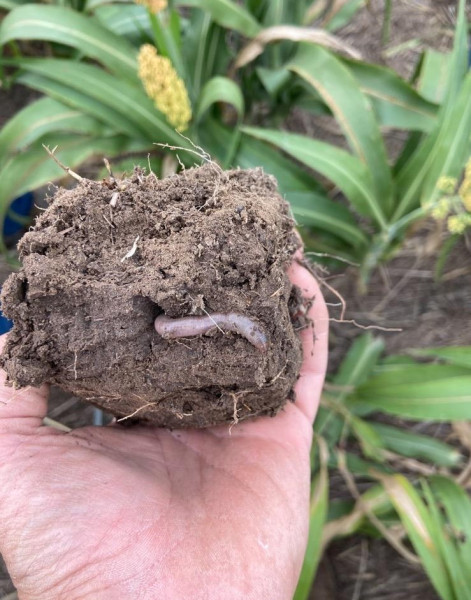
Completed in September, the website grew out of a larger, five-year project: the development of a new Kansas land cover map — focused on non-cropland. While the land cover map does include a cropland class, the project group’s goal, Peterson said, was to understand non-cropland vegetation systems, whether native or “messy” classes that occur as the result of human impacts.
“There isn’t a lot of attention placed on understanding what land cover is and what it means, and how crucial this information is to conservation decisions,” Peterson said. “The StoryMap goes into what factors drive land cover and land use — whether natural factors, such as the state’s east-west precipitation gradient, or human use including habitat fragmentation.”
To develop the land cover map, Peterson and other researchers at the Kansas Biological Survey & Center for Ecological Research traveled throughout the state, collecting data and taking photos. The group included Moody and former researchers Courtney Masterson and Amy Isenburg. Kelly Kindscher, a senior scientist at the research center and a KU professor in the Environmental Studies Program, created the Kansas plant community classification and also directed and participated in the project’s field research.
To showcase the land cover map and provide public educational content about Kansas landscapes, Peterson secured a one-year grant for the StoryMap from AmericaView, a nationwide network focused on using public domain satellite/remote sensing imagery for education, applied research and technology transfer. The network of university-based members, representing 41 states, is supported by the U.S. Geological Survey. Peterson is the lead investigator and coordinator for KansasView, the member in this state.
The land cover map is a collaboration between the Kansas Biological Survey & Center for Ecological Research and the Missouri Resource Assessment Partnership (MoRAP). The Kansas Department of Wildlife and Parks and the Nebraska Department of Natural Resources provided funding for the development of land cover maps for both states in tandem. All project partners worked in tight coordination to create new maps with borders that would match seamlessly.
The Kansas Biological Survey & Center for Ecological Research houses a diverse group of ecological research and remote sensing/GIS programs at KU. It also manages the 3,700-acre KU Field Station, a resource for study across the university.
-30-
————————————————————————
The official university Twitter account has changed to @UnivOfKansas.
Refollow @KUNews for KU News Service stories, discoveries and experts.
Tweets by KUnews
————————————————————————
Contact: Melissa Peterson, University Academic Support Centers, 785-864-7267, [email protected], @NativeatKU
Three Jayhawks invited to attend White House Native American events
LAWRENCE — The University of Kansas and the Office of Native American Initiatives is proud to share that three KU students were invited to and attended two prestigious events in Washington, D.C., on Nov. 14 and 15.
Native youth from across Indian Country joined together to attend the annual White House Tribal Youth Forum hosted by the White House, United National Indian Tribal Youth (U.N.I.T.Y.) and the Center for Native American Youth (CNAY) at the Aspen Institute.
Representing KU, undergraduates Kylie Kookesh (Tlingit), Delilah Begay (Diné) and Hayley Harman (Prairie Band Potawatomi) participated in programs with high-level administration officials and special guests and engaged in important conversations that impact Native communities including mental health, climate change, food sovereignty, education and more.
Following the forum, First Lady Jill Biden invited the students to visit the White House for a Celebration of Native American History Month.
Assistant Director and Native American Student Success Coordinator Lori Hasselman (Delaware/Shawnee Tribes of Oklahoma) is grateful for the continued connection with CNAY that facilitated this wonderful opportunity for KU Native students. “We have such a tremendous pool of high-achieving Native students at KU, and I am excited that the three students participating in this honor are a great representation of Jayhawks at the Capitol.”
About the students
1. Kylie Kookesh (Kyałxtin) is Tlingit, Deisheetaan (Raven, Beaver) from Shdeen Hít (Steel house) in Angoon, Alaska. Kookesh is currently studying elementary education and aspires to return to her hometown to set an example as a consistent long-term teacher, creating culturally relevant curriculums that inspire students to succeed in and after school. She is also a Multicultural Scholar and recipient of the Billy Mills Scholarship.
2. Delilah Begay, a citizen of the Navajo Nation from Ganado, Arizona, is a double major in film & media studies and linguistics. Begay aspires to work in the film industry and bring representation and a voice to those like her. She is also a McNair Scholar and a Chief Manuelito Scholar.
3. Hayley Harman, of the Prairie Band Potawatomi Nation from Hoyt, is studying human biology with the goal to attend medical school at the KU School of Medicine to become a doctor. Harman is a member of the KU First Nations Student Association, KU Women in Medicine, KU Pre-Medical Society and KU Club Softball team.
-30-
————————————————————————
Subscribe to KU Today, the campus newsletter,
for additional news about the University of Kansas.
http://www.news.ku.edu
————————————————————————
Contact: Angela Perryman, Office of Study Abroad & Global Engagement, 785-864-3742, [email protected], @KUStudyAbroad
KU Study Abroad & Global Engagement selected for IIE American Passport Project
LAWRENCE — This fall, 95 University of Kansas freshman students will receive free U.S. passports as part of the IIE American Passport Project, a grant initiative sponsored by the Institute of International Education.
Now in its second year, the IIE American Passport Project seeks to promote diversity, inclusion, access and equity in study abroad and encourage students to go abroad who would otherwise not participate in an international experience as part of their college education. For students of limited means, studying abroad can require long-term planning and involve financial hurdles, like the cost of a passport, which could bar them from moving forward.
IIE selected KU as one of 40 institutions to receive this unique funding opportunity. Through the IIE American Passport Project, Study Abroad & Global Engagement received grant funds for 25 U.S. passports. Through the generosity of donors, SAGE contributed additional financial support, enabling up to 95 freshman, Pell Grant-eligible KU students to obtain a U.S. passport this fall.
“We are honored to have been selected by IIE for the American Passport Project,” SAGE Director Angela Perryman said. “One of the primary goals of KU Study Abroad & Global Engagement is to increase the number and diversity of students participating in education abroad, such that the population of study abroad students mirrors the KU undergraduate student population across all student profiles (academic discipline and student demographics). The American Passport Project directly supports this goal by providing students access to a passport and the resources and motivation to use it during their time at KU.”
International education has measurable benefits for all students. As a high-impact practice, study abroad is positively correlated to increased student engagement and retention, the development of soft skills and professional competencies, and improved career outcomes.
According to recent research from the University System of Georgia Consortium for Analysis of Student Success through International Education, students who studied abroad were 6 percentage points more likely to graduate in four years and 4 percentage points more likely to graduate in six years than their classmates, and achieved higher cumulative grade-point averages than their peers. These effects are even more pronounced for students on need-based aid and those who identify as first-generation college students, making efforts to support and engage these student populations in education abroad both a national and institutional priority.
The IIE Network is a global membership network connecting more than 10,000 professionals from over 1,500 organizations to resources, including IIE’s extensive knowledge and decades of experience supporting student mobility and exchange, campus internationalization and international partnerships.
-30-
————————————————————————
KU News Service
1450 Jayhawk Blvd.
Lawrence KS 66045
Phone: 785-864-3256
Fax: 785-864-3339
[email protected]
http://www.news.ku.edu
Erinn Barcomb-Peterson, director of news and media relations, [email protected]
Today’s News is a free service from the Office of Public Affairs