Saturday, March 21, 2026
Home Blog Page 889

Water Landscape Plants Before Winter if Needed

0

We are having another very dry fall.  Watering now is important to prevent moisture stress through the winter months.

A good, deep watering with moisture reaching at least a foot down into the soil is much better than several light sprinklings that just wet the top portions of the soil. A deep watering will help ensure that the majority of roots have access to water. Regardless of the watering method used, soil should be wet at least 12 inches deep. Use a metal rod, wooden dowel, electric fence post turned upside down or something similar to check depth. Dry soil is much harder to push through than wet.

Although all perennial plants benefit from moist soils before winter, it is especially important for newly planted trees and shrubs due to limited root systems. Even trees and shrubs planted within the last 2 to 3 years are more sensitive to drought than a well-established plant. Evergreens are also more at risk because moisture is lost from the foliage during the winter months.

Trees or shrubs planted within the last year can be watered inexpensively with a 5-gallon bucket.  Drill a small hole (1/8″) in the side of the bucket near the bottom. Fill the bucket and let the water dribble out slowly next to the tree. Refill the bucket once more, and you have applied 10 gallons. Very large transplanted trees and trees that were transplanted two to three years ago will require more water.

A perforated soaker hose is a good way to water a newly established bed or foundation plantings.  However, soaker hoses are notorious for non-uniform watering. In other words, you often receive too much water from one part of the hose and not enough from another. Hooking both the beginning and the end of the soaker hose to a Y-adapter helps equalize the pressure and therefore provide a more uniform watering. The specific parts you need are shown in the photo above and include the soaker hose, Y-adapter and female to female connector. It is also helpful if the Y-adapter has shut off valves so the volume of flow can be controlled. Too high a flow rate can allow water to run off rather than soak in.

On larger trees, the soaker hose can circle the trunk at a distance within the dripline of the tree but at least ½ the distance to the dripline. The dripline of the tree is outermost reach of the branches. On smaller trees, you may circle the tree several times so that only soil which has tree roots will be watered.

If using a soaker hose, note the time watering was started. Check frequently to determine the amount of time it takes for water to reach 12 inches. From then on, you can water “by the clock.”  Use a kitchen oven timer so you remember to move the hose or shut off the faucet. If you are seeing surface runoff, reduce the flow, or build a berm with at least a 4-foot diameter around the base of the tree to allow the water to percolate down through the soil, instead of spreading out.

If we have a normal winter, watering once before spring should be adequate.  However, if the winter is warm and dry, watering once a month may be needed.
Anfred Allen Smith

0

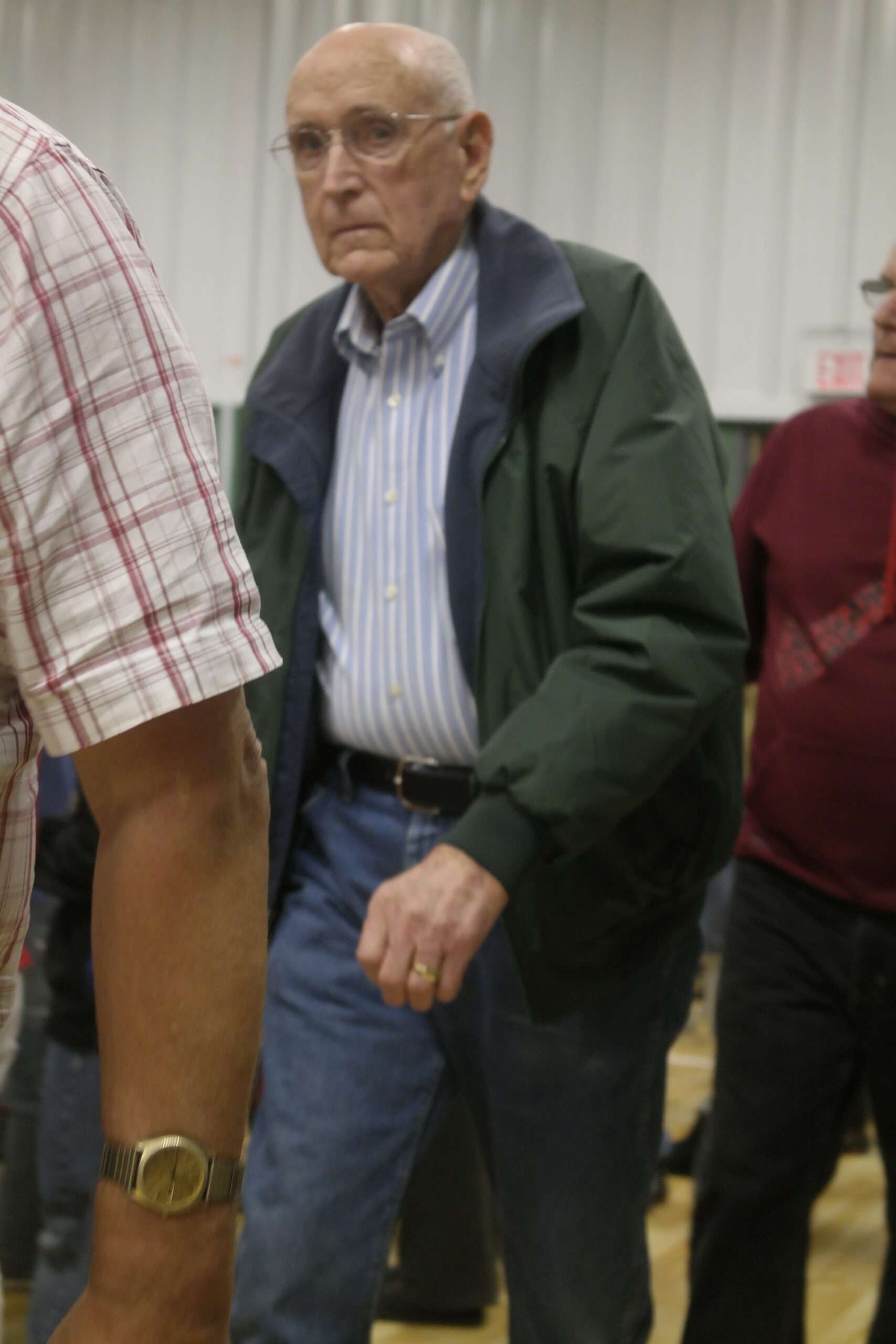
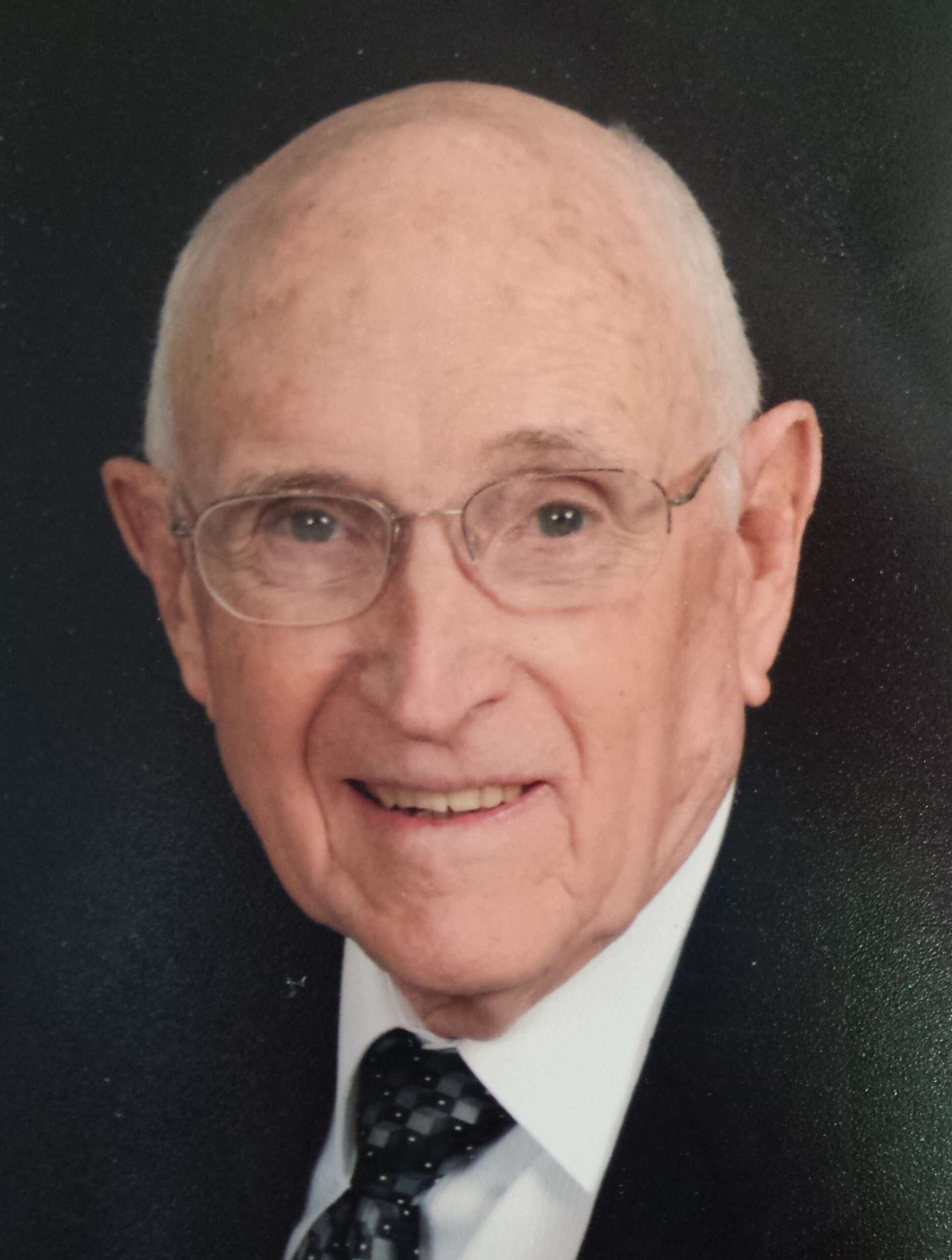
Anfred Allen Smith, also known as “Shorty”, 97, peacefully passed away Thursday, October 27, 2022, a resident of Parkwood.
Anfred was born August 21, 1925, the youngest son of Jesse and Leah (Shepard) Smith, in Springvale Township in the southwest corner of Pratt Co. He was the last surviving cousin of the Smith and Shepard families.
A life-long resident of Pratt Co., as a young boy he attended school at Wellsford and Cullison. He graduated from Cullison High School in 1943 with a fellow classmate, Vivian Adams, who he would marry.
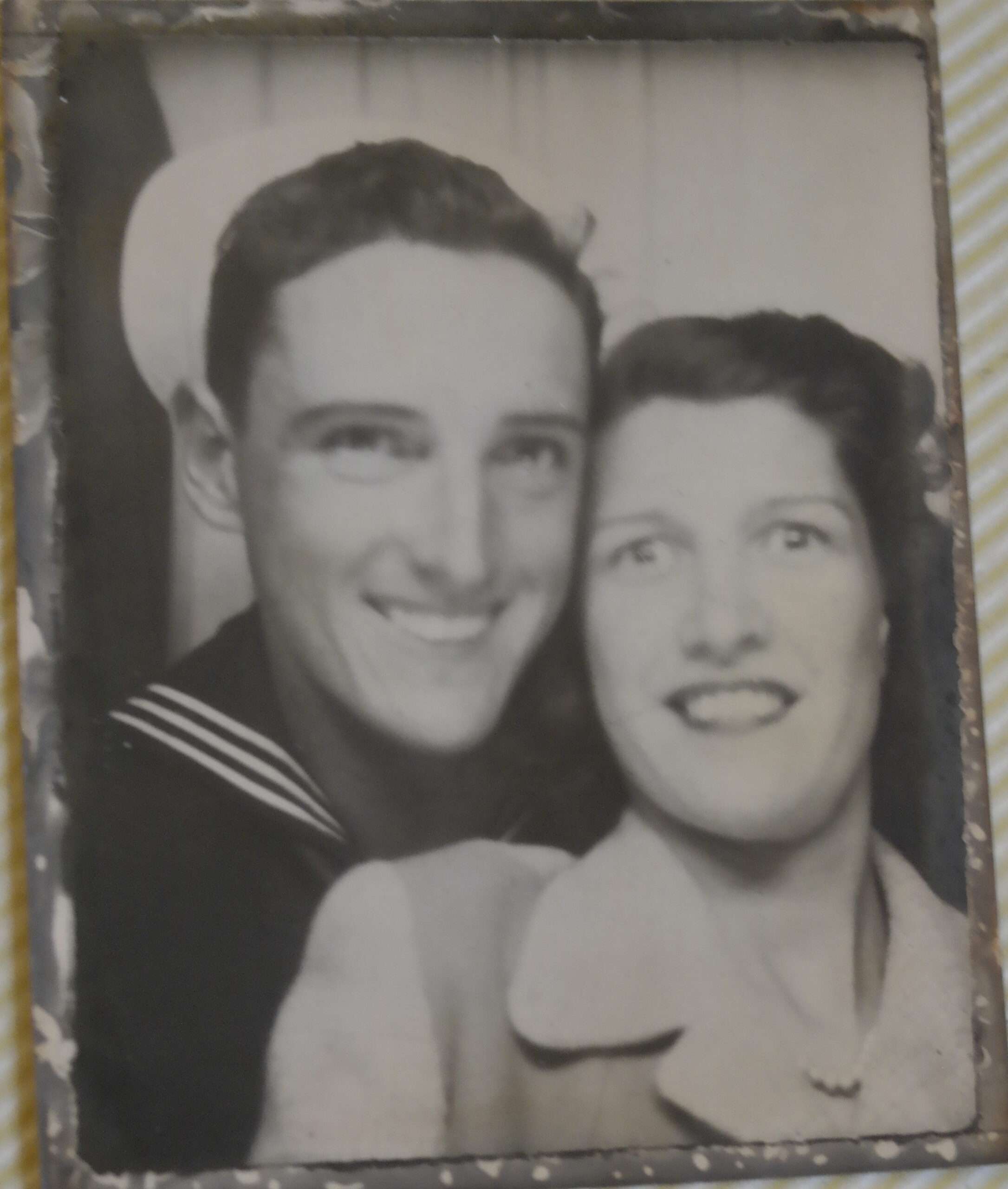
Anfred enlisted in the US Navy on Nov 1944, and attended the US Naval Training Center in Great Lakes, Illinois. Wearing his Navy uniform he married Vivian Adams in Pratt, KS, on Feb 25, 1945. He was assigned to the USS McCaffrey DD860, a newly commissioned destroyer. He and Vivian attended the commissioning ceremony July 1945, at Terminal Island, Los Angeles, CA. Anfred served as an ammunition supply shipman aboard the McCaffery as it preformed military maneuvers in preparation for its deployment to China.
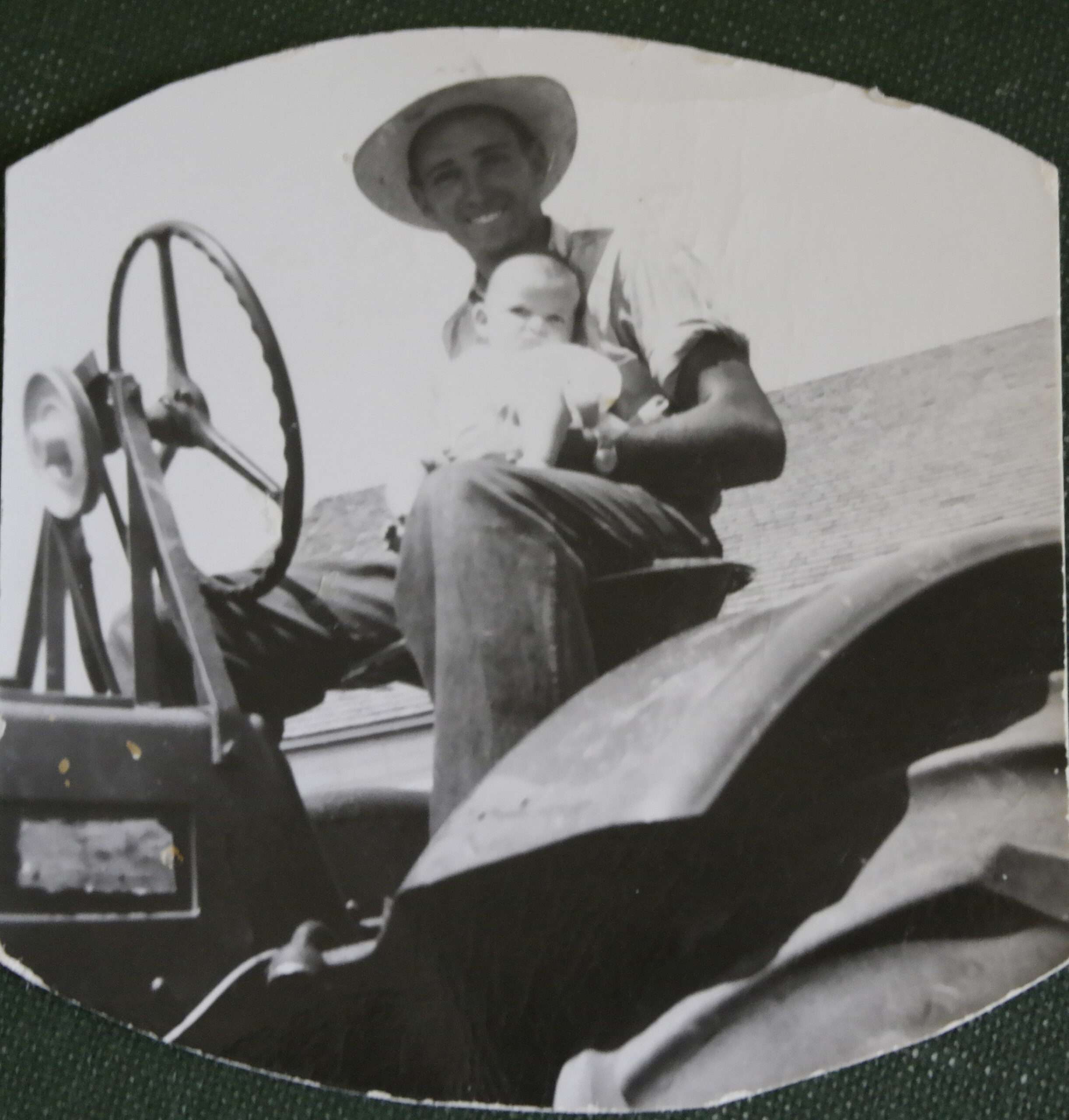
After his discharge from the Navy in 1946, Anfred returned to the southwest area of Pratt Co. where he engaged in farming and raising livestock where the fourth generation of Smiths continue to farm. He and his wife, Vivian, had three children.
In 1979 Anfred participated in the American Agriculture Tractorcade driving his Case tractor to Washington, DC, in February of that year to protest farm prices. Accompanied by his wife and brother, Lawrence, he was one of hundreds of tractors participating in the tractorcade.
Anfred attended the Wellsford Methodist Church and later joined the Pratt Free Methodist Church in Pratt. After his retirement in 1991 he and Vivian moved to Pratt where he was involved with church activities and the Gideons, an organization that places bibles in local hotels and distributed bibles to school children. He was involved with missionary work and made trips to Honduras and an Arizona Indian school to help with building and maintenance projects. He enjoyed his grandchildren and gave several of them their first driving lesson in his pickup truck, taking them driving through the pasture.
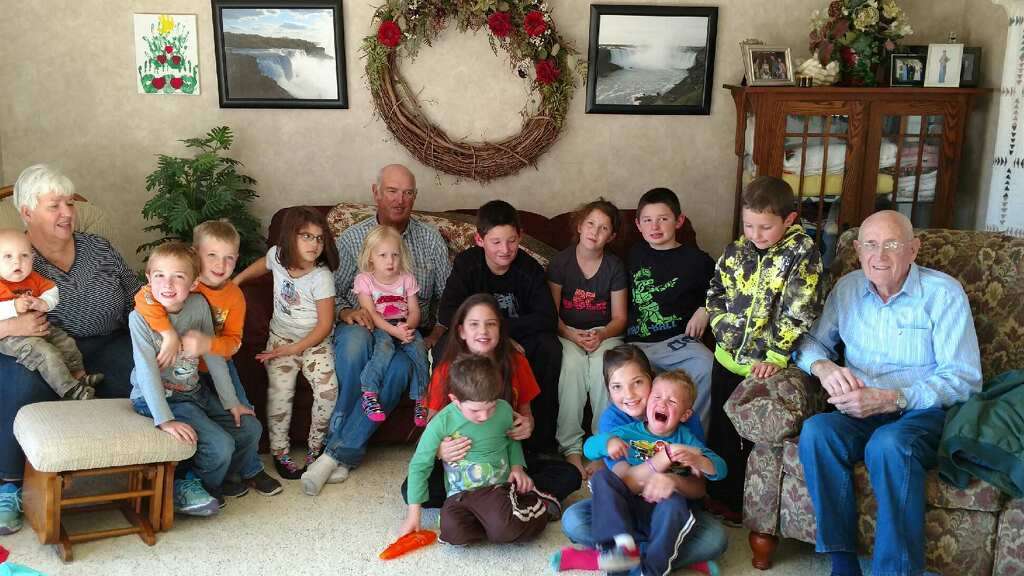
Survivors include: a daughter, Janice (Don) Urban, Wichita, and children, Jess (Megan) of Marysville, KS and Leslie (Adam) Rathert of Nortonville, KS; a son, Morris (Kay) Smith, Haviland, and children, Teresa (Don) Richhart of Moline, IL, Tammie (Luke) Hoeme of Preston, Kristi (Justin) Gatz of Preston, and Allen (Katie) Smith of Haviland; granddaughters, Lori (Roger) Rankin of Wichita and Becky Moore of Moore, OK, daughters of a deceased daughter, Gloria Jean (Richard) Petersen; 8 grandchildren; 28 great-grandchildren and 5 great-great grandchildren.
He was preceded in death by his wife Vivian, three brothers, Lloyd, Marvin and Lawrence; a daughter, Gloria Jean Petersen; and son in-law, Richard Petersen.
Visitation will be held on Friday, November 4, 2022 from 9:00 a.m. – 8:00 p.m. with family receiving friends from 6-8 at Larrison Mortuary, 300 Country Club Road, Pratt. Funeral services will be held at 10:00 a.m. at Larrison Mortuary in Pratt on Saturday, November 5, 2022 with burial following at Sunset Cemetery, Cullison. Memorials may be made to the Gideon International or Cullison Sunset Cemetery. Online condolences may be left at www.larrisonmortuary.com.

SAMSUNG CSC
SAMSUNG CSC

SAMSUNG CSC

Free Program on Francisco Vazquez de Coronado

0

On November 10, 2022, at 7:00 p.m., Dr. Tim Myers, Chair of Social Sciences and Professor of History at Butler Community College, will present a program about Francisco Vazquez de Coronado and the Seven Cities of Gold. Dr. Myers will cover the history of Coronado, his motives, his career, and his impact on Kansas.

The free program is open to the public. It will be held at the Coronado Quivira Museum which is located at 105 West Lyon, Lyons, Kansas. Daily hours of operation are Tuesday to Friday from 10:00 a.m. to 4:00 p.m. and Saturday from 10:00 a.m. to 1:00 p.m. Call (620) 257-3941 for more information.

3 New Horticulture Training Opportunities This November

0

Training Workshop:

o  Date: Wednesday, November 16, 2022 from 8:00am – 5:00pm

o  Location: Sedgwick County Extension Education Center, 4-H Hall, or online via Zoom

o  Topic: Learn about weed, insect, and disease identification and management of turfgrass and ornamental plants. Certification credit will be available for Commercial Pesticide Applicators and ISA Certified Arborists.

o  Audience: Horticulturists, Arborists, Grounds Maintenance Staff, Turfgrass Managers, Landscapers, Pest Control Companies, and community members interested in current horticulture industry topics

o  See the full schedule and register online by November 11th at: www.tinyurl.com/2022recertification


·        Kansas Community Tree Canopies: Values, Impacts, Reforestation:

o  Date: Monday, November 21, 2022 from 8:30 am – 1:00 pm

o  Location: Sedgwick County Extension Education Center, 4-H Hall; Other dates around the state

o  Topic: Learn about Kansas’s recently completed tree canopy assessment, and how to utilize your community’s data to improve urban tree canopy health. Learn more about current risks to community trees, pruning strategies to reduce canopy loss, and tree selection to reforest your community.

o  Audience: Mayors, Council Representatives, City Staff, Tree Board Members, Arborists, Horticulturists, Grounds Maintenance Staff, Landscape Architects and community members interested in the health of their community tree canopies

o  See the full schedule and register online at: https://bit.ly/3Ri308J


·        Kansas Turf & Landscape Conference:

o  Date: Wednesday, November 30 and Thursday, December 1, 2022

o  Location: Hilton Garden Inn Hotel & Conference Center, Manhattan, Kansas

o  Topic: A wide variety of turf and landscape management topics as well as horticultural research updates will be covered in this 2 day conference. Certification credit will be available for Commercial Pesticide Applicators, ISA Certified Arborists, and Golf Course Superintendents Association of America.

o  Audience: Horticulturists, Arborists, Grounds Maintenance Staff, Turfgrass Managers, Landscapers, Pest Control Companies, and community members interested in current horticulture industry topics

o  See the full schedule and register online at: https://2022turfconference.eventbrite.com

Splitting Heirs

0
lee pitts

As an animal science graduate my favorite subjects were genetics and animal breeding, although that statement may sound a little kinky to liberal arts students. I think many purebred cattle breeders enjoy the cattle business so much because they too are fascinated by genetics and can hardly wait to see the results of their planned matings. It’s funny though that while I’m intrigued by the study of genetics I have no interest whatsoever in who I’m related to.

I had an aunt who was a “genealogy nut” although a good case could be made that she was just a full blown nut. My kooky aunt had boxes and boxes of printed matter “related” to the genealogy of my family that no one wanted when she passed away.

On one huge wall of her house she had photos, or copies of photos, of my relatives laid out in the format of a family tree, with two people becoming four, then sixteen and so forth. I’m sure if Kodak® had been around at the time she’d have photos of Adam and Eve. Judging by the looks of some of the folks on her wall I’d have to say there was a lot of dry rot in my family tree. At a minimum I’d say there were a lot of branches and twigs that sure needed pruning. Judging by the looks of some of these scary looking folks it’s little wonder that I look more like a peach pit than I do Brad Pitt.

I think my aunt pursued our family’s genealogy with such vigor hoping to find some famous movie star, soldier or athlete that we were related to but the closest she came was that we were related to John Wesley Hardin, one of the the most infamous, no-good murdering gunslingers the west has ever known. John Wesley allegedly murdered his first man at age 15 and 26 other murders have since been attributed to him. Actually my grandparent’s name was Harding but after John Wesley Hardin ruined his last name my relatives changed their name and added a “g” to the end.

Luckily, my aunt could never find credible evidence that we were related to the worst President in history up until now, Warren G. Harding. (I say up until now because I think the current occupant of the White House is making a good case that he deserves that honor.) I’d like to say that my name was actually Pitt, like the great looking actor Brad Pitt, but I figure my family had to add an “s” to our last name so people wouldn’t get Brad and I confused.

Practically every time I saw auntie Bev I used to belittle her lifetime of work trying to find someone famous she was related to. For example, she’d get really offended when I mentioned that someone she really hated in town had just joined the Mayflower Society, an organization of people who could document their descent from at least one of the 102 passengers who arrived on the Mayflower in 1620 at Plymouth Rock. I used to argue with her all the time and would drive her nuts with statements like, “Did you know auntie Bev that genetically speaking 98.4% of our genes are identical to that of a modern day chimpanzee?”

Or, “Auntie Bev did you know that we are very closely related to vegetables like turnips and rutabagas? That’s right, according to author Bill Bryson about half the chemical functions that take place in a banana are fundamentally the same as those that take place in your body! And over 60% of human genes are fundamentally the same as those found in fruit flies! So auntie Bev, if you want to expand your photo gallery on your wall of who our family is related to you might want to frame a photo of an onion, a fruit fly or a chimp and put that on your wall!”

Oh, that one really got her but the deepest cut of all was when I said. “There is more difference between a zebra and horse, genetically speaking, that there is between you and a member of the ass family. Relatively speaking, of course.”

So I guess I shouldn’t have been surprised when auntie Bev cut me out of her will!