Sunday, March 22, 2026
Home Blog Page 899

Doggie Diners

0
Inflation is running rampant and nowhere is this more evident than at restaurants, so diners have to get creative to stretch their food dollars. Up until now I’ve relied on three ways to reduce the total tab and not break the bank: you can eat fast food more often, order off the a la carte menu or split a meal with your spouse. Believe me, I’ve experimented with all three with varying results but have found that the best way to cheapen back on your bill is is the combo meal which consists of one item off the a la carte menu at a fast food joint and then split it with your spouse.
My wife and I never eat supper or breakfast out but I do like to treat her to lunch a couple times a week. Currently one of our favorite restaurants is a place called Sea Pines. We’ve eaten at Sea Pines for over 40 years and it’s gone through its ups and downs depending on the management but currently its fare is fabulous and the staff is super friendly. We also like it because we’re only a couple miles away and this brings up yet another way to reduce the tariff while dining out: pick a place close to home to cut back on gas, of the fossil fuel kind anyway.
If you think being a customer at a restaurant is costly put yourself in the restauranteur’s shoes. Their costs are spiraling out of control, customers are still a bit reluctant to dine out due to Covid, many places can’t find the help they need and some chains have gone belly up because they simply cannot find the workers they need in sufficient numbers.
The restaurant business really has gone to the dogs. One way Sea Pines has come up with to generate more income is to feature a dog’s menu. For example, the breakfast menu offers The Canine Combo which include one scrambled egg, one piece of bacon and one doggie biscuit, all for only seven bucks. Or you can buy three scrambled eggs cooked to your dog’s liking for six dollars and last but not least, four pieces of extra crispy bacon for five dollars. The lunch and dinner items for the pooches at Sea Pines include sliced chicken breast for five dollars, one third of a pound of ground beef patty for six dollars, or an eight ounce ribeye cooked to your pup’s preferred degree of doneness for only ten dollars. (What dog is gonna eat chicken when they can eat beef?)
I asked our favorite server Brie, “Does anybody really order these thing for their dog?”
I watched as a tear began forming in the corner of her eye and with halting speech she uttered, “Oh, yes. On the day we had to put our old dog down we brought her here first and ordered the ribeye steak for her.”
“I bet she went to heaven with a big old smile on her doggie face,” I said, trying to lighten the mood.
On our next visit to Sea Pines Brie wasn’t there and I ordered the doggie ribeye. “And could I get a knife and fork with that, you know, to cut up the steak into more dog-sized chucks?”
“That’s thoughtful of you,” our server said. “And would your dog like something to drink?”
“That depends. How much are you getting for your dog ice tea or a doggie Diet Coke.”
“They’re three fifty, the same as the people version.”
“Oh, I think our dog will pass then. Could you just bring us all some water?”
I ruminated about what a great concept the dog menu was at Sea Pines. Basically they turned one restaurant into two. One for people and an all new coffee shop for dogs. If they can be so creative in coming up with ways to fight inflation I figured so can I. So, the last time we dined out at Sea Pines I ordered the ribeye steak along with The Canine Combo with two extra plates. So we ended up with the ribeye, a scrambled egg and a piece of bacon all for $17, or $8.50 for two.
“As we were leaving the server yelled out to us across the crowded restaurant, “Don’t forget your doggie biscuit for your imaginary dog.”
Smarty-pants.
www.LeePittsbooks.com

www.LeePittsbooks.com


Dunmovin’ In Ten Sleep

0
lee pitts
I collect things and one of the things I’ve collected over the years are names of small town’s I’ve either visited or wanted to. For example, I’ve been in Greybull, Wyoming, Bull Run, Oregon, and Bullhead City, Arizona but I’ve never been to Bulltown, West Virginia, Bull, Wyoming, or Cowford, Florida. I spent quite a few days in Bovina, Texas, which was previously called Bull Town. You’d be surprised to find just how many small towns drew their names from the cowboy lexicon. For example, New Mexico has had five towns in its history called Corral, which I’d think would have gotten confusing when the boss man said to take the herd to Corral. “Which one?” you might ask? Further complicating matters is the fact that there’s a Cowpens in South Carolina.
There used to be a town called Ox Bow, Nebraska, but for some reason they changed their name to Angus in 1886. This was years before sporting venues sold naming rights like the ScotiaBank Saddledome, KFC Yum! Center, Tony Macaroni Arena, and Smoothie King Center, so I doubt the Angus Association paid for the name change in Oxbow. Keeping with the cowboy theme there is a Saddle River, New Jersey, Saddlestring, Wyoming, Lariat, Texas, and a Roundup in both Montana and Texas.
Some small towns have such soothing names you want to go there like Cool, California, or Briny Breezes, Florida, while others seem to be trying to scare you away with names like Bake Oven, Thermal, Stinking Water, or Sweatman. The hardest job in the world has got to be being head of the Chamber of Commerce in Hell, Michigan, although it would be no picnic in Boring, Oregon, or Dull, Tennessee either. And who in their right mind is gonna say, “Back up the moving truck Martha we’re moving to Humptulips, Hogeye, Hogaw, Punkin Center, Okay or Ordinary.” I think these are all places you actually have to have been born there to get there.
When I’m talking small towns I’m referring to places where there’s five cows and three sheep for every person and no politician has ever visited there. I’m talking about places you’d never think of stopping in unless you broke down. Places like Crooked River, Coldass Creek, Waterproof, Possum Grape, Scratch Ankle, Sweet Lips, Cheesequake, Greasy Corner, Lick Skillet, Wide Awake, Tightsqueeze, Monkey’s Eyebrow, Potato Neck, Cut and Shoot, Breakabean, Smackover, Pie Town, or Stifleknee Knob. These are places where there’s more people IN the Fourth of July parade than are actually watching it. It’s where good folks leave their doors unlocked and one speeding ticket can double the town’s yearly income.
I love everything about Wyoming especially the fact that people are so honest there. Who else would name a town Dead Bastard Peak, Crazy Woman Creek or Maggie’s Nipples? I’m told Ten Sleep, Wyoming, got its name from the Indians because they said the distance between two places was 20 “sleeps” away, or 20 nights, and Ten Sleep was therefore half way.
Some small towns named themselves like Bear Wallow, Arsenic Tubs, Happy Valley, Mud Lick, Wagon Mound, Burning Well, Crooked River, Iron Mountain, Dripping Springs, Oil Trough, Goose Lake and Dunmovin’.  I can only imagine how Relief, Kentucky, got its name. Did someone have to pull over the wagon train to pee and decided that would be a good place to start a town?
I can’t think for the life of me why anyone would name their town Why, Arizona, or Why Not, Mississippi. Or Ding Dong, Texas, for that matter. I’ve been to towns called You Bet and Truth or Consequences, which was actually named after a TV game show. And I’m being truthful when I say there’s a town in Texas that shall go Nameless. Really, that’s its name… Nameless. I think the name Recluse, Montana, was named after me, but it existed long before I was born.
Pennsylvania sounds like a land of perverts when you consider some of their town names like Intercourse, Climax, Blue Ball, Virginville, Lover and Noodle Doosey. Some towns just want to be cute like Fountain, Penn., Noah’s, Ark., and Tin, Kan., but my favorite town name in my collection is Zzysx, California, which supposedly just wanted to be the last word in the English language. So I guess it’s only appropriate I let them have the last word.
www.LeePittsbooks.com

Wheat industry gets boost from biofuel, protein plant

0

A new wheat protein processing center is providing welcome news to the breadbasket of America.

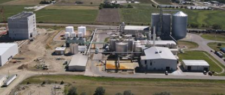
In Phillipsburg, Kansas, a corn ethanol plant is being retooled so that it can produce wheat-based biofuel and wheat protein (gluten) for the baking and pet food industries.

Amber Wave, through its parent group Summit Ag Investors, Alden, Iowa, purchased the Prairie Horizon Agri-Energy corn ethanol plant in summer 2021, said Chief Operating Officer Steve Adams.

While the converted plant will have the capacity to handle both crops in the future, the emphasis is on the construction and conversion to a wheat processing facility that will produce a wheat-based biofuel for the energy sector and wheat protein for bakers and pet food manufacturers, said CEO Randy Cimorelli.

The Prairie Horizon plant at the time of the purchase was producing 50 million gallons a year of corn ethanol and in the short run will continue to produce that type of biofuel until the conversion to wheat takes place, Adams said.

In January, Amber Wave broke ground on the 27,500 hundredweight wheat flour mill that is currently under construction, he said. In addition to the mill, a wheat protein extraction facility is being built.

“We’ll grind about 20 million bushels of wheat per year, Adams said. “One hundred percent of the flour that comes out of that mill will go to our wheat protein extraction facility and ultimately we will produce in excess of 100 million pounds of finished wheat protein to sell to bakeries and pet food manufacturers.”

During protein extraction a mechanical process is involved that separates the starch from the protein, the protein can then be dried and packed in bags, totes or bulk, Adams said. The starch will then go to the ethanol plant.

Cimorelli said the focus of the plant will be as a wheat processing center for biofuel and protein production. “This country, as a whole, imports over 70%—probably closer to 80%—of its wheat protein, or gluten, (each year),” Cimorelli said. “If you look at what’s been going on in the world the last few years we knew that if we could create a domestic source of manufacturing we would be a solution provider by helping our future customers eliminate the global supply chain challenges and constraints that they were faced with.”

Wheat protein, he said, is the “plant based protein of the world.” Our goal is to be the largest manufacturer in North America.

The interest in wheat as an alternative to corn has been well received by growers, he said. While Mother Nature can be unkind to growers regardless of crop, Cimorelli says the Phillipsburg plant is at the right location for them to leverage best possible outcomes. “We may have some years where we’ll need to go farther away (to secure wheat) for the plant but the opportunity for growers in the region and beyond is real.”

Cimorelli said he believes connections with Kansas State University, seed companies, grower organizations and farmers will produce protein that is beneficial for Amber Wave’s needs while also benefiting growers. “Ultimately, we can reward higher protein levels.

Adams said the ability to repurpose and add to the Phillipsburg plant as well as have it in full production in a year made it the right fit. The region’s ability to produce wheat and the proximity to rail transport facilities was an added bonus.

“Location-wise, from a wheat standpoint, it was very beneficial for Phillipsburg,” Adams said.

Construction and renovation has meant as many as 200 workers, including the local employees, have been onsite on a daily basis, Adams said. The economic impact is being felt in the local community as many of those temporary workers are buying fuel, eating lunch, staying in local motels or renting a place to stay. “We believe the local community is feeling the impact everywhere,” Cimorelli said. Phillipsburg and surrounding communities have been unified in watching the project succeed.

A Kansas native who grew up on a farm and ranch operation in Greenwood County, Adams said the project is a source of pride as he has worked on various successful projects across the country. “Being able to fit something in my home state provides a benefit to the farmers and ranchers in that area I’m excited and it definitely means a lot to me.”

Adams has been busy recruiting milling science interns and full-time professionals and he is eager to see how those talented professionals will mesh in the community.

Cimorelli said the commitment and support from community leaders, the community at large and state officials has been excellent. And that support makes for a great long-term partnership going forward.

Justin Gilpin, CEO of the Kansas Wheat, said the Amber Wave project is great news for High Plains growers as he called it an exciting development for wheat farmers and the state’s wheat industry.

“It will create increased localized demand in the largest producing state of hard red winter wheat in the United States,” Gilpin said. “Increasing localized demand for Kansas-grown wheat will be a positive for Kansas farmers. This plant, in combination with PureField Ingredients wheat protein plant in Russell, will make the state of Kansas the largest wheat protein producing state in the country.”

Gilpin said the Amber Wave plant should create localized demand for wheat not just in Phillips County area but throughout the region, particularly western Kansas. The Kyle Railroad runs from northeast Colorado to Kansas City and there is opportunity to pull wheat from other regions to meet Amber Wave’s commitments, he said, and that can benefit growers from those regions, too.

Amber Wave’s commitment demonstrates its commitment to wheat growers and to the hard red winter wheat industry.

“We’re excited about it, not just because of the increased and demand and that specific project, but we’re encouraged by the leadership team that’s in place with Amber Wave and their approach on how they are coming into the state of Kansas and going into that area of Kansas,” Gilpin said.

“Kansas farmers are some of the most diversified in the United States with crop rotations and they do what they need to do to stay profitable,” Gilpin said.

As reported in the High Plains Journal

Tips for Turfgrass, Mower Maintenance & Fall Vegetables

0

REMINDERS

  1. Continue to transplant trees and shrubs
  2. Harvest tomatoes and peppers when frost threatens

TURFGRASS – Control Broadleaf Weeds in Lawns in Late October – Early November

Late October to early November is the most effective time to control broadleaf weeds with postemergence herbicides in lawns. Dandelions usually produce a flush of new plants in late September, and the winter annual weeds henbit and chickweed should have germinated in October. These young plants are small and easily controlled with herbicides such as 2,4-D or combination products (Trimec, Weed-B-Gon, Weed-Out) that contain 2,4-D, MCPP and Dicamba. Even established dandelions are more easily controlled now than in the spring because they are actively moving materials from the top portion of the plant to the roots in the fall.  Herbicides will translocate to the roots as well and will kill the plant from the roots up.  Choose a day that is 50 degrees or higher. The better the weed is growing, the more weed killer will be moved from the leaves to the roots. Cold temperatures will slow this process but these products will still work at lower temperatures.

Weed Free Zone (also sold under the name of Speed Zone) contains the three active ingredients mentioned above, plus carfentrazone. It will give a quicker response than the other products mentioned especially as temperatures move below 50 degrees. (Ward Upham)

Why Late Lawn Seedings Often Fail

We normally recommend that Kentucky bluegrass and tall fescue be seeded in September but no later than October 15. Though plantings later than October 15 can be successful, the odds of success diminish as time passes.

The problem with late plantings is not that the seed will not come up or that young grass plants are sensitive to cold. Most often, the problem is with rooting. Unless the young grass plants have a fairly extensive root system, the freezing and thawing that takes place during winter heaves plants out of the ground, and they dry out and die.

Regardless of when planted, be sure the new lawn is kept watered through the fall. More mature lawns will need less frequent watering but all should go into the winter with moist soil. (Ward Upham)

Tucking Your Lawnmower in for the Winter

If you are done mowing for the year, be sure to service your mower before putting it away. Make sure you drain the gas tank of gasoline-powered engines or use a gasoline stabilizer. Untreated gasoline can become thick and gummy. A few drops of oil squirted inside the spark plug hole (after you remove the spark plug) will help lubricate the cylinder. While you have the spark plug removed, replace it with a new one. If your equipment has a battery, clean the battery terminals, which usually corrode during the season.  A wire-bristle brush is a good tool for doing this. The battery can then be removed or connected to a battery maintainer that will keep it charged over winter. If you remove the battery, be sure to store it in a protected location for the winter (a cool basement works best). Now is also an excellent time to sharpen mower blades so they’ll be ready next spring.

Sharpening rotary mower blades is fairly straightforward. The following steps will guide you through this process:

* Check the blade for major damage. If you can’t fix it, it will need to be replaced.

* Remove grass and debris from the blade with a moist cloth. Dry before beginning to sharpen the cutting edge.

* Remove nicks from the cutting edge, using a grinding wheel or hand-file.

* If using a grinding wheel, match the existing edge angle to the wheel. If hand-filing, file at the same angle as the existing edge.

* Grind or file until the edge is 1/32 inch, about the size of a period.  Sharpening to a razor edge may result in the edge folding over during use resulting in a poor cut.

* Particularly with a grinding wheel, avoid overheating the blade as this may damage it.

* Clean the blade with solvent or oil, much like if you were cleaning a gun, for optimum winter storage. Avoid using water because it will promote rust.

Following these tips can help you better prepare your mower for winter storage and also save you some steps this coming spring. (Ward Upham)

VEGETABLES – Hardiness of Cool-Season Vegetables

Cool-season vegetables vary in cold tolerance, with some able to take colder temperatures than others. Semi-hardy crops can take a light frost but are damaged by temperatures in the mid- to upper-20s. Examples include beets, Chinese cabbage, collards, Irish potatoes, Bibb lettuce, mustard, radishes, spinach, Swiss chard, and leaf lettuce. Covering these plants when cold weather threatens can help extend the harvest season.

Plants termed “hardy” can take lower temperatures but are damaged when the temperature drops to the low 20s. These include cabbage, broccoli, cauliflower, Brussels sprouts, carrots, turnips, and kale.

Certain root crops can essentially be stored outside even after the leaves have been damaged or killed by frost. Beets, carrots, potatoes and turnips can be mulched and harvested as needed until the soil starts to freeze in late November to December.

Growing vegetables in Kansas can be a challenge, but we have an extremely long gardening season. We can harvest from early April (asparagus) to early December. Winter is a good time to plan and prepare for next year’s crops. (Ward Upham)

Keeping Your Pumpkin Longer

If you buy your pumpkins early, there are some tricks to make them last. Make sure the pumpkin wasn’t harvested too early; before the rind developed a hard, waxy layer to keep it from drying out and shriveling. Test the pumpkin with your thumbnail. If it penetrates the fruit easily, it was harvested too early. Pumpkins also keep better in cooler weather. Even mature pumpkins may benefit from a light application of a spray wax such as that used for cars.

If you carve your pumpkins consider that the seeds can be saved and roasted.  Scoop out the seeds, rinse them well to remove any strands of tissue that have remained and spread them out so they can dry.   Once dry, they can be roasted on a cookie sheet for 10 to 15 minutes at 350 degrees.  Roast larger seeds for the longer amount of time.

If you prefer salted seeds, soak the seeds in a brine.  Make the brine by combining 2 tablespoons of salt for every 2 cups of water.  Add the seeds to the brine and bring to a boil and simmer for 10 minutes.  Drain, toss with a tablespoon of olive oil and spread on a cookie sheet.  Bake at 400 degrees for 20 to 25 minutes.  Check the seeds during the last 5 minutes and remove when done.

Note that carving reduces the longevity of pumpkins with carved pumpkins doing well to last a week.

FLOWERS – Winter Storage of Summer Bulbs

As winter approaches, we need to start thinking about storage of the bulbs that will not survive Kansas winters. The bulbs of gladiolus, caladium, dahlia, tuberous begonia, calla lily, and canna lily need to be dug and stored so they can be planted next year. Actually, the storage organ of the above plants is not a true bulb. Canna and calla lilies are rhizomes, caladium, and tuberous begonias are tubers, gladiolus is a corm, and dahlia is a tuberous rooted plant.

All of these plants should be dug after frost has browned the foliage. Then, allow them to dry for about a week in a shady, well-ventilated site such as a garage or tool shed.  Freezing temperatures should be avoided.  Remove any excess soil and pack them in peat moss, vermiculite, or perlite. Make sure the bulbs don’t touch so that if one decays, the rot doesn’t spread. Dusting them with fungicide before storage will help prevent them from rotting.

Caladium should be stored between 50 and 60 degrees F. The other bulbs mentioned should be stored as near 40 degrees F as possible. Finding a good spot to store the bulbs may be difficult. Some people place them against a basement wall farthest from the furnace and insulate them so the wall keeps them cool. (Ward Upham)

Contributors: Ward Upham, Extension Associate

Fall Yard/Gardening Tips

0

REMINDERS

  1. Plant garlic if haven’t yet.
  2. Remove dead annuals after killing frost.

FLOWERS – There is Still Time to Plant Spring-Flowering Bulbs

Generally, it is recommended to plant hardy bulbs (especially daffodils) in October to give them enough time to root before winter. But it is certainly not too late to plant them in early November. As long as the soil temperatures are above 40 degrees F, the bulbs should continue root development.

Although many of the best bulbs have probably already been purchased, garden centers may still have a good selection. Be sure to select large, firm bulbs that have not begun to sprout. While many bulbs can adapt to a wide range of soil types, none can tolerate poorly drained soil.  Prepare the planting bed by adding organic matter such as peat moss, well-rotted manure, or compost and mix into the soil.

Adequate fertility is essential. It is best to rely on a soil test to determine what nutrients are needed. Garden soils that have been fertilized regularly in the past may have excess levels of phosphorus. Excess phosphorus can interfere with the uptake of other essential micronutrients though levels need to be extremely high to be of concern.  In cases where levels of phosphorus are high, it would be better to use a fertilizer relatively high in nitrogen such as a 29-5-4, 27-3-3, or something similar.  Although these are lawn fertilizers, they will work well for our purposes as long as they don’t contain a weed preventer or weed killer.  Apply these fertilizers at the rate of 2/3 pound (3 cups) per 100 square feet.

Organic sources of fertilizers low in phosphorus include blood meal (12-0-0) applied at 2 pounds per 100 square feet (1 tsp per sq ft), cottonseed meal (6-0.4-1.5) applied at the rate of 3 pounds per 100 square feet (2 tsps /per sq ft) and soybean meal (7-2-1) applied at the rate of 3 pounds per 100 square feet (2 tsps /per sq ft).

In the absence of a soil test, or if phosphorus is needed, add a low analysis, balanced fertilizer such as 5-10-5 or 6-10-4 at the rate of 3 pounds (6 cups) per 100 square feet of bed or 2 tsps/per sq ft. Mix all amendments thoroughly with the soil before planting the bulbs.

The size and species of the bulb determines how deep to plant. In general, the depth to the bottom of the bulb should be about 2 to 3 times the size of the bulb, but check the planting instructions specific to each particular flower. (Ward Upham)

Perennial Garden Clean-up

Fall is traditionally a time for cleaning up gardens. Normally, we recommend clear-cutting dead stems to help control insect and disease problems. With herbaceous perennials that have been pest free, you might want to consider leaving some to provide structure, form, and color to the winter garden. For example, ornamental grasses can be attractive even during the winter months. However those near structures should be cut to the ground because they can be a fire hazard. Perennials with evergreen or semi-evergreen foliage can provide color. Of course, some perennials are naturally messy after dormancy and should be cut back in the fall.

Foliage can be left for other reasons. For example, foliage left on marginally hardy plants such as tender ferns helps ensure overwintering of plant crowns. Also, seed heads on some perennial plants can provide seed for birds. (Ward Upham)

ORNAMENTALS

Fall Colors of Trees

Part of the allure of fall foliage is color variation. There are trees that turn red, purple, yellow, orange and brown.

Specific plant pigments determine individual colors. Foliage derives its normal green color from chlorophyll, the substance that captures the energy of the sun. Other pigments produce fall colors. Reds and purples are caused by anthocyanins, yellows by xanthophylls, and oranges by a combination of carotenes and xanthophylls. Browns are the result of tannins present in the leaf. Most of these substances are present throughout the growing season but are masked by the green color produced by chlorophyll. Anthocyanins are the exception and are produced after the chlorophyll is destroyed in the fall.

If you have ever seen pictures of New England in the fall, you have probably wondered why trees in Kansas usually do not color as well. This difference is partly because of the tree species prevalent in New England. Certain oaks and maples naturally produce good color and are abundant in New England. Coloring also is influenced by the weather.

Warm, sunny days and cool nights are ideal for good color. The sunny days encourage photosynthesis and, thus, sugar accumulation in the leaves. Cool nights slow respiration which helps conserve those sugars.

As fall progresses, each leaf develops an abscission layer at the base of the petiole, or leaf stem, that prevents these sugars from being transported down the trunk to the roots for storage. This high sugar content in the leaves produces more intense colors. Cloudy days and warm nights prevent some of the sugar accumulation in the leaves and results in less vibrant colors.

Weather during other parts of the growing season also can have an effect. Heavy rains in the early spring or hot, dry weather during the summer can both have a deleterious effect on fall color.

The length of time a tree maintains fall color also depends on weather. Reds, yellows and oranges are short-lived when trees undergo frosts and freezes. (Ward Upham)

MISCELLANEOUS

Caring for Houseplants During the Winter Months

Houseplants need varying amounts of water and fertilizer at different times of the year. They need the most during summer when light levels are high and days are long. They need the least during the short days of winter. The primary reason for this is light.  Light produces the fuel for plant growth. More light allows more growth, which results in a greater demand for water and nutrients. When light is limiting, the need for water and nutrients decreases dramatically. Therefore, it becomes easy to overwater and overfertilize during the winter months. Excess water and fertilizer can harm a plant by damaging the root system. Overwatering can suffocate roots by eliminating oxygen and excess fertilizer can burn roots.  Therefore, it is best not to fertilize at all during the middle of winter (December-January) and to fertilize sparingly during November and February (maybe 1/4 a normal rate).

It is never wise to water on a set schedule. Rather, allow the potting soil to tell you when watering is needed. Check to see if the soil is moist 1-inch deep by inserting your finger into the potting mix. Don’t water unless the mix is dry.  (Ward Upham)

Preserving Garden Tools – Hoes, shovels and other common garden tools often have wooden handles that can deteriorate over time. Storing tools in a protected location can slow that process, but normal use will still expose the tools to the elements. The end of the season is a good time to clean up and protect the handles so they will last for many years. Weathering can raise the grain of wood, resulting in splinters. A light sanding can smooth the handle. Follow that with a light application of wood preservative, boiled linseed oil or polyurethane to protect the wood. Wipe off any excess after a few minutes as oil-based products can attract dirt. Cleaning any dirt off metal parts and coating with a light application of oil can prevent rust. Good tools are expensive. A few minutes of care after the season is over can help preserve them for many years to come.

Contributors: Ward Upham, Extension Associate